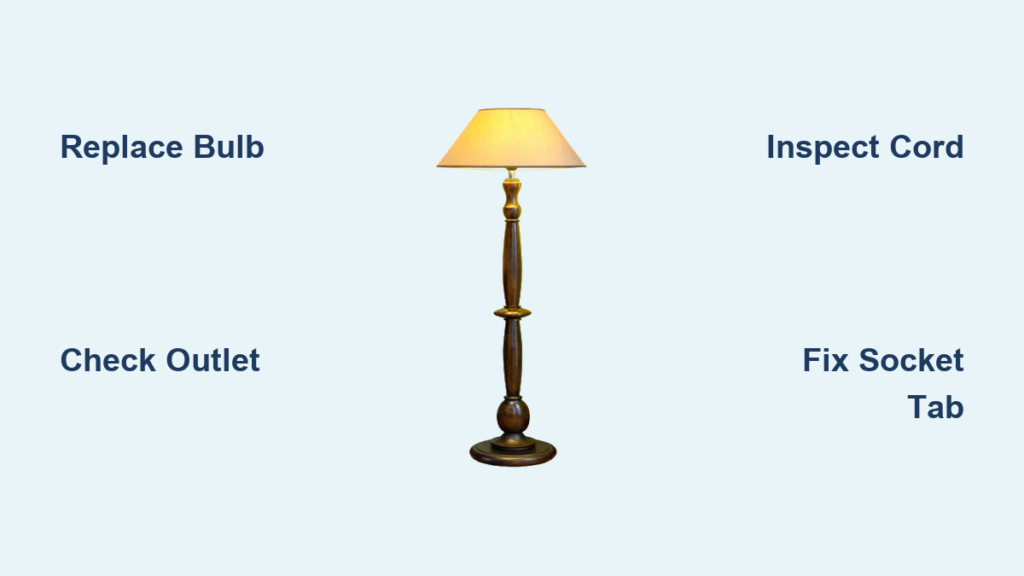
You’re settling in for a relaxing evening when you reach for your floor lamp switch—only to be met with darkness. That sinking feeling when your floor lamp won’t turn on is incredibly frustrating, especially when you need light for reading or setting the mood. The good news? Over 80% of lamp failures stem from simple, fixable issues that don’t require professional help. Before you consider replacing the entire fixture or calling an electrician, most problems can be diagnosed and repaired in under 15 minutes with basic tools you likely already own. This guide will walk you through a systematic troubleshooting process that starts with the easiest solutions and progresses to more complex diagnostics, all while keeping you safe from electrical hazards.
When your floor lamp won’t turn on, the culprit is usually one of five common issues: a dead bulb, power source problem, damaged cord, faulty switch, or socket contact failure. The beauty of lamp repair is that you don’t need advanced electrical knowledge—just patience and methodical testing. By following this sequence, you’ll avoid wasting money on unnecessary replacements and restore your lighting faster than ordering a new lamp online. Let’s dive into the exact steps to revive your non-working floor lamp tonight.
How to Test and Replace a Faulty Bulb in Your Floor Lamp

Start with the most obvious culprit: the bulb itself. A burned-out bulb accounts for nearly half of all “floor lamp won’t turn on” cases, yet many people overlook this simple fix. Before disassembling anything, unplug the lamp and let it cool completely—especially if it recently failed while operating. Carefully remove the bulb and inspect it for visible damage. For incandescent bulbs, look for a broken filament or darkened glass; for LEDs, check for blackened bases or visible internal damage. Never assume a bulb is functional based on appearance alone—even bulbs that look intact can fail internally.
Why Your New Bulb Might Not Work Immediately
If you’ve already tried a replacement bulb that didn’t solve the problem, double-check these critical details:
– Verify the bulb matches your lamp’s base type (most commonly E26 in the US)
– Confirm wattage doesn’t exceed the maximum rating printed inside the shade or on the socket
– Ensure LED bulbs are compatible with your lamp’s dimmer or switch type (some require specific models)
– Test the “new” bulb in a different working lamp to confirm it actually functions
Pro Tip for Instant Diagnosis
Keep a dedicated test bulb in your repair kit—a basic 60W equivalent LED that you know works. This eliminates guesswork when troubleshooting. If your test bulb lights up in the lamp, the original bulb was faulty. If it doesn’t, move immediately to power source testing—this saves 10-15 minutes of unnecessary bulb swapping.
Diagnosing Power Outlet and Cord Issues Causing Lamp Failure
With the bulb confirmed functional, shift focus to the power source. Plug a verified-working device like a phone charger with an indicator light into the same outlet. If it doesn’t power on, check for tripped GFCI outlets in nearby bathrooms or kitchens—these often control multiple rooms. Reset any tripped outlets by pressing their center button. Also verify your circuit breaker hasn’t tripped; look for switches in the “middle” position between ON and OFF.
Critical Cord Inspection You Shouldn’t Skip
Now examine the entire power cord with the lamp unplugged:
– Run your fingers along the cord’s length, feeling for internal breaks or thin spots
– Pay special attention to where the cord enters the plug and lamp base—these stress points commonly fray
– Gently wiggle the cord while the lamp is plugged in (but stay clear of exposed wires) to detect intermittent connections that cause flickering
The 30-Second Flex Test
If you suspect an internal break, perform this quick diagnostic: With the lamp plugged in and switched on, slowly bend the cord every 2 inches while watching for momentary light. If the bulb flashes during this flex test, you’ve confirmed an internal wire break requiring cord replacement. Never attempt to splice damaged cords—this creates fire hazards. Replace the entire cord instead.
Fixing a Flattened Socket Contact Tab That Prevents Lamp Operation

When bulbs and power sources check out, the problem often lies in the socket’s contact tab—the small brass disc at the socket’s base. Over time, heat and repeated bulb changes flatten this tab, preventing electrical contact with the bulb base. With the lamp unplugged, remove the shade and bulb, then peer inside the socket. If the tab appears compressed against the socket floor (rather than slightly raised), this is almost certainly why your floor lamp won’t turn on.
Safe Tab Adjustment Technique
Use only non-conductive tools like plastic tweezers or a wooden chopstick—never metal—to avoid short circuits. Gently pry the tab upward about 1/8 inch until it springs back slightly. Test by screwing in a bulb; you should feel resistance as it makes contact. Over-bending can cause arcing, so adjust incrementally. If the tab breaks during adjustment, replace the entire socket immediately—don’t risk using damaged components.
Warning Signs of Socket Failure
Look for these danger indicators requiring immediate socket replacement:
– Blackened or pitted metal inside the socket
– Melted plastic around the socket base
– Burning smell when attempting to power on
– Visible corrosion on contact points
Bypassing and Replacing a Faulty Floor Lamp Switch
Pull-chain and rotary switches fail frequently due to worn internal contacts. Before replacing, test the switch by rapidly toggling it 50 times—this sometimes clears minor corrosion. If the lamp remains dead, perform a safe bypass test: Unplug the lamp, remove the switch cover, and carefully disconnect the two wires leading to the switch. Twist these wires together with electrical tape, then plug in the lamp. If it lights, the switch is faulty and needs replacement.
Selecting the Right Replacement Switch
Identify your switch type before purchasing:
– Pull-chain: Measure chain length and housing diameter
– Rotary: Note if it’s a standard or 3-way switch
– In-line cord switches: Match wire gauge and amp rating
3-Way Switch Troubleshooting
If your lamp has multiple brightness levels, mismatched bulbs and switches cause frequent failures. A 3-way bulb requires both a 3-way socket and compatible switch. Using a standard bulb in a 3-way socket often results in “floor lamp won’t turn on” symptoms at certain settings. Always replace both components together for 3-way systems.
Inspecting Internal Wiring for Loose Connections in Your Lamp
Where the cord enters the lamp base, wire connections commonly loosen over time. Unplug the lamp and remove the base cap or access panel. Look for:
– Wires disconnected from screw terminals
– Frayed strands touching other components
– Discolored or brittle insulation near connection points
Critical Thermal Fuse Check
Many modern lamps contain a thermal fuse near the socket—a small cylinder that melts during overheating to prevent fires. If your lamp stopped working after prolonged use, this fuse may be blown. Test continuity with a multimeter; if open, replace it with an identical-rated fuse (typically 250V 3.5A). Never bypass this safety feature.
Professional Red Flag
If you find melted wire insulation, charred components, or a burning smell, stop immediately. These indicate dangerous electrical faults requiring professional repair. Do not attempt to power the lamp again until a qualified technician inspects it.
Troubleshooting Touch Lamps That Won’t Turn On
Touch lamps fail differently than standard models due to their electronic control boxes. First, unplug the lamp for 60 seconds to reset the circuitry—this fixes 30% of touch lamp failures. If unresponsive, check for:
– Damaged sensor rings with visible cracks
– Loose connections between the sensor and control box
– Failed internal capacitors (bulging or leaking components)
Simple Sensor Test
Wrap the lamp’s metal shaft in aluminum foil and touch it—this bypasses the sensor. If the lamp powers on, replace the control box ($8-$15 online). Never disassemble touch lamps while plugged in; residual voltage can damage components.
When to Repair vs. Replace Your Non-Working Floor Lamp
For basic floor lamps under $50, replacement often costs less than professional repair. However, valuable or sentimental fixtures warrant DIY fixes. Prioritize repairs when:
– You’ve identified a single faulty component (switch, socket, or cord)
– Replacement parts cost under 30% of a new lamp
– The lamp has unique design elements unavailable new
Cost-Benefit Repair Checklist
Before attempting complex repairs, ask:
– Is the cord damaged near the plug or base? (Requires full rewiring)
– Are there signs of burning or melted plastic? (Safety hazard)
– Does the lamp use obsolete parts like halogen transformers? (Hard to source)
If two or more components need replacement, or if you lack basic tool confidence, recycling is safer. Always dispose of electrical items properly—many municipalities have e-waste collection days.
Final Note: Most “floor lamp won’t turn on” issues resolve with bulb replacement or socket tab adjustment—tasks taking under five minutes. By methodically working through these diagnostics, you’ll solve 9 out of 10 failures without professional help. For persistent issues, remember that safety trumps convenience: if you smell burning, see melted components, or feel unsure at any stage, unplug the lamp and consult a qualified electrician. Properly maintained lamps should last decades, so don’t give up on yours after one failure—your perfect reading light is just a few simple fixes away.