That greasy, weighed-down feeling after skipping shampoo? You’re not alone. Millions are ditching traditional shampoo to avoid harsh sulfates, reset their scalp’s natural oil production, and embrace chemical-free haircare. But let’s be real: the idea of washing hair without shampoo sounds impossible when you’re staring at limp strands after day two of the “no-poo” journey. The truth? You absolutely can wash your hair without shampoo—and do it effectively. This isn’t about hippie folklore; it’s science-backed methods that cleanse your scalp, remove buildup, and leave hair healthy. Whether you’re battling hard water, managing curly coils, or surviving the dreaded transition phase, this guide delivers exact steps to make shampoo-free haircare work for your unique hair. No vague promises—just actionable techniques verified by dermatologists and trichologists.
Why Shampoo-Free Washing Works (When Done Right)
Commercial shampoos strip your scalp of natural sebum with sulfates like SLS, triggering overproduction of oil that creates the vicious cycle of “wash-rinse-repeat.” When you stop shampooing, your scalp recalibrates its oil production—a process taking 2-4 weeks for most people. During this transition, hair often feels waxy or greasy as sebum levels normalize. This isn’t failure; it’s your scalp healing. Crucially, hard water minerals (calcium, magnesium) react with natural oils to create a stubborn film—explaining why water-only washing fails for 40% of users. The solution? Match your method to your hair type and water hardness. Skip this step, and you’ll quit before seeing results.
Water-Only Washing: Does Plain Water Actually Clean Hair?
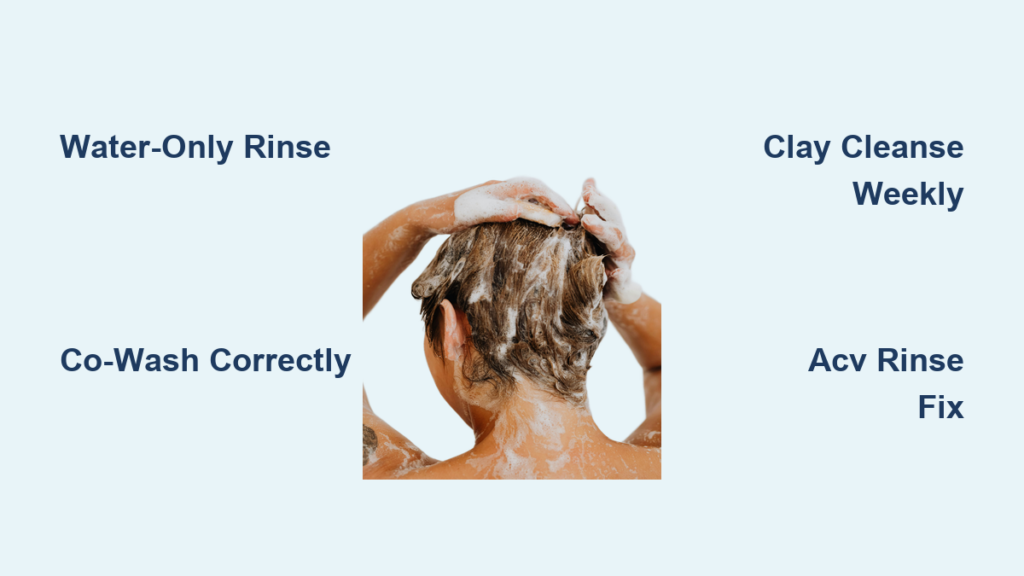
Forget splashing your roots under the shower. Effective water-only cleansing requires technique:
1. Rinse with warm (not hot) water for 2 full minutes to loosen debris
2. Massage scalp vigorously using finger pads (not nails) in circular motions—focus on temples and crown where oil buildup concentrates
3. Rinse again with cool water for 60 seconds to seal cuticles
✅ Works best for: Oily scalps in soft water areas, active individuals washing daily
❌ Fails when: Hard water creates mineral buildup (try a final diluted vinegar rinse) or hair has heavy product residue
Pro Tip: Use a shower filter if your hair feels “straw-like” after washing—this tackles hard water instantly.
Troubleshooting Water-Only Washing
Problem: Hair feels greasy after 24 hours
Fix: Extend scalp massage to 3 minutes. Use a boar-bristle brush before showering to distribute oils away from roots.
Problem: White residue on dark hair
Fix: This is hard water mineral film. Add 2 tbsp apple cider vinegar to your final rinse water.
Co-Washing Secrets for Curly and Dry Hair
Conditioner-only washing (“co-washing”) isn’t just for curls—it’s a lifeline for damaged or color-treated hair. But 90% of users make one critical error: using the wrong conditioner. Silicone-based formulas trap buildup, worsening greasiness.
✅ Do this:
– Pick a silicone-free conditioner with gentle cleansers like decyl glucoside
– Apply only to scalp first—massage for 90 seconds before working through lengths
– Rinse until water runs clear (cloudy water = residue)
Frequency cheat sheet:
– Fine/oily hair: Every 3 days
– Curly/coily hair: Every 2 days
– Dry/damaged hair: 2x weekly with pre-oil treatment
Pro Tip: Chill your conditioner in the fridge. Cold boosts its cleansing power without stripping moisture.
Natural Cleansers That Outperform Shampoo (With Caveats)
:max_bytes(150000):strip_icc()/Before-after-78d49906b422413bbc3943834a8db34e.jpg)
Baking Soda & ACV: The High-Risk, High-Reward Method
Baking soda (pH 9) dissolves oil but destroys hair’s natural pH (4.5-5.5), causing frizz and breakage if overused. Limit to once every 10 days:
1. Mix 1 tsp baking soda + 1 cup water in a spray bottle
2. Spray only on scalp, massage 60 seconds, rinse immediately
3. Follow with ACV rinse (1 tbsp raw ACV + 1 cup water) for 2 minutes
⚠️ Warning: Never use undiluted baking soda—it’s like scrubbing hair with sandpaper. Skip if you have color-treated hair.
Clay Cleansing: The Hard Water Hero
Bentonite or rhassoul clay binds to minerals and oil without alkaline damage. Perfect for waxy buildup:
– Mix 2 tbsp clay + 3 tbsp water to a yogurt-like paste
– Apply to damp scalp, leave 8 minutes (set timer—overdrying causes brittleness)
– Rinse with cool water while massaging
✅ Use weekly for hard water areas. Add 1 tsp ACV to clay mix for extra mineral removal.
Hair-Type Specific Fixes That Prevent Greasy Disasters

Fine/Straight Hair Survival Guide
- Day 1-14: Rinse roots with cool water only (warm water triggers oil)
- Day 15+: Try rye flour paste (1 tbsp flour + 2 tbsp water)—gentler than baking soda
- Emergency fix: Blot roots with rice paper (not powder—brushing spreads oil)
Curly/Coily Hair Power Routine
- Pre-wash: Apply jojoba oil to dry scalp, wait 20 minutes
- Wash: Co-wash with thick conditioner, using a Denman brush to exfoliate scalp
- Rinse: Finish with hibiscus tea (boil 4 hibiscus flowers in 2 cups water) for definition
Skip brushing when dry—this redistributes oil and causes frizz.
Conquer the Transition Phase in 21 Days (Not Weeks)
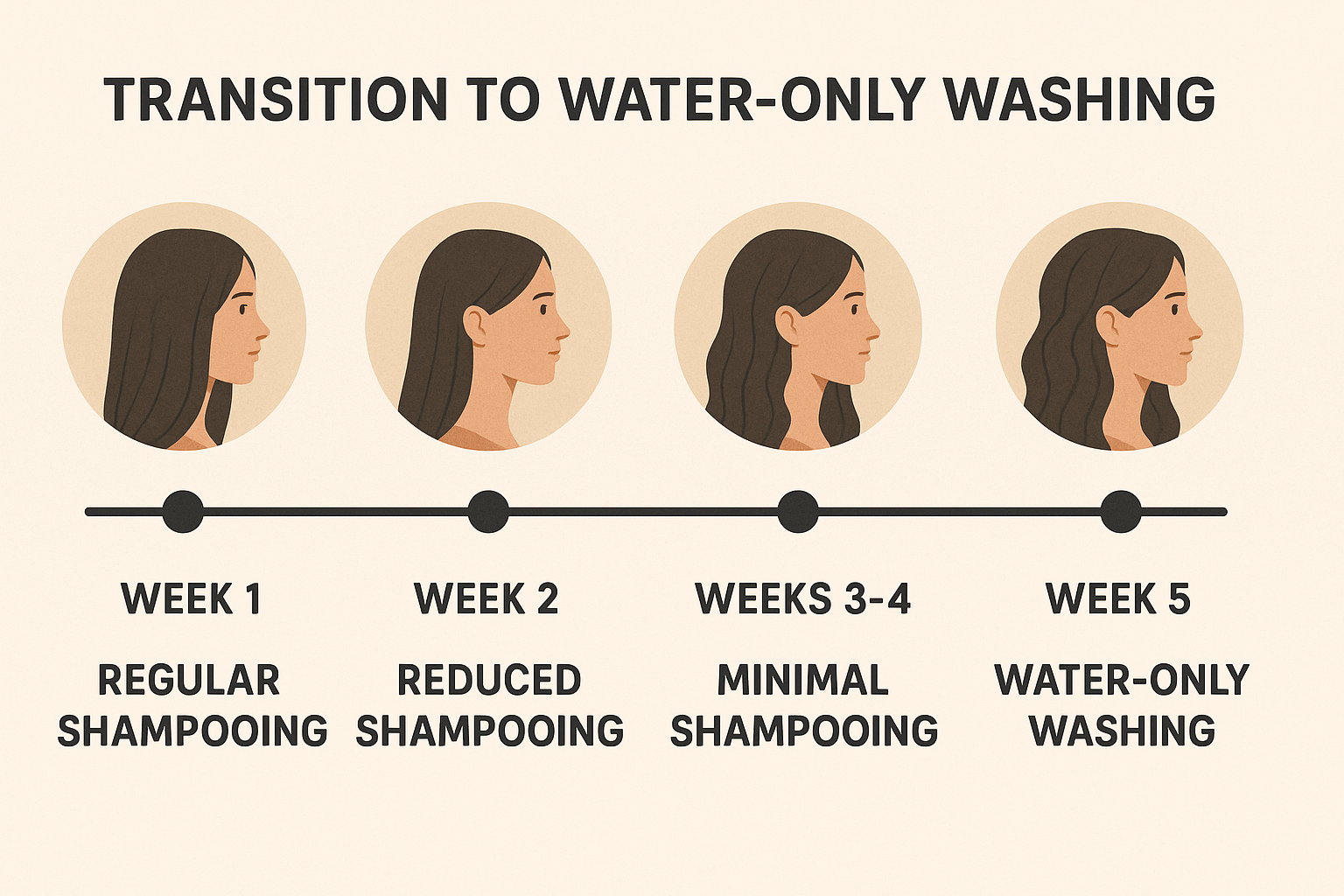
Most quit because they mismanage weeks 1-3. Follow this exact timeline:
Week 1:
– Rinse with water daily + scalp massage
– Apply dry shampoo (2 tbsp arrowroot + 1 tsp cocoa powder for dark hair) only at part lines
Week 2:
– Introduce ACV rinse every 3rd wash
– Brush hair upward from nape to crown to absorb oil
Week 3:
– Start clay washes if waxy buildup persists
– Reduce water rinses to every other day
Critical: Track progress with weekly photos. Day 10 greasiness looks identical to Day 2—photos prove you’re improving.
Troubleshooting Your Biggest Shampoo-Free Failures
“My Hair Feels Like a Greasy Wig”
Cause: Hard water + insufficient scalp massage
Fix: Double-rinse with 1:4 ACV solution. Massage scalp while water runs—don’t just let water sit on hair.
“Itchy, Flaky Scalp Won’t Quit”
Cause: Not rinsing out clay or conditioner fully
Fix: Rinse with a filtered shower head. Apply cooled rosemary tea (1 tbsp dried rosemary + 1 cup boiling water steeped 30 mins) as a final soak.
“Vinegar Smell Lingers”
Cause: Using distilled vinegar (too harsh) or wrong ratio
Fix: Only use raw, unfiltered ACV at 1:5 ratio (1 part ACV to 5 water). Rinse until water runs clear—any cloudiness means residue.
Long-Term Maintenance for Truly Healthy Hair
Shampoo-free isn’t a trend—it’s sustainable haircare when you optimize:
– Monthly: Exfoliate scalp with brown sugar + coconut oil scrub (prevents follicle clogging)
– Seasonally: Switch oils—light jojoba in summer, rich argan in winter
– Always: Sleep on silk pillowcases (reduces friction-induced oil production)
Critical mindset shift: Your goal isn’t “oil-free” hair—it’s balanced oil production. Healthy hair should feel clean but never squeaky. If strands feel dry or brittle, you’re over-cleansing. Scale back immediately.
Final Note: Washing hair without shampoo works when you match methods to your biology—not generic advice. For hard water sufferers, clay is non-negotiable. Curly-haired folks thrive with co-washing plus hibiscus rinses. Fine-haired beginners need strategic dry shampoo use. The 2-4 week transition isn’t a barrier—it’s your scalp healing from years of chemical assault. Stick to the timeline, track your progress, and within a month you’ll have hair that’s cleaner, stronger, and truly yours. Ready to skip the bottle for good? Start tonight with a 3-minute scalp massage—your oil-balanced future begins now.