Waking up shivering at 3 AM with ice crystals coating your sleeping bag—that’s the nightmare fueling the question how cold is too cold for tent camping. But here’s the truth: experienced mountaineers sleep in tents on Mount Everest where temperatures plunge below -40°F. The real answer isn’t found on a thermometer—it’s in your gear and preparation. For most campers, 30°F is the critical threshold where inadequate gear turns adventure into danger, but with the right systems, -20°F becomes manageable. This guide cuts through the myths to show you exactly when cold becomes dangerous and how to push your limits safely.
Why Your Thermometer Lies About “Too Cold” for Tents
The number on your weather app is meaningless without context. Wind chill, humidity, and your gear’s condition redefine “too cold” moment by moment. A calm 20°F night feels warmer than a windy 35°F storm. Your actual limit? The temperature where your sleep system fails to maintain core body heat for 8+ hours. This failure point varies wildly: a novice with a summer sleeping pad might hit “too cold” at 45°F, while a prepared winter camper thrives at -10°F.
The Two Hidden Killers You’re Ignoring
Ground Conductivity: Frozen earth siphons body heat 25x faster than cold air. At 32°F, a single-layer sleeping pad (R-value 2.0) loses effectiveness within hours. This is why campers report “freezing from the bottom up” even with a warm-rated sleeping bag.
Body Moisture Buildup: Your breath releases 1 pint of water vapor nightly. In sub-40°F temps, this moisture freezes on tent walls then drips onto gear. One camper described waking to “an inside-out snow globe” after sealing vents during a -5°F night.
The Sleeping Pad Crisis Below Freezing

If your pad’s R-value is below 4.0, temperatures under 35°F become dangerous. This isn’t gear marketing—it’s physics. The ground will drain your body heat faster than your metabolism can replace it, triggering hypothermia before you feel dangerously cold.
Why R-Value 4.0 Is Your Non-Negotiable Minimum
| Temperature Range | Minimum R-Value | Consequence of Under-Insulation |
|---|---|---|
| 30°F to 0°F | 4.0 | Disrupted sleep, morning stiffness |
| 0°F to -20°F | 5.5+ | Numb limbs, early morning shivering |
| Below -20°F | 6.5+ (stacked) | Hypothermia risk within 4 hours |
Stacking pads isn’t optional—it’s survival. Combine a closed-cell foam pad (R-2.0) under an inflatable (R-4.5) for R-6.5 total. This redundancy prevents total insulation failure if your inflatable leaks—a common issue when kneeling on frozen ground.
The Midnight Pad Check You Must Do
At your first bathroom break (yes, even at -15°F), press your palm against the ground through your pad. If you feel cold radiating upward within 10 seconds, you’re losing heat critical for survival. Immediate fixes:
1. Place a folded emergency blanket between pad and ground
2. Lay pine boughs under your tent footprint for dead-air insulation
3. Sleep diagonally across the tent to avoid cold spots near walls
Decoding Sleeping Bag Ratings: Comfort vs Survival Trap
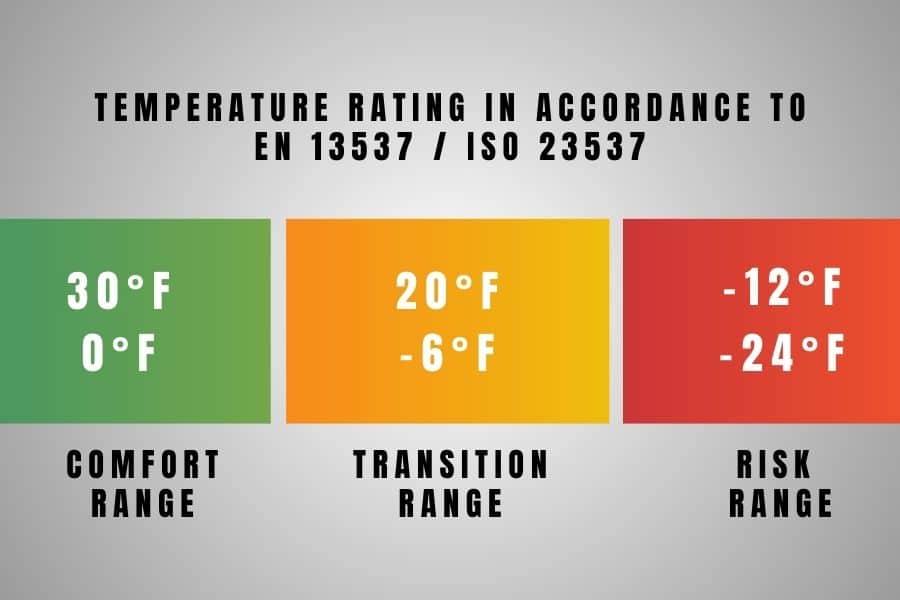
That “20°F” tag on your sleeping bag? It likely means you’ll survive—but not sleep—at 20°F if you’re male and exhausted. The EN/ISO rating system’s “Lower Limit” is the temperature where a standard male sleeps comfortably in a curled position. For actual restful sleep at 30°F, you need a bag rated to 10°F or lower.
Three Rating Realities That Save Lives
1. Women Need 10-15°F Warmer Bags: Most ratings are based on male physiology. Female campers should select bags rated 15°F below expected lows. One tester reported waking at 28°F in her “20°F” bag while her male partner slept soundly.
2. Age Changes Everything: Kids lose heat 3x faster than adults. For children, choose a bag rated 20°F below forecast lows. A 30°F night requires a 10°F bag for kids—not the 20°F bag you’d use for yourself.
3. The Layering Lifeline: Never zip yourself into a bag rated exactly for the temperature. Instead, use:
– Base bag rated 15°F below expected low
– Down quilt rated 10°F above base bag (e.g., 20°F quilt over 0°F bag = effective -10°F system)
– Silk liner adding 5-10°F warmth
Why Tent Condensation Becomes Ice in Sub-Zero Temps
Sealing your tent to “keep heat in” is the fastest path to a frozen sleeping bag. At 20°F with 50% humidity, your breath creates 1.2 oz of water vapor hourly—enough to coat everything in ice within 6 hours. This isn’t discomfort; it’s a safety hazard as wet insulation loses 90% of its warmth.
The Ventilation Protocol That Prevents Ice Storms
Step 1: Position your tent with the rainfly’s peak vent facing into the wind. This creates negative pressure that pulls moisture out.
Step 2: Crack the vestibule door 2 inches—even during snow flurries. Use a folded bandana to block direct snow entry while allowing airflow.
Step 3: Hang a microfiber towel inside the tent to absorb airborne moisture. Wring it into your cook pot every 2 hours.
Critical Mistake: Using chemical warmers inside your sleeping bag while condensation forms. The heat melts ice crystals onto your bag shell, creating damp spots that freeze solid when temps drop at dawn.
3 Proven Tactics for -20°F Nights
.JPG.81bb364df2804b542b5f1bd1f4b123dc.JPG)
When the mercury drops below zero, standard gear needs battlefield upgrades. These aren’t “nice-to-haves”—they’re the difference between restful sleep and emergency evacuation.
The Boiling Water Bottle Method
Fill a wide-mouth Nalgene with boiling water (not to the brim—leave 1″ for expansion). Wrap in a wool sock, then place in the footbox of your sleeping bag 90 minutes before bed. This single trick adds 15°F of effective warmth and lasts 6+ hours. Never use plastic bottles—they can melt or leak scalding water.
Strategic Heat Placement
Place hand warmers inside your hat (not sleeping bag) to warm blood flowing to your core. For feet, tuck warmers into the sides of your sleeping bag—not directly against skin—to avoid frostnip from sudden temperature shifts when you roll over.
The Muscle Heat Priming Sequence
Do this 10 minutes before bed:
1. 20 jumping jacks (in thermal layers)
2. 10 push-ups on foam kneeling pad
3. Drink 8 oz hot broth
This raises core temperature 1.5°F—enough to prevent the “cold crash” when you first enter your bag.
When to Call It Quits: Your Cold Weather Bail-Out Plan
“Too cold” isn’t a temperature—it’s the moment your safety margins disappear. Recognize these non-negotiable exit triggers:
- The 3-Hour Rule: If you’re still shivering 3 hours after bedtime despite all warming tactics
- The Toe Test: Numbness in toes that doesn’t resolve after 10 minutes of wiggle exercises
- The Car Check: Your vehicle is more than 15 minutes away on foot
Your bail-out kit must include:
– Chemical hand warmers taped to car battery terminals (prevents -20°F dead batteries)
– Reflective emergency blanket stuffed in jacket pocket
– Pre-loaded offline maps showing nearest warming shelters
The Midnight Pee Bottle Protocol
A 2 AM bathroom trip at -15°F risks hypothermia through heat loss and frostbitten fingers. The solution? A dedicated 32oz Nalgene marked with red tape. Here’s the fail-safe system:
- Fill bottle 1/3 full with cold water before bed (prevents thermal shock cracking)
- Place bottle in sleeping bag’s footbox at bedtime
- When needed, unzip only your head and arm—keep core covered
- After use, wipe threads and seal immediately to avoid fumes
Critical: Never use this bottle for drinking. Label it “WASTE ONLY” in permanent marker to prevent tragic mix-ups.
How cold is too cold for tent camping? The threshold hits when your sleep system can’t maintain core temperature through the night—typically 30°F for beginners with basic gear, but potentially -30°F for prepared campers. Your true limit depends on three non-negotiables: an R-4.0+ sleeping pad system, a sleeping bag rated 15°F below expected lows, and ruthless moisture management. Above all, always have a bail-out option within 15 minutes. Master these, and you’ll unlock silent forests dusted in snow, frozen lakes echoing with ice songs, and the profound solitude of a winter wilderness few ever witness. The cold isn’t your enemy—it’s the gatekeeper to one of camping’s most transformative experiences.