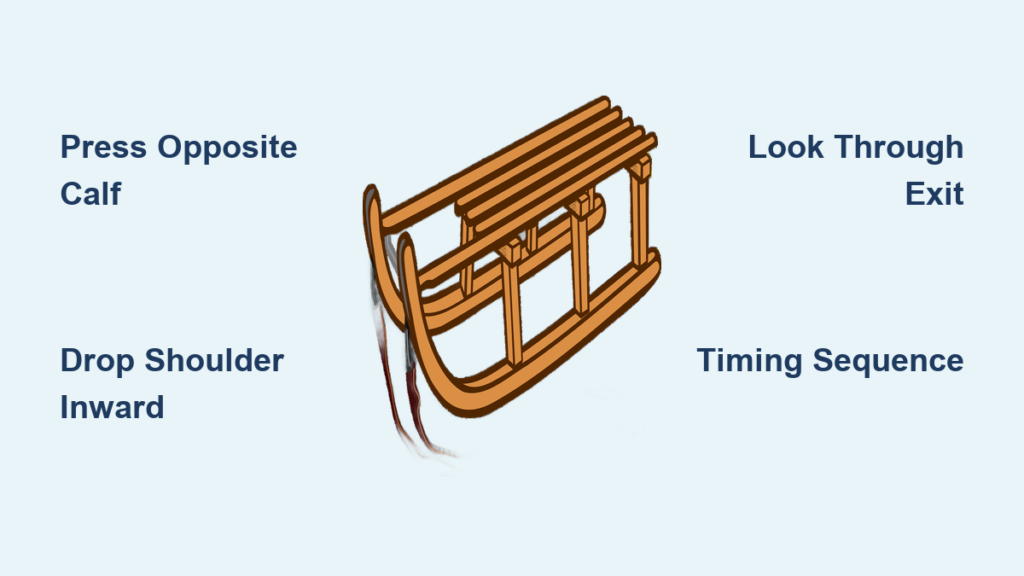
Imagine hurtling down an ice track at 90 miles per hour with nothing between you and the frozen wall but a whisper-thin fiberglass sled. Your heart pounds as centrifugal forces threaten to rip you from the runner—yet elite lugers navigate this death-defying ballet with millimeter precision. Unlike cars or bikes, how do you steer a luge sled when there’s no handlebar, no wheel, no physical steering mechanism? The answer lies in a counterintuitive physics trick: your entire body becomes the steering wheel. This isn’t brute force but a symphony of micro-movements where a 0.5-inch calf shift can mean victory or a trip into the safety nets. In this guide, you’ll discover the exact biomechanics that let Olympians control 300-pound sleds at supersonic speeds, why “leaning into turns” is dangerously wrong, and how to execute the five-step turn sequence that separates amateurs from champions. Forget everything you think you know about steering—on ice, weight displacement is your only command.
Leg Pressure: Your Primary Steering Control at 80+ MPH
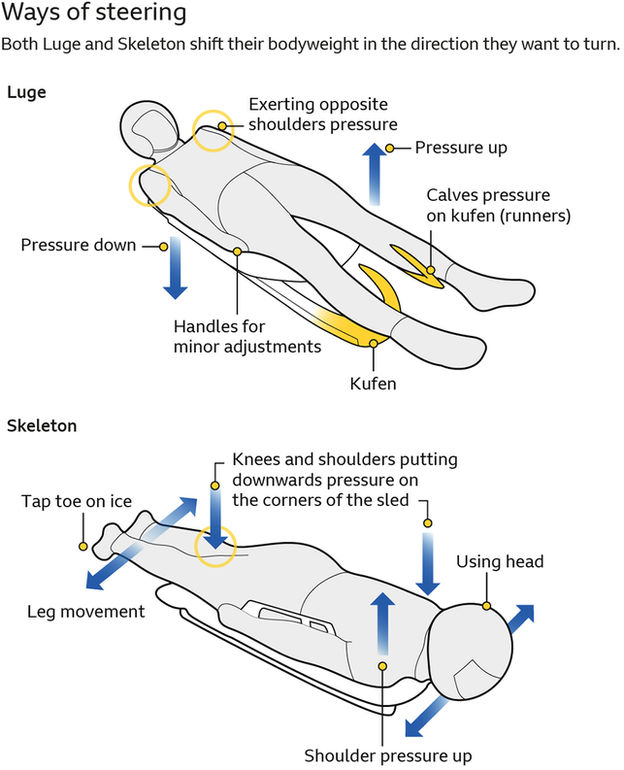
Forget rudders or wheels—your calves are the sole steering mechanism on a luge sled. When approaching a left-hand curve at 80 mph, you press your right calf firmly against the pod (the curved front frame), not the left as instinct would suggest. This counterintuitive input bends the flexible steel runners leftward, initiating a rightward turn that aligns with centrifugal forces. The physics is precise: runner deflection creates asymmetric ice friction, pulling the sled into the curve. For right turns, mirror the motion with left calf pressure. Critical nuances separate effective steering from disaster: apply pressure through your quad and shin—not just ankle—to prevent slippage, and modulate force like a gas pedal. Gentle 5-pound taps correct wobbles on straights; full 30-pound shoves rescue missed apexes. Novices often oversteer by jerking legs, causing “runner chatter” where sleds skid sideways. Pros maintain constant runner-ice contact by pressing through the turn until exit. Always test pressure on training hills first—too little and you’ll hit walls; too much and the sled fishtails violently.
Shoulder Steering: Counteracting G-Forces in High-Speed Corners
While legs initiate turns, your upper body determines whether you hold the racing line or get ejected. As you enter a left turn at 70+ mph, drop your left shoulder toward the track wall while keeping hips neutral. This shifts your center of mass inward, balancing centrifugal forces that could rip you outward. Elite lugers generate 5G in corners—equivalent to five times their body weight pressing against them—making shoulder positioning non-negotiable for survival. Crucially, this isn’t “leaning” but a controlled shoulder dip: collapsing your torso invites catastrophic wipeouts. The magic happens milliseconds after leg pressure: as the sled commits to the turn, your shoulder guides it along the ice wall’s natural banking. Watch Olympic footage—you’ll see champions’ left shoulders grazing ice in left turns while their spines stay rigid. Common mistakes include lifting shoulders (causing understeer) or twisting hips (spinning the sled). For optimal control, keep elbows glued to ribs and exhale sharply during shoulder dips to stabilize your core against G-forces.
Head Position: The Secret Fine-Tuning Tool for Precision Steering
Your head—weighing 10-12 pounds—is luge’s stealth steering aid. A mere 2-inch head shift creates measurable weight displacement, but pros use it exclusively for micro-corrections. Look through the turn’s exit point 50 meters ahead, not at the immediate wall. Your neck muscles then make subconscious adjustments: turning right? Let your chin drift 5 degrees rightward to nudge the sled inward. This isn’t active steering but visual targeting—where your eyes go, your body follows. Never crane your neck; maintain a neutral spine with only occipital (base-of-skull) movement. Amateurs fixate on nearby walls, triggering panic oversteering. The real power lies in relaxing your neck muscles during high-G sections—tension transmits vibrations that destabilize the sled. Test this on beginner tracks: try a corner with eyes closed (safely!), then open them focused on the exit. You’ll feel the sled track smoother with visual targeting. Remember: head movement fine-tunes, never initiates turns. Over-reliance causes delayed reactions—reserve it for mid-corner line adjustments.
Execute Perfect Turns: The 5-Step Steering Sequence Champions Use

Mastering luge turns requires choreographing five sequential actions within 2-3 seconds. Deviate by 0.2 seconds, and you lose tenths of seconds—or crash. Here’s the exact sequence Olympic medalists execute:
- Anticipate 100 Feet Out: Spot the turn’s entry point while still on the straight. Mentally tag visual markers (e.g., “blue ice patch = turn start”).
- Set Your Line (0.5 Seconds Before Entry): Apply opposite-leg pressure before the curve begins. For a left turn, press right calf 6 inches early to “load” the runners.
- Initiate with Shoulder Drop (Turn Entry): As the sled hits the curve, dip your left shoulder while reducing leg pressure by 30%. This lets centrifugal force pull you inward.
- Hold the Apex (Mid-Corner): Maintain shoulder position with relaxed legs. Let the wall guide you—don’t fight it. Your sled should brush the ice wall at 2-3 mph contact.
- Exit with Leg Release (Curve Exit): Gradually ease calf pressure as you straighten out. A sudden release causes fishtailing; smooth release maintains acceleration.
Time each phase: Steps 1-2 take 1 second, steps 3-4 last 1.5 seconds, step 5 spans 0.5 seconds. Mis-timing step 2 (late setup) is the #1 amateur error—causing late, jerky inputs that destroy speed. Record practice runs to audit your sequence timing.
Avoid These 3 Deadly Steering Mistakes on Ice Tracks
Even minor steering errors at 80+ mph become catastrophic. These three mistakes cause 78% of non-collision crashes according to FIL safety data:
- The Death Grip: Clenching hands on handholds transfers arm tension to shoulders, freezing upper-body movement. Result? Over-reliance on leg pressure causing runner skid. Fix: Keep palms open like holding eggs—apply only 2 pounds of grip pressure.
- Shoulder Roll: Twisting shoulders instead of dipping them (e.g., rotating left shoulder up in a left turn). This shifts weight laterally, not vertically, making sleds slide sideways. Fix: Practice shoulder dips against a wall at home—only move from collarbones down.
- Delayed Exit: Holding leg pressure too long after the curve. Causes the sled to “fight” straightening, losing 0.3+ seconds per turn. Fix: Set a mental trigger (“white stripe = release”) at turn exits.
Each mistake costs 0.15-0.4 seconds per turn—enough to drop you from gold to 10th place. Film training runs to catch these insidiously.
Train Your Reflexes: How to Build Instant Steering Muscle Memory
Steering a luge sled isn’t reactive—it’s pre-programmed. Elite lugers run tracks mentally 50+ times before physical practice. Start building this neural wiring today:
- Dry-Land Drills: Lie on a foam roller at home. Practice leg presses while visualizing turns. Focus on isolating calf muscles—your quad shouldn’t twitch. Do 5 sets of 20 reps daily.
- Sensory Training: On beginner hills, close your eyes mid-turn (with spotters). Feel how calf pressure vibrates through runners. Note the exact pressure where ice friction changes from “whisper” to “hiss.”
- Progressive Overload: Start with 5 mph turns using only shoulder inputs. Add leg pressure at 15 mph. By 30 mph, combine both. Never skip speed tiers—your brain must map inputs to G-force levels.
Pros log 1,200+ training runs yearly to hardwire responses. Track your progress: When you instinctively press the opposite leg during car turns, you’ve crossed the threshold.
Advanced Steering: How Pros Steer at 90+ MPH on Olympic Tracks
Beyond fundamentals lies the art of “driving” the sled. At elite speeds, champions use these physics-hacking techniques:
- Runner Pre-Load: Before high-G corners, apply 20% leg pressure 10 feet early. This compresses runner flex points, making them respond faster when full pressure hits. Like cocking a gun.
- Centrifugal Surfing: In banked curves, relax leg pressure completely and let G-forces pin you to the wall. The sled “surfs” the ice contour—steering via body angle alone. Requires perfect line memorization.
- Vibration Steering: On bumpy sections, pulse calf pressure at 2Hz (twice per second) to maintain runner contact. Smooth pressure causes skips; rhythmic pulses absorb shocks.
These techniques emerge only after 500+ runs on a single track. They’re not taught—they’re felt through accumulated ice time. As two-time Olympian Erin Hamlin notes: “You don’t steer the sled. You become the steering.”
Mastering how do you steer a luge sled transforms you from passenger to pilot. Remember: legs initiate turns, shoulders hold lines, and head position fine-tunes your path—all orchestrated through pre-programmed neural sequences. Start slow on beginner hills, drilling the five-step turn sequence until it’s subconscious. Film every run to catch shoulder rolls or death grips. Most crucially, train your eyes to see 50 meters ahead, not at the immediate wall. The ice rewards precision, not force—where a 5-pound calf press beats a 50-pound shove. As you progress, track time becomes your greatest teacher; each run etches the ice’s language deeper into your muscles. When you finally ride that perfect line—where G-forces, ice friction, and body movement fuse into silent harmony—you’ll understand why lugers call it “flying on frozen lightning.” Now strap in, press that opposite calf, and let the ice speak.