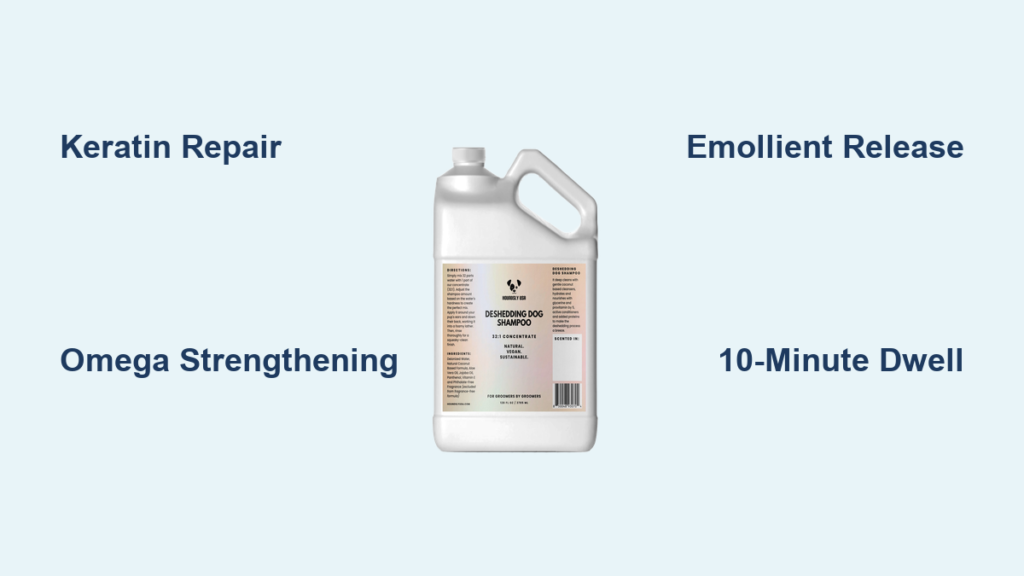
You’re vacuuming for the third time today when you spot another tumbleweed of fur rolling across the floor. Your black pants look like a furry accessory, and your couch resembles a pet bed. If you’ve tried regular shampoos only to find them useless against relentless shedding, you’re not alone. How does deshedding shampoo work differently? Unlike standard pet shampoos that merely clean surfaces, deshedding formulas target the root cause of shedding through a three-phase process: strengthening existing hair, releasing trapped undercoat, and optimizing skin health. This science-backed approach reduces loose hair by up to 80% per bath when used correctly. In this guide, you’ll discover the exact mechanisms behind these specialized shampoos, avoid common application mistakes that sabotage results, and learn the professional drying technique that makes all the difference.
Why Standard Shampoos Fail Against Undercoat Buildup
Regular pet shampoos clean dirt and oils but ignore the core shedding problem: trapped undercoat. Your pet’s undercoat consists of fine, downy hairs designed for insulation that naturally sheds seasonally. But indoor heating and artificial lighting disrupt this cycle, causing year-round shedding where dead undercoat hairs get locked beneath guard hairs. When you use a standard shampoo, you’re essentially washing hair that’s already destined to fall out—leaving the real problem untouched. The result? You’ll see minimal hair reduction because these shampoos lack the specialized ingredients to release embedded undercoat or strengthen vulnerable hair shafts.
The Undercoat Trap Cycle Explained
Dead undercoat hairs should detach naturally during shedding phases. But without intervention, they tangle with living guard hairs, creating a dense mat that traps more dead hair. This cycle worsens with each wash using conventional shampoos that don’t contain detangling polymers or follicle-strengthening actives.
Seasonal Shedding vs. Year-Round Fur Problems
Pets like Huskies or Golden Retrievers “blow their coat” twice yearly in the wild. Indoor environments confuse their biological clocks, triggering continuous light shedding. Deshedding shampoos address this by accelerating the natural shedding phase—safely releasing months of trapped undercoat in one controlled bath.
Keratin Proteins Seal Hair Shafts Against Breakage
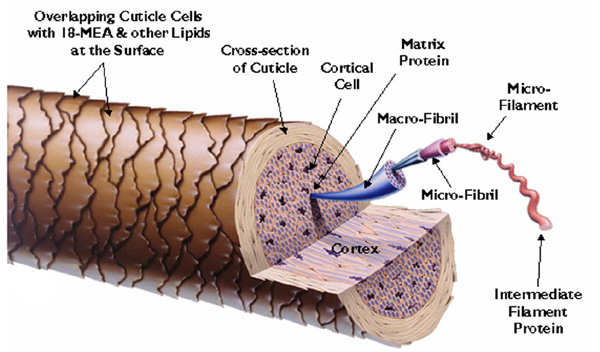
The most effective deshedding shampoos contain hydrolyzed keratin—a protein identical to pet hair structure. When applied during bathing, these microscopic keratin fragments penetrate the hair cuticle to repair weak spots where breakage occurs. Unlike surface-level conditioners, keratin bonds chemically with the hair shaft, filling cracks and smoothing the cuticle. This does two critical things: it prevents healthy hairs from snapping during brushing (reducing the appearance of excessive shedding), and it creates a slick surface that allows dead undercoat hairs to slide out effortlessly during rinsing. You’ll notice less hair on your brush because the shampoo stopped breakage at the source.
How Keratin Differs from Regular Conditioners
Standard conditioners coat hair externally with silicones that wash off quickly. Keratin proteins integrate into the hair structure for lasting reinforcement. Look for “hydrolyzed keratin” or “collagen peptides” in ingredients—they’re small enough to penetrate, unlike whole keratin proteins.
Visual Cue: The Shine Test
After a proper deshedding bath, your pet’s coat should have a soft, satin-like sheen—not greasy or dull. If hair looks flat or oily, the shampoo contains heavy waxes that will trap future undercoat.
Omega Fatty Acids Strengthen Hair Follicles from Within
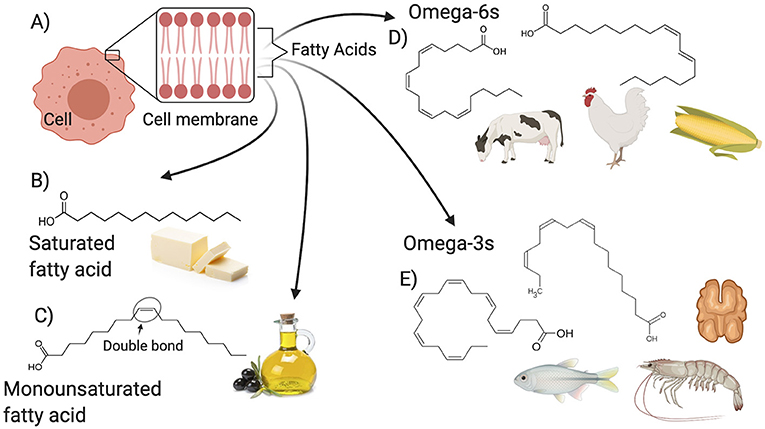
Deshedding shampoos with Omega-3 and Omega-6 fatty acids (typically from salmon oil, flaxseed, or sunflower oil) work beneath the skin’s surface. These lipids absorb through the epidermis to nourish hair follicles, thickening the hair shaft during growth phases. Stronger follicles produce hairs less prone to premature shedding, while improved skin elasticity prevents hairs from snapping when stressed. Crucially, Omegas reduce inflammation that can trigger excessive shedding—common in pets with environmental allergies. Within 3-4 baths, you’ll see fewer broken hairs and reduced patchiness.
Why Plant-Based Omegas Fall Short
While coconut or avocado oil moisturizes externally, they lack the specific Omega-3 (EPA/DHA) profile needed for follicle health. Prioritize shampoos listing “salmon oil,” “fish oil,” or “flaxseed oil” for bioavailable Omegas.
Timing Matters: The 8-Week Growth Cycle
Hair follicles operate on an 8-week renewal cycle. Consistent bi-weekly deshedding baths allow Omegas to build up in the skin, strengthening new hair growth. Skipping baths resets this progress.
How Emollients Release Trapped Undercoat During Rinsing
The true magic happens during the rinse phase thanks to emollients like aloe vera and shea butter. These ingredients create a lubricating film around each hair strand, reducing static electricity that causes dead undercoat hairs to cling stubbornly to guard hairs. As water flows through the coat, the emollient layer allows trapped undercoat to detach and wash away freely. Without this, dead hairs remain anchored—explaining why regular shampoos leave you with the same fur problem post-bath. The key is sufficient contact time: emollients need 5-10 minutes to fully coat hairs before rinsing.
The Rinse-Through Test for Effectiveness
During your next bath, pause mid-rinse and gently pull a section of wet fur. If loose undercoat slides out easily with minimal resistance, the emollients are working. If it tangles, the shampoo lacks sufficient detangling agents.
Why Cold Water Ruins Results
Warm (not hot) water is essential—it opens hair cuticles to accept emollients. Water below 70°F (21°C) causes cuticles to contract, trapping undercoat. Always use lukewarm water for the final rinse.
Step-by-Step: Pre-Bath Brushing for Maximum Hair Removal

Skipping pre-bath brushing wastes your deshedding shampoo’s potential. Dead undercoat must be loosened before shampoo application to allow emollients to reach the skin. Use an undercoat rake (not a slicker brush) to gently remove surface-level dead hair. This prevents clogged drains and ensures shampoo contacts the skin where it works best. For double-coated breeds, spend 5-7 minutes pre-brushing—focus on the chest, flank, and tail base where undercoat accumulates thickest. You’ll pull out 30-50% of loose hair before wetting, making the shampoo’s job dramatically easier.
The Right Tool for Your Pet’s Coat
- Short-haired breeds: Rubber curry brush
- Double-coated breeds: Undercoat rake with wide-spaced teeth
- Sensitive skin: Pin brush with cushioned tips
Never use metal combs—they pull live hairs from follicles.
Warning: Over-Brushing Damages Skin
Brush only until loose hair stops releasing (5-7 minutes max). Continued brushing irritates skin, triggering more shedding. Stop when you see mostly clean brush strokes.
The Critical 10-Minute Dwell Time You’re Skipping
Most pet owners rinse deshedding shampoo too early—sabotaging results. The 5-10 minute dwell time isn’t optional; it’s when keratin penetrates hair shafts and emollients coat follicles. Set a timer! During this period:
1. Massage shampoo deep into the undercoat (not just surface lather)
2. Focus on high-shed zones: under legs, belly, and base of tail
3. Keep pet calm—stress hormones can constrict skin pores
Rinse immediately after lathering leaves active ingredients ineffective. You’ll see dramatically less hair removal without this step. Pro tip: Use a washcloth to hold shampoo against thick undercoat areas like the ruff.
High-Velocity Drying: The Secret to Blowing Out 90% More Hair
Your drying method determines 70% of deshedding results. Air-drying lets loosened undercoat re-tangle with guard hairs. Instead, use a high-velocity pet dryer (not a human hairdryer) on cool setting:
– Start 12 inches from skin, moving against hair growth
– Use short bursts (5 seconds) to avoid overheating
– Focus on underbelly and legs where undercoat hides
The forced air literally blows dead hairs out of the coat. You’ll see hair clouds flying—this is the trapped undercoat finally releasing. For pets afraid of dryers, vigorously rub with a microfiber towel in quick, short motions. Cotton towels absorb moisture but lack the friction needed to eject undercoat.
Why Towel Choice Matters
Microfiber towels have tiny fibers that grab and lift dead undercoat during rubbing. Standard terrycloth just mats wet hair. Always rub in the direction of hair growth to avoid skin irritation.
What Deshedding Shampoo Won’t Fix (And When to See a Vet)
Deshedding shampoos manage normal shedding but can’t address medical issues. If you notice these signs, skip the shampoo and call your vet:
– Bald patches or red skin: Indicates allergies or parasites
– Excessive scratching: Could be mites or yeast infection
– Thinning across entire body: Potential thyroid disorder
– Sudden heavy shedding: Often stress or nutritional deficiency
Shampoos also won’t stop seasonal “coat blowing”—they simply concentrate it into one bath. For breeds like Newfoundlands, expect 2-3 heavy deshedding baths per season regardless of shampoo use.
Choosing Sulfate-Free Shampoo for Sensitive Skin
Harsh sulfates (SLS/SLES) strip natural oils, causing dry skin that increases shedding. Opt for sulfate-free formulas with these vet-approved ingredients:
– Oatmeal extract: Soothes itchy skin within 3 washes
– Chamomile: Reduces inflammation without drowsiness
– Vitamin E: Repairs skin barrier function
– Hypoallergenic fragrances: Like lavender or unscented
Avoid shampoos listing “parfum,” “fragrance,” or “methylisothiazolinone” near the top—they’re common irritants. Patch-test new shampoos on your pet’s inner thigh first.
Avoid These 3 Costly Deshedding Shampoo Mistakes
Mistake #1: Using Human Shampoo Variants
Human shampoos have higher pH (5.5 vs. pet’s 7.5), disrupting skin’s acid mantle. This causes dryness and flaking that mimics shedding. Always use pet-specific formulas.
Mistake #2: Bathing Too Frequently
Over-bathing (more than every 2 weeks) strips protective oils. Stick to bi-weekly baths during peak shedding seasons only. Between baths, use deshedding sprays for maintenance.
Mistake #3: Ignoring Brush Maintenance
Deshedding shampoos work best with clean brushes. Hair, oil, and dead skin clog brush teeth, reducing effectiveness. Soak brushes in vinegar-water solution weekly to remove buildup.
When to Combine Shampoos with Mechanical Tools
For extreme undercoat buildup, pair deshedding shampoo with a Furminator after bathing:
1. Bathe with deshedding shampoo (include 10-min dwell time)
2. Towel-dry until 50% damp
3. Use Furminator on dry coat to extract loosened undercoat
Never use mechanical tools on wet hair—they pull live follicles. This combo removes up to 90% of loose undercoat in one session.
Deshedding shampoos work by transforming your pet’s natural shedding process—not stopping it. Through keratin reinforcement, Omega-powered follicle health, and emollient-assisted release, they turn chaotic fur loss into controlled, manageable shedding. Implement the 10-minute dwell time and high-velocity drying technique consistently, and you’ll spend 70% less time vacuuming within a month. For best results, pair bi-weekly baths with pre-brushing during seasonal changes—your furniture (and sanity) will thank you. Remember: no shampoo stops biological shedding, but the right formula puts you in control of where that hair ends up.