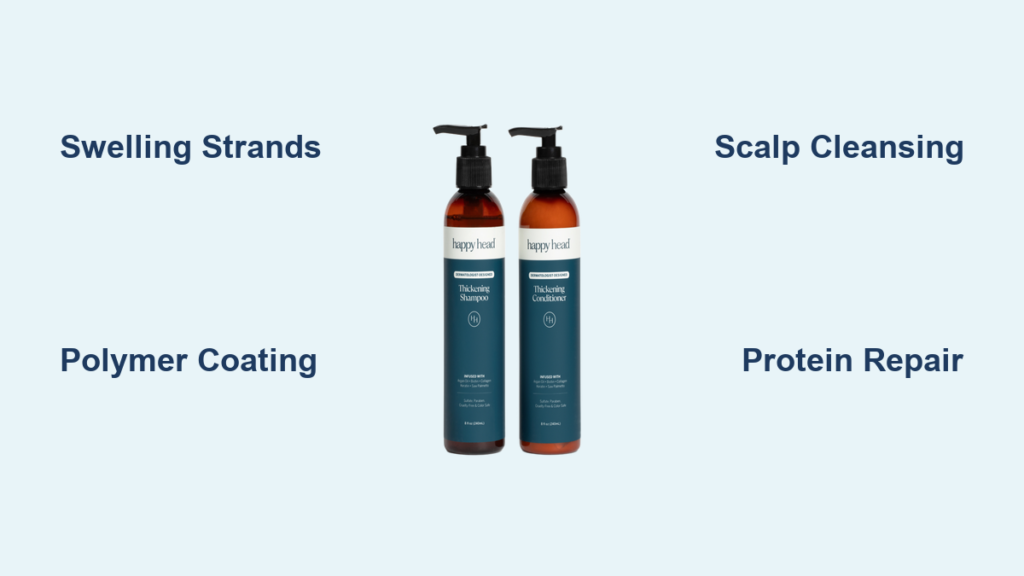
You wash your hair and watch in frustration as strands lie flat against your scalp, offering zero lift or body. That’s why millions turn to thickening shampoos promising fuller-looking hair—but how does thickening shampoo work when you rinse it out in under five minutes? The answer lies in clever chemistry that temporarily swells each strand and lifts hair at the roots. Unlike hair growth treatments, these formulas create immediate visual density through microscopic plumping and strategic coating. Discover exactly how these products transform limp hair into bouncy, voluminous locks without growing a single new follicle.
Thickening shampoos deliver their magic through three simultaneous actions: swelling individual strands, depositing invisible thickening layers, and removing weight that flattens hair. They target the root cause of flatness—fine strands that lack structural integrity—by leveraging ingredients that interact with your hair’s natural biology. While results wash out with your next cleanse, consistent use builds confidence between haircuts. This guide unpacks the precise mechanisms behind the volume boost, so you can choose products that actually work for your hair type.
Why Humectants Make Hair Strands Swell Instantly
Thickening shampoos plump hair from within using moisture-grabbing humectants that temporarily increase strand diameter. When you lather up, ingredients like panthenol and glycerin pull water molecules from the air into your hair’s cortex. This causes the cuticle layer to expand outward by up to 10%—enough to create visible thickness without weighing hair down.
How Panthenol Creates Lasting Plumpness
Panthenol (Provitamin B5) delivers the most dramatic swelling effect because it converts to pantothenic acid on contact with hair. This acid penetrates deeper than other humectants, binding moisture directly to keratin proteins inside the strand. Look for these visual cues during washing:
– Hair feels slightly “fatter” between your fingers when wet
– Strands appear less transparent under light
– Reduced light reflection off the hair surface
Pro Tip: For maximum plumping, leave thickening shampoo on damp hair for 60 seconds before rinsing. This gives humectants time to penetrate—especially crucial for coarse or damaged hair that absorbs moisture slower.
Polymer Coatings: The Invisible Thickness Boosters
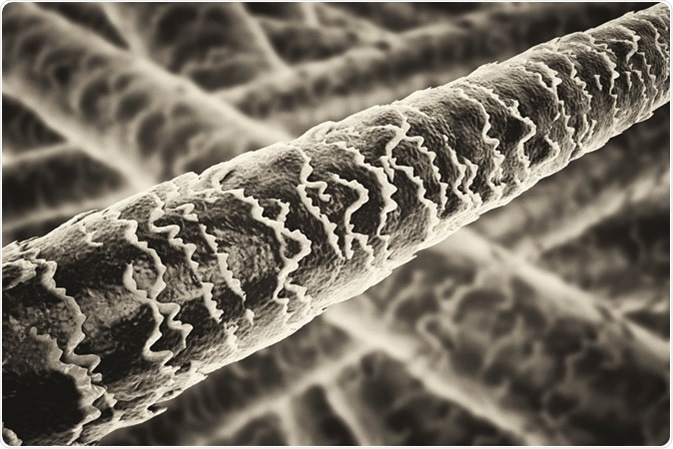
Film-forming polymers create a second layer of thickness by wrapping each strand in a breathable, flexible coating. Ingredients like Polyquaternium-10 and PVP form microscopic “socks” around hair fibers, adding measurable diameter without stiffness. This isn’t buildup—it’s a targeted deposit that washes cleanly with your next shampoo.
How Polymers Target Fine Hair Weaknesses
These polymers exploit hair’s natural negative charge to cling only where needed:
– On fine hair: They fill microscopic gaps in the cuticle, making strands feel denser
– On damaged hair: They patch split ends temporarily, reducing frizz-induced flatness
– At the roots: They create friction between strands to prevent clumping
Critical Mistake to Avoid: Using heavy conditioners after polymer-based shampoos. The conditioner dissolves the polymer coating, canceling the thickening effect. Always apply conditioner ONLY from ear-level down.
Protein Power: Filling Hair Gaps for Structural Thickness
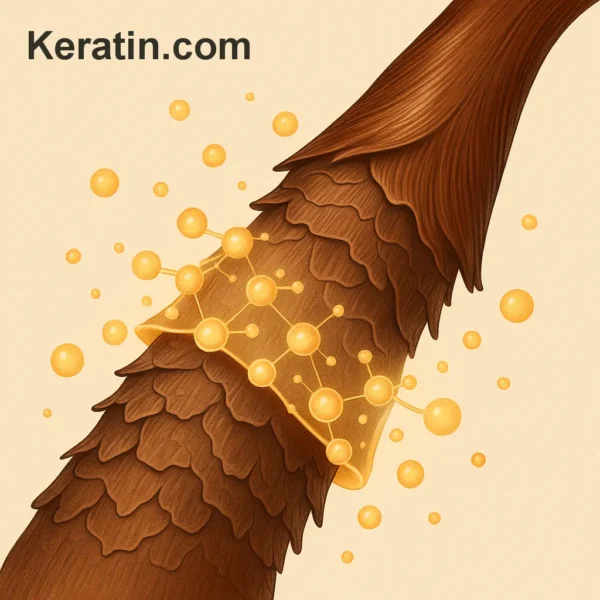
Hydrolyzed proteins (keratin, wheat, or soy) deliver immediate thickness by plugging holes in damaged cuticles. When broken down into nano-sized fragments, these proteins slip beneath the cuticle layer to reinforce weak spots. Unlike humectants that add temporary water weight, proteins create structural integrity that lasts until your next wash.
The 2-Minute Protein Fix for Flat Hair
For noticeable results, massage shampoo into your scalp for exactly 120 seconds. This triggers two key reactions:
1. Proteins penetrate cuticle gaps through mechanical agitation
2. Increased blood flow delivers oxygen to follicles for better strand anchoring
You’ll see immediate root lift as proteins swell within the hair shaft—no heat tools required.
Why Scalp Cleansing Equals Root Lift Volume

Thickening shampoos contain specialized surfactants that remove sebum and product residue without stripping natural oils. This targeted cleansing is why your roots stand up straighter: without oil’s gravitational pull, hair gains 30-50% more lift at the crown. Unlike regular shampoos, they avoid sulfates that cause rebound oiliness.
Spot the Difference: Clean vs. Oily Roots
| Condition | Hair Behavior | Visual Clue |
|---|---|---|
| Oily Scalp | Strands clump and fall flat | Visible shine at roots within 24 hours |
| Clean Scalp | Strands repel each other | Roots stay separated for 48+ hours |
Time-Saver: Apply shampoo exclusively to roots using a dropper bottle. Skip the mid-lengths—they need less cleansing and absorb too much thickening agents, causing dryness.
The 3-Step Technique for Maximum Volume Results
Most people waste thickening shampoo by applying it incorrectly. Follow this pro method for salon-level lift:
-
Pre-Wash Clarify (1 minute): Use a dime-sized amount of regular shampoo on dry roots to dissolve stubborn buildup. Rinse completely—this step prevents polymers from bonding to residue instead of hair.
-
Targeted Lather (2 minutes): Massage thickening shampoo ONLY into scalp with fingertips (not nails). Focus on the crown and part line where volume matters most. You should hear a slight “squeak” indicating thorough cleansing.
-
Cool Water Rinse (30 seconds): Finish with cold water to seal the cuticle. This locks in plumping ingredients and adds reflective shine that enhances the thick appearance.
Warning: Never apply thickening shampoo to soaking-wet hair—it dilutes active ingredients. Apply to damp (not dripping) strands for optimal ingredient adhesion.
Thickening Shampoo Myths: What It Won’t Do for Hair Loss
Despite marketing claims, thickening shampoo works solely on existing hair—it cannot address actual hair loss. If you’re experiencing these issues, skip the shampoo and see a dermatologist:
- Receding hairlines (sign of androgenetic alopecia)
- Visible scalp through part lines (indicates follicle miniaturization)
- Excessive shedding (more than 100 strands daily)
Thickening shampoos only create the illusion of density by maximizing what’s already there. They contain zero ingredients that stimulate new growth or block DHT—the hormone causing genetic hair loss.
Who Actually Benefits from Thickening Shampoo (And Who Doesn’t)
Thickening shampoos deliver dramatic results for specific hair types but backfire on others. Here’s how to know if yours will work:
Ideal Candidates
- Fine-strand hair (strands thinner than 0.05mm diameter)
- Aging hair (post-40 thinning from reduced keratin production)
- Chemically processed hair (bleached or permed strands that lost structural integrity)
Poor Candidates
- Type 4 coily hair (polymers cause excessive dryness)
- Seborrheic dermatitis (clarifying action worsens flaking)
- Very low density hair (<100 hairs per cm²—shampoo can’t create volume from nothing)
Pro Tip: Rub a single strand between fingers—if you barely feel it, thickening shampoo will work wonders. If you feel distinct thickness, skip it—your hair already has adequate diameter.
Avoiding Buildup: How Often to Use Thickening Shampoo
Overuse causes polymer and protein accumulation that weighs hair down. Follow this frequency guide based on your hair’s needs:
| Hair Condition | Usage Frequency | Buildup Warning Signs |
|---|---|---|
| Fine + Oily | Every wash (3-4x/week) | Roots feel sticky when dry |
| Fine + Dry | 2x/week + moisturizing shampoo other days | Strands feel stiff or straw-like |
| Medium Texture | Only when styling for volume (1-2x/week) | Limpness returns within 12 hours |
Emergency Fix: If you notice buildup, use a vinegar rinse (1 tbsp apple cider vinegar in 1 cup water) after shampooing. The acidity dissolves polymer deposits without stripping color.
Thickening shampoo works through three simultaneous actions: swelling strands with humectants, coating fibers with polymers, and cleansing roots for lift. This creates immediate visual density by maximizing your existing hair—not growing new strands. For lasting results, apply only to roots, leave on for 2 minutes, and always follow with cool water. Remember that these shampoos won’t stop hair loss or thicken extremely sparse areas, but they’re unmatched for transforming fine, flat hair into bouncy, body-rich locks. Pair with dry shampoo on non-wash days to maintain volume between uses, and always clarify monthly to prevent ingredient buildup. When chosen for your specific hair type, thickening shampoo delivers salon-worthy volume in under five minutes—no extensions required.