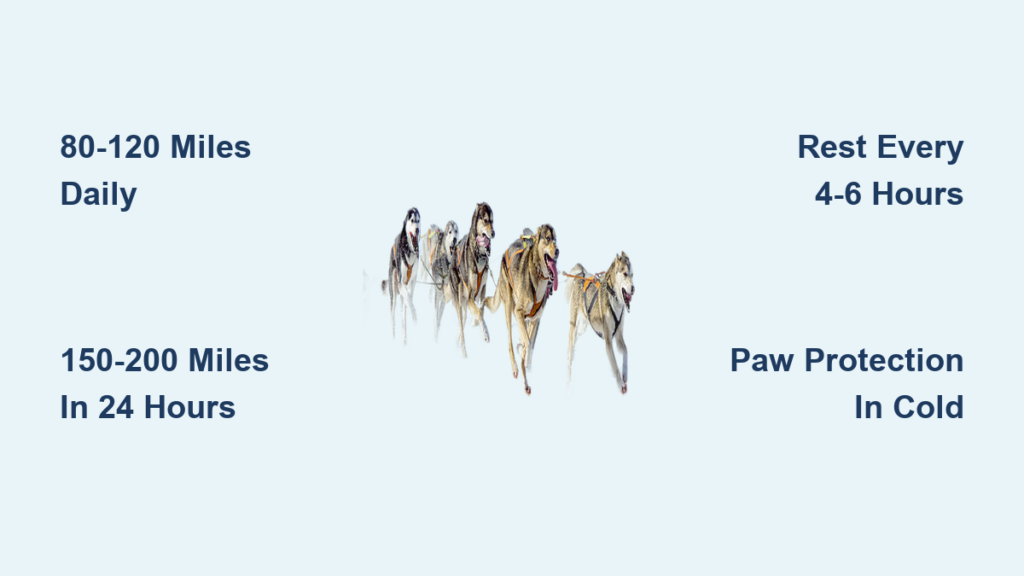
Picture this: frozen breath hanging in the crisp air, the rhythmic panting of powerful huskies, and a sled gliding silently over untouched snow. You’re watching a dog sled team charge across the landscape, and one burning question hits you—how fast can a dog sled go before vanishing into the horizon? The answer isn’t a single number but a dynamic story shaped by canine athletes, trail conditions, and the musher’s expertise. Forget textbook averages; the reality ranges from a casual stroll to highway speeds depending entirely on context.
Elite racing teams can hit explosive bursts of 18-20 miles per hour when passing competitors or launching off the starting line. But that blistering pace rarely lasts more than a few minutes. For serious distance—like the grueling 1,000-mile Iditarod—sustainable speeds drop to a strategic 8-12 miles per hour. Why such a dramatic difference? Because dog sledding isn’t about raw speed alone; it’s a delicate balance between canine endurance, trail physics, and intelligent pacing. If you’ve ever wondered why your guided tour feels slower than race footage, you’re about to discover exactly what controls these remarkable machines of muscle and wood.
5 Critical Factors That Determine Your Dog Sled’s Maximum Speed
Forget “top speed” claims—your actual velocity depends on these five non-negotiable elements. Get any one wrong, and even the strongest team crawls.
Why Your Slowest Dog Limits the Entire Team’s Pace
A dog sled moves only as fast as its weakest link. Top sprint teams use genetically engineered Alaskan Huskies bred for explosive power, but one fatigued dog forces the entire team to slow down. During the Iditarod, mushers constantly rotate lead dogs—those setting the pace—because even elite athletes tire after 20-30 minutes of all-out sprinting. The lead pair must also possess trail intelligence; a hesitant leader navigating icy river crossings or dense forests automatically reduces speed for safety. Crucially, dogs aren’t engines—they’re living athletes requiring rest. Push too hard on a 30-below morning, and you’ll face refusal to pull within miles.
Trail Conditions: Hard-Packed Snow vs. Deep Powder Speed Test
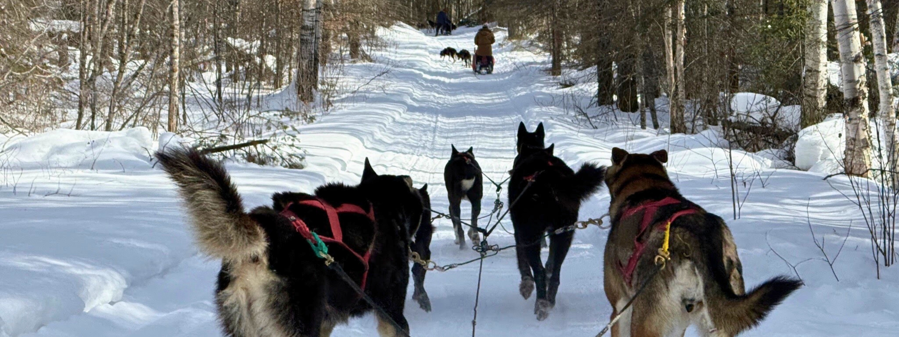
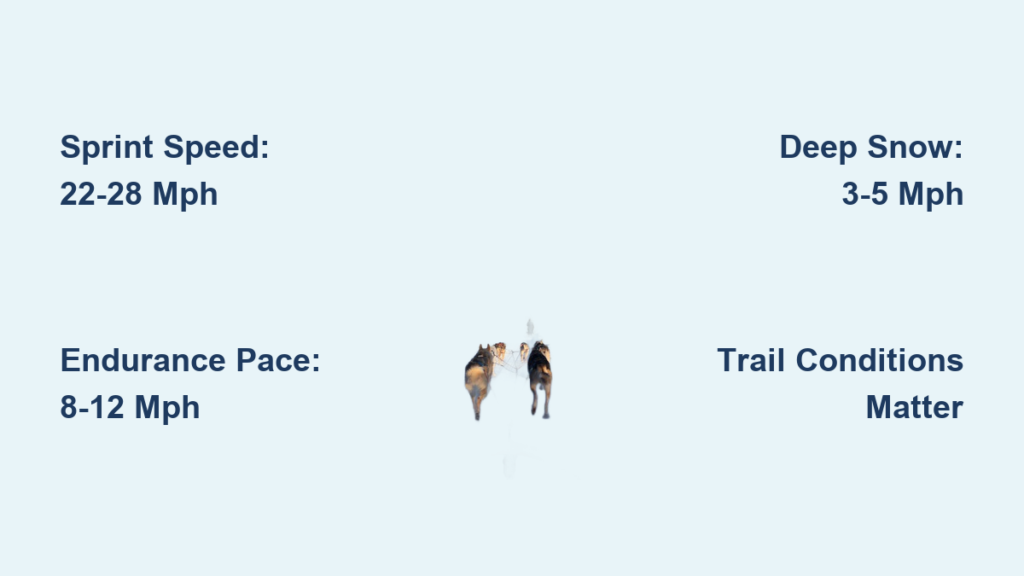
Your trail surface is the #1 speed controller. On groomed, hard-packed snow, plastic runners glide with minimal friction—think of ice skates versus hiking boots. Teams hit 15+ mph on these “fast trails.” But switch to unbroken deep powder, and physics turns against you. Each dog sinks waist-deep, expending 3x more energy to lift their bodies with every step. Speed plummets to 3-5 mph—slower than walking. Even minor changes matter: a 1-inch crust of wind-packed snow can double your speed versus loose powder. And don’t ignore terrain—steep climbs slash pace to 2-4 mph, while downhill sections (with controlled braking) briefly spike speeds.
Sled Weight and Design: The Physics of Faster Dog Sledding

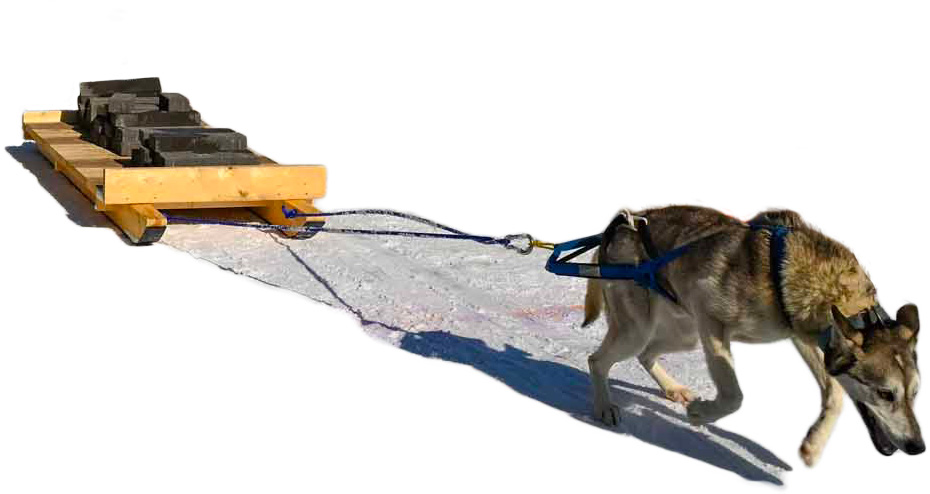
A heavy sled is a slow sled—period. Every extra pound your team pulls directly reduces speed. Racing sleds weigh 35-50 lbs with minimalist frames and slippery plastic runners (Teflon-coated for ice). Add 100 lbs of gear for an expedition, and speed drops 20-30%. But weight isn’t the only factor—runner design is critical. Wood runners grip snow for control but create drag; modern racing sleds use smooth plastic-on-snow interfaces that “hydroplane” over packed trails. Even the sled’s balance matters: too much weight forward causes “plowing” through snow, while rear-heavy loads fishtail dangerously at speed.
Musher Skill: How Your Technique Impacts Sled Velocity
You’re not just cargo—you’re a speed multiplier or limiter. Skilled mushers distribute their weight dynamically: leaning forward on climbs to free the runners, shifting back on descents to prevent jackknifing. They also master “pedaling”—kicking one foot while gliding—to add 2-3 mph on flat sections. Crucially, braking technique makes or breaks pace. Slamming the brake on a downhill wastes hard-earned momentum; instead, elite mushers use controlled drags with the sled’s hook or a “scrape” technique (lightly dragging a foot). And your weight matters—mushers in sprint races often weigh under 150 lbs to minimize load.
Temperature and Distance: The Hidden Speed Killers
Extreme cold (-20°F/-29°C or below) forces dogs to burn calories just staying warm, cutting sustainable speed by 25%. But paradoxically, above-freezing temps are deadlier—dogs overheat at 20+ mph, risking collapse. That’s why races like the Iditarod monitor temps closely; at 32°F (0°C), teams slow to 5-7 mph regardless of fitness. Distance is equally crucial: a 5-mile sprint team averages 15-18 mph, but over 100+ miles, even champions drop to 8-10 mph to prevent injury. Push too hard early, and your team “hits the wall” by mile 50.
Sprint Racing Speeds: How Fast Do World-Class Dog Sled Teams Go?
Forget Hollywood myths—verified sled speeds come from competitive sprint racing. On perfect 4-25 mile courses with hard-packed, groomed trails, top teams hit 22-28 mph (35-45 km/h) in short bursts. These aren’t casual rides; they’re high-stakes events where 8-10 dogs pull with 1,200+ lbs of force. The key? Specialized sprint huskies with lean builds (45-55 lbs) and explosive power—think canine racehorses. During the 2023 World Championship in Norway, Norwegian musher Thomas Waernes recorded a 27.3 mph (44 km/h) burst on a downhill straightaway. But crucially, these speeds last only 30-90 seconds; maintaining over 20 mph for more than 2 miles risks dog injury.
Recreational Dog Sledding Pace: What to Expect on Guided Tours and Expeditions
Your vacation tour won’t match race speeds—and that’s intentional. Guided tours average 6-10 mph on packed trails, prioritizing safety over velocity. Why so “slow”? Tour operators use mixed-age teams (including retirees) pulling heavier sleds with passengers. Deep snow on backcountry routes further reduces pace to 3-5 mph—barely faster than walking. Even serious expeditions like Alaska’s 1,000-mile Yukon Quest maintain just 6-12 mph average speeds when factoring in mandatory 24-48 hour rest stops. For context: at 8 mph, you’d cover 40-60 miles daily—the equivalent of a marathon runner’s daily distance, but sustained for weeks. Experienced mushers call this “the sweet spot”: fast enough to make progress, slow enough to protect dogs on multi-day journeys.
Dog Sled Speed Benchmarks: Real-World Examples from Races to Backcountry
Stop guessing—here’s exactly what to expect in common scenarios based on verified race data and tour operator logs:
- Olympic-Style Sprint Races (4-10 miles): 22-28 mph peak bursts on flat sections; 15-18 mph average
- Mid-Distance Races (100-200 miles): 10-14 mph sustained pace on good trails; 6-8 mph in deep snow
- Guided Adventure Tours: 6-10 mph on groomed trails; drops to 3-5 mph in unpacked powder
- Arctic Expeditions (e.g., Greenland crossing): 4-7 mph average due to heavy gear and variable snow
Notice the pattern? The deeper the snow or heavier the load, the closer your speed gets to human walking pace (3-4 mph). That “slow” tour you took? It was likely navigating trail-breaking conditions where dogs sink 12+ inches with each step—exhausting work that demands conservative pacing.
Why the ‘Right’ Speed Matters More Than Top Speed in Dog Sledding
Chasing maximum velocity risks disaster. In 2022, a rookie musher pushing 18+ mph on a warm Alaskan day caused three dogs to overheat—ending their race. True expertise lies in matching speed to conditions and canine limits. Elite Iditarod mushers like Dallas Seavey win by sustaining 9-10 mph for days, not by sprinting. They read dog body language constantly: heavy panting, lagging pace, or refusal to eat signal it’s time to slow down. The fastest teams aren’t those hitting 25 mph; they’re the ones arriving healthy after 1,000 miles. For recreational riders, this means trusting your guide when they rein in speed—it’s not about excitement but respecting the dogs’ welfare.
Pro Tip: On your next tour, watch the lead dogs’ ears. Pricked forward? They’re engaged and comfortable at current speed. Flattened against the head? They’re stressed and need a slowdown.
Understanding how fast a dog sled can go transforms from a trivia question into a lesson in partnership. Whether you’re watching the Iditarod or booking a Denali tour, remember: the most impressive speed isn’t the highest number—it’s the pace that brings every dog home strong. For sustainable adventure, prioritize rhythm over records, and let the trail dictate your velocity. Your huskies (and future adventures) will thank you.