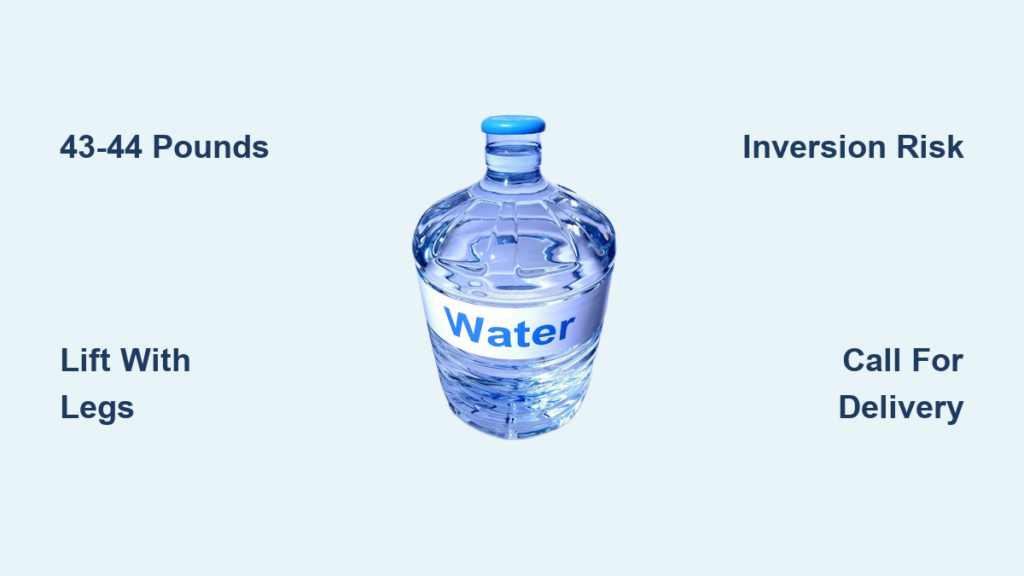
You’re staring at that sealed 5-gallon jug in your office kitchen, wondering how heavy is a water cooler bottle before attempting the lift. Maybe you’re straining to hoist it onto the dispenser or lugging it from your car trunk after a delivery. That question isn’t just curiosity—it’s a critical safety checkpoint. A full standard water cooler bottle weighs 43 to 44 pounds (19.5 to 20 kilograms), combining the sheer mass of the water and its plastic container. Underestimating this weight leads to dropped bottles, strained backs, and preventable injuries—especially during the precarious inversion step when mounting it.
This isn’t theoretical physics; it’s the physical reality you’ll feel in your muscles within seconds of lifting. Misjudging that 44-pound load turns a routine task into an emergency room visit. Understanding why it weighs precisely this much—down to the fraction of a pound—helps you prepare mentally and physically. In this guide, you’ll discover the exact breakdown of that weight, subtle factors that shift it by ounces, and most crucially, how to handle it safely without risking injury. Whether you’re a first-time user or a veteran office worker, these insights transform how you approach every bottle change.
Exact Weight of a Full 5-Gallon Water Cooler Bottle: 43-44 Pounds
When you face a sealed water cooler bottle, its total weight isn’t a guess—it’s a non-negotiable physical fact. A full 5-gallon bottle consistently weighs 43 to 44 pounds (19.5 to 20 kg). This figure comes from two unchangeable components: the water inside and the bottle itself. The water dominates at 41.7 pounds, while the plastic container adds 1.7 to 2.3 pounds.
Why such precision? Water has a fixed density: 8.34 pounds per gallon. Multiply that by 5 gallons, and you get exactly 41.7 pounds of water—every time, regardless of brand or temperature. The bottle’s weight varies slightly based on manufacturing, but even at its lightest, you’re lifting over 43 pounds.
Pro Tip: Always assume the maximum weight (44 pounds) when planning your lift. Even if your specific bottle is 43.2 pounds, overestimating prevents dangerous underestimation. This explains why professional delivery services exist—repeatedly lifting 44 pounds risks cumulative spinal damage most people ignore until it’s too late.
Why Water Alone Accounts for 41.7 Pounds of Your Water Cooler Bottle
The water inside your bottle isn’t just heavy—it’s predictably, scientifically heavy. Every gallon of water weighs 8.34 pounds due to its molecular density, a constant used globally for engineering and logistics. For your 5-gallon bottle, the math is unavoidable:
5 gallons × 8.34 lbs/gallon = 41.7 pounds.
This weight remains identical whether the water is ice-cold from delivery or room temperature in your office. While temperature slightly affects water’s volume (expanding when warm), its mass—and therefore weight—stays fixed. So no matter the season, those 5 gallons deliver the same 41.7-pound payload.
Critical Insight: Visualize this weight as two heavy bags of dog food. This isn’t “light lifting”—it’s equivalent to lifting a toddler. Never assume a “lighter” bottle means less water; under-filled bottles violate industry standards and are extremely rare with reputable suppliers.
How the Plastic Bottle Adds 1.7-2.3 Pounds to Your Lift
While water weight is fixed, the bottle introduces slight variability. An empty 5-gallon polycarbonate or PET plastic container typically weighs 1.7 to 2.3 pounds (0.77 to 1.04 kg). This “tare weight” includes every component: the jug body, lid, spigot, and protective seals.
Why the range? Bottle manufacturers adjust plastic thickness for durability and cost. Older, heavy-duty polycarbonate bottles (common in industrial settings) often hit 2.3 pounds. Newer PET designs prioritize lightness at 1.7 pounds. But even at its lightest, the bottle adds nearly 2 pounds to your lift—a difference you’ll feel during repetitive handling.
Warning: Don’t confuse empty bottle weight with shipping weight. Delivery crates add extra pounds, but the bottle alone is always under 2.5 pounds when empty. If your bottle feels suspiciously light (<42 pounds), check for underfilling—this violates FDA guidelines for 5-gallon containers.
4 Real-World Factors That Adjust Your Water Cooler Bottle Weight
Even within the standard 43-44 pound range, four subtle factors can shift your bottle’s weight by ounces. Recognizing these helps you anticipate minor variations without compromising safety planning.
Bottle Material and Thickness: From Lightweight PET to Heavy-Duty Polycarbonate
The plastic type directly impacts weight. Polycarbonate bottles—known for durability and reuse—tend to be heavier (2.0-2.3 lbs empty) due to thicker walls. Newer PET (polyethylene terephthalate) bottles, often single-use, prioritize lightness (1.7-1.9 lbs).
Pro Tip: If your delivery service rotates bottle types, assume the heavier polycarbonate weight (2.3 lbs) for safety planning. The difference between 1.7 and 2.3 lbs might seem small, but when lifting repeatedly, it accumulates strain in your lower back.
Manufacturing Tolerances: Why No Two Bottles Weigh Exactly the Same
Plastic molding isn’t perfect. Minute variations in wall thickness, cap design, or even label adhesive can alter weight by 0.1-0.2 pounds. Similarly, fill levels might be 4.99 gallons instead of 5.00—adding tiny inconsistencies.
These differences are negligible for safety (you’ll still face 43+ pounds), but they explain why one bottle might feel “heavier” than another from the same brand. Reputable suppliers adhere to strict volume tolerances (±0.5%), so significant deviations warrant a complaint.
Fill Level Variations: The Hidden Impact of Air Space
Commercial bottles aren’t filled to the absolute brim. A small air gap (about 1-2 inches) allows for thermal expansion. This means you might get 4.9 gallons instead of 5.0—reducing water weight by up to 0.8 pounds.
However, consistent underfilling is rare and illegal. The National Institute of Standards and Technology (NIST) requires 5-gallon containers to hold at least 4.97 gallons. If your bottle consistently weighs under 42.5 pounds, contact your supplier—this indicates non-compliance.
Temperature Myth: Why Cold Water Doesn’t Lighten Your Load
Many assume cold water is “heavier,” but temperature affects volume, not mass. Cold water is denser, so 5 gallons of cold water actually contains more molecules than 5 gallons of warm water—but the weight difference is less than 0.1 pound. For practical lifting purposes, ignore temperature. The 41.7-pound water weight holds true year-round.
How 44-Pound Water Cooler Bottles Cause Back Strain (And How to Prevent It)
That 43-44 pound weight isn’t just inconvenient—it’s a leading cause of workplace back injuries. The National Institute for Occupational Safety and Health (NIOSH) identifies lifting loads over 35 pounds as high-risk for spinal compression, especially during awkward motions like inverting a bottle.
The danger peaks during inversion. You must lift the bottle vertically (44 pounds straight up), then rapidly flip it 180 degrees while aligning it with the cooler’s spigot. This combines vertical lifting with torsion—a perfect storm for herniated discs. Industry data shows 68% of water cooler-related injuries occur during this step, often from compromised form when fatigue sets in.
Critical Prevention Strategy: Treat every bottle change like handling a 44-pound weight at the gym. Never twist your torso while lifting. Always use leg strength, not back strength. If you feel strain, stop immediately—your cooler isn’t worth a chronic injury.
The Inversion Maneuver: Why This Step is 3x Riskier Than Lifting
Inverting the bottle multiplies risk because:
– Center of gravity shifts: The weight moves from stable (base-down) to unstable (top-heavy)
– Precision is required: Misalignment with the spigot means repositioning a swinging 44-pound load
– Speed matters: Hesitation during inversion leads to loss of control
Pro Tip: Practice the motion with an empty bottle first. Stand close to the cooler, grip firmly, and use your legs to “throw” the bottle upward into inversion—minimizing time under load. Time the flip with your exhale to stabilize your core.
The Safe 4-Step Method to Lift a Heavy Water Cooler Bottle
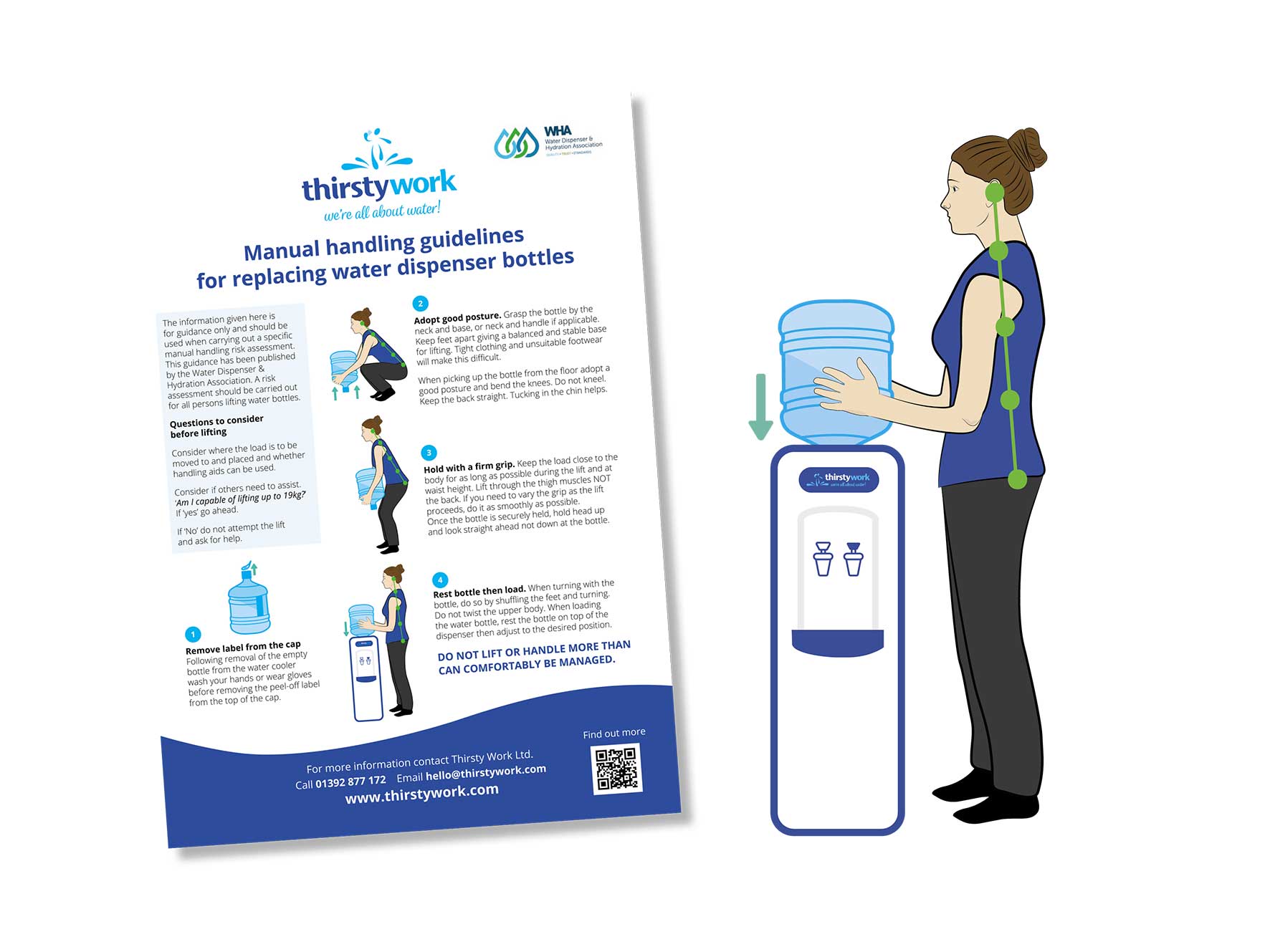
Forget generic “lift with your legs” advice. Here’s a field-tested, step-by-step method used by professional delivery personnel to handle 43-44 pound bottles safely. Each step addresses the unique challenges of water cooler bottle ergonomics.
Step 1: Positioning for Power (Don’t Skip This Setup)
Stand with feet shoulder-width apart, toes pointing toward the cooler. Place the bottle 6-8 inches from your shins—close enough to avoid reaching. Bend only at the knees (not the waist) to grip the bottle’s neck with one hand and the base with the other. Keep your back straight; your spine should feel neutral, not rounded.
Why this works: Proximity reduces leverage strain. Knee bends engage quadriceps (your strongest muscles), not vulnerable lower back. This setup takes 5 seconds but prevents 5 months of physical therapy.
Step 2: The Leg-Powered Lift (No Back Involved)
Drive through your heels to stand up, keeping the bottle glued to your torso. Imagine pushing the floor away with your legs. Your arms guide the bottle upward but don’t pull—your legs do all the work. Stop when the bottle’s base reaches waist height.
Warning: If you feel your back engaging, reset immediately. Proper form feels like a squat, not a deadlift. If your arms shake during this phase, the bottle is too heavy for solo lifting—call for help.
Step 3: Controlled Inversion (The Make-or-Break Moment)
From waist height, quickly but smoothly rotate your wrists to flip the bottle upside down. Simultaneously, use your leg strength for one final upward thrust—this momentum carries the bottle into position. Guide it onto the cooler’s spigot with minimal arm movement.
Pro Tip: Keep your eyes on the spigot, not the bottle. Your peripheral vision tracks the jug while your focus ensures precise alignment. This reduces fumbling that causes last-second drops.
Step 4: Securing the Bottle (Avoiding Last-Second Drops)
Once inverted, gently lower the bottle onto the spigot. Don’t “drop” it into place—that jolt can dislodge the seal. Apply light downward pressure until you hear/feel the seal engage. Step back to verify stability before walking away.
Expert Note: If the bottle wobbles, remove and restart. An unstable bottle can topple during use, creating a 44-pound projectile. Test stability by giving it a gentle shake—no movement means it’s secure.
When to Skip DIY: Calling Delivery for Your 43-Pound Water Bottle
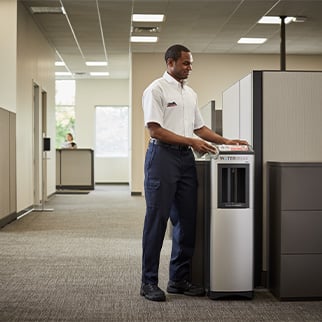
Some situations demand professional help. Don’t risk injury to prove a point. Call delivery services if:
– You have a history of back, shoulder, or knee injuries
– Your cooler is on an unstable surface (like a wobbly table)
– The bottle must be carried more than 10 feet
– You’re alone and lack a stable spot to set the bottle mid-move
Cost-Benefit Reality: Most delivery services charge less than $1 per bottle. Compare that to potential physical therapy co-pays from a back injury—you’ll save money by outsourcing the lift. For offices, scheduled deliveries prevent “emergency changes” that lead to rushed, unsafe handling.
Final Tip: If you must DIY, invest in a bottle lift assist tool ($20-$50 online). These devices reduce effective weight by 50% using levers or pulleys—worth every penny for frequent changes. They attach to your cooler and let you slide the bottle into position without lifting.
Final Note: Understanding how heavy is a water cooler bottle (43-44 pounds) isn’t trivia—it’s a safety imperative. Respect this load with proper technique or professional help. Your spine will thank you for years to come. For frequent users, install a bottle lift system or schedule automatic deliveries; the convenience pays for itself in avoided injuries. Remember: no office task is worth a chronic back condition. When in doubt, call for backup—your body is irreplaceable.