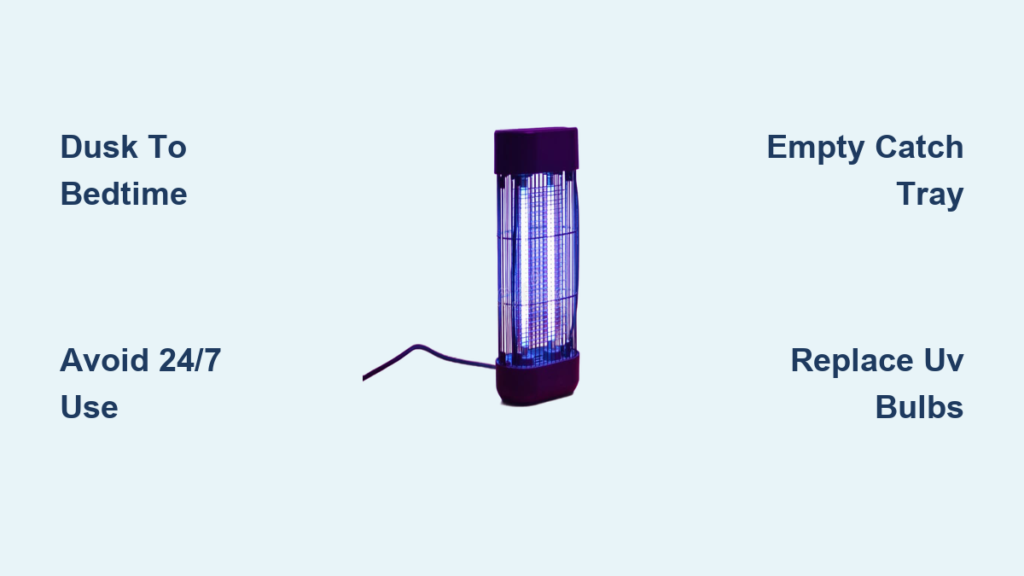
That familiar “zap” sound means your bug zapper is doing its job—eliminating mosquitoes, flies, and other flying pests that ruin your outdoor relaxation. But as you settle in for an evening on the patio, a critical question lingers: how long can you leave bug zapper on before it becomes unsafe or inefficient? Many homeowners mistakenly believe these devices are designed for continuous operation, potentially risking fire hazards, wasting electricity, and shortening their equipment’s lifespan.
The reality is that while most quality bug zappers can technically operate 24 hours a day, doing so is rarely advisable. Leaving your bug zapper running nonstop creates unnecessary risks and costs that far outweigh any marginal pest control benefits. More importantly, running your device only during peak insect activity periods—typically dusk to bedtime—maximizes effectiveness while minimizing hazards. This targeted approach not only protects your family but also extends your bug zapper’s operational life by preserving the critical UV bulbs that attract insects in the first place.
Understanding the precise limitations of your specific model is essential, as bug zappers vary significantly in their construction quality, safety features, and recommended usage patterns. Whether you’re using a basic plug-in model for your backyard or a commercial-grade unit for your restaurant patio, knowing exactly how long you can safely operate your device prevents costly mistakes and keeps your outdoor spaces truly enjoyable.
Why Continuous Operation Damages Your Bug Zapper
Leaving your bug zapper on around the clock creates multiple problems that accumulate over time, significantly reducing both safety and effectiveness. The continuous electrical current passing through the grid generates heat that, while manageable in short bursts, builds up dangerously during extended operation. High-quality units incorporate thermal protection that automatically shuts down the device when temperatures reach unsafe levels, but cheaper models often lack this critical safety feature.
The UV bulbs that attract insects have a finite lifespan measured in hours—typically between 3,000 and 5,000 hours for most residential models. Running your zapper 24/7 means replacing these expensive bulbs every 4-6 months instead of the expected 1-2 years. Each time you replace a UV bulb, you’re not just spending $15-$30 on the replacement part—you’re also creating additional electrical hazards during the change process if you don’t properly disconnect power.
What happens when you ignore bulb replacement schedules?
When UV bulbs age beyond their recommended usage time, they become significantly less effective at attracting insects while still consuming the same amount of electricity. An old bulb operating at 50% efficiency forces you to run the zapper longer to achieve the same pest control results, creating a vicious cycle of wasted energy and reduced performance. Worse, aged bulbs sometimes develop micro-fractures that can cause electrical arcing inside the unit, creating potential fire hazards that most homeowners never anticipate.
Strategic Timing: When to Turn Your Bug Zapper On and Off
The most effective bug zapper usage strategy aligns with insect behavior patterns rather than human convenience. Mosquitoes, flies, and other common pests follow predictable activity cycles that vary by species but generally peak during specific hours. Understanding these patterns allows you to maximize pest control while minimizing operational time.
Dusk to Dawn: The Critical Window for Maximum Impact
Most flying insects become active approximately 30 minutes before sunset as temperatures cool and light levels decrease. This pre-dusk period represents the optimal time to activate your bug zapper, giving it time to establish its attraction zone before insects begin their evening feeding. For typical backyard use, running your device from 30 minutes before sunset until 2-4 hours after full darkness provides maximum effectiveness against mosquitoes, which typically feed during the first few hours after dark.
Weekend Entertaining vs. Weekday Protection
Your bug zapper schedule should adapt to your actual usage patterns. For weekday evenings when you’re only outside for 1-2 hours, program your timer to activate 30 minutes before you typically go outside and shut off 1 hour after you usually come inside. During weekend gatherings or special events, extend the runtime to cover the entire expected duration of your outdoor activities plus an additional 30 minutes to handle any lingering insects.
Safety Hazards of Extended Bug Zapper Operation
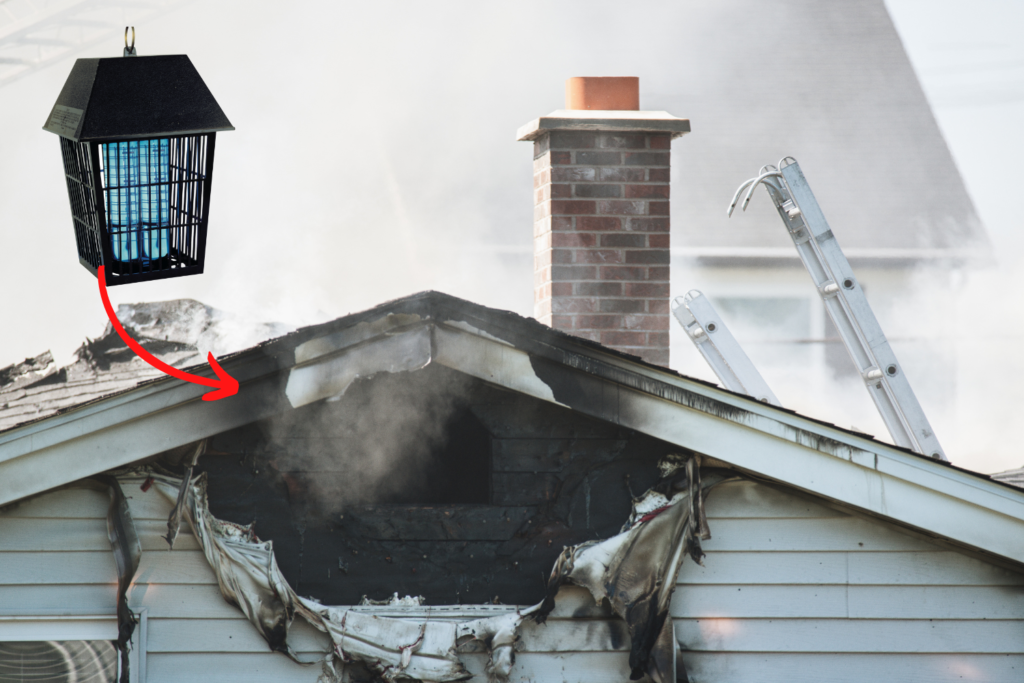
While the “zap” sound provides satisfying confirmation of your bug zapper’s effectiveness, continuous operation creates multiple safety concerns that many homeowners overlook until it’s too late. The combination of high-voltage electrical components, insect debris, and environmental factors creates potentially dangerous situations when left unattended for extended periods.
Fire Risk from Insect Debris Accumulation
As your bug zapper operates, it collects insect remains in the catch tray below the electrified grid. Most manufacturers recommend emptying this tray every 3-5 uses, but continuous operation can fill it within 24-48 hours during peak bug season. When this organic material accumulates near the high-voltage grid, it creates a significant fire hazard as dried insect parts become highly flammable. A single large insect or cluster of smaller ones can create enough residue to ignite when zapped, especially during extended operation when the unit has no chance to cool between electrical discharges.
Weather-Related Electrical Dangers
Many homeowners mistakenly believe their outdoor-rated bug zapper can withstand all weather conditions during continuous operation. While quality units carry weather-resistant ratings, no electrical device is completely immune to moisture intrusion over time. Extended operation during humid conditions allows moisture to gradually penetrate seals and connections, creating electrical shorts that might not immediately trip a breaker but significantly increase shock and fire risks. Units left running during unexpected rain showers become particularly dangerous, as water contacting the electrified grid can cause immediate electrical faults.
Smart Automation: Timers and Smart Plugs for Perfect Bug Zapper Scheduling
The single most effective upgrade you can make to your bug zapper setup is adding an automatic timer, transforming it from a potential hazard into a precision pest control tool. Modern digital timers and smart plugs eliminate the guesswork of manual operation while providing significant safety benefits through consistent, controlled usage patterns.
Programmable Digital Timers: Set It and Forget It
A basic outdoor-rated digital timer costs less than $15 but pays for itself in energy savings within weeks. Program it to activate your bug zapper 30 minutes before sunset and shut off 4 hours later—exactly matching peak insect activity periods. During daylight saving time changes, most quality timers automatically adjust their schedules, ensuring your bug zapper always operates during optimal hours without manual intervention.
Smart Plugs: Remote Control and Activity Monitoring
For tech-savvy homeowners, Wi-Fi enabled smart plugs provide additional benefits beyond simple scheduling. Monitor your bug zapper’s actual runtime through your smartphone, receive alerts if the unit experiences electrical anomalies, and even activate it remotely if you decide on an impromptu backyard gathering. Some advanced models track energy consumption, showing exactly how much electricity your bug zapper uses during each operating cycle—valuable data for optimizing both cost and effectiveness.
Model-Specific Considerations: Not All Bug Zappers Are Created Equal

Your specific bug zapper model dramatically impacts how long you can safely leave it operating. Understanding your unit’s capabilities and limitations prevents both underutilization and dangerous overuse.
Commercial vs. Residential Units: The Power Difference
Commercial-grade bug zappers designed for restaurants and resorts often incorporate heavy-duty components that safely handle 24/7 operation. These units feature larger heat sinks, industrial-grade transformers, and automatic debris-clearing mechanisms that make continuous operation feasible. Residential models, however, rarely include these robust safety features. Unless your owner’s manual explicitly states 24-hour operation is approved, assume your home unit should follow the dusk-to-bedtime schedule.
Solar-Powered Models: Limited by Nature’s Schedule
Solar-powered bug zappers present unique operational constraints—you can only run them as long as their batteries hold charge, typically 6-12 hours after full sunlight exposure. These units automatically regulate their operation based on available power, making them inherently safer but less flexible for specific timing needs. During extended cloudy periods, they may lack sufficient charge for full evening coverage, requiring strategic placement in maximum sunlight areas.
The Cost Analysis: Why Extended Operation Costs More Than You Think
Leaving your bug zapper running continuously creates hidden costs that extend far beyond your monthly electricity bill. A comprehensive cost analysis reveals why targeted operation schedules deliver superior value.
Electricity Consumption That Adds Up
While a typical residential bug zapper consumes only 15-40 watts during operation, running it 24/7 costs approximately $2-$5 monthly depending on your electricity rates. This might seem insignificant, but consider that 75% of this energy is wasted during daylight hours when insects aren’t actively seeking UV light sources. By limiting operation to 8 hours nightly instead of 24, you immediately cut these costs by two-thirds while maintaining maximum effectiveness.
Replacement Part Economics
The true financial impact of continuous operation hits hardest when you factor in replacement costs. UV bulbs that would last 2 years with proper 8-hour nightly usage may need replacing every 8 months when run constantly. At $25 per bulb with annual replacement, you’re adding $50 to your yearly maintenance costs unnecessarily. High-end models with specialized bulbs can cost $50-$75 per replacement, making improper usage patterns financially significant over time.
Essential Maintenance Checklist for Safe, Long-Lasting Operation
Proper maintenance transforms your bug zapper from a potential hazard into a reliable pest control solution. Follow this weekly maintenance routine to ensure safe, effective operation regardless of your usage schedule.
Weekly Safety Inspection Protocol
- Power down completely and unplug your unit (don’t just turn off the switch)
- Inspect the catch tray for excessive debris—empty when more than 1/3 full
- Check the UV bulb for dark spots or visible damage (replace if any anomalies appear)
- Examine the grid wires for warping or insect buildup that could cause arcing
- Verify all housing connections are tight and weatherproofing remains intact
Seasonal Deep Cleaning Procedure
At the start and end of each bug season, perform a thorough cleaning:
– Remove all external debris with a soft brush
– Wipe down the housing with a damp cloth (never spray cleaners directly on the unit)
– Use compressed air to clear dust from internal components (with power disconnected)
– Check and tighten all electrical connections according to manufacturer specifications
The Verdict: Optimal Bug Zapper Scheduling for Safety and Effectiveness
After examining safety considerations, operational costs, and pest control effectiveness, the clear recommendation emerges: run your bug zapper only during peak insect activity periods—typically dusk until 2-4 hours after full darkness. This targeted approach delivers maximum pest control where and when you need it while minimizing fire risks, electrical hazards, and operating costs. Quality residential units can technically operate continuously, but doing so represents poor judgment that sacrifices safety for negligible benefits.
For the average homeowner, implementing a simple timer that activates your bug zapper 30 minutes before sunset and deactivates it 4 hours later provides the perfect balance of effectiveness and safety. This schedule aligns with natural insect behavior patterns, preserves your equipment’s lifespan, and keeps operating costs minimal. During particularly heavy infestation periods, you might extend operation until dawn, but this should remain the exception rather than the rule.
Remember that the most effective pest control strategy combines properly scheduled bug zapper usage with other preventive measures like eliminating standing water, using insect-repellent plants, and maintaining clean outdoor dining areas. By operating your bug zapper intelligently rather than continuously, you’ll enjoy a more comfortable outdoor space while keeping your family safe from both pests and potential electrical hazards.