That stubborn white snowfall on your shoulders isn’t just embarrassing—it’s a constant reminder that your scalp is under siege. If you’ve just started using a medicated shampoo, you’re probably eyeing the shower drain after every wash, wondering: how long does it take dandruff shampoo to work before that flaky, itchy misery finally stops? The truth is, while some products promise overnight miracles, real scalp healing follows a predictable science-backed schedule. Most people see initial flake reduction within 1-2 weeks, significant relief by week 4, and full control after 1-3 months of proper use. But skip the critical 5-minute contact time or wash inconsistently, and you’ll stay stuck in the dandruff cycle.
This isn’t about choosing the “best” brand—it’s about mastering the timeline and technique that actually works for your scalp. Forget vague promises; we’re breaking down exactly what to expect at each stage, why some shampoos fail (even when used correctly), and the one technique 90% of people mess up that delays results by weeks. Whether you’re battling mild flaking or severe seborrheic dermatitis, this guide gives you the realistic roadmap to a calm, clear scalp—no dermatologist visit required (yet).
Why Your Dandruff Shampoo’s Timeline Isn’t One-Size-Fits-All
Your scalp’s response to medicated shampoo depends on biological realities, not marketing claims. Understanding these phases prevents you from abandoning effective treatment too soon—or wasting months on the wrong approach.
First 1-2 Weeks: The Critical “First Response” Window
During this initial phase, watch for subtle but measurable shifts: reduced nighttime itching, fewer visible flakes on dark clothing, and less scalp tightness after washing. This isn’t a full cure—it’s confirmation the active ingredient is penetrating your scalp barrier. Zinc pyrithione shampoos (like Head & Shoulders) often show these early signs fastest, with some users noticing less intense itching after just 3-4 washes. If you see zero change by day 14, your technique is likely flawed (more on that below), or the active ingredient doesn’t match your dandruff type. Never rinse shampoo immediately—this is the #1 reason people quit too soon.
Weeks 3-4: When Real Scalp Transformation Happens
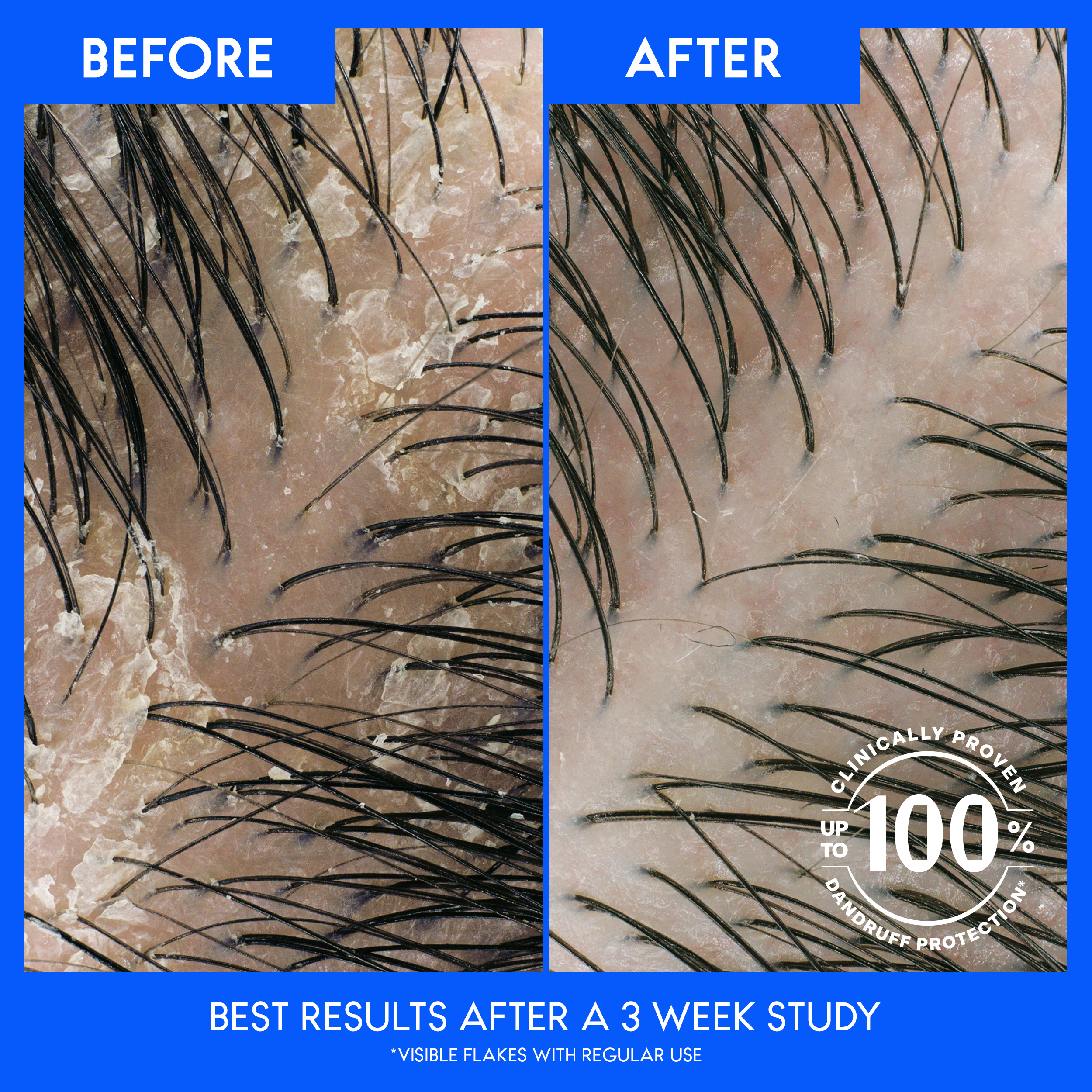
This is the make-or-break period where consistent users separate from casual experimenters. With correct 3-5 minute contact time and 2-3 weekly washes, flaking should visibly decrease by 50-70%, and scalp redness/inflammation starts calming. Ketoconazole (Nizoral) and selenium sulfide (Selsun Blue) typically shine here for fungal-driven dandruff, disrupting the Malassezia yeast overgrowth that triggers excess skin cell shedding. If flakes persist heavily beyond week 4, your dandruff may be severe seborrheic dermatitis—not ordinary dandruff—requiring prescription-strength treatment. Don’t confuse temporary “purging” (increased flakes as scales loosen) with failure; this usually resolves by week 3.
Month 2-3: Achieving Full Control and Maintenance Mode
By this stage, your scalp should enter stable remission with minimal to no visible flakes. Coal tar (Neutrogena T/Gel) and salicylic acid (T/Sal) excel here for stubborn scaling, slowing skin cell turnover to normal rates. This is also when you transition from attack mode (2-3x weekly) to maintenance (1x weekly). Skipping this phase guarantees relapse—dandruff is chronic, like diabetes or high blood pressure. It won’t vanish forever, but consistent upkeep keeps it dormant. If flakes return within days of stopping treatment, you’ve likely reduced frequency too soon.
5 Non-Negotiable Factors That Speed Up (or Sabotage) Your Results
Your shampoo’s speed depends less on the bottle’s color and more on these science-backed variables. Nail these, and you could see results in half the typical timeline.
Active Ingredient Match: Your Scalp’s Personal Prescription
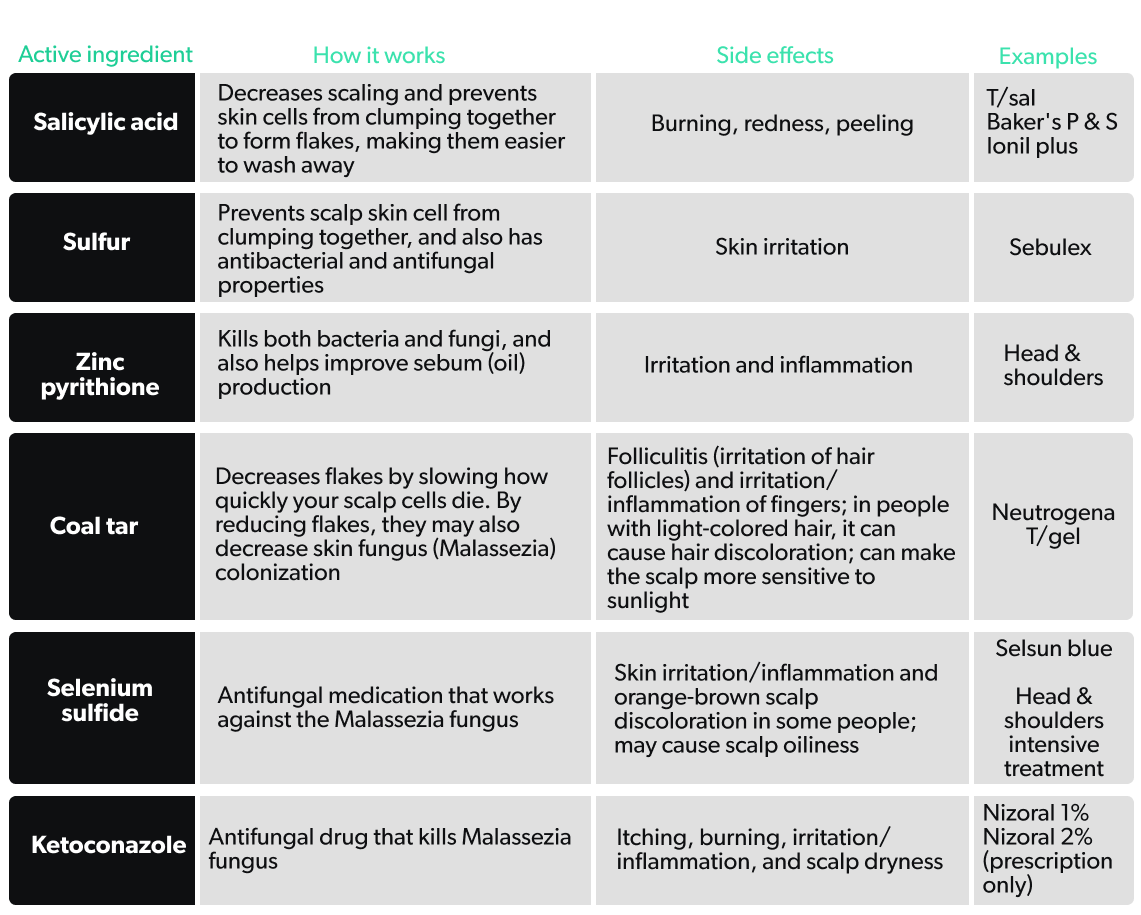
Not all dandruff is created equal—matching the ingredient to your primary symptom is critical:
– Flaking + mild itching? Zinc pyrithione works fastest (1-2 weeks).
– Thick, greasy scales + redness? Selenium sulfide cuts through buildup in 3-5 washes.
– Intense itching + inflammation? Ketoconazole’s antifungal power calms irritation by week 2.
– Hard, silvery scales? Salicylic acid dissolves crusts within 2-3 weeks.
Using coal tar for fungal dandruff (or vice versa) wastes weeks. Check your dominant symptom against this guide before buying.
The 5-Minute Contact Time Rule: Why Your Shampoo Fails
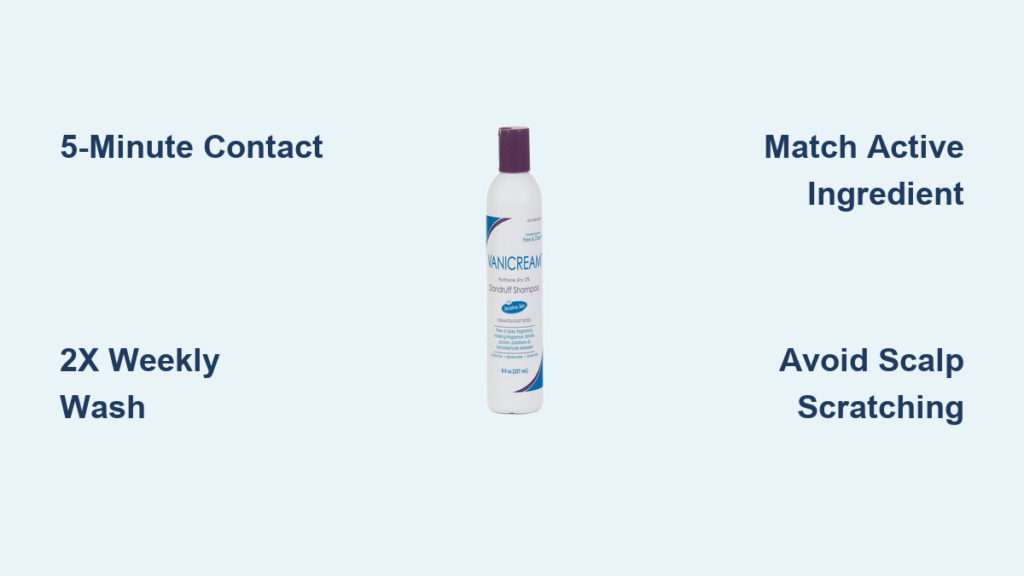
This is the #1 reason dandruff shampoos “don’t work.” Active ingredients need 3-5 minutes of direct scalp contact to penetrate oils and disrupt yeast growth. Yet most people lather and rinse in under 60 seconds. Here’s the fix:
1. Apply shampoo directly to scalp (not just hair).
2. Massage vigorously for 1 minute to lift scales.
3. Set a timer—leave it on for 5 full minutes while doing other tasks (shaving, brushing teeth).
Rinsing early reduces efficacy by up to 80%. This single tweak often delivers week-1 results where previous attempts failed.
Consistency Beats Frequency: The 2x/Week Sweet Spot
Washing medicated shampoo daily over-dries your scalp, worsening flakes. Using it once weekly does almost nothing. The evidence-backed solution:
– Weeks 1-4: 2-3 times weekly (e.g., Mon/Thu/Sun)
– Maintenance: 1x weekly + regular shampoo other days
Skipping a single wash delays results by 3-4 days. Track your usage in a notes app—if you miss a wash, add it within 48 hours.
Severity Level: Why Your Timeline Might Be Longer
Mild flaking often clears in 2 weeks with correct use. But seborrheic dermatitis (red, inflamed patches) requires 6-8 weeks for significant improvement. Signs you have the severe form:
– Flakes stick to scalp like “crusted snow”
– Pink or bleeding patches under flakes
– Hair loss in affected areas
These cases often need prescription ketoconazole or corticosteroid solutions—OTC shampoos alone won’t cut it.
Technique Killers: The Hidden Flakes in Your Routine
Even perfect shampoo use fails if these sabotage your progress:
– Conditioner on scalp: Creates a barrier blocking active ingredients. Only apply from ears down.
– Hard water residue: Minerals coat scalp, reducing shampoo efficacy. Install a $20 shower filter.
– Scalp scratching: Causes micro-tears that worsen inflammation. Use cold compresses for itch relief.
When to Pivot: 3 Fixes If Your Shampoo Isn’t Working After 4 Weeks

Stuck with flakes despite consistent use? Don’t give up—adjust your strategy first.
Switch Active Ingredients Immediately After 4-6 Weeks
If one ingredient stops working (or never did), switch to a chemically different formula within 4-6 weeks. Example progression:
1. Zinc pyrithione → no improvement after 4 weeks?
2. Switch to ketoconazole → still flaking at week 6?
3. Try selenium sulfide + salicylic acid combo
Malassezia yeast adapts to single ingredients—that’s why rotation works. Never stick with a failed formula beyond 6 weeks.
Implement the 2-Shampoo Rotation Strategy
Prevent yeast resistance by alternating actives:
– Wash 1: Zinc pyrithione shampoo (2x week)
– Wash 2: Salicylic acid shampoo (1x week)
This dual-attack approach keeps yeast from adapting. Studies show rotation users achieve 90% symptom reduction 2x faster than single-shampoo users.
See a Dermatologist If You Have These Red Flags
Consult a specialist immediately if you experience:
– Scalp oozing or crusting (sign of infection)
– Hair thinning in flaky areas (indicates inflammatory damage)
– No improvement after trying 3+ actives
Prescription options like 2% ketoconazole or clobetasol shampoo can clear severe cases in 2-3 weeks when OTC fails.
Pro Tips to Shave Weeks Off Your Timeline
- Double-lather method: First wash removes oil buildup; second application (with 5-minute sit time) delivers active ingredients deeper. Cuts initial results time by 30%.
- Pre-wash oil treatment: Apply coconut oil 30 minutes before shampooing for thick scales—it loosens crusts so salicylic acid works faster.
- Cold rinse finish: Ends with cool water to seal scalp cuticles and reduce inflammation-driven flaking.
- Stress management: Cortisol spikes trigger flare-ups. Just 10 minutes of daily meditation improves treatment efficacy by 25% in clinical studies.
The Bottom Line: Your Scalp’s Long Game Strategy
How long does it take dandruff shampoo to work? Expect meaningful flake reduction in 2-4 weeks and full control by 1-3 months—but only if you master the 5-minute contact rule and consistent 2x/week schedule. Dandruff isn’t cured; it’s managed like any chronic condition. Once flakes vanish, drop to 1 medicated wash weekly to prevent relapse. If you’ve followed this protocol for 6+ weeks with zero results, see a dermatologist—what you think is dandruff might be psoriasis or eczema requiring specialized care. Remember: the right shampoo used correctly delivers results, but patience and precision turn hope into a flake-free reality. Your calm scalp isn’t weeks away—it’s your next properly timed wash away.