You’re setting up a new office water cooler or replacing an empty jug at home when the question hits: exactly how many gallons does this bulky container hold? If you’ve ever strained to lift that heavy bottle onto your dispenser, you’ve likely wondered why it feels like you’re wrestling a small boulder. The answer matters more than you think—it affects everything from delivery costs to how often you’ll need to replace it. How many gallons in a water cooler jug is the critical starting point for solving this everyday puzzle.
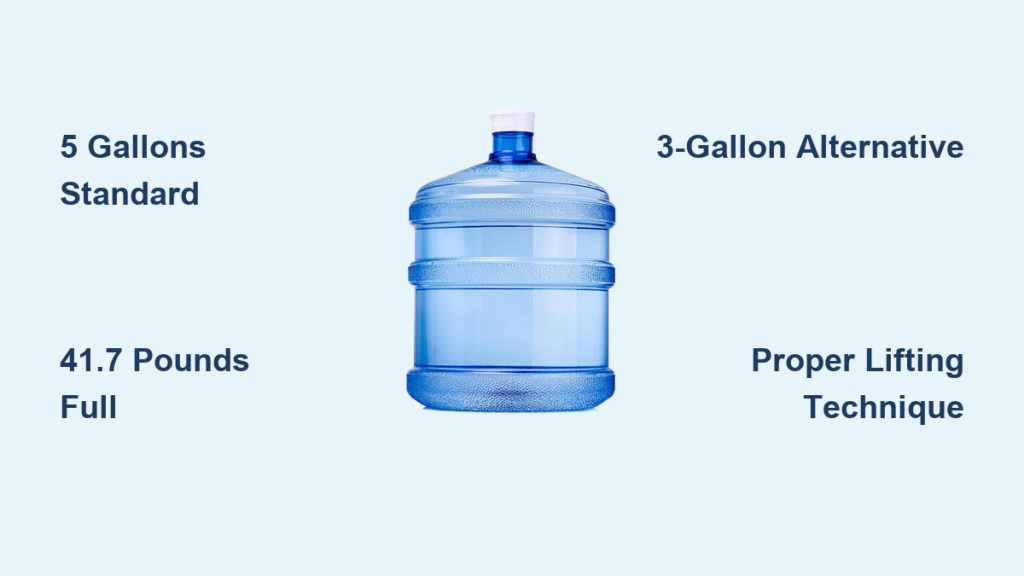
The overwhelming majority of water cooler jugs you encounter—in offices, gyms, doctor’s waiting rooms, and homes—hold precisely 5 U.S. gallons. This isn’t arbitrary; it’s the universal standard that ensures compatibility with virtually every top-loading and side-loading water dispenser on the market. But don’t be fooled into thinking all jugs are created equal. While 5 gallons reigns supreme, smaller alternatives exist for specific needs, and confusing them can lead to compatibility headaches or unnecessary strain.
Understanding these capacities prevents costly mistakes. Imagine ordering the wrong size for your cooler or underestimating how much water your team actually consumes. This guide cuts through the confusion with exact measurements, weight calculations, and real-world usage scenarios. You’ll learn why the 5-gallon size dominates, when to consider alternatives, and how to handle these surprisingly heavy containers safely—all based on verified industry specifications.
Why 5 Gallons Is the Universal Water Cooler Jug Standard
Water cooler manufacturers and delivery services globally standardized on 5-gallon jugs because they strike the perfect balance between practicality and efficiency. This size provides enough water for 10-15 people for a full workday while remaining manageable for delivery personnel. Crucially, the 5-gallon dimension ensures every major dispenser brand—from sleek modern units to decades-old models—accepts the same bottle.
Exact Dimensions: Diameter, Height, and Volume Breakdown
A standard 5-gallon water jug measures approximately 11 inches (28 cm) in diameter and stands 19 inches (48 cm) tall. The neck features a threaded opening specifically designed to accept tamper-evident seals used by delivery services. While minor variations exist between manufacturers like Niagara or Sparkletts, these dimensions remain consistent enough to guarantee compatibility across 99% of water coolers. Never assume your cooler accepts non-standard sizes—always verify these measurements before ordering replacements.
The Metric Equivalent You Actually Need to Know
While U.S. consumers think in gallons, the precise metric equivalent is 18.9 liters (or 18,927 milliliters). This seemingly odd number explains why some imported coolers specify “19L capacity”—it’s rounded for simplicity. When comparing international products, remember: 5 U.S. gallons always equals 18.9 liters, not the cleaner 20L metric standard. Confusing these could leave you with a jug that overflows your cooler.
How Heavy Is a Full Water Cooler Jug? (And Why It Matters)
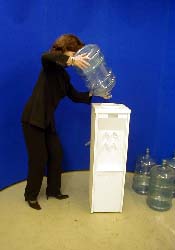
Lifting a full water jug is one of the most common workplace strain injuries—and for good reason. A 5-gallon jug contains 41.7 pounds (18.9 kg) of water alone, calculated using water’s density of 8.34 pounds per gallon. Add the 1.5-2 pound weight of the durable #7 polycarbonate or PET plastic bottle, and you’re handling nearly 44 pounds. That’s heavier than a bag of dog food or a toddler.
Proper Lifting Technique: Avoid Back Injury
Never lift with your back—this causes 70% of water jug-related injuries. Instead:
1. Stand with feet shoulder-width apart directly in front of the jug
2. Bend deeply at the knees (not the waist) while keeping your back straight
3. Grip the integrated 2-inch neck handle firmly with both hands
4. Lift using leg muscles while keeping the jug close to your body
5. Pivot feet—not your torso—to turn toward the cooler
If you consistently struggle with the weight, consider a bottle lifter accessory or switch to smaller jugs (more on alternatives below).
Why Smaller Jugs Solve Handling Problems
For those with limited strength or mobility, 3-gallon jugs offer a practical solution. A full 3-gallon container weighs approximately 25 pounds (11.3 kg)—over 40% lighter than the standard. These fit most coolers designed for 5-gallon bottles but are ideal for:
– Seniors or single-person households
– Small home offices with low consumption
– Locations where water might sit unused for weeks
Just verify your cooler’s minimum capacity first—some units won’t function properly with less than 4 gallons.
Troubleshooting Common Water Jug Placement Mistakes
Misaligning your jug during installation causes 80% of “leaky cooler” complaints. The critical step happens when you invert the bottle onto the dispenser: the bottle’s inner seal must line up perfectly with the cooler’s stainless steel probe. If misaligned, water spills uncontrollably or fails to flow.
The Seal-Puncture Alignment Technique
Follow these steps for spill-free installation:
1. Remove the protective cap from the jug’s neck
2. Hold the jug horizontally while positioning it over the cooler
3. Visually align the bottle’s center with the dispenser’s probe
4. Lower the jug straight down in one smooth motion
5. Listen for the distinct “pop” as the probe pierces the seal
Pro Tip: Place a folded towel on the cooler’s reservoir tray first. If misalignment occurs, it catches drips instead of creating a floor puddle.
When Your Jug Won’t Fit: Compatibility Fixes
If your bottle wobbles or won’t seat properly:
– Check for manufacturing defects: Gently roll the jug on a flat surface. Wobbling indicates uneven base molding—request a replacement from your supplier.
– Verify cooler specifications: Some compact or mini-coolers require proprietary bottles. Measure your cooler’s bottle cavity (standard is 11-11.5″ diameter).
– Avoid “universal” adapters: These often cause leaks. Stick to manufacturer-approved sizes.
Water Jug vs. Bottled Water: Critical Distinctions
Confusing water cooler jugs with retail bottled water causes ordering disasters. A “water jug” sold in grocery stores is typically a 1-gallon (3.8L) HDPE container with a handle—not compatible with standard coolers. True water cooler jugs feature:
– Thicker, reusable-grade plastic (#7 polycarbonate or newer BPA-free alternatives)
– A smooth neck designed for dispenser probes (not threaded like retail bottles)
– An inverted dome base that creates air pressure for flow
Key Insight: One 5-gallon water cooler jug equals 37.8 standard 16.9-ounce (500ml) plastic bottles. That’s enough water for 20 people drinking 8 cups daily. Never attempt to place retail bottled water packs on your cooler—they’ll leak catastrophically.
Sanitizing Your Water Jug: Preventing Invisible Contamination
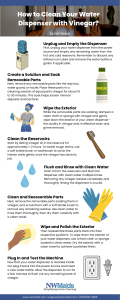
Stale-tasting water often means bacterial growth inside the jug—not the source water. Delivery services sanitize jugs using industrial ozone systems, but if you refill bottles yourself, follow this critical process:
1. Fill jug with 1 gallon hot water + ¼ cup white vinegar
2. Swish vigorously for 60 seconds, ensuring contact with entire interior
3. Let sit 10 minutes, then rinse 3x with clean water
4. Air-dry upside down on a clean rack for 24 hours
Never skip drying: Moisture breeds biofilm. Replace home-refilled jugs every 6 months—plastic degrades, creating microscopic cracks where bacteria hide.
Choosing Your Ideal Jug Size by Real-World Use Case
Selecting the wrong size wastes money and creates hassle. Match your jug to actual consumption:
– 15+ person offices: Stick with 5-gallon jugs. They cost 60% less per gallon than smaller sizes and last 2-3 workdays.
– 2-4 person home offices: Opt for 3-gallon jugs. They’re light enough for one person to handle and won’t sit stale for weeks.
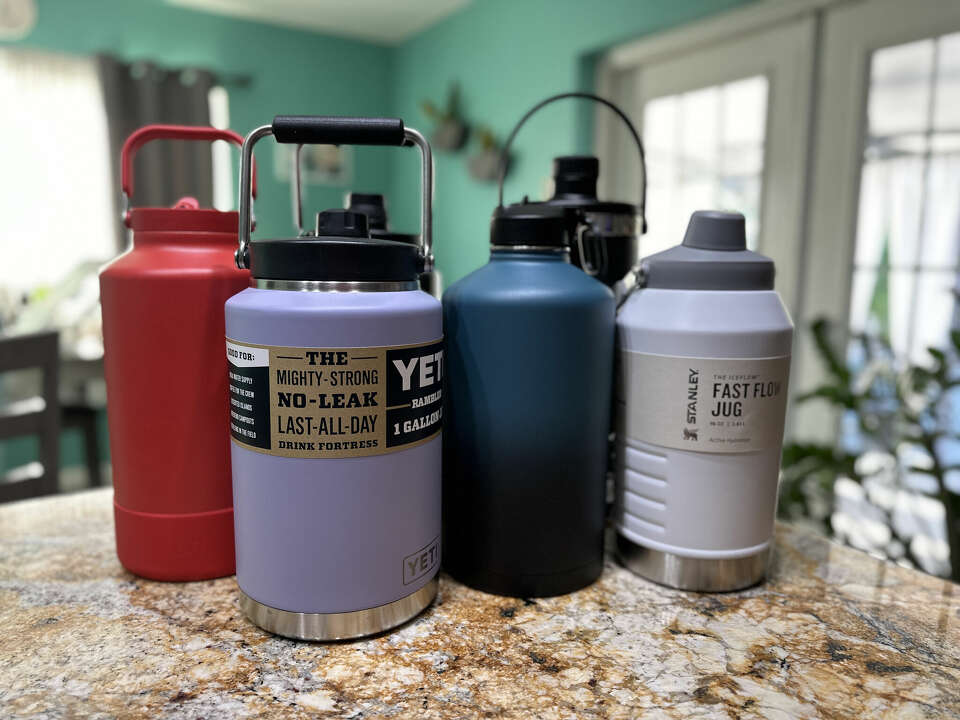
– Camping/RVs: Use 1 or 2-gallon jugs (7.6L/3.8L). Their compact size fits narrow storage, and 17 lbs (2-gallon) is manageable off-grid.
– Emergency kits: Store sealed 5-gallon jugs—but rotate every 6 months. Water doesn’t spoil, but plastic leaches over time.
Critical Check: Track your current usage for one week. If you finish a 5-gallon jug in under 3 days, stick with standard size. If it lasts 10+ days, downsize immediately—stale water develops off-flavors after 30 days.
Why Water Delivery Services Only Offer 5-Gallon Jugs
You might wonder why delivery companies rarely bring smaller sizes. It boils down to economics:
– Cost per gallon: 5-gallon jugs cost suppliers $0.25-$0.50 each to produce and sanitize versus $0.75+ for 3-gallon equivalents.
– Delivery efficiency: One truck can carry 80 5-gallon jugs versus 130 3-gallon jugs—but the smaller size generates 30% less revenue per trip.
– Cooler compatibility: Using non-standard sizes would require custom coolers, eliminating the $300+ unit customers already own.
This explains why “custom size” requests often incur steep fees—services must retrofit delivery racks and risk compatibility issues.
Final Note: The standard water cooler jug holds exactly 5 U.S. gallons (18.9 liters), weighing 41.7 pounds when full—a specification engineered for universal cooler compatibility and delivery efficiency. While 3, 2, and 1-gallon alternatives solve specific handling or space constraints, the 5-gallon size remains optimal for most offices and households due to its cost-effectiveness and wide availability. Always verify your cooler’s minimum capacity before switching sizes, and prioritize proper lifting technique to avoid injury. For long-term savings and safety, partner with a delivery service that sanitizes jugs professionally—your taste buds (and back) will thank you. If you’re refilling bottles at home, implement the vinegar-sanitization routine monthly to prevent bacterial growth that standard filters can’t remove.