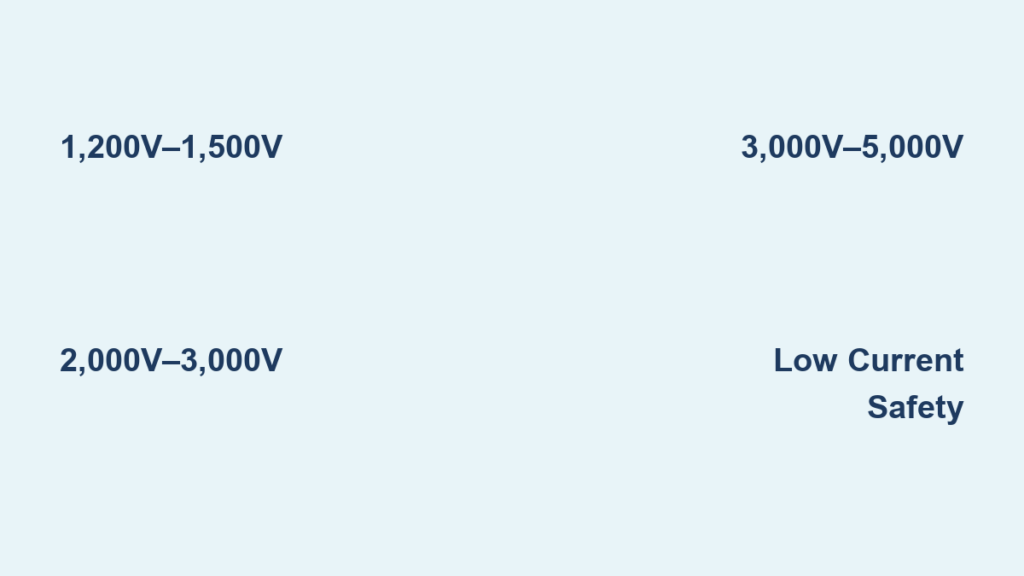
How many volts are in a bug zapper? The answer isn’t as simple as a single number—it depends entirely on your specific needs. Most residential models operate between 1,200V and 1,500V, delivering enough power to instantly kill mosquitoes and fruit flies while remaining safe around children and pets. Commercial units for restaurants and food processing facilities typically use 2,000V to 3,000V to handle heavier insect traffic, while agricultural systems protecting crops can reach 3,000V to 5,000V. Understanding these voltage differences is critical because choosing the wrong voltage means ineffective pest control or unnecessary expense.
You’ve probably heard conflicting information about bug zapper voltages. Some claim all zappers use “thousands of volts,” while others warn about dangerous electrical risks. The truth lies in the engineering specifics: all bug zappers use high voltage but extremely low current (typically 2-10mA), creating a lethal shock for insects while remaining generally safe for humans. This guide cuts through the confusion with precise voltage specifications for every application, so you can select the right zapper for your home, patio, or business without overpaying or under-protecting.
Residential Bug Zappers: Why 1,200V Kills Mosquitoes But Not Pets
The voltage in your home bug zapper is deliberately calibrated to eliminate pests while prioritizing safety. Manufacturers engineer these units with just enough voltage to bridge the gap between grid wires when small insects make contact, creating the satisfying “zap” sound we associate with effective insect control.
Indoor Zappers: 1,200V to 1,500V for Fruit Flies and Gnats
Your kitchen or bathroom bug zapper typically operates at 1,200V to 1,500V DC—enough to eliminate small pests but designed with multiple safety features. This voltage range creates an electrical arc strong enough to vaporize tiny insects like fruit flies and gnats, which have minimal resistance to electrical current. The grid spacing in these units is precisely 6-12mm, ensuring the circuit only completes when small insects bridge the gap.
Critical safety features in residential zappers include:
– Current limited to 5mA maximum (well below dangerous levels)
– Double insulation on all high-voltage components
– Protective outer cages preventing finger access
– Automatic shutoff if the housing is opened
These models consume just 10-40W of power while covering 500-2,000 square feet—perfect for living spaces where safety and quiet operation matter most.
Patio Models: 1,500V to 2,000V for Backyard Mosquito Control
When you move outdoors, voltage requirements increase to handle larger insects and environmental challenges. Your patio bug zapper typically operates at 1,500V to 2,000V DC, with grid spacing widened to 5/16″ to 1/2″ to accommodate bigger pests like house flies and moths. This higher voltage creates a more powerful arc that works effectively even in humid conditions where moisture might otherwise dissipate the electrical charge.
The increased voltage directly impacts performance:
– Creates louder, more effective “zap” sounds you can hear from across your deck
– Delivers instant kill for mosquitoes rather than just stunning them
– Maintains effectiveness in 30-80% humidity (common during bug season)
– Covers larger areas (up to 2,000 square feet for a 2,000V model)
Look for units with NEMA 3R weatherproofing and GFCI protection when selecting an outdoor model—safety standards become critical at these higher voltages.
Commercial Zappers: What Makes 2,000V+ Essential for Restaurants

Commercial kitchens face strict health codes requiring continuous insect control, which demands higher voltage systems. These environments need bug zappers operating at 2,000V to 3,000V DC to handle the constant influx of pests attracted to food preparation areas. The higher voltage ensures instant kill for larger insects like blow flies and wasps that might survive lower-voltage shocks.
Food Service Requirements: 2,000V to 3,000V for Health Code Compliance
Health inspectors require commercial kitchens to maintain visible pest control, and standard 1,500V residential units simply can’t deliver. A 2,500V commercial zapper creates sufficient arc power to eliminate pests immediately, preventing insects from carrying pathogens through the facility. These units feature larger grid areas (up to 12″ x 12″) and heavy-duty collection trays to handle high insect volumes.
Key specifications for commercial food service zappers:
– Voltage: 2,000V-3,000V DC (UL 1012 certified)
– Power consumption: 40-100W for continuous operation
– Coverage: 2,000-6,000 square feet
– Grid spacing: 5/16″ to 1/2″ for optimal insect contact
Unlike residential models, commercial units must comply with UL 507 standards specifically for electric insect traps in food environments—don’t risk health code violations with underpowered equipment.
Why 3,000V Is Standard for Commercial Kitchen Insect Control
The physics behind commercial zapper voltage reveals why 3,000V has become the industry standard. Large flies and moths have thicker exoskeletons that require higher voltage to penetrate—1,500V might only stun these pests, allowing them to escape and contaminate food areas. At 3,000V, the electrical arc instantly carbonizes the insect’s body, ensuring complete elimination with no escape risk.
Commercial units also incorporate advanced safety features:
– Ground fault detection that cuts power instantly
– Automatic discharge circuits when opened
– Stainless steel grids resistant to kitchen grease buildup
– Overheat protection for 24/7 operation
These systems consume more power (40-100W) but provide the reliable, high-volume pest control commercial kitchens demand.
Agricultural Zappers: How 3,000V to 5,000V Protects Crops
Farm-scale insect control requires serious electrical power to cover large areas and eliminate resilient agricultural pests. Agricultural bug zappers operate in the 3,000V to 5,000V range—nearly triple the voltage of residential models—to create powerful arcs that work effectively in challenging outdoor conditions.
Farm-Grade Zappers: 4,000V Systems for Large Insect Populations
When protecting crops across acres of land, voltage becomes critical for both effectiveness and range. A 4,000V agricultural zapper creates an electrical field strong enough to kill pests instantly even in windy conditions where insects might only briefly contact the grid. These high-voltage systems feature wider grid spacing (1/2″ to 1″) to prevent arcing in dusty environments while maintaining lethal power.
Agricultural zapper specifications differ significantly:
– Voltage: 3,000V-5,000V DC (CE and RoHS compliant)
– Power: 100-1,000W for maximum UV attraction
– Coverage: Up to 1 acre per unit
– Operating temperature: -20°C to 50°C for year-round use
The higher voltage directly translates to larger effective range (20-50 feet compared to 6-15 feet for residential models), making these systems practical for field deployment.
The Physics Behind Bug Zapper Voltage: How 2,000V Kills Insects Safely
Understanding why high voltage doesn’t mean high danger requires examining the complete electrical equation. Bug zappers use a clever combination of high voltage (1,000V-5,000V) with extremely low current (2-10mA) to create lethal conditions for insects while remaining safe for humans—a principle known as the “let-go” threshold in electrical safety.
Why High Voltage + Low Current Equals Safe Insect Elimination
The key safety factor isn’t the voltage number itself but the current delivered. While your bug zapper might read 2,000V on a meter, the actual current is limited to 5-10mA—far below the 50-100mA that could cause human harm. Insects complete the circuit between grid wires with their small bodies, allowing the high voltage to overcome their minimal resistance. Humans, with much larger body mass and resistance, wouldn’t complete the circuit in the same way, and the current limiter would prevent dangerous flow.
Critical voltage-current relationships:
– Lethal threshold for insects: 500V minimum
– Optimal insect control range: 1,000-2,000V
– Human safety threshold: <5mA continuous current
– Maximum safe current: 10mA peak (built into all certified zappers)
This engineering balance is why you can safely clean a bug zapper (when unplugged) despite its high voltage rating.
Voltage Multiplier Circuits: How 120V Becomes 2,000V in Your Zapper

Inside every bug zapper lies a voltage multiplier circuit—typically a Cockcroft-Walton design with 5-15 stages—that transforms standard household current into insect-zapping power. This circuit uses diodes and capacitors to “stack” voltage with each AC cycle, effectively multiplying the input voltage without a traditional transformer.
The process works like this:
1. Standard 120V AC enters the circuit
2. Rectification converts to DC
3. Capacitors charge in parallel during one half-cycle
4. During the next half-cycle, capacitors discharge in series
5. This “voltage doubling” repeats through multiple stages
A typical 10-stage multiplier can produce 2,000V from 120V input—enough to create the instantaneous kill zone insects can’t survive.
Can a Bug Zapper Voltage Harm Humans? Safety Explained
Despite the intimidating voltage numbers, properly designed bug zappers pose minimal risk when used as intended. All certified models incorporate multiple safety layers that prevent dangerous current flow, making them safe for homes with children and pets when installed correctly.
Why Even 4,000V Zappers Won’t Electrocute You (When Used Properly)
The common fear about high-voltage bug zappers stems from misunderstanding electrical principles. Voltage alone doesn’t determine danger—it’s the combination of voltage, current, and duration. While industrial zappers may read 4,000V, their current is strictly limited to 5mA, well below the 10-20mA that might cause muscle contraction in humans. The brief duration of any potential shock (microseconds) further reduces risk.
Safety features preventing human injury:
– Automatic shutoff at 5mA+ current flow
– Double insulation on all high-voltage components
– Physical barriers preventing finger contact
– Ground-fault circuit interruption (GFCI) on outdoor models
Always follow manufacturer instructions and never bypass safety features—especially when cleaning the grid.
Choosing the Right Voltage: What Your Space Actually Needs
Selecting the proper voltage bug zapper prevents both underperformance and unnecessary expense. Many homeowners overspend on commercial-grade units when a standard 1,500V model would suffice, while restaurant owners sometimes make the dangerous mistake of using residential zappers in commercial settings.
Small Balcony Solution: Why 1,500V Is Perfect for Apartments
For compact living spaces like balconies or small patios (under 500 sq. ft.), a 1,200V-1,500V zapper provides optimal performance without safety concerns. These units feature smaller grids (6-8″ diameter) that match the voltage to the space, ensuring insects reliably contact both grid wires for instant kill. Higher voltage would be unnecessary and could create excessive ozone in confined areas.
When shopping for apartment use:
– Verify UL certification (look for UL 73 mark)
– Choose models with automatic night sensors
– Ensure 6-12mm grid spacing for safety
– Confirm 10-20W power consumption for efficiency
This voltage range delivers effective mosquito control without the noise or ozone concerns of higher-voltage commercial units.
Large Yard Requirement: When You Actually Need 2,500V+
For properties over 2,000 square feet or areas with heavy pest pressure (like near standing water), you’ll need at least 2,000V to ensure effective control. A 2,500V zapper creates a stronger electrical field that works through light foliage and maintains effectiveness in higher humidity—critical for southern climates where mosquitoes thrive.
Signs you need higher voltage:
– Insects surviving initial contact (only stunned)
– Inconsistent “zap” sounds during operation
– Needing multiple units where one should suffice
– Operating in areas with 80%+ humidity regularly
Look for weatherproof models rated for outdoor use with NEMA 3R or IPX4 ratings—standard indoor zappers won’t survive extended outdoor exposure.
Voltage vs. Effectiveness: Does More Volts Mean Better Bug Control?

Many consumers assume “more volts equals better zapping,” but physics reveals diminishing returns beyond certain thresholds. Understanding the actual voltage requirements for different insects prevents overspending on unnecessarily powerful (and expensive) systems.
The 1,000V Threshold: Minimum Voltage That Actually Kills Insects
Research shows 500V is the absolute minimum to affect most insects, but 1,000V represents the practical threshold for reliable kill rates. Below this level, many pests (especially larger flies) may only be stunned rather than killed, allowing them to escape and potentially spread pathogens. At 1,000V, the electrical arc reliably penetrates insect exoskeletons, causing instant neural disruption.
Voltage requirements by insect type:
– Fruit flies, gnats: 1,000-1,500V
– Mosquitoes, house flies: 1,200-1,800V
– Moths, larger flies: 1,800-2,500V
– Wasps, horseflies: 2,000-3,000V
Purchasing a 4,000V agricultural zapper for indoor mosquito control delivers no practical benefit while increasing cost and ozone production.
Diminishing Returns: When Higher Voltage Doesn’t Improve Performance
Above 2,500V, bug zappers experience significant diminishing returns for most residential applications. The increased voltage creates louder arcs and more ozone, but doesn’t substantially improve kill rates for common household pests. In humid conditions, voltages above 3,000V can actually cause premature arcing between grid wires, reducing effective range and creating maintenance issues.
For typical backyard use, 2,000V represents the sweet spot—powerful enough for all common pests while maintaining reliability and safety. Reserve 3,000V+ systems for commercial kitchens, food processing facilities, or agricultural applications where regulatory requirements or extreme pest pressure justify the higher voltage.