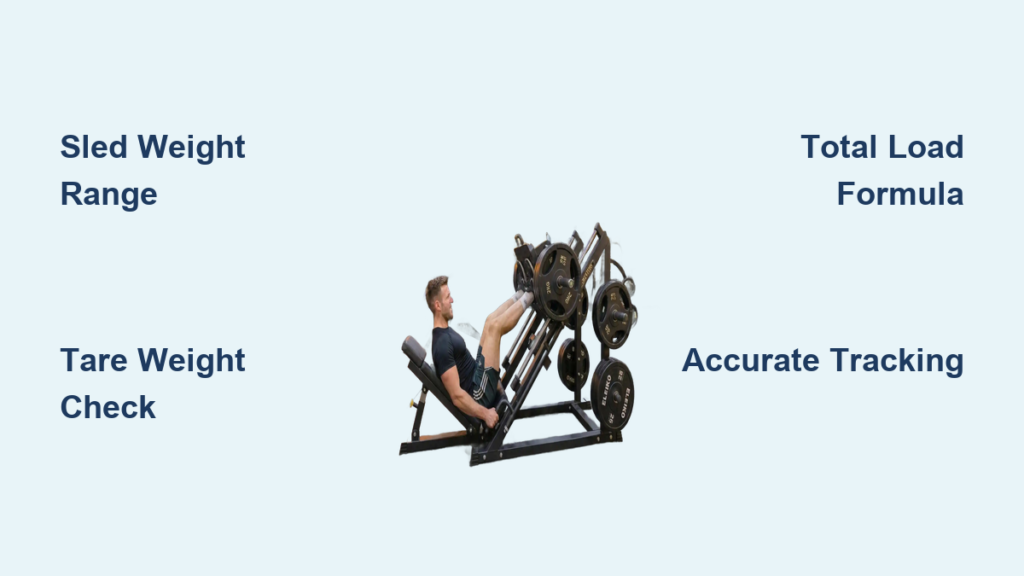
You’re crushing leg day with your usual plate configuration on the leg press, but suddenly the movement feels dramatically heavier at your new gym. Or maybe you’re meticulously tracking progress in your fitness app, only to realize your “200-pound” lift is actually far less because you forgot one critical factor: the weight of the leg press sled itself. This unaccounted-for mass tricks thousands of lifters daily into underestimating their true workload or misjudging their strength gains. Understanding how much does a leg press sled weigh isn’t just trivia—it’s fundamental to accurate training progression and avoiding plateau frustration. By the end of this guide, you’ll know exactly how to calculate your real leg press load, why that empty sled matters more than you think, and practical methods to measure it on any machine you encounter.
Most commercial leg press sleds weigh between 50-125 pounds when completely unloaded—meaning no weight plates attached. This “tare weight” represents the dead weight you’re moving before you even add a single plate. Ignoring this base load is like trying to count calories while forgetting the container your food came in; your calculations will always be flawed. The exact figure varies wildly based on equipment design, making it impossible to assume a standard value across gyms. Crucially, this sled weight must be added to your plate load to determine your total resistance—a step 90% of gym-goers skip entirely. Let’s dismantle the mystery behind this hidden resistance so you can train with precision.
Why Your Leg Press Sled Weight Changes Your Entire Workout Calculation

The 100-Pound Mistake Most Lifters Make Daily
Picture loading two 45-pound plates (one per side) and assuming you’re pressing 90 pounds. In reality, you’re moving 90 pounds plus the sled’s base weight—which could be 75 pounds on a commercial 45-degree machine. That “90-pound lift” is actually 165 pounds! This miscalculation leads to stalled progress, inaccurate strength comparisons, and dangerous jumps in perceived workload when switching gyms. Your nervous system adapts to the total resistance, not just the plates you see. Underestimating sled weight means you’re likely lifting significantly less than you believe, sabotaging hypertrophy and strength goals. Always treat the sled as active weight—it’s not just a carriage but a core component of your lift.
How Sled Weight Impacts Your Strength Gains
When you consistently underestimate total load by 50+ pounds, your progressive overload strategy collapses. Adding 10 pounds of plates might only increase total resistance by 6% instead of 10% if the sled weighs 60 pounds (60 sled + 90 plates = 150 total; 60 sled + 100 plates = 160 total = 6.6% increase). Over months, this compounds into dramatically slower strength development. Worse, moving to a gym with a heavier sled (e.g., 100 lbs vs. your old 60 lbs) means your “same” plate load now totals 40 pounds more resistance—a shock that can cause injury or failed sets. Tracking only plate weight makes your training data meaningless across different facilities.
Commercial Leg Press Sled Weight Range: 50-125 Pounds Unloaded
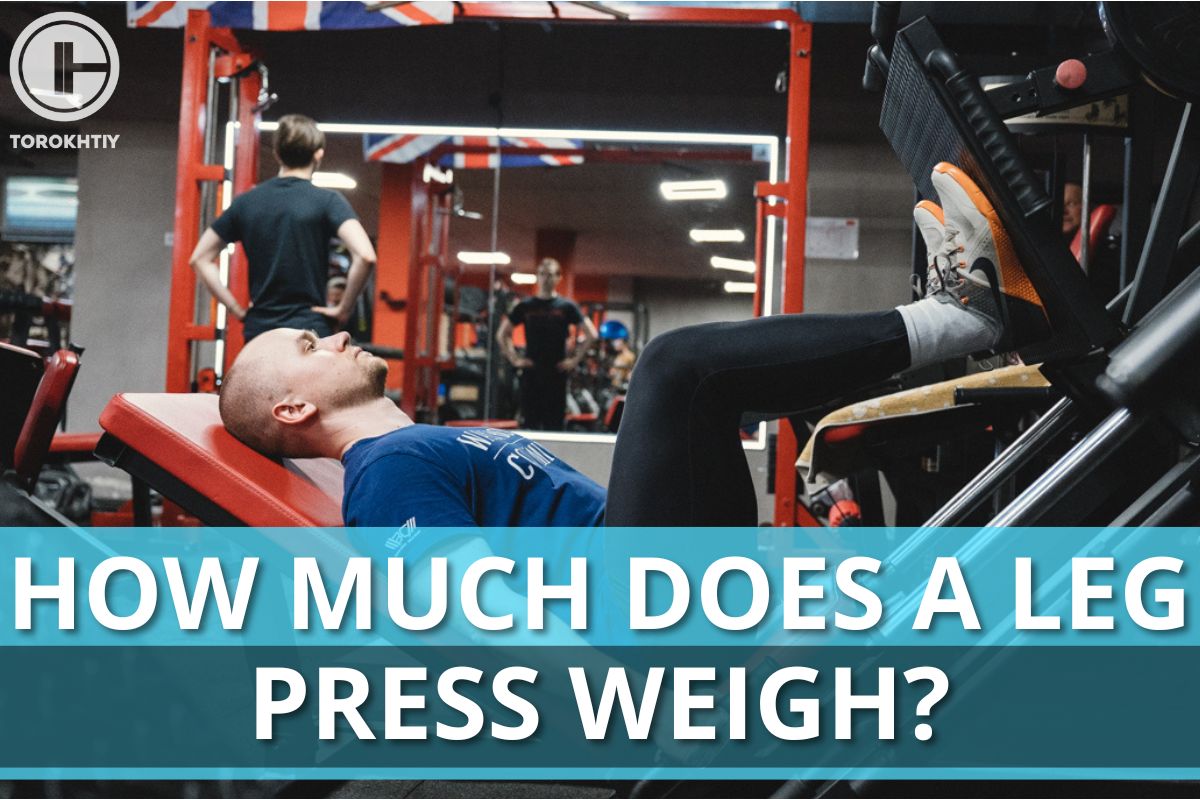
45-Degree Machines: The Heavyweight Champions
Expect 45-degree leg press sleds to dominate the upper end of the weight spectrum (80-125 lbs). Their angled design requires sturdier construction to handle lateral forces, using thicker steel plates and reinforced pivot points. A standard commercial unit like the Cybex 45° Leg Press typically has a 95-110 lb sled. Don’t confuse this with plate weight—this is the mass you move before loading plates. The heavier sled provides smoother momentum but demands greater starting strength. If your gym uses Hammer Strength or Hoist 45-degree models, assume 90+ lbs unless verified otherwise.
Vertical and Horizontal Presses: Lighter but Not Light
Horizontal (plate-loaded) and vertical sleds generally fall in the 50-85 lb range due to simpler linear motion mechanics. A Life Fitness Plate-Loaded Leg Press sled often weighs 65-75 lbs, while smaller vertical units may hit 50-60 lbs. Never assume “lighter” means negligible—50 pounds still represents over 30% of your “100-pound” lift (50 sled + 50 plates = 100 total). Budget home gym sleds can dip below 50 lbs but sacrifice durability. Always verify: that “light” sled might still add two solid plates to your perceived workload.
Why Machine Build Quality Dictates Your Sled’s Base Weight
Commercial vs. Home Gym: The 30-Pound Difference
Gym-grade leg presses endure 50+ daily users, requiring 3-5mm steel tubing versus the 2-3mm gauge in home units. This extra metal adds 20-40 pounds to the sled assembly. A commercial Matrix 45° Leg Press sled hits 105 lbs, while a comparable home model might be 70 lbs. The trade-off? Heavier sleds glide smoother under load but demand more force off the pins. Never apply home-gym assumptions to commercial equipment—your “usual” plate load could feel 25% heavier due to the sled alone.
Material Matters: Solid Steel vs. Hollow Frames
Check for visible weld points and tube thickness. Sleds with solid steel end caps (common in Hammer Strength units) add 15-20 lbs versus hollow-tube competitors. Tubular frames prioritize cost over stability, creating “bouncy” resistance that masks true sled weight. If the sled wobbles when unloaded, it’s likely lighter (50-70 lbs) but less reliable for progressive tracking. Solid-steel builds (80+ lbs) provide consistent inertia—critical for measuring small strength gains. Run your hand along the frame: thick, cold-rolled steel feels dense and vibration-resistant.
Step-by-Step: Measuring Your Leg Press Sled Weight with a Scale

Tare Weight Method: The Only Accurate Approach
You’ll need: Digital luggage scale (200+ lb capacity), gloves, gym staff permission.
- Engage safety stops at the sled’s lowest position with zero plates attached. This locks the carriage securely.
- Hook the scale to the sled’s footplate frame (not the moving parts). Use a carabiner or strap for secure attachment.
- Lift steadily until the sled clears the stops by 1-2 inches. Keep the scale perpendicular to the ground.
- Record the peak reading—this is your sled’s true weight. Commercial units often spike 5-10 lbs during initial lift-off; ignore these jumps and note the stabilized weight.
- Repeat 3x for accuracy. If readings vary by >5 lbs, reposition the scale for better alignment.
Pro Tip: Do this during off-peak hours. Staff usually approve if you explain it’s for injury prevention. Never attempt without safety stops engaged—this risks catastrophic sled drop.
Why Bathroom Scales Fail for Sled Measurement
Placing a scale under the footplate seems intuitive but delivers false lows. The leg press’s mechanical advantage (typically 1:1.5) reduces perceived sled weight by 30-40% at the platform. A 100-lb sled might register as 65 lbs on a scale under the footplate. Only direct lifting measures true mass. If you lack a luggage scale, skip inaccurate methods—your estimation could be 30 lbs off.
The Counterweight Estimation Method for Plate-Loaded Machines
When Tools Aren’t Available: The 45-Pound Test
Only attempt if medically cleared for heavy lifting.
- Load one 45-lb plate per side (90 lbs total plates). Perform 5 controlled reps, noting the effort level.
- Remove all plates. Perform reps with only the unloaded sled, matching the same speed and range of motion.
- Compare resistance: If the empty sled feels like 50-60% of the 90-lb load, your sled weighs 45-55 lbs (e.g., 50 lbs sled = 55% of 90 lbs plates). If it feels 70-80% as heavy, sled weight is 65-75 lbs.
- Refine with 25-lb plates: Repeat with 50 lbs of plates for finer calibration.
Critical Warning: This method risks knee strain from unaccustomed light loads. Stop immediately if you feel joint stress. Never use for angled presses—mechanical advantage distorts comparisons.
Why Plate Weight Isn’t Your Total Leg Press Load
The Double-Plate Deception
Most lifters add plates to both sides but forget the sled weight applies once. Total load = sled weight + (left plate weight + right plate weight). Loading two 45s? That’s 90 lbs of plates—but your total resistance is sled weight + 90 lbs. If your sled is 80 lbs, you’re actually moving 170 lbs. This single oversight makes your “200-lb leg press” 25% weaker than claimed if the sled weighs 60 lbs (60 + 140 plates = 200 total vs. assumed 200 plates).
How Angle Distorts Plate Perception
On 45-degree presses, gravity assists the return phase but resists the push. This makes the same total weight feel 15-20% lighter than on vertical presses. A 150-lb total load (sled + plates) on a 45-degree machine mimics 125-130 lbs vertically. Never compare plate counts across machine types—always calculate total resistance first. Your “light” 45-degree set might equal a max-effort vertical press.
The Leg Press Total Weight Formula: Sled + (Plates x 2)

Real Gym Scenario Breakdown
- Machine: Commercial 45-degree press (sled = 95 lbs verified)
- Your load: Two 45-lb plates per side (180 lbs plates)
- Total resistance: 95 + 180 = 275 lbs
- Common error: Recording “180 lbs” in your log
This miscalculation makes your next 10-lb plate increase only a 3.5% jump (275 → 285 lbs) instead of 5.5% (180 → 190). Over 6 months, this 2% deficit compounds into 20% less progressive overload—enough to stall gains entirely.
Tracking Template for Accurate Progress
| Date | Sled Weight | Plate Weight | Total Weight | Reps |
|---|---|---|---|---|
| Jun 1 | 95 lbs | 180 lbs | 275 lbs | 10 |
| Jun 8 | 95 lbs | 190 lbs | 285 lbs | 9 |
Always verify sled weight monthly—wear can alter it by 5+ lbs.
Common Mistakes That Skew Your Leg Press Weight Calculation
Assuming All Sleds Weigh the Same
Switching from a 60-lb vertical press to an 85-lb 45-degree machine? Your “same” plate load just jumped 25 lbs total resistance. This explains why sets fail unexpectedly at new gyms. Always remeasure sled weight when changing facilities—never assume.
Forgetting the Sled in Deload Weeks
During recovery weeks, lifters often remove plates but keep sled weight constant. A “50% deload” with 90 lbs plates (sled 95 lbs = 185 total) should be 92.5 lbs total. But removing all plates leaves 95 lbs—only a 49% reduction. True deload: Calculate 50% of total weight, then subtract sled weight to find target plate load.
Where to Find Your Machine’s Sled Weight Label
Hidden Placards: Check Under the Seat
Manufacturers often stamp sled weight on:
– The sled’s rear frame (near pivot points)
– Underside of the footplate
– Inside the weight post housing
– Safety stop brackets
Look for phrases like “Tare Weight:” or “Sled Mass:” followed by lbs/kg. Cybex units list it near the model number sticker. If absent, check the gym’s equipment manual—front desk staff usually have digital copies.
Pro Tips for Consistent Leg Press Weight Tracking
Create a Gym-Specific Sled Database
Photograph sled weight labels across your regular gyms. Store in a notes app titled “Leg Press Sled Weights” with machine types. Update after major equipment changes. This takes 2 minutes but saves years of inaccurate logging.
The 10% Plate Rule for Safe Progression
Always increase plates by 10% of total weight, not plate weight. If your total is 200 lbs (sled 70 + plates 130), a 10% jump = 20 lbs. Add 10 lbs of plates (new total: 70 + 140 = 210 lbs). This ensures consistent overload regardless of sled mass.
When to Ask Gym Staff About Your Leg Press Sled
The Manager Question That Gets Answers
Instead of “How much does this weigh?”, ask: “Could you share this machine’s tare weight for accurate tracking?” Managers know “tare weight” refers to unloaded sled mass. Commercial gym managers track this for maintenance—Life Fitness units require sled weight logs for calibration. Frame it as safety-focused, and you’ll rarely be refused.
Final Note: Your leg press sled weight isn’t optional math—it’s the foundation of accurate strength training. By confirming that 50-125 lb base load and adding it to your plates, you transform guesswork into precision. Start today: measure your gym’s sled using the tare method, then log total resistance moving forward. Within weeks, you’ll spot genuine progress instead of phantom plateaus. For next-level tracking, pair this with our guide on “Leg Press Foot Placement for Quad vs. Glute Emphasis” to maximize every calculated pound. Remember: in strength training, what you measure improves—and now you’re measuring right.