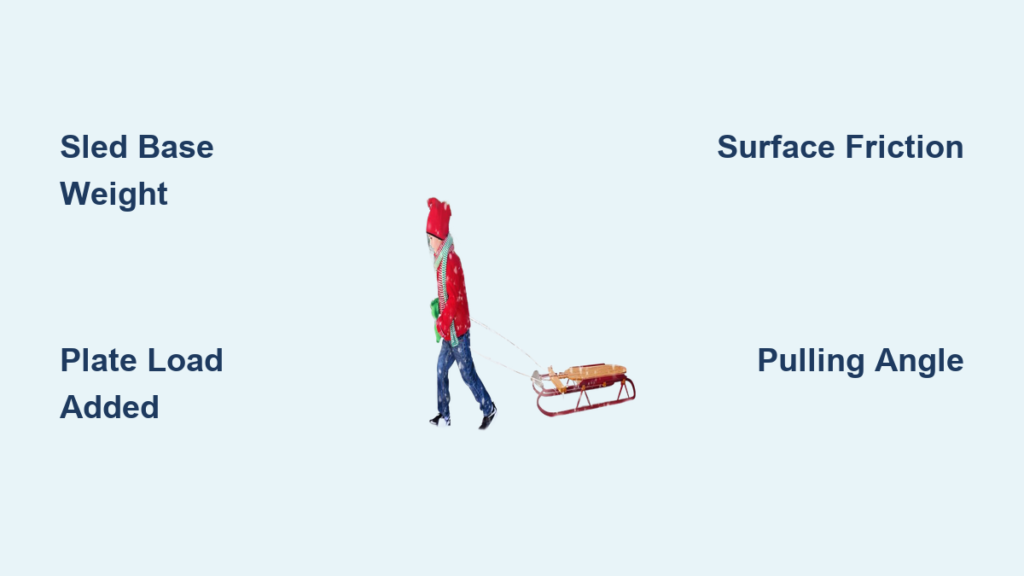
You’re standing in the gym, staring at that hulking metal frame loaded with weight plates. The coach says “push the sled,” but a critical question stops you cold: how much does a pulling sled weigh right now? Without knowing this number, you’re guessing at resistance levels, risking wasted effort or injury. The truth is, there’s no single answer—it’s a dynamic equation of base weight, added plates, and surface friction. Getting this calculation wrong means missing your training targets for speed, power, or conditioning. Let’s cut through the confusion with the exact numbers and formulas you need to program sled work like a pro.
Forget vague guesses. The actual resistance you feel comes from three measurable factors: the sled’s empty weight, every plate you load, and how much the ground fights back. Whether you’re chasing NFL combine speed or CrossFit conditioning, nailing this weight equation transforms random dragging into precision training. By the end of this guide, you’ll know exactly how to calculate effective sled weight for your surface, choose loads for specific goals, and avoid the #1 mistake that sabotages 90% of sled workouts.
Breaking Down the True Weight Components of Your Sled
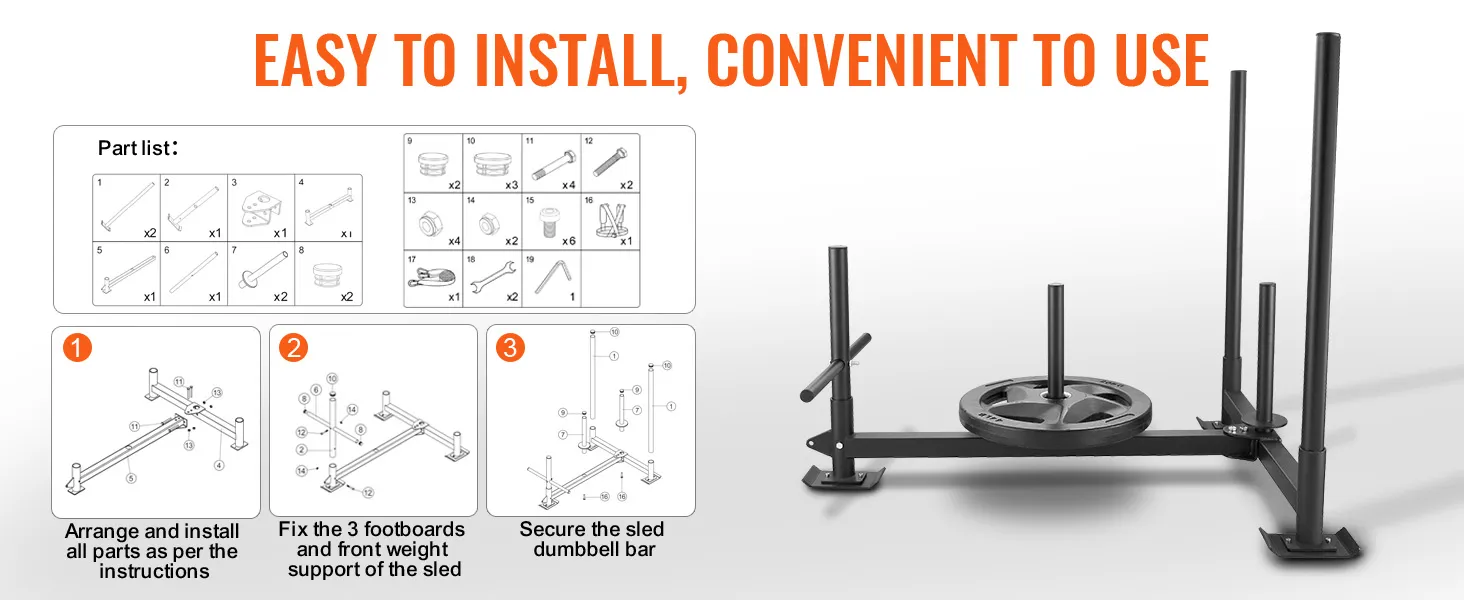
What the scale shows isn’t what your muscles feel. The total resistance is a physics problem you solve before every push. Here’s exactly what contributes to the weight you’re moving.
Sled Deck and Frame: The Unavoidable Base Weight
That metal frame isn’t weightless. Before a single plate touches it, your sled has “tare weight” you can’t ignore. Light plastic agility sleds (common in high schools) tip scales at 15-25 lbs—barely noticeable during sprints. But commercial steel sleds dominate serious training facilities. Their unloaded weight ranges from 60 to 100 lbs depending on construction. A standard Rogue or Titan model? Expect 75-85 lbs empty. This base weight is non-negotiable—it’s always part of your resistance equation, even when you think you’re using “just the sled.”
Weight Posts and Plate Capacity: Your Adjustable Load
The vertical posts determine your maximum load. Olympic-sized posts (2-inch center holes) hold standard 45lb bumper plates. Here’s the critical math: Total Resistance = Sled Weight + Plate Weight. Load two 45lb plates? That’s 90lbs added. But with a 75lb base sled, you’re actually moving 165lbs total. Most athletes skip this step—they see “90lbs on the sled” and forget the frame’s 75lbs. That miscalculation turns intended speed work into a max-strength grind.
Surface Friction: The Hidden Weight Multiplier
Concrete feels like cheating. Grass feels like dragging a car. Why? Surface friction artificially inflates perceived weight. On smooth gym floors, resistance equals actual weight (sled + plates). But turf or grass multiplies resistance via friction coefficients. A 100lb total sled weight on turf feels like 160-220lbs—adding 60-120lbs of “phantom weight.” Track your surface religiously: Asphalt adds 0-10% perceived weight, turf adds 60-120%, rubber tracks add 20-40%. Ignoring this turns your carefully planned 20% bodyweight load into a form-destroying 50% drag.
Pushing vs. Pulling: Why Weight Feels Different Based on Technique
How you move the sled changes the physics. Your muscles experience resistance differently whether pushing, pulling, or dragging.
Pushing Mechanics: Full Weight Transfer
When you drive against the pushing plate, you feel 100% of the total resistance (sled weight + plates + friction). Your quads and glutes work against the entire load. A 150lb total sled on turf (feeling like 240lbs) requires maximal horizontal force. This makes pushing ideal for raw power development—but only if you calculate the true resistance. Underestimating by forgetting base weight or friction leaves you lifting too light.
Pulling and Dragging: Angled Force Dynamics
Attach a harness or rope, and physics shifts. Now resistance equals (Total Weight x Friction Coefficient) x cos(angle). Pulling at 45 degrees reduces effective resistance by 29% versus pushing straight ahead. A 200lb total sled on turf (feeling like 320lbs) becomes ~225lbs when pulling at 45°. This explains why athletes use heavier loads for pulling—they’re compensating for the angle. Critical mistake: Loading the same weight for pulling as pushing. You’ll always feel weaker if you don’t adjust for the angle factor.
Goal-Specific Weight Recommendations: Stop Guessing, Start Progressing

Your training objective dictates the math. These numbers work for 95% of athletes—no more random plate loading.
Max Strength & Power: Heavy Loads for Explosive Starts
Target load: 75-90% of your max sled push capacity.
How to calculate: Load until you can barely move 20-30 feet in 4-6 seconds. For most athletes, this means total resistance (sled + plates) = 100-200% of bodyweight. A 200lb athlete might use a 75lb sled plus 150lbs of plates (225lbs total) on turf (feeling like 360lbs). Warning: If you complete 40+ feet easily, add 20lbs. Power gains vanish when the load is too light.
Acceleration Speed Work: Light Loads for Form Retention
Target load: 5-12.5% of bodyweight added resistance.
Exact formula: (Bodyweight x 0.05 to 0.125) – Sled Base Weight. For a 180lb athlete:
– Target added resistance: 9-22.5lbs
– Minus 75lb sled base weight? Impossible.
Solution: Use a plastic sled (20lb base) + 0-5lbs plates = 20-25lbs total. On turf, friction makes this feel like 32-40lbs (18-22% of bodyweight)—perfect for sprint mechanics. Pro tip: If your chin tucks or stride shortens, the load is too heavy. Drop 5lbs immediately.
Metabolic Conditioning: Moderate Loads for Sustained Burn
Target load: 25-40% of max push capacity.
Sweet spot: Total resistance where you gas out at 30-45 seconds. For most, this is sled + plates = 50-75% of bodyweight. A 160lb athlete: 80-120lbs total resistance. On turf, that’s 128-192lbs perceived weight. Key indicator: Your last 10 seconds should feel like “survival mode,” not max effort. If you finish strong, add 15lbs next round.
Surface-Specific Weight Adjustments: Your Friction Cheat Sheet
Stop using the same load everywhere. These friction multipliers transform your programming.
| Surface Type | Friction Multiplier | Perceived Weight Example (100lb Total Sled) |
|---|---|---|
| Concrete/Asphalt | 1.0-1.1x | 100-110lbs |
| Rubberized Track | 1.2-1.4x | 120-140lbs |
| Artificial Turf | 1.6-2.0x | 160-200lbs |
| Natural Grass | 1.8-2.2x | 180-220lbs |
Real-world application: For turf speed work, a 200lb athlete needs just 5-10lbs added to a 75lb steel sled (80-85lbs total). Turf friction (1.8x) makes this feel like 144-153lbs (72-76% of bodyweight)—ideal for acceleration. On concrete? That same load feels like 80-85lbs (40-42% bodyweight), too light for speed development. Adjust plates based on surface, not just the goal.
Avoid These 3 Critical Sled Weight Mistakes
Mistake #1: Ignoring the Sled’s Base Weight
Loading 100lbs of plates on a 75lb sled creates 175lbs of resistance—not 100lbs. This error turns intended conditioning work (targeting 50% bodyweight) into max-strength effort (87.5% for a 200lb athlete). Fix: Always note “Sled Weight + Plates” in your log. A 75lb sled + 50lbs plates = 125lbs total resistance.
Mistake #2: Using the Same Load Across Surfaces
Doing speed work on turf with the same load as concrete? You’re sprinting against 2x the resistance. Fix: Reduce plates by 30-50% when moving from concrete to turf. If 45lbs plates work on concrete, use 20-30lbs on turf.
Mistake #3: Pulling Without Angle Compensation
Loading identical weight for pulling as pushing guarantees failure. Fix: Add 20-30% more plates for pulling to match pushing resistance. Pushing 100lbs total? Pulling needs 120-130lbs total for equivalent effort.
Your Step-by-Step Sled Weight Setup Protocol
Follow this sequence before every session to guarantee optimal loading.
Step 1: Identify Your Training Surface
Check the friction multiplier table. Grass? Apply 1.8-2.2x. Don’t assume—test with an empty sled push.
Step 2: Calculate Target Total Resistance
- Strength: 100-200% bodyweight
- Speed: 5-12.5% bodyweight added resistance
- Conditioning: 50-75% bodyweight
Step 3: Subtract Sled Base Weight
If target is 150lbs total resistance and your sled weighs 80lbs, load 70lbs of plates.
Step 4: Adjust for Surface Friction
On turf (1.8x), reduce target by 44%: 150lbs ÷ 1.8 = 83lbs total resistance. Now subtract sled weight: 83 – 80 = 3lbs of plates.
Step 5: Test and Refine
Push 10 feet. If form stays perfect but you’re not gassed by 30 feet, add 10lbs. If you can’t move it, reduce 15lbs.
Pro tip: Mark plate loads for surfaces. “Turf Speed: 5lbs plates” sticks better than mental math mid-workout.
Final Word: Master the Weight Equation for Real Results
How much does a pulling sled weigh? The answer lives in three variables: your sled’s base weight (60-100lbs for steel models), every plate you add, and the invisible multiplier of surface friction. Forget “just loading some weight.” Precision here separates effective training from wasted effort. Start with lighter loads than you think—you’ll be shocked how little added weight turf requires for speed work. Log every session with “Sled Weight + Plates + Surface” to track true progress. When you dial in these numbers, your sled transforms from a generic tool into a surgical instrument for speed, power, or conditioning. Now push.