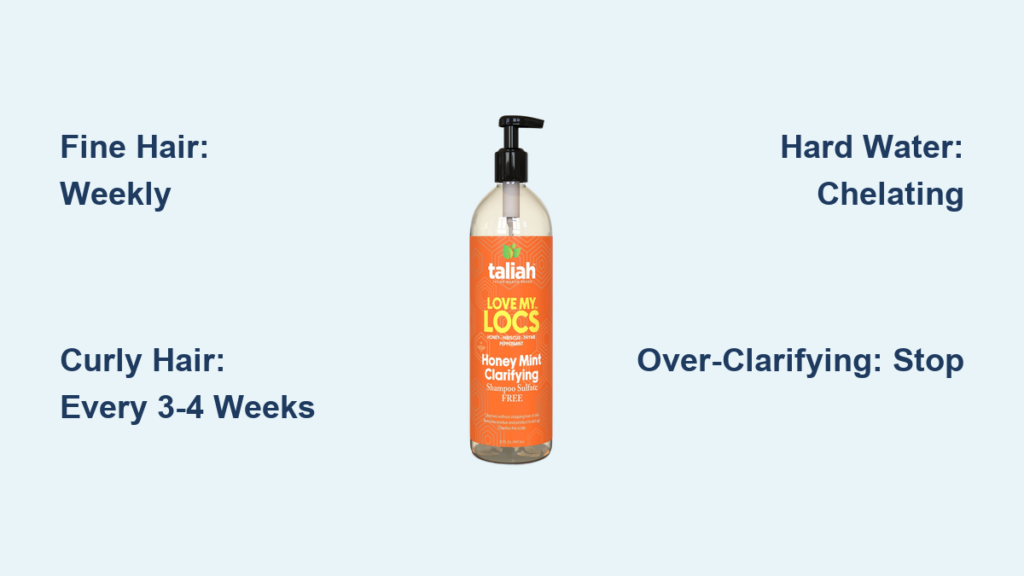
You’ve washed your hair, but it still feels coated in invisible glue—flat, lifeless, and strangely heavy despite your “gentle” routine. That frustrating sensation means your regular shampoo isn’t cutting through the buildup of styling products, hard water minerals, and environmental grime. Understanding how often clarifying shampoo should be used is the missing key to restoring bounce and shine. This guide delivers precise frequency recommendations based on your unique hair profile—not generic advice—so you can banish buildup without stripping your strands. You’ll learn exactly when to clarify based on hair texture, product use, and environmental factors, plus avoid the costly mistake of over-clarifying that leaves hair parched and brittle.
Most beauty influencers push weekly clarifying as gospel, but that approach will wreck 60% of hair types. Clarifying shampoos contain potent chelating agents and sulfates that dissolve stubborn residue regular cleansers miss, acting like a pressure washer for your scalp. Yet unlike daily shampoos, they remove everything—including natural oils that protect your hair’s moisture barrier. When you get how often clarifying shampoo should be used wrong, you risk a dry, flaky scalp and hair that snaps like overcooked spaghetti. The solution? A personalized schedule based on what your hair actually needs, not arbitrary rules.
Why Weekly Clarifying Ruins Most Hair Types
Clarifying shampoos are industrial-strength cleansers—not your everyday wash. They contain high concentrations of sulfates (like sodium lauryl sulfate) or chelating agents (EDTA) that break chemical bonds holding mineral deposits and silicones to your hair. While fine, oily hair might tolerate weekly use, coarse, curly, or chemically treated strands suffer immediate damage. Over-clarifying disrupts your scalp’s pH balance, triggering excess oil production that makes hair greasier faster—a vicious cycle many mistake for needing more clarifying.
The Fine Hair Exception: When Weekly Clarifying Works
If you have fine, straight strands that collapse by day two, how often clarifying shampoo should be used is weekly for you. Thin hair shows buildup faster because product residue weighs down individual strands. Users of the Kristin Ess Deep Clean Clarifying Shampoo report going from 2-day to 4-day wash cycles when clarifying every 7 days. But stop immediately if ends feel straw-like or roots itch—all signs you’ve crossed into damage territory.
When Weekly Clarifying Causes Irreversible Damage
Curly, coily, or color-treated hair loses elasticity fast with over-clarifying. The cuticle lifts during cleansing, and frequent use prevents it from sealing, causing moisture loss that leads to split ends within weeks. If your hair feels “squeaky” after washing (a sign all natural oils are stripped), you’re clarifying too often. For these textures, exceeding bi-weekly sessions risks permanent porosity issues where hair won’t hold moisture regardless of treatments.
5 Hair-Specific Factors That Dictate Your Clarifying Schedule

Your ideal how often clarifying shampoo frequency depends on these non-negotiable factors—not online trends. Ignoring them guarantees either buildup or breakage.
Your Hair Texture: The Primary Frequency Decider
- Fine/Oily Hair: Clarify weekly. Thin strands can’t handle buildup without flattening.
- Medium/Normal Hair: Every 10-14 days. Balances cleansing with moisture retention.
- Coarse/Curly or Chemically Treated Hair: Every 3-4 weeks. Over-cleansing causes frizz and color fade.
- Dry/Damaged Hair: Monthly maximum. Focus clarification only on roots to protect fragile ends.
Product Buildup Level: The Silent Frequency Accelerator
Track these red flags that demand more frequent clarifying:
– Using dry shampoo 2+ times weekly
– Applying leave-in conditioners or oils daily
– Styling with gels, waxes, or heat protectants
– Swimming in chlorinated pools (clarify immediately after)
Each “yes” adds urgency—hardcore product users may need to clarify twice weekly.
Hard Water Exposure: The Mineral Buildup Trigger
If your water leaves spots on glasses, minerals are coating your hair. Hard water causes:
– Permanent dullness even after washing
– Hair that feels sticky or “waxy”
– Reduced lather from regular shampoos
Solution: Swap standard clarifying for chelating shampoos (with EDTA or citric acid) every 7-10 days. For extreme cases, add the Malibu C Hard Water Wellness Remedy weekly until shine returns.
Scalp Oil Production: The Grease Gauge
Press a tissue to your roots at day 3:
– Oily: Clarify weekly (tissue shows oil)
– Normal: Every 2 weeks (slight oil only at part line)
– Dry: Every 3-4 weeks (no oil, possible flaking)
Adjust frequency seasonally—many oily-scalp users need bi-weekly sessions in humid summers but monthly in dry winters.
Chemical Treatments: The Damage Amplifier
Color-treated, bleached, or relaxed hair loses 30% more moisture with each clarifying session. If you’ve chemically altered your hair:
– Wait 72 hours post-treatment before clarifying
– Never exceed every 3 weeks
– Always follow with a bond-repair treatment (like Olaplex No.3)
7 Emergency Signs You Need Clarifying This Week
Don’t wait for your scheduled session if you notice these urgent signals—your hair is screaming for a reset:
- Hair won’t hold a curl or style beyond 2 hours (product residue prevents adhesion)
- Scalp feels tight and itchy after washing (mineral buildup irritating follicles)
- Conditioner feels “sitting on top” of hair rather than absorbing (barrier of buildup)
- Roots look greasy by day one while ends stay dry (scalp overproducing oil to compensate for stripped mid-lengths)
- Shampoo barely lathers (hard water minerals blocking surfactants)
- Hair has a faint “wet dog” smell even when clean (trapped bacteria in buildup)
- Brush glides through hair without resistance (coating preventing natural friction)
Step-by-Step: Clarifying Without Damage (Even for Fine Hair)
The Correct Application Method for Squeaky-Clean Strands
- Wet hair with WARM water (hot water opens cuticles too wide, causing moisture loss)
- Squeeze dime-sized amount into palms—never pour directly onto head (too harsh)
- Massage scalp for 3 full minutes focusing on part lines where buildup concentrates
- Rinse until water runs clear (cloudy runoff means residue remains)
- Apply conditioner ONLY from ears down—fine hair users can skip mid-lengths entirely
The Critical Post-Clarifying Rescue Routine
Clarifying strips natural oils for 48+ hours. Prevent damage with:
– Immediate: Cool water final rinse to seal cuticles
– Within 1 hour: Lightweight protein treatment (e.g., K18 Leave-In)
– Next wash: Skip conditioner—use only a moisturizing mask on ends
– For 48 hours: Avoid heat styling and heavy products
Hard Water? Your Clarifying Shampoo Isn’t Working (Do This Instead)
Standard clarifying shampoos fail against mineral deposits—they remove organic buildup but leave calcium and magnesium bonded to hair.
The Chelating Shampoo Protocol for Hard Water Areas
- Pre-wet hair for 2 minutes to saturate mineral-coated strands
- Apply chelating shampoo (e.g., Malibu C) and leave on for 5 minutes without rinsing
- Add 1 tbsp baking soda to remaining lather for extra mineral-chelating power
- Rinse with filtered water if possible (shower filter or bottled water)
- Follow with apple cider vinegar rinse (1:4 ratio with water) to dissolve remaining deposits
Test if you’ve succeeded: Hair should feel “squeaky” only at the roots—ends must retain slip. If all strands feel rough, you over-clarified.
The Fine Hair Clarifying Schedule That Actually Works
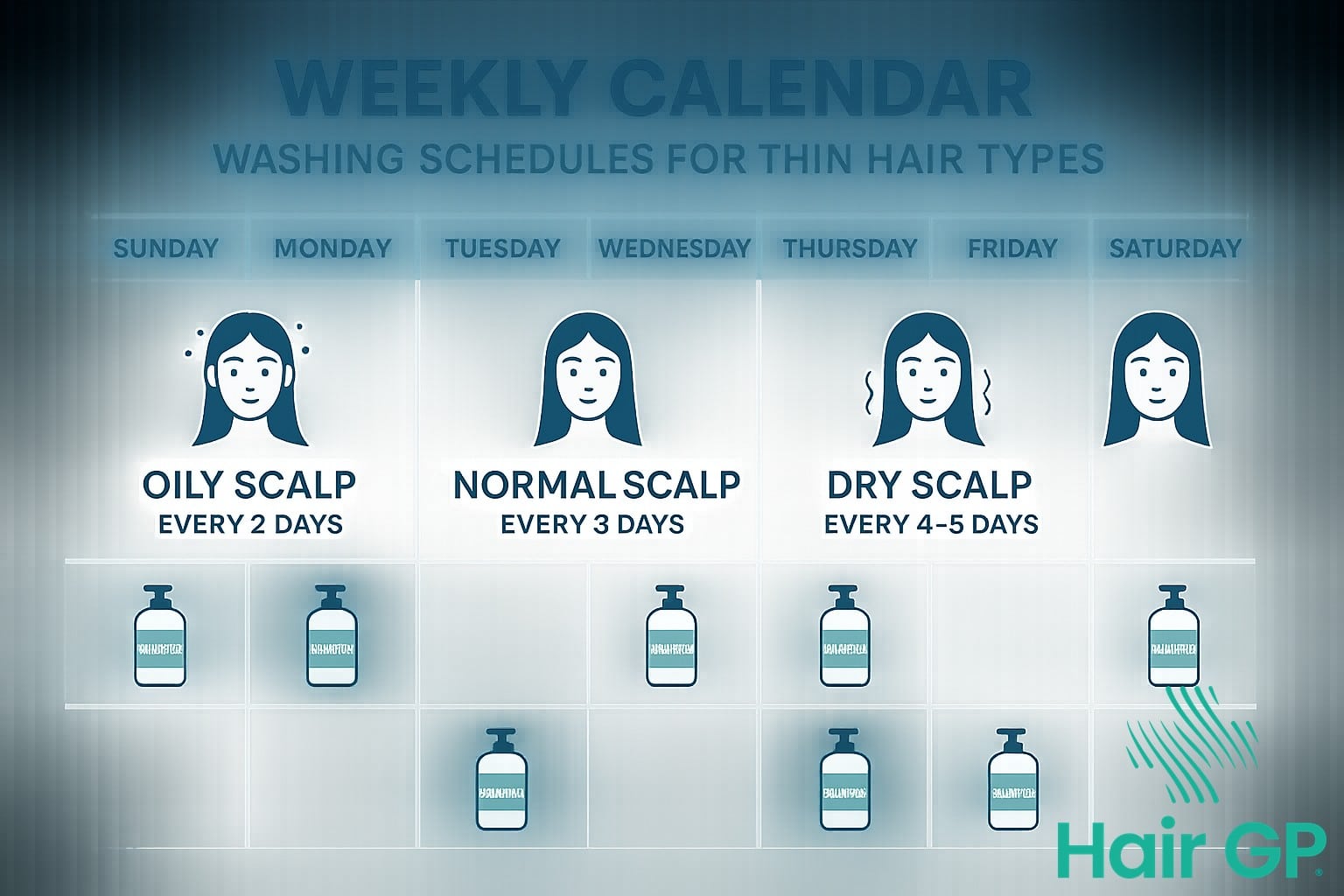
Fine strands need strategic clarifying to avoid the “washed-out” look. This science-backed rhythm delivers volume without damage:
Weekly Clarifying Routine for Thin Hair
- Day 1: Clarify with sulfate-based formula (e.g., Kevin Murphy Maxi Wash)
- Day 2-3: Use only dry shampoo at roots
- Day 4: Second wash with gentle volumizing shampoo (no conditioner)
- Day 5-7: Style as usual—hair should hold volume through day 7
Pro Tip: Apply conditioner to roots with a lightweight formula (like Living Proof Full Conditioner). This tricks oily scalps into producing less sebum while adding volume—extending time between washes by 2 full days.
4 Costly Mistakes That Make Clarifying Backfire
Over-Clarifying: The #1 Hair Disaster
Using clarifying shampoo more than twice weekly causes:
– Scalp inflammation (redness, flaking resembling dandruff)
– Cuticle erosion (light reflects unevenly, causing permanent dullness)
– Accelerated color fade (up to 50% faster in treated hair)
Fix: If you’ve over-clarified, do 3 consecutive oil treatments (coconut oil + heat cap for 20 minutes) before next wash.
Skipping the Conditioner Step
Clarifying removes 90% of natural oils—conditioning isn’t optional. Always:
– Use water-soluble conditioners (avoid silicones post-clarifying)
– Apply only to mid-lengths and ends
– Rinse with cool water for 30 seconds to lock in moisture
Ignoring Your Hair’s SOS Signals
Stop clarifying immediately if you notice:
– Increased breakage when detangling
– Hair that feels “crunchy” when dry
– Scalp stinging during washes
These indicate barrier damage requiring 4-6 weeks of zero clarifying.
The Final Clarifying Shampoo Frequency Cheat Sheet
| Hair Profile | Ideal Frequency | Clarifying Shampoo Type |
|---|---|---|
| Fine/Oily + Heavy Products | Weekly | Sulfate-based (e.g., Kristin Ess) |
| Medium/Normal | Every 10-14 days | Gentle clarifying (Neutrogena) |
| Curly/Coily | Every 3-4 weeks | Chelating (Malibu C) |
| Color-Treated | Monthly | Sulfate-free clarifying (Briogeo) |
| Hard Water Exposure | Weekly* | Chelating + Malibu C treatment |
*Hard water users: Alternate standard clarifying with chelating every other session
Start with the frequency for your hair type, then adjust based on how your hair responds—not a calendar. If strands feel supple and styles last longer, you’ve nailed how often clarifying shampoo should be used. If hair feels parched or greasy faster, reduce sessions by 3-4 days. Remember: Clarifying should make hair feel clean, not stripped. When in doubt, wait—it’s easier to fix buildup than repair damaged hair. For ongoing maintenance, keep a clarifying shampoo on hand but treat it like an emergency reset button, not your daily driver. Your healthiest hair days start with getting this one step perfectly calibrated.