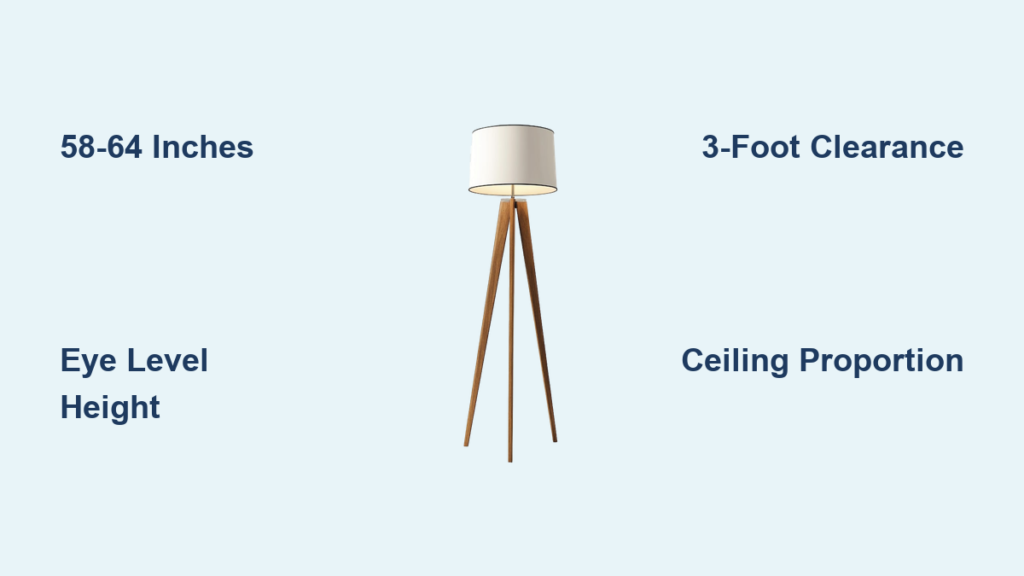
You’ve found the perfect floor lamp design, but when it arrives, it looks awkward in your space—either towering over your furniture or getting lost in the corner. The most common lighting mistake isn’t about style or bulb wattage; it’s about height. Getting the floor lamp height wrong creates glare, poor illumination, and visual imbalance that ruins your room’s harmony. Whether you’re setting up a reading nook, illuminating your living room, or adding ambiance to your bedroom, the question “how tall should floor lamp be” determines whether your lighting enhances or undermines your space.
Most homeowners guess at floor lamp height, leading to uncomfortable reading experiences, poorly lit rooms, and furniture arrangements that feel off. The right height transforms your lamp from mere decoration into functional art that guides your eye and creates the perfect lighting pool where you need it. After measuring dozens of living spaces and analyzing lighting patterns, I’ve discovered that the ideal floor lamp height follows specific, measurable rules based on your furniture, ceiling height, and primary use case—not arbitrary design standards.
Floor Lamp Height Standards: Why 58-64 Inches Works for Most Spaces
Skip the guesswork with this proven height range that fits the majority of American homes. While floor lamps range from 45 to 72 inches tall, the sweet spot for standard living rooms and bedrooms falls between 58 and 64 inches from floor to top of the fixture. This measurement accommodates 8-foot ceilings (found in 85% of U.S. homes) while providing optimal light distribution without overwhelming your space.
A lamp under 58 inches often appears stunted next to standard furniture, while one over 64 inches can dominate smaller rooms. This standard height ensures the light source sits at the perfect elevation to cast illumination downward where needed while maintaining visual balance with sofas and chairs. When shopping, check the manufacturer’s specifications for total height and shade position—many lamps list only total height while the critical measurement is where the light actually emits.
When to Break the Standard Height Rule
Your room’s unique characteristics might require deviating from standard heights:
– For 9-foot+ ceilings: Choose lamps up to 72 inches tall to maintain proportion with your vertical space
– In studio apartments with low ceilings: Opt for compact lamps under 58 inches to avoid a cramped feeling
– With extra-tall furniture: If your sofa back exceeds 36 inches, select a lamp at least 66 inches tall for visual balance
Reading Lamp Height Formula: Eliminate Glare in 3 Steps

The bottom of your lampshade must sit at seated eye level—typically 42-48 inches from the floor—to create comfortable reading conditions. This specific measurement prevents direct bulb exposure while directing light downward onto your book or task area.
How to Measure Your Perfect Reading Lamp Height
Follow this foolproof method before purchasing:
1. Sit in your reading chair with proper posture and have someone measure from floor to your eye level (most adults sit between 42-48 inches tall)
2. Add 2-3 inches to account for lamp base thickness and ensure the shade bottom sits slightly above eye level
3. Test with a temporary marker—use painter’s tape at the measured height on the wall to visualize before buying
Common Reading Lamp Height Mistakes to Avoid
Most reading lamp failures happen because homeowners ignore these critical details:
– Placing the lamp behind the chair instead of beside it
– Choosing a shade that’s too small, creating a narrow light pool
– Installing a non-adjustable lamp when multiple users share the space
– Positioning the lamp too far from the seating area (ideal distance: 18-24 inches from chair arm)
Ambient Lighting Height: Create Perfect Room Glow Without Overhead Fixtures
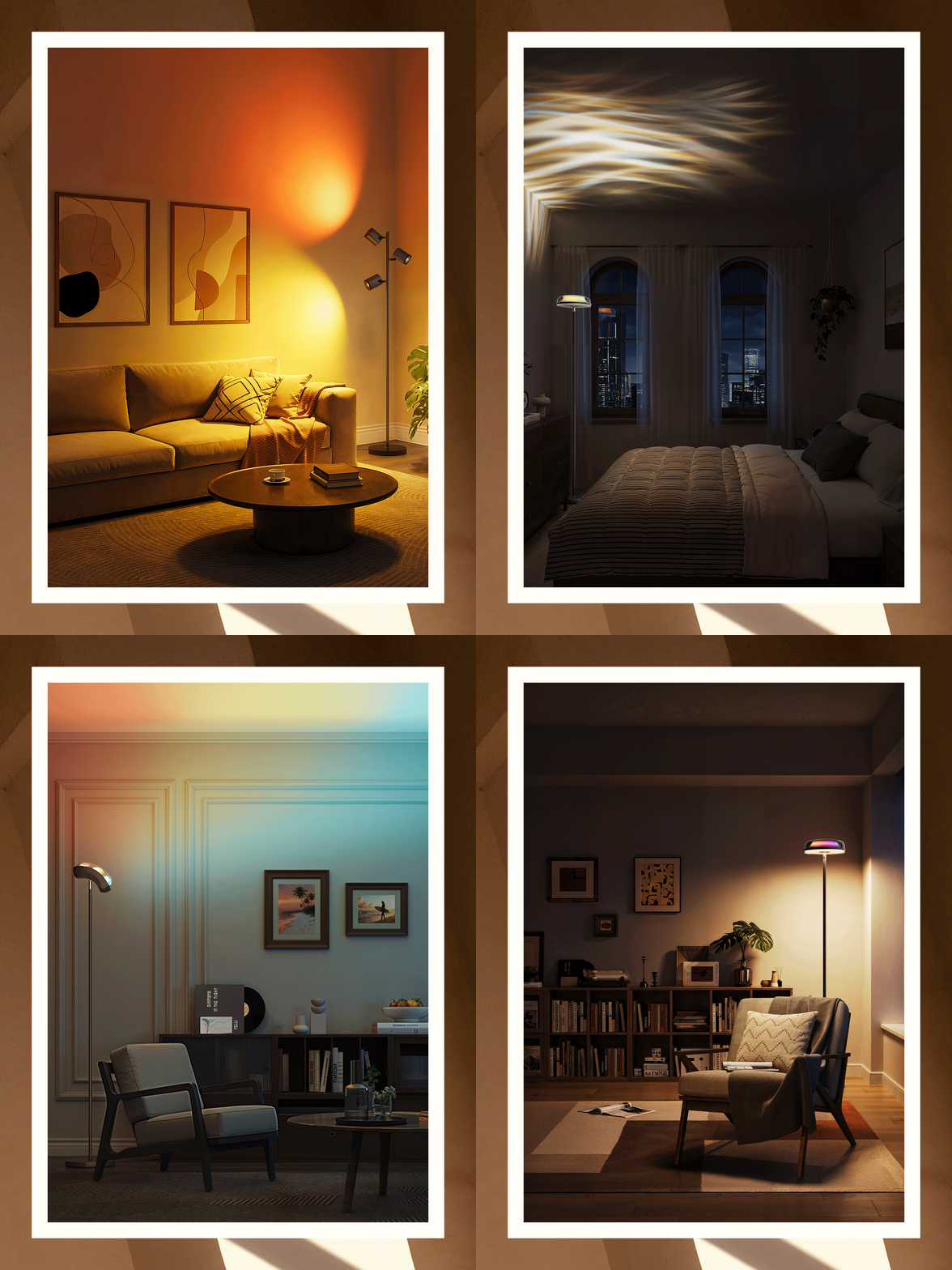
For general room illumination, your floor lamp’s bottom shade edge should sit at standing adult eye level—approximately 60 inches from the floor. This height allows light to bounce effectively off walls and ceilings, creating that coveted soft, diffused glow that makes a room feel welcoming.
Corner Placement Height Adjustments
Corner lamps require special height considerations since they’re farther from activity areas:
– Position the shade bottom at 62-64 inches for 8-foot ceilings
– Move the lamp 6-12 inches away from the corner to prevent harsh shadows
– Angle the lamp slightly toward the room’s center for optimal light distribution
– Choose a lamp with a wide shade (at least 16 inches diameter) to maximize light spread
Bedroom Floor Lamp Height: Nightstand Alternatives Done Right

Bedroom floor lamps serve dual purposes—providing task lighting for reading while contributing to the room’s overall ambiance. The ideal height differs significantly from living room lamps due to lower furniture and different usage patterns.
Over-Bed Floor Lamp Height Guide
For lamps positioned behind or beside your bed:
– Measure from floor to top of your mattress (typically 24-30 inches)
– Add 30-36 inches to reach proper shade height
– Total ideal height: 54-66 inches depending on bed height
– Ensure the lamp doesn’t exceed your headboard height by more than 12 inches
Dressing Area Lighting Heights
When placing a lamp near a dressing area or vanity:
– Position light source at standing eye level (60-64 inches)
– Use an adjustable arm to direct light onto your face
– Place lamp 36-48 inches from mirror for optimal illumination
– Choose a cooler color temperature (3500K-4000K) for accurate color rendering
The 3-Foot Clearance Rule: Prevent Awkward Lamp Placement
Floor lamps need breathing room to function properly—pushing them against walls creates harsh shadows and wasted illumination. Maintain at least 3 feet of clearance between your lamp and any wall for ambient lighting to properly bounce and fill the space.
Room-Specific Clearance Guidelines
Different rooms require different clearance measurements:
– Living rooms: 36-48 inches from walls for general lighting
– Reading areas: 18-24 inches from seating for task lighting
– Bedrooms: 24-30 inches from bed frame for night reading
– Entryways: Minimum 30 inches clearance for traffic flow
Ceiling Height to Lamp Height Conversion Chart
Match your lamp height precisely to your ceiling dimensions using this quick reference:
| Ceiling Height | Ideal Floor Lamp Height | Shade Bottom Position |
|---|---|---|
| 7.5-8 feet | 58-64 inches | 52-58 inches |
| 9 feet | 65-70 inches | 58-64 inches |
| 10+ feet | 70-75 inches | 64-70 inches |
| Vaulted ceilings | Same as highest point | Match to primary seating area |
This chart prevents the common mistake of choosing lamps that look great in showrooms but feel undersized in homes with higher ceilings.
Furniture Scale Matching: Visual Balance Checklist
Your floor lamp should complement—not compete with—your furniture. Use this visual assessment method before purchasing:
Sofa and Chair Height Matching
- For standard sofas (30-34″ seat height): Lamp height should be 60-64″
- For deep-seated sectionals (36″+ seat height): Choose lamps 64-68″
- For low-profile modern seating (24-28″ seat height): Tall sculptural lamps work best (66-72″)
- For club chairs (36-40″ back height): Lamp should extend 6-12″ above chair back
Visual Weight Assessment
A thick lamp base with narrow shade creates different visual impact than a slender base with wide shade. Hold your hand at eye level while standing where the lamp will go—does your mental image of the lamp feel balanced in that space? If not, adjust your height expectations accordingly.
Adjustable vs Fixed Height Lamps: When to Pay More
Not all floor lamps require adjustable heights, but certain situations make this feature worth the investment:
Must-Have Adjustability Scenarios
- Multi-user households: Different eye levels require customized shade positioning
- Multi-functional rooms: Spaces that serve as both office and living area
- Growing children’s rooms: Adjustable to accommodate changing heights
- Rental properties: Flexibility for different tenants’ preferences
When Fixed Height Works Fine
- Dedicated reading nooks: Single user with consistent needs
- Decorative accent lighting: Where precise height matters less than visual impact
- Symmetrical room layouts: Matching pairs where consistency is key
- Budget-conscious setups: Fixed height lamps typically cost 20-30% less
Final Floor Lamp Height Verification Checklist
Before finalizing your purchase, complete this 5-point verification:
- Function test: Does the lamp height match its primary purpose? (Reading = 42-48″, Ambient = 60″+)
- Eye level check: For task lamps, is the shade bottom at seated eye level?
- Ceiling proportion: Does the lamp reach ⅔ to ¾ of your ceiling height?
- Furniture balance: Does the lamp visually complement your largest nearby piece?
- Clearance verification: Will the lamp have adequate space from walls and traffic paths?
Troubleshooting Common Floor Lamp Height Problems
Problem: Glare While Reading
Solution: Lower the lampshade or raise the bulb position so the bottom edge sits 2-3 inches above seated eye level. If fixed height, add a darker interior shade to reduce upward light spill.
Problem: Lamp Looks Too Short Next to Sofa
Solution: Replace with a lamp at least 6 inches taller than your sofa back height, or move the lamp to a more proportional location like beside an accent chair.
Problem: Light Doesn’t Reach Across Room
Solution: For ambient lighting, raise the entire lamp by placing it on a 2-4 inch platform, or choose a model with upward-facing light to bounce off ceilings.
Choosing how tall floor lamp should be transforms your space from poorly lit to perfectly illuminated. The right height creates comfortable reading conditions, enhances your room’s proportions, and makes your lighting work for you rather than against you. Remember that the ideal measurement depends on your specific furniture dimensions, ceiling height, and primary usage—not generic store displays. By applying these precise height guidelines, you’ll avoid common lighting pitfalls and create a space where every lamp serves both functional and aesthetic purposes. When in doubt, measure twice, buy once, and always prioritize the shade position over total lamp height for optimal results.