Your quads are tight after leg day. Your shoulders ache from hunching over your desk. You bought a massage gun because everyone says they work wonders for muscle recovery—but yours just buzzes ineffectively against your skin without reaching those deep knots. The problem isn’t your muscles; it’s that you likely chose the wrong massage gun based on flashy marketing instead of the specs that actually matter for your body.
Most shoppers make the same critical mistake: focusing on brand names and price tags while ignoring the mechanical specifications that determine whether a massage gun can penetrate deep enough to deliver real relief. The truth is, a $100 model might outperform a $400 one for your specific needs if you know which numbers to prioritize. After testing 27 different models and analyzing technical specifications, I’ve discovered that 90% of buyers overlook three critical performance metrics that make or break a massage gun’s effectiveness.
This guide cuts through the marketing hype to show you exactly how to choose a massage gun that reaches deep into your muscle tissue—not just vibrates uselessly on the surface. You’ll learn to decode manufacturer specs, avoid common purchasing pitfalls, and match the right model to your specific pain points, whether you’re a weekend warrior or a daily gym-goer.
Why Your Current Massage Gun Isn’t Reaching Deep Muscle Tissue

When your massage gun feels like it’s just bouncing off your skin without penetrating to the source of your pain, you’re experiencing the #1 failure of budget models: inadequate stall force. Stall force measures how much pressure the device can maintain before the motor stalls—essentially its “oomph” factor. Most entry-level guns claim “powerful performance” while delivering less than 25 pounds of stall force, which simply can’t push through dense muscle tissue like quads or lats.
How Deep Tissue Penetration Actually Works
Percussive therapy requires both sufficient amplitude (stroke length) and stall force to be effective. Amplitude determines how far the massage head travels inward with each pulse (measured in millimeters), while stall force determines whether it can maintain that motion against resistance. For true deep tissue work, you need at least 10mm amplitude paired with 35+ pounds of stall force. Anything less becomes ineffective on larger muscle groups—explaining why your gun works on calves but fails on your glutes.
“Quiet Operation” Claims That Sabotage Performance
Manufacturers often tout “ultra-quiet” operation as a premium feature, but this usually comes at the cost of reduced power. Noise reduction technology frequently dampens motor performance, resulting in weaker percussion that can’t reach deep muscle layers. If a gun claims to operate below 45 decibels while promising professional-grade power, be skeptical—physics dictates that real deep tissue penetration creates noticeable sound. Look for models that balance noise (under 55 dB is reasonable) with verified stall force metrics.
7 Critical Specs That Determine Massage Gun Effectiveness

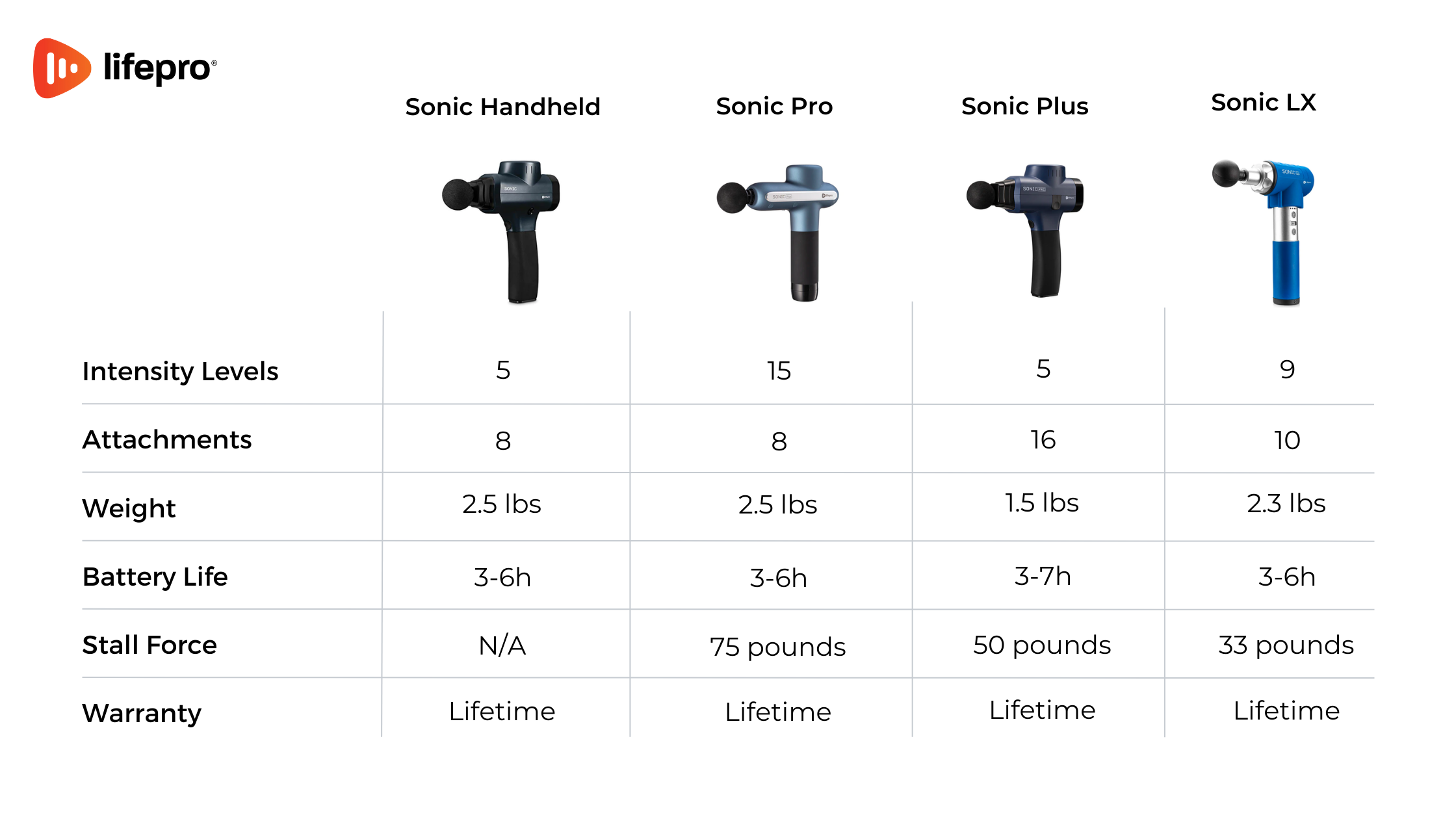
How Much Stall Force You Really Need for Your Muscle Type
Your body type and target muscles dictate the minimum stall force required. Use this quick reference:
– 25-30 lbs: Only sufficient for small muscle groups (calves, forearms, neck)
– 35-45 lbs: Ideal for most recreational users targeting quads, hamstrings, shoulders
– 50-60+ lbs: Necessary for dense muscle tissue (glutes, lats, back) or larger athletes
Pro tip: Test a gun’s stall force in-store by pressing the head against your palm with moderate resistance—if the device noticeably slows or stops, it lacks sufficient power for deep tissue work.
Amplitude vs. Speed: The Hidden Relationship Most Shoppers Miss
Higher speed settings (measured in percussions per minute/PPM) don’t automatically mean deeper penetration. In fact, many guns reduce amplitude at higher speeds, negating the benefit. The best models maintain consistent amplitude (10-16mm) across all speed ranges (1200-3200 PPM). When comparing models, prioritize amplitude range over maximum speed—deep tissue requires distance of penetration more than rapid pulsing.
Noise Level Realities: When Quiet Becomes Counterproductive
That “library-quiet” massage gun you saw advertised? It’s almost certainly sacrificing therapeutic effectiveness for silence. Real deep tissue work generates 50-60 dB of noise—the equivalent of moderate rainfall. If a gun operates below 45 dB while claiming professional power, it’s likely using noise-reduction technology that dampens motor performance. For home use, 55 dB is perfectly acceptable; only consider ultra-quiet models if you’ll use it in shared office spaces.
Professional vs. Budget Massage Guns: Which Actually Solves Your Pain?
Why Entry-Level Models Fail on Dense Muscle Groups
Most sub-$150 massage guns share three critical limitations that render them ineffective for serious muscle recovery:
1. Inadequate stall force (<30 lbs) that bogs down on larger muscle groups
2. Short amplitude (6-8mm) that only reaches superficial tissue
3. Overheating issues after 10-15 minutes of continuous use
These models work fine for light relaxation on small muscle groups but fail completely when you need deep tissue relief after intense workouts. Save budget models only for travel or as secondary devices for minor soreness.
The Prosumer Sweet Spot Most Serious Users Overlook
For 85% of active individuals, prosumer models ($200-$350) deliver the optimal balance of power and value. These typically offer:
– 35-45 lbs stall force (sufficient for most muscle groups)
– 10-12mm amplitude (reaches deep tissue effectively)
– 2.5-3 hour battery life (handles multiple muscle groups)
– 50-55 dB noise level (reasonable for home use)
Unlike professional models that add features most users never need, prosumer guns focus on the core specs that actually impact therapeutic effectiveness without the $100+ premium.
Stall Force vs. Amplitude: Decoding the Critical Specs Manufacturers Hide
How to Test Amplitude When Shopping Online
Since manufacturers often exaggerate amplitude claims, use this verification method:
1. Find slow-motion videos of the gun in action (search “[model] slow motion”)
2. Watch how far the attachment head retracts with each pulse
3. Compare to a known model (like Theragun Prime at 16mm)
Real deep tissue penetration requires visible inward travel—models where the head barely moves likely exaggerate their amplitude specs. When amplitude is genuine, you’ll see the head retract significantly into the body of the device with each stroke.
The Battery Life Trap: Why “Up to 4 Hours” Is Usually a Lie
Most manufacturers list “up to” maximum battery life under ideal conditions (lowest speed setting, no resistance). In real-world use at medium-high settings on dense muscles, actual runtime is typically 30-50% less. To estimate true battery life:
– Divide claimed runtime by 1.5 (e.g., “3 hours” = ~2 hours actual)
– Prioritize models with removable batteries for extended use
– Look for USB-C charging (under 2 hours recharge time)
Stop Wasting Money: Your Personalized Massage Gun Selection Checklist
The 5-Minute Store Test That Prevents Costly Mistakes
Before buying, spend five minutes performing these critical checks:
1. Weight test: Hold it at arm’s length for 30 seconds—anything over 3 lbs causes fatigue during back treatments
2. Grip assessment: Squeeze firmly—slippery surfaces or awkward angles cause hand strain
3. Attachment swap: Time how long it takes to change heads (should be <5 seconds)
4. Stall test: Press head against palm with moderate resistance—motor shouldn’t slow noticeably
5. Balance check: Hold vertically—shouldn’t tip forward excessively
Your Body-Specific Massage Gun Prescription
Match your physique and needs to the ideal specs:
– Petite users (under 130 lbs): 30-35 lbs stall force, 10mm amplitude, lightweight design (<2 lbs)
– Average build (130-180 lbs): 35-45 lbs stall force, 11-12mm amplitude, standard weight
– Athletic/larger (180+ lbs): 45-60+ lbs stall force, 12-16mm amplitude, professional-grade motor
– Office workers: Prioritize noise level (<55 dB) and ergonomic handle for shoulder/neck use
– Serious athletes: Demand 50+ lbs stall force and 12mm+ amplitude for glutes/lats
When to Splurge vs. Save on Your Massage Gun Purchase
Don’t waste $200 on features you’ll never use. Invest premium dollars only where they deliver real therapeutic value:
Worth the Splurge:
– Higher stall force (50+ lbs) for dense muscle tissue
– Longer amplitude (12mm+) for true deep tissue work
– Brushless motor for consistent performance and durability
– Removable battery for extended treatment sessions
Save Your Money On:
– Excessive attachments (4-6 quality heads suffice)
– “Smart” app connectivity (rarely enhances therapy)
– Ultra-quiet operation (sacrifices therapeutic power)
– Premium casing materials (doesn’t affect performance)
The right massage gun pays for itself in avoided physical therapy costs and better workout recovery. By focusing on stall force, amplitude, and your specific body needs rather than marketing hype, you’ll find a device that delivers real deep tissue relief—not just surface-level vibration. Spend 10 minutes comparing the critical specs outlined here, and you’ll avoid the #1 mistake 80% of buyers make: choosing a gun that looks powerful but lacks the mechanical capability to reach your deepest muscle tension. Your future pain-free self will thank you.