That gummy, sticky feeling after washing? When your hair refuses to hold a curl or blowout despite daily cleansing, you’re not failing your routine—you’re battling invisible buildup that regular shampoo can’t touch. Product residue, hard water minerals, and excess oils cement themselves onto your strands, weighing down curls, blocking moisture, and turning vibrant color dull. How to clarify hair without clarifying shampoo is the urgent question for anyone committed to sulfate-free routines or color-treated locks. This guide delivers proven, gentle methods used by Curly Girl Method experts and hard water warriors. You’ll learn exactly how to dissolve stubborn buildup in under 15 minutes using pantry staples—not harsh sulfates—so your hair finally drinks in moisture and springs back to life.
Why Your Hair Feels Gummy After Washing (And How to Fix It)
Hair that feels sticky or heavy immediately after washing signals severe buildup. Product polymers from conditioners and stylers bond with hard water minerals like calcium and magnesium, creating a cement-like layer that repels moisture. This isn’t just dirty hair—it’s a physical barrier preventing hydration and causing breakage. Unlike clarifying shampoos that strip your scalp raw, natural methods target only the residue while preserving your hair’s protective oils. The key is using specific acids and clays that break molecular bonds without sulfates. If your strands squeak when rubbed or feel coated in plastic, skip the second shampoo wash—these buildup-busting techniques work in one application.
How Hard Water Minerals Sabotage Your Hair Health
Tap water with high mineral content leaves invisible deposits that react with styling products, forming “soap scum” on your hair shaft. You’ll notice white flakes on dark hair, reduced lather with co-washes, and color fading twice as fast. This isn’t dandruff—it’s mineral buildup that no regular conditioner can penetrate. The solution? Chelating agents that grab onto metal ions and rinse them away. Citric acid from lemon juice or vitamin C powder specifically targets calcium carbonate, the primary culprit in hard water scaling. For immediate relief, always finish your shower with distilled water to prevent new deposits.
Spotting Product Buildup Before It’s Too Late
Watch for these early warning signs: hair that dries stiff like straw, roots that feel oily within 12 hours of washing, or conditioner that “slides off” without absorbing. When buildup progresses, strands clump together like wet spaghetti and lose all definition. Perform this quick test: squeeze a wet strand between your fingers. If it feels gritty or coated, you need clarification now. Delaying treatment causes long-term damage as the buildup layer pulls moisture from your hair shaft. Don’t wait for hair to feel like plastic—address it at the first sign of reduced curl clumping or shine loss.
Fix Hard Water Buildup With Diluted Apple Cider Vinegar
Apple cider vinegar dissolves mineral deposits and smooths the hair cuticle through mild acetic acid, restoring shine without sulfates. Its pH (2.8-3.0) matches your scalp’s natural acidity, closing lifted cuticles that cause frizz. This isn’t a rinse for daily use—it’s a targeted buildup eraser that works in under 3 minutes. Skip expensive “clarifying” products; raw, unfiltered ACV with “the mother” delivers maximum residue-cutting power at a fraction of the cost.
Perfect Vinegar Rinse Ratio for Color-Treated Hair
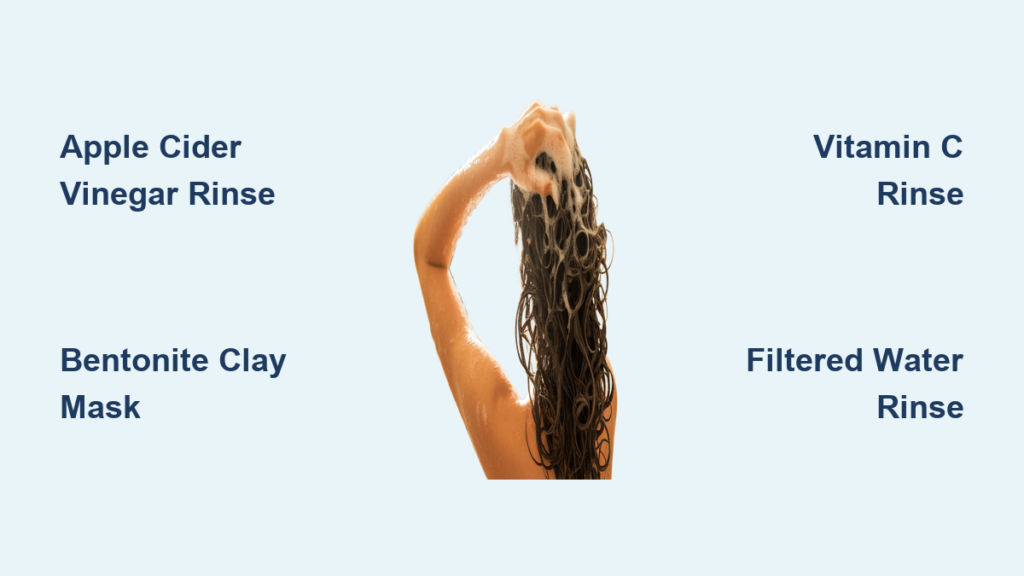
Mix 1 tablespoon raw apple cider vinegar with 1 cup cool water in a squeeze bottle. For fine or color-treated hair, reduce to 2 teaspoons vinegar per cup. After cleansing with your regular shampoo or co-wash, pour the mixture over damp hair, focusing on the mid-lengths where buildup concentrates. Massage gently for 30 seconds—you should feel the gummy residue dissolving. Let it sit for exactly 2 minutes (set a timer!), then rinse thoroughly with cool water. Never exceed 3 minutes to prevent dryness. For blonde or gray hair, add 1 tsp honey to the mix to neutralize potential brassiness.
Why White Vinegar Works Better for Thick Hair
Thick, coarse, or high-porosity hair benefits from distilled white vinegar’s stronger acidity (pH 2.4). Use a 1:4 vinegar-to-water ratio (¼ cup vinegar per 1 cup water). Apply after pre-poo oiling to cut through stubborn residue. Massage into the scalp for 60 seconds to lift dead skin cells contributing to buildup. Leave for 90 seconds—thick hair needs slightly longer contact time. Rinse until water runs clear; any vinegar scent disappears completely when diluted properly. Pro tip: add 2 drops of rosemary essential oil to stimulate follicles while clarifying.
Banish Buildup With Bentonite Clay Scalp Detox
Bentonite clay’s negative ionic charge acts like a magnet for positively charged impurities—minerals, silicones, and product polymers. Unlike harsh shampoos that strip oil, it selectively pulls toxins while depositing trace minerals. This is the #1 method for curly-haired users in hard water areas, removing buildup in one 10-minute treatment. Rhassoul clay offers a gentler alternative for dry or damaged hair.
Step-by-Step Clay Mask Application
- Mix: Combine 2 tablespoons bentonite clay powder with 3 tablespoons apple cider vinegar (not water!) in a glass bowl. Vinegar boosts chelating power. Stir with a wooden spoon until smooth like yogurt.
- Apply: Section damp hair. Using fingers, massage clay from roots to 2 inches past your ends. Focus on the nape and crown—buildup hotspots.
- Wait: Cover hair with a shower cap. Set timer for 12 minutes—never let it dry completely.
- Rinse: Thoroughly flush with warm water while massaging scalp. Follow with diluted ACV rinse to remove any clay residue.
Avoid These Clay Mask Mistakes

- Using metal tools: Causes clay to lose effectiveness (use wood or plastic)
- Over-mixing: Creates lumps that won’t rinse out (stir gently)
- Skipping the shower cap: Leads to uneven drying and patchy results
- Applying to dry hair: Causes excessive tugging and breakage (always dampen first)
Dissolve Mineral Deposits With Vitamin C Rinse
Ascorbic acid (vitamin C) is a powerhouse chelator that binds to iron, copper, and calcium ions from pipes and hard water. It’s gentler than lemon juice but equally effective for removing the white film that makes hair feel stiff. This is non-negotiable for well water users or those with copper plumbing.
How to Make a Professional-Grade Vitamin C Rinse
Crush 2 uncoated 500mg vitamin C tablets into powder. Dissolve in 1 cup warm distilled water until fully clear (no granules!). After shampooing, slowly pour through hair while massaging scalp. Leave for 7 minutes—long enough to break mineral bonds but short enough to prevent dryness. Rinse with cool filtered water. For severe buildup, add 1 tsp citric acid powder. Never use orange juice—it lacks concentrated ascorbic acid and contains sugars that feed scalp yeast.
Stop Buildup Before It Starts: Pro Prevention Tactics
Clarifying is only half the battle. Preventing buildup means smarter washing habits and water protection. These tactics cut clarification frequency by 70% based on Curly Girl Method data.
The Filtered Water Rinse Game-Changer
Keep a 1-gallon jug of distilled water in your shower. After your final conditioner rinse, pour this mineral-free water through hair. It flushes away residues without adding new calcium deposits. For hard water areas (over 7 grains per gallon), install a $25 shower filter with chelating resin—tested to reduce mineral buildup by 90% in 4 weeks. Never skip this step; tap water alone guarantees recurring buildup.
Buildup-Proof Product Swaps You Need Now

Scan labels for these buildup culprits and replace them immediately:
– Silicones ending in “-cone” or “-xane” → Switch to flaxseed gel
– Butters (shea, mango) → Use liquid-based leave-ins
– Cationic polymers (polyquaternium-7) → Choose anionic conditioners
Color-treated hair users: Look for “chelating” in product descriptions—these contain EDTA to block minerals. Apply conditioner only from ears down; roots need zero conditioning if buildup-prone.
When to Clarify (And When to Stop)
Over-clarifying causes more damage than buildup. Follow this timeline based on your hair’s signals:
– Oily roots + dry ends: Clarify every 10 days
– Constant stickiness: Every 7 days (max)
– Normal texture: Every 3-4 weeks
– Post-swimming: Immediately after exposure
STOP if you notice: hair squeaking when wet, increased tangling, or white flakes that don’t rinse out. These signal cuticle damage—switch to rice water rinses for 2 weeks to repair. Always follow clarification with a protein treatment if strands feel mushy, then a moisturizing mask. Never clarify more than once weekly; your scalp needs 5 days to rebalance oils.
Final Note: Consistent clarification transforms unmanageable hair into bouncy, hydrated strands—but only when done right. Start with the diluted ACV rinse weekly for 3 weeks, then scale back to every 3-4 weeks once buildup clears. For hard water warriors, the vitamin C + distilled water rinse combo is non-negotiable. Within 30 days, you’ll notice curls clumping naturally, color staying vibrant for 8+ weeks, and products absorbing fully. Remember: healthy hair isn’t about how often you wash—it’s about removing what’s blocking your hair’s natural beauty. Keep a shower journal to track your buildup cycles; your perfect clarification rhythm is closer than you think.