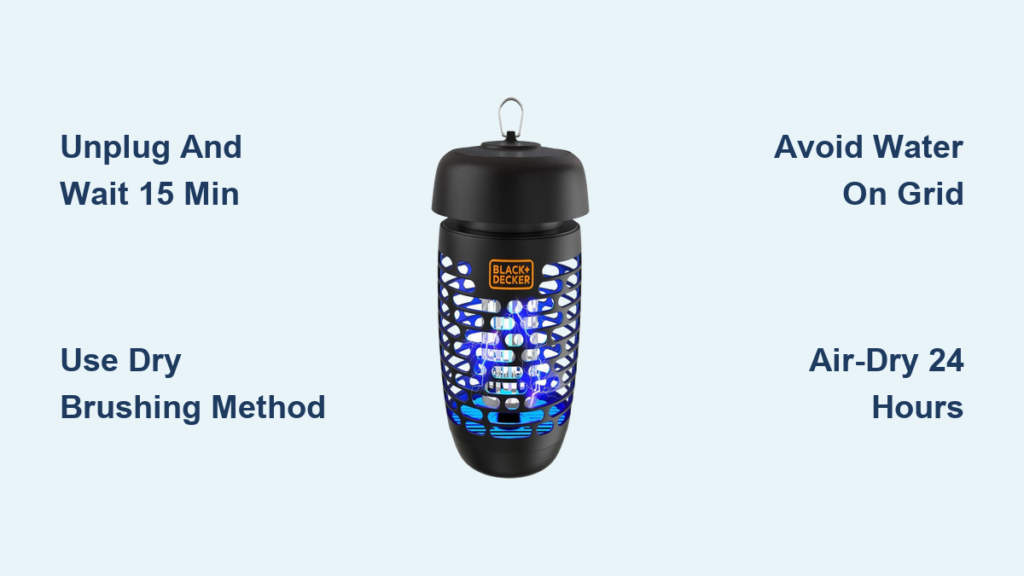
That satisfying zap you used to hear every few minutes? It’s gone silent. Your Black and Decker bug zapper sits on the patio, coated in a grimy layer of insect residue, doing nothing but gathering dust while mosquitoes feast on your backyard barbecue. When dead bugs clog the high-voltage grid, your unit can’t electrocute pests effectively—wasting energy and inviting swarms. Cleaning your Black and Decker bug zapper isn’t just about maintenance; it’s critical for restoring that powerful zap while preventing electrical hazards. In this guide, you’ll learn exactly how to deep-clean your unit safely, avoid shocking mistakes, and keep it zapping efficiently all season long.
Most homeowners don’t realize that a single layer of dried insects can reduce killing efficiency by over 70%. Worse, moisture trapped in a poorly cleaned grid creates fire risks or electric shocks. I’ve seen units fail permanently because owners sprayed water directly onto the grid or skipped the essential 15-minute discharge wait. Follow these steps precisely, and you’ll add years to your zapper’s life while keeping your family safe. Let’s transform that silent, bug-coated eyesore back into your patio’s most effective pest defender.
Why Your Black and Decker Bug Zapper Isn’t Zapping Anymore
Dead insects aren’t just gross—they’re performance killers. As carcasses accumulate on the grid, they create conductive bridges that short-circuit the high-voltage arcs. You’ll notice fewer zaps, weaker light output, or complete failure. This isn’t a manufacturing flaw; it’s 100% preventable with routine cleaning. During peak mosquito season, heavy buildup can occur in as little as two weeks. If your unit’s collection tray overflows or the grid looks dark and crusty (not shiny metal), it’s screaming for attention. Ignoring this invites two dangers: reduced pest control forcing you closer to bug zones, and electrical arcing that could overheat components.
How Insect Buildup Causes Electrical Failures
Insects contain salts and moisture that, when baked onto metal grids, form conductive paths. Instead of jumping between bars to zap bugs, the current leaks across debris. This drains power from the UV bulb too, dimming its lure. In severe cases, carbonized remains act like fuses, creating hot spots that melt plastic housings. You might smell ozone or see discoloration near the grid—immediate red flags.
Seasonal Impact on Cleaning Frequency
Summer’s heat accelerates buildup. Clean every 10–14 days when mosquitoes swarm at dusk. In spring/fall, stretch to 3–4 weeks. Always inspect after heavy rain events—even if unplugged, moisture can reactivate residue into conductive sludge.
Immediate Safety Steps to Avoid Electric Shock

Never skip these steps. The grid stores enough charge to stop your heart, even when unplugged. One homeowner ignored this and received a 2,000-volt shock while cleaning—landing him in the ER. Your safety depends on disciplined execution.
Why the 15-Minute Wait Isn’t Optional
Capacitors inside the unit hold lethal energy. Unplugging breaks the power source, but residual charge lingers. Set a physical timer—no guessing. Work only in dry conditions: humidity above 60% or damp surfaces can conduct stray voltage. If you smell ozone after unplugging, wait 30 minutes instead.
Critical Safety Gear Checklist
- Rubber-soled shoes: Non-conductive footwear prevents ground paths
- Nitrile gloves: Protects against allergens in insect dust
- Safety goggles: Prevents debris from flying into eyes during brushing
- Dust mask (N95): Inhaling dried bug particles can trigger asthma
Gather These 7 Cleaning Supplies Before You Begin

Using wrong tools risks permanent damage. That stiff-bristled grill brush? It’ll scratch protective coatings, inviting corrosion. Water from a spray bottle? One drop inside the housing could short the transformer. Here’s your exact toolkit:
- Soft-bristle paintbrush (1-inch width)
- Compressed air can (upright position only)
- Microfiber cloths (lint-free)
- 70%+ isopropyl alcohol
- Cotton swabs
- Mild dish soap
- Small bowl (for cleaning solution)
Pro Tip: Skip paper towels—they shed fibers that melt onto hot grids. Use old T-shirt scraps if microfiber’s unavailable.
Disassemble Your Bug Zapper Without Damaging It
Forcing clips or stripping screws ruins weather seals. Most Black and Decker models (like the DS-1000 or BP-100) use twist-lock cages—never force them.
How to Identify Your Model’s Mechanism
- Twist-lock models: Rotate the outer cage counterclockwise 1/4 turn until tabs align with slots. Lift straight up.
- Clip models: Press inward on 2–4 plastic tabs simultaneously while lifting the cage.
- Screw models: Use a Phillips screwdriver on 2–3 housing screws (store screws in a cup to avoid loss).
If resistance occurs, double-check your manual. Forcing it cracks UV bulb housings.
Collection Tray Removal Technique
Slide the tray out slowly—jerkiness spills debris into the grid. If stuck, tap the unit’s bottom gently on a towel. Never use pliers; metal contact risks shorts.
Remove Insect Debris from the Grid in 3 Safe Ways
Work outdoors over a trash can. Insect dust contains endotoxins that cause respiratory irritation.
Dry Brushing: The Primary Debris Removal Method
Hold the grid horizontally. Using light pressure, brush parallel to the wires (not perpendicular) with downward strokes. Start at the top grid bar—this directs debris into the tray cavity. Rotate the unit 90 degrees after each pass to cover all angles. Stop if bristles snag; forced brushing bends grid wires.
Compressed Air Protocol for Tight Spaces
Hold the can upright 6 inches from the grid. Use 1-second bursts at 45-degree angles to blow debris outward. Never tilt the can—propellant liquid freezes grids on contact, causing cracks. Focus on wire junctions where carcasses lodge.
Stubborn Buildup Removal Without Scratching
Dip a cotton swab in isopropyl alcohol. Gently roll it along grid bars—alcohol dissolves residue without moisture damage. For thick deposits, rub along the wire (not across) with a soft toothbrush. Test on one bar first; if metal dulls, stop immediately.
Deep Clean the Grid and Collection Tray Without Water Damage
Water is the enemy here. One drop inside the housing can corrode contacts within days.
Safe Wipe-Down Technique for Grids
Dampen a microfiber cloth with alcohol only (never water-based solutions). Wring until almost dry—like a misted window. Wipe grid bars using feather-light pressure. If residue remains, reapply alcohol to the cloth, not the unit.
Collection Tray Cleaning Process
- Empty tray contents into trash (not compost—it attracts pests)
- Soak in warm, soapy water for 5 minutes
- Scrub with soft brush (avoid abrasive sponges)
- Rinse under cold running water
- Air-dry tray standing upright for 2 hours minimum
Warning: Hot water warps plastic trays, creating gaps where live bugs escape.
Restore UV Light Efficiency by Cleaning the Bulb Properly
A dirty UV bulb attracts 50% fewer insects. Finger oils alone can create hot spots that shatter the bulb when powered.
Step-by-Step Bulb Cleaning
- Unplug and wait 20 minutes (bulbs stay hot longer than grids)
- Wrap microfiber cloth around bulb
- Wipe gently from base to tip in one direction
- For stubborn grime, apply alcohol to cloth first
- Never touch bare bulb—use cloth as barrier
Bulb Cover Cleaning Method
Remove the plastic shield if possible. Wipe both sides with alcohol-dampened cloth. If fixed in place, use cotton swabs in crevices. Cloudy covers reduce UV output by 30%—replace if scratched.
Dry and Reassemble Your Bug Zapper Correctly
Moisture is the silent killer of bug zappers. Skipping this step causes 90% of post-cleaning failures.
Critical Drying Protocol
- Air-dry all parts 24 hours minimum indoors (not in sun—UV degrades plastics)
- Place grid on paper towels, wires facing up
- Check for moisture in screw holes with cotton swab
- Never use hair dryers—heat cracks components
Reassembly Safety Check
Before plugging in:
1. Verify grid wires aren’t bent or touching
2. Confirm collection tray slides in smoothly
3. Ensure all clips/screws are secured (gaps allow bug entry)
4. Wipe housing exterior with dry cloth
Schedule Maintenance to Prevent Future Clogs
Proactive care beats emergency fixes. Set phone reminders:
- Every 2 weeks in summer: Quick brush-out of grid
- Monthly: Full cleaning per this guide
- End of season: Deep clean + store indoors
Pro Tip: Place unit under eaves—not directly exposed to rain. Even “weather-resistant” models fail when drenched weekly.
Troubleshoot 3 Common Post-Cleaning Issues
No Light After Cleaning
Cause: Moisture in bulb socket or loose wiring from reassembly. Fix: Unplug, dry socket with alcohol swab, reseat bulb firmly.
Weak Zapping Sound
Cause: Residual grease on grid wires. Fix: Re-clean grid with alcohol swab, focusing on wire intersections.
Unit Turns Off Intermittently
Cause: Collection tray not fully seated, triggering safety cutoff. Fix: Remove and reinsert tray until it clicks.
Final Note: Consistent cleaning makes your Black and Decker bug zapper 3x more effective at pest control while eliminating shock risks. Never operate a unit with visible grid buildup—it’s literally playing with fire. For model-specific quirks, always reference your owner’s manual first. Now grab that paintbrush and reclaim your bug-free backyard!