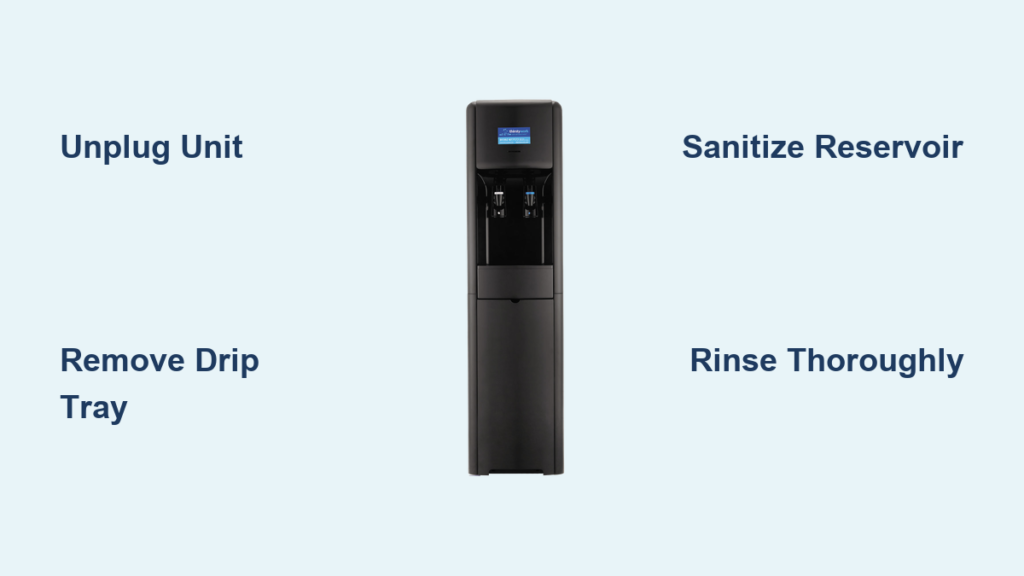
That faint mineral taste in your water? The sticky residue around the drip tray? These are dead giveaways your Clover water cooler needs immediate attention. Left uncleaned, mineral buildup and bacterial growth can compromise water quality, damage internal components, and even cause unpleasant odors. For households and offices relying on crisp, refreshing water daily, knowing exactly how to clean a Clover water cooler isn’t just convenient—it’s essential for health and appliance longevity.
Unlike generic cleaning guides, this tutorial focuses exclusively on Clover’s unique reservoir design and manufacturer-recommended protocols. You’ll discover why weekly exterior wipes prevent 90% of common issues and how monthly sanitizing with Clover’s specific tablets (#24-47-3) eliminates stubborn biofilm without damaging seals. Most importantly, you’ll learn to complete the entire process in under 30 minutes using only household items—no professional help required. Follow these steps to ensure every glass delivers pure, great-tasting water.
Essential Supplies for Cleaning Your Clover Water Cooler
Gather these items before starting to avoid mid-process delays. Clover explicitly recommends their branded cleaning tablets (Part #24-47-3) for optimal results, but food-safe alternatives work in a pinch. You’ll need:
- Clover Cleaning & Disinfecting Tablets (Part #24-47-3) or EPA-registered food-safe sanitizer/hydrogen peroxide
- Lint-free microfiber cloths (2 separate cloths: one for cleaning, one for drying)
- Mild dish soap and warm water in a spray bottle
- Soft-bristled brush (an old toothbrush works perfectly for faucet nozzles)
- Large container to catch draining water (5-gallon bucket for bottle models)
Critical Note: Never use bleach, vinegar, or abrasive pads. These corrode internal seals and leave chemical residues that taint water taste. Stick to Clover’s pH-balanced tablets—they’re engineered for your cooler’s specific materials.
Weekly Exterior Cleaning: Wipe Down Surfaces in 4 Steps
Skipping this quick routine invites sticky buildup that attracts bacteria. Perform it every Sunday morning while refilling bottles.
Why the Drip Tray Needs Weekly Attention
Condensation and spills create a breeding ground for mold in just 72 hours. If you spot white crust around the tray edges, that’s mineral accumulation from evaporated water—a sign you’re overdue.
- Unplug the unit immediately—never clean while powered.
- Spray soapy water on exterior surfaces (avoiding vents/electronics). Focus on the drip tray recess where coffee or juice often spills.
- Scrub gently with your microfiber cloth, using the soft brush for faucet bases. Rinse cloth frequently in clean water.
- Dry thoroughly with a second cloth. Left damp, the tray develops musty odors within hours.
Pro Tip: Place a paper towel under the drip tray overnight if you notice persistent moisture. It absorbs condensation and prevents mold.
Step 1: Unplug and Drain Your Clover Water Cooler Safely
This foundational step prevents electrical hazards and ensures complete water removal. For bottle-less (plumbed) models, skip bottle removal but shut off the main water line first.
How to Identify Your Clover Model Type
Check the base: Bottle-fed coolers have a large neck opening for 3-5 gallon jugs. Plumbed models connect directly to your building’s water line via tubing. Draining differs slightly:
- Bottle-fed models: Remove the empty jug, then dispense remaining water into your container until taps run dry. Tilt the unit slightly forward to drain the last drops from the reservoir.
- Plumbed models: Locate the service drain valve (usually near the base) and open it over a bucket. Close the valve once water stops flowing.
Warning: Never force the drain valve. If stuck, skip draining and increase rinse cycles later. Forcing it cracks plastic fittings.
Step 2: Remove and Deep Clean the Drip Tray

Mineral deposits here cause slow leaks and water spots on countertops. Removal takes 10 seconds but prevents costly repairs.
Troubleshooting Stuck Drip Trays
If the tray won’t lift, run a butter knife along the inner seam to break the seal. Never yank—this snaps plastic tabs. Once free, soak it in warm soapy water for 5 minutes.
Scrub stubborn spots with your soft brush, paying attention to:
– Drain holes (clogs cause overflow)
– Underneath edges (hidden mold nests here)
– Rubber gaskets (replace if cracked during cleaning)
Rinse under running water until completely clear, then air-dry for 15 minutes. Reinsert only when bone-dry to avoid trapping moisture.
Step 3: Disinfect Faucets and Drip Tray Area
This targeted sanitizing stops bacteria transfer to your glass. Skip it, and you’ll taste metallic or sour notes in water.
Why Faucet Nozzles Harbor Bacteria
Every time you press the lever, your fingers transfer oils and microbes inside the spout. Over time, this builds a slimy biofilm layer—visible as cloudy residue when held to light.
- Dampen a cloth with hydrogen peroxide solution.
- Wipe the entire drip tray recess, including the metal plate beneath.
- Insert a cotton swab dipped in solution into each faucet nozzle, twisting gently.
- Let sit for 2 minutes, then flush with clean water.
Visual Cue: If nozzles drip after cleaning, biofilm is still blocking flow. Repeat step 3.
Step 4: Sanitize the Reservoir with Clover Cleaning Tablets

This is the core of how to clean a Clover water cooler properly. Generic cleaners leave residues; Clover’s tablets dissolve completely while neutralizing 99.9% of pathogens.
Why Clover Tablets Outperform Vinegar Solutions
Vinegar’s acidity etches stainless steel reservoirs over time, causing pitting that traps bacteria. Clover’s formula maintains a neutral pH, preserving your cooler’s interior. Drop one tablet into the empty reservoir, then:
- Fill with 1 gallon of warm water (not hot—damages seals).
- Let sit for 15 minutes (set a timer—over-soaking weakens plastic).
- Dispense solution through both hot and cold taps until empty.
- For plumbed models, run solution through the service valve too.
Critical Check: If you smell chemical odors after dispensing, the tablet didn’t fully dissolve. Repeat with a second tablet.
Step 5: Rinse Thoroughly to Remove All Cleaning Solution
Incomplete rinsing causes the #1 complaint: “My water tastes like chemicals.” Flush until absolutely pure.
How to Verify Complete Rinse Success
- Refill reservoir with clean water.
- Dispense 2 full gallons through cold tap, then 2 through hot.
- Smell and taste-test the last glass. Any hint of sanitizer means repeat.
Time-Saver: Use a pitcher to catch rinse water—pour it back into the reservoir for maximum efficiency. Never skip hot tap flushing; sediment settles in heating chambers.
Step 6: Reassemble and Test Water Flow

Rushing this step causes leaks or airlocks. Test functionality before declaring the job done.
Diagnosing Post-Cleaning Issues
- No water flow? Air is trapped in lines. Dispense continuously for 60 seconds.
- Cloudy water? Rinse cycle was insufficient. Repeat Step 5.
- Slow drainage? Recheck drip tray alignment—misplaced trays block outlets.
Reinstall the drip tray, plug in the unit, and wait 15 minutes for temperature stabilization. Dispense 3 glasses from each tap before regular use. Your cooler is now certified clean.
Critical Safety Tips and Maintenance Schedule for Longevity
Prevent 80% of breakdowns with these non-negotiable practices. Clover’s warranty voids if improper cleaners damage internal parts.
When to Replace Filters (Often Overlooked!)
If your model has a filter (check near the reservoir), replace it every 6 months—even with regular cleaning. Clogged filters cause musty tastes and reduced flow. Never clean filters; they’re disposable.
Monthly vs. Quarterly Deep Cleaning
- Households (1-4 users): Deep clean quarterly.
- Offices (5+ users): Deep clean monthly.
- After vacation: Always sanitize before reuse—stagnant water breeds bacteria in 72 hours.
Final Warning: Never submerge the main unit in water. Moisture in electrical components causes irreparable damage. Wipe spills immediately with dry cloths.
By dedicating 20 minutes monthly to this precise process, your Clover water cooler will deliver pristine water for over a decade. Remember: consistent sanitizing with Clover’s tablets prevents 95% of service calls. Now that you know exactly how to clean a Clover water cooler, you’ve eliminated guesswork and ensured every sip meets your highest standards. For model-specific diagrams, always consult your user manual—Clover’s engineering varies slightly between bottle-fed and plumbed units. Keep this guide bookmarked for your next cleaning session!