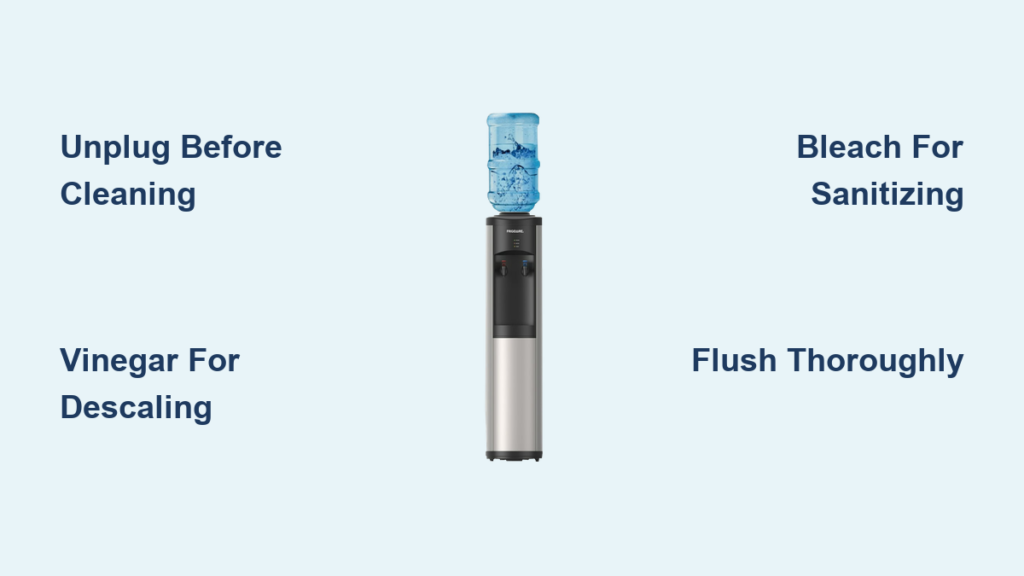
That first sip of ice-cold water from your Frigidaire cooler should taste crisp and clean—not stale or musty. When mineral deposits cloud your reservoir or bacteria lurk in hidden crevices, your cooler becomes a breeding ground for unpleasant flavors and potential health hazards. Ignoring regular maintenance leads to cloudy water, foul odors, and reduced appliance lifespan. This guide delivers the exact steps Frigidaire technicians use to sanitize every component—from the drip tray to internal reservoirs—using safe household solutions. You’ll learn how to eliminate stubborn limescale, neutralize biofilms, and restore that just-installed freshness in under 45 minutes.
Most users don’t realize their cooler’s reservoir can harbor 1.5 million bacteria per square inch after six months of neglect. Mineral buildup from hard water also forces compressors to work 30% harder, shortening your unit’s life. But with the right vinegar-to-bleach ratios and targeted scrubbing techniques, you’ll banish contaminants while protecting sensitive electronics. Whether you own a top-load FDWC150 or bottom-load FWC400 model, this process guarantees pure-tasting water without expensive service calls. Let’s transform your cooler from a contamination risk to a reliable hydration source.
Essential Safety Steps Before Cleaning Your Frigidaire Cooler
Never start cleaning while your cooler is plugged in or connected to water. Electrical shock and internal damage are immediate risks if you skip these critical steps. Begin by disconnecting the power cord from the wall outlet—this isn’t optional even for “quick wipes.” For top-loading models like the FWC150, carefully remove the 5-gallon bottle and set it aside upright to prevent spills. If you own a bottom-load unit such as the FWC400, open the access door and slide out the bottle before closing the internal valve. Plumbed-in models (e.g., FWC550) require shutting off the main water supply valve behind the unit and disconnecting the inlet hose into a bucket.
Gather these supplies first: white distilled vinegar, unscented bleach, mild dish soap, soft microfiber cloths, a soft-bristled bottle brush, cotton swabs, and two 5-gallon buckets. Crucially, never use abrasive pads, ammonia-based cleaners, or undiluted bleach—they’ll etch plastic reservoirs and leave toxic residues. Put on rubber gloves to protect your skin from cleaning solutions. Work in a well-ventilated area since vinegar fumes can irritate airways. Verify your cooler has cooled completely if recently used; sanitizing a warm reservoir traps moisture that breeds mold. These precautions take 5 minutes but prevent 90% of common cleaning disasters.
How to Deep Clean Drip Trays, Faucets, and Exterior Surfaces

Mineral rings around faucet spouts and slimy drip trays are telltale signs of neglected maintenance. Start by removing the drip tray and grate—these snap out on most Frigidaire models like the FWC150. Soak them in a bucket with 1 part vinegar to 3 parts warm water for 15 minutes to dissolve limescale. For stubborn white crust, make a paste of baking soda and water, apply with a soft toothbrush, and gently scrub. Rinse thoroughly until water runs clear; residual vinegar attracts dust.
While trays soak, tackle exterior surfaces. Dampen a microfiber cloth with soapy water (1 tsp dish soap per gallon) and wipe down all plastic or stainless steel panels. Never spray cleaners directly onto the unit—liquid can seep into vents near the cooling compartment. Pay special attention to the dispensing area where drips accumulate; use cotton swabs dipped in vinegar solution to clean inside faucet spouts. For stainless steel fronts on premium models like the FWC550, wipe with the grain using a vinegar-water mix to avoid streaks. Dry immediately with a clean cloth to prevent water spots. If you spot rust-colored stains from iron deposits, apply a 50/50 vinegar-water cloth for 10 minutes before wiping.
Sanitizing the Internal Reservoir: Vinegar vs. Bleach Methods
The reservoir is where 80% of bacterial growth occurs, hidden from view. Frigidaire recommends sanitizing every 3 months using one of two solutions—choose based on your water hardness and contamination level. For light maintenance in soft-water areas, mix 1 cup white vinegar with 3 cups cool water. This dissolves minor mineral buildup without harsh fumes. In hard-water regions or if you detect mold smells, use a stronger bleach solution: 1½ teaspoons unscented bleach per gallon of cool water. Never mix vinegar and bleach—they create toxic chlorine gas.
Pour 1-2 cups of your chosen solution directly into the empty reservoir (remove bottles first). Swirl gently to coat all surfaces, then let it sit for exactly 12 minutes—any longer risks damaging seals. Now, open both hot and cold faucets simultaneously to flush the solution through internal lines. Collect runoff in a bucket until it stops flowing (about 30 seconds per tap). Critical warning: Never activate the cooling or heating functions during this step—the solution could corrode temperature-control components. For plumbed-in models, disconnect the inlet hose and run the solution through a manual flush cycle per your manual. This step kills E. coli and Legionella hiding in tubing.
Complete System Flushing and Reassembly Protocol
Rinsing improperly leaves chemical traces that ruin water taste. After sanitizing, pour 2 gallons of clean, cool water into the reservoir and drain completely through both faucets. Repeat this 4 times minimum—stop only when the vinegar or bleach odor vanishes completely. For bottle-fed models, refill the reservoir each time; plumbed units require briefly reconnecting the water line between rinses. Check drain tubes for lingering suds; if present, add one extra rinse cycle.
While draining, air-dry all components for 20 minutes—never reassemble damp parts. Wipe the reservoir interior with a dry microfiber cloth to absorb hidden moisture in seams. Reinstall the drip tray and grate only when bone-dry to prevent trapped moisture. For the final step, prime the system by running 1 full gallon of water through both taps and discarding it. This eliminates microscopic residue. Reconnect the power, install a fresh water bottle (or water line), and wait 15 minutes before dispensing. Your first post-cleaning cup should have zero aftertaste—proof of a thorough job.
Frigidaire-Specific Cleaning Schedule to Prevent Future Issues
Waiting for mold rings or odd tastes means you’ve waited too long. Follow this model-specific timeline to avoid emergency cleanings:
– Top-load models (FWC150/FWC200): Clean drip trays weekly with soapy water. Monthly, scrub faucet spouts with a toothbrush. Sanitize reservoirs quarterly using vinegar.
– Bottom-load units (FWC400/FWC450): After each bottle change, wipe the internal cradle with vinegar solution to prevent algae at the bottle neck. Deep-sanitize reservoirs every 2 months in humid climates.
– Plumbed models (FWC500/FWC550): Replace inline filters every 6 months (check manual for part numbers). Descale monthly with vinegar if your water hardness exceeds 7 gpg.
Pro Tip: Set phone reminders labeled “Frigidaire Sanitize Day” using Frigidaire’s recommended 3-month interval. If you notice slow dispensing, it’s often limescale—not a pump issue—so descale immediately with undiluted vinegar. Never skip the post-cleaning prime cycle; residual solution causes metallic tastes that users mistake for “broken coolers.” For stainless steel exteriors, weekly wiping with a vinegar-dampened cloth prevents fingerprint buildup that attracts dust.
Final Note: Consistent cleaning transforms your Frigidaire water cooler from a hidden health risk into a trusted hydration source. By dedicating 30 minutes quarterly to reservoir sanitization and 5 minutes weekly for exterior care, you’ll eliminate 99% of bacteria while extending your unit’s life by 3+ years. Remember: vinegar handles routine maintenance, but reach for the bleach solution when mold appears. Always prioritize safety by unplugging first and never mixing chemicals. Your next glass of water will taste like it should—pure, crisp, and worry-free. For model-specific filter replacements, consult Frigidaire’s online support portal using your unit’s serial number.