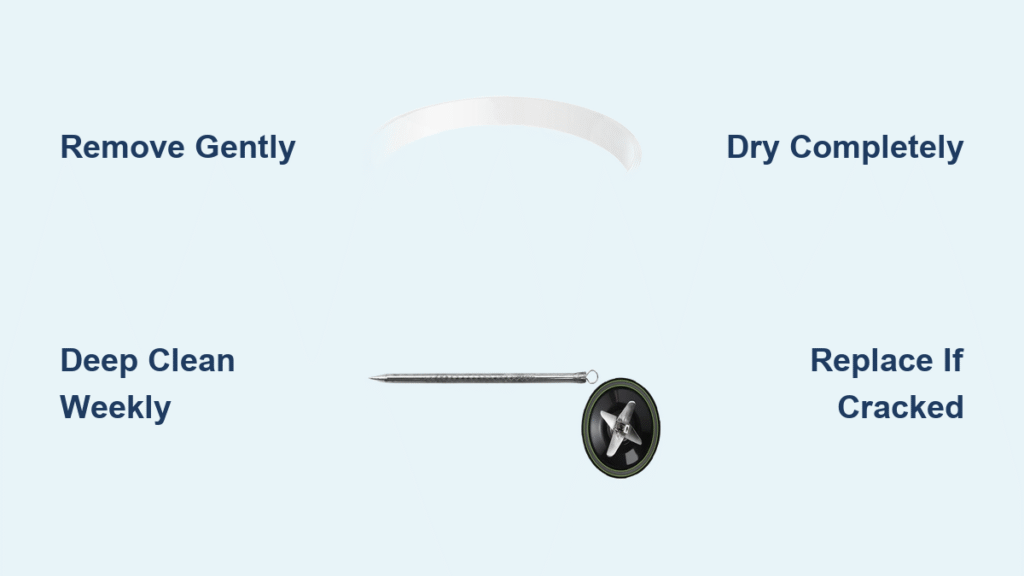
Your Ninja blender powers through frozen fruit and ice until you spot dark gunk clinging to the blade assembly. That unassuming rubber ring—your blender’s gasket—is silently failing as a bacteria trap. Skip proper maintenance and you’ll face leaks, foul odors, or premature replacement costs. This guide delivers the exact steps to remove, deep-clean, and reinstall your Ninja blender gasket safely in under 30 minutes. You’ll learn model-specific techniques to tackle stubborn protein residue, eliminate mold, and prevent future buildup while avoiding common mistakes that warp or tear this critical seal.
Locate Hidden Gasket Quickly
The Ninja blender gasket hides in a recessed groove beneath the blade assembly, forming a circular seal where the jar meets the blade housing. This rubber component creates the airtight barrier that keeps smoothies contained while blocking food particles from invading your motor base. Spot it by examining the bottom of your jar where the blade unit screws in—look for a distinct rubber ring nestled in the plastic channel.
Model-specific identification tips:
– Professional Series (BL610/BL660): White or clear rubber integrated into the blade assembly
– Nutri Ninja (BL480/BL482): Smaller gray silicone ring requiring frequent cleaning due to single-serve use
– Kitchen System (BL770): Color-coded gaskets matching different attachments—always verify the correct seal before cleaning
Essential Safety Steps First
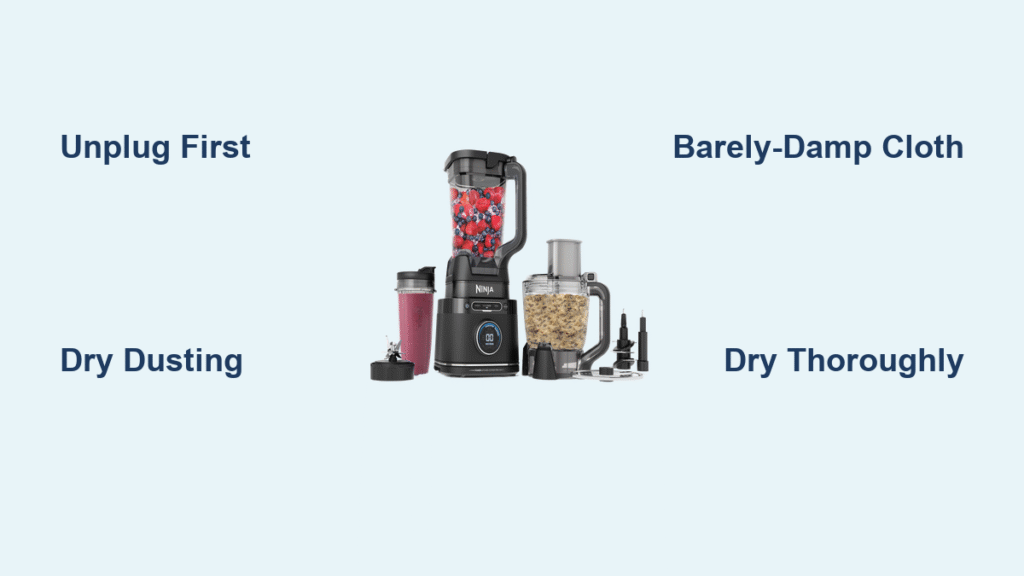
Unplug your blender and let the base cool for 20 minutes if recently used—never handle electrical components with damp hands. Dry fingers prevent accidental activation when removing the blade assembly. Skipping this step risks severe injury from sharp blades or electrical shock.
Gather these non-negotiable tools:
– Soft-bristled bottle brush (never use metal scrubbers)
– Mild dish soap (bleach or ammonia-based cleaners degrade rubber)
– Warm water only (boiling water causes permanent deformation)
– Microfiber cloth (paper towels leave fibers in grooves)
– Optional: White vinegar for odor removal, baking soda paste for stains
Remove Gasket Without Tearing
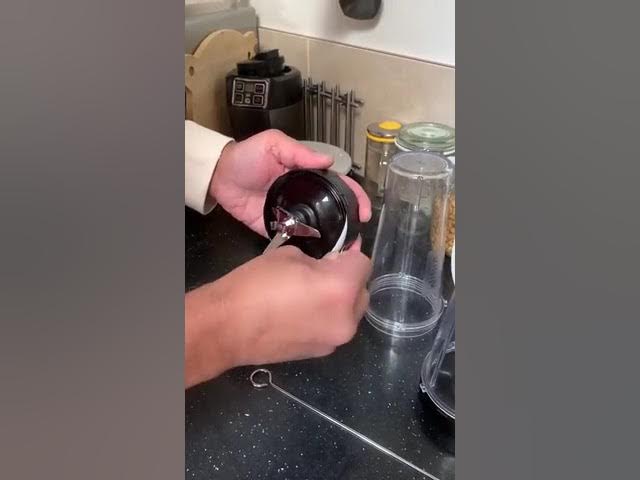
Grip the blade assembly firmly by its plastic housing—never touch the blades. Locate the gasket edge where rubber meets plastic, then lift one section gently using your thumbnail or a plastic utensil. Work slowly around the circumference, applying even pressure to avoid snapping the seal. Note the orientation—most Ninja gaskets have a flat side facing down and a rounded side up.
Pro tip: If stuck, run warm water over the assembly for 30 seconds to soften residue. Never force removal—stretched gaskets won’t reseal properly. If resistance persists, skip removal and clean in place using a soft brush.
Daily Cleaning Method
Rinse immediately after each use under warm running water to prevent residue hardening. Apply dish soap directly to the gasket surface, then massage gently with your fingers, focusing on the inner circumference where spinach fibers and seed particles hide. Rinse until water runs crystal clear—cloudy runoff means trapped debris remains.
Time estimate: This 3-minute routine prevents 90% of buildup. Critical check: Shine a flashlight along the groove—if you see dark spots, repeat the massage step. Never skip this daily step; dried residue becomes impossible to remove without deep cleaning.
Deep Clean Stubborn Residue
Create a cleaning solution with 1 tablespoon dish soap mixed into 1 cup warm water. Soak the removed gasket for 10-15 minutes (exceeding 30 minutes weakens rubber). Scrub all surfaces with a soft brush, paying special attention to the groove where it seats in the blade assembly.
For specific challenges:
- Mineral deposits: Apply white vinegar with a cotton swab, wait 2 minutes, then brush
- Persistent odors: Coat with baking soda paste (equal parts water and baking soda), wait 5 minutes, rinse thoroughly
- Protein stains (from milk or eggs): Start with cold water to prevent coagulation, then gradually warm during cleaning
Dishwasher Safety Check
Top-rack placement only applies only to Ninja Professional Series models—never assume dishwasher safety. Always remove the gasket from the blade assembly first; trapped water causes warping. Disable heated dry to prevent rubber deformation from high temperatures.
Warning: Nutri Ninja and Kitchen System gaskets often warp in dishwashers. When in doubt, hand-wash. Post-cycle, check for gaps when reinstalled—if water leaks during testing, replace the gasket immediately.
Tackle Oil and Protein Residue
For nut butter or avocado oil: Blot excess oil with paper towel first, then apply degreasing dish soap directly. Let it sit 2 minutes before scrubbing—this breaks down oily films without harsh chemicals. Repeat twice if a greasy sheen remains.
For protein shakes or eggs: Begin with cold water to prevent cooked-on residue, then gradually increase temperature. Enzyme-based cleaners work best on stubborn protein buildup—apply, wait 3 minutes, then scrub with a soft brush. Never use hot water initially; it permanently bonds proteins to the rubber.
Eliminate Mold Safely

Create a sanitizing solution of 1 part white vinegar to 3 parts water. Soak the gasket for 15-20 minutes maximum—longer exposure degrades rubber. Scrub visible growth with a soft toothbrush, focusing on black spots in crevices. Rinse under running water for 30 seconds minimum to remove all vinegar residue.
Critical warning: If mold penetrates deep into the rubber (visible as dark veins), replacement is non-negotiable—your health outweighs the $5 part cost. Never use bleach; it breaks down rubber compounds and leaves toxic residues.
Dry Completely Before Reassembly
Pat dry with a microfiber cloth to remove surface moisture, then air dry for 2-4 hours on a dish rack. Check for trapped water by pinching the gasket—any dampness inside the rubber means extended drying time. Never skip this step; residual moisture breeds mold within 48 hours.
Pro tip: Place near a fan to accelerate drying, but avoid direct sunlight which degrades rubber. Verify dryness by pressing your fingertip into the groove—it should feel completely dry with no coolness.
Reinstall Gasket Correctly
Clean the groove in the blade assembly with a dry toothpick to remove debris—dust here prevents sealing. Position the gasket with the flat side down (most models), then press firmly around the entire circumference. Check for uniform seating by rotating the assembly; gaps or twists cause leaks.
Test seal integrity by assembling the blender with ½ cup water, then running on low for 10 seconds. Any drips mean repositioning is needed—never use with food until this test passes.
Prevent Future Problems
Daily: Rinse gasket after every use—don’t let residue dry. Weekly: Remove and deep-clean the gasket to prevent buildup. Monthly: Inspect for cracks or permanent odors while rotating reversible gaskets to extend life.
Game-changing habit: After washing, store the blade assembly disassembled. Compression during storage creates permanent indentations that compromise the seal. Keep gaskets in a ventilated container away from heat sources.
When Replacement Becomes Necessary
Replace immediately if you spot:
– Visible cracks or tears (even hairline fractures)
– Permanent warping that prevents full contact with the jar
– Leaking during low-speed blending
– Persistent odors after vinegar/baking soda treatment
– Discoloration from turmeric or berries affecting food safety
Order exact replacements by matching your model number (found on the base). Install new gaskets with a light food-grade mineral oil coating to ease seating—test with water before food use.
Storage Best Practices
Store completely dry gaskets upright in ventilated containers—never in sealed plastic bags where moisture accumulates. Avoid direct sunlight which degrades rubber compounds within months. For optimal lifespan, flip reversible gaskets monthly to distribute wear evenly.
Pro hack: Keep spare gaskets labeled by model in your kitchen drawer. When one shows wear, swap it out in 60 seconds—no blender downtime. Always run a water test after storage to ensure no seal deformation occurred.
Maintaining your Ninja blender gasket takes just 5 minutes daily but prevents costly replacements and health hazards. By following these model-specific techniques—from immediate rinsing after use to proper mold elimination—you’ll extend your blender’s life by years. Remember: a clean gasket means no mysterious leaks, zero funky odors, and truly fresh-tasting smoothies. Start this routine today, and your Ninja will deliver flawless performance through thousands of blends. For ongoing maintenance, bookmark this guide and inspect your gasket monthly—you’ll catch small issues before they become blender-killing problems.