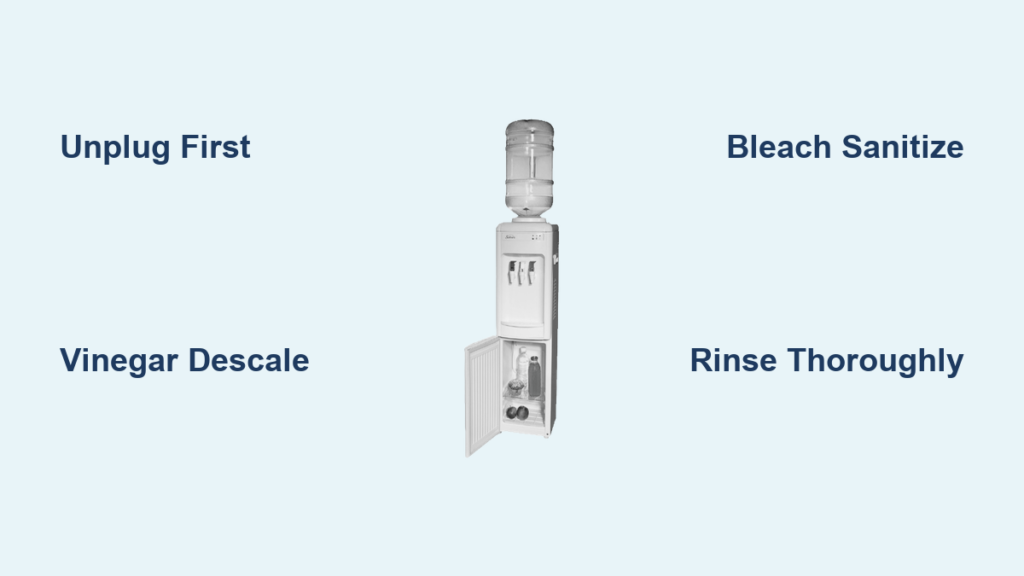
That stale taste in your water? The faint musty odor when you pour a glass? Your Sunbeam water cooler is silently screaming for attention. Mineral deposits clog internal lines, bacteria thrive in damp reservoirs, and uncleaned drip trays become germ factories. Left untreated, these issues compromise water quality and shorten your cooler’s lifespan. I’ve seen too many users ignore simple maintenance only to replace coolers prematurely. This guide delivers the exact steps Sunbeam technicians use—no fluff, no guesswork. You’ll learn how to eliminate stubborn limescale, banish odors, and keep every sip fresh. Let’s restore your cooler to like-new condition in under an hour.
Critical Safety Steps Before Cleaning Your Sunbeam Cooler
Unplug immediately—this isn’t optional. Electrical components near water create lethal shock risks. Work in a well-ventilated area to avoid inhaling fumes from cleaning agents. Wear rubber gloves when handling bleach solutions, and never mix vinegar with bleach—this creates chlorine gas that can cause breathing emergencies. Prepare these supplies first: white vinegar or unscented bleach, a 5-gallon bucket, soft microfiber cloths, a long bottle brush, and chlorine test strips (available at pool stores). Keep children and pets away during the process. If your cooler has a filter, replace it after cleaning—you can’t sanitize clogged carbon filters.
Why Unplugging Is Non-Negotiable
Skipping this step risks electrocution, especially when draining reservoirs. Water seeps into electrical pathways during cleaning. One user reported sparks when they touched a wet control panel while the unit was plugged in—this could have been fatal. Always verify the power cord is disconnected before removing water bottles or opening panels.
Sunbeam Cooler Deep Clean: Vinegar Method for Mineral Removal

Hard water leaves chalky deposits that choke water flow and breed bacteria. Vinegar dissolves scale without harsh chemicals. Perform this every 1-3 months if you have hard water, or every 6 months for average water quality.
Step-by-Step Vinegar Descaling Process
- Drain and prep: Unplug the cooler. Place a 5-gallon bucket under the drain valve (usually at the base front). Remove the water bottle and open all taps until water stops flowing.
- Pour solution: Mix 4 cups undiluted white vinegar into the empty reservoir. For severe scaling, use pure vinegar—not diluted.
- Circulate and soak: Close taps. Let vinegar sit for 60 minutes (set a timer!). For bottle-fed models, reattach an empty bottle to contain the solution. Open taps briefly every 15 minutes to refresh contact with lines.
- Drain and rinse: Drain vinegar completely through taps and drain valve. Flush with 3 full reservoirs of cold water—you’ll need 12+ gallons total. Taste-test water; if vinegar lingers, repeat rinsing. Pro Tip: Add lemon slices to the final rinse for fresher taste.
Troubleshooting Vinegar Cleaning Failures
- Vinegar smell persists? You didn’t rinse enough. Run 2 extra gallons and let water sit in reservoir for 10 minutes before draining.
- White crust still visible? Soak a cloth in vinegar, wrap it around the fill cylinder neck, and let sit 30 minutes before re-rinsing.
- Slow water flow after cleaning? Mineral chunks broke loose. Tap the reservoir sides firmly to dislodge debris, then drain and re-rinse.
Emergency Sanitizing: Bleach Method for Musty Smells and Mold
When vinegar fails to fix foul odors or slimy residue, bacteria have taken root. Bleach is the nuclear option—use it only when vinegar doesn’t work or after storing the cooler unused for over 2 weeks.
Exact Bleach Sanitization Protocol
- Mix safely: In a separate bucket, combine 1 tablespoon unscented bleach with 1 gallon cold water. Hot water deactivates bleach and releases toxic fumes.
- Inject and circulate: Pour solution into the reservoir. Plug in the cooler briefly—just long enough to dispense 2 cups through each tap. Unplug immediately.
- Soak precisely: Let solution sit for exactly 5 minutes. Longer exposure cracks rubber seals.
- Rinse relentlessly: Drain completely. Flush with 4+ gallons of cold water. Use chlorine test strips after each gallon—stop when strips show 0 ppm chlorine. Critical: Never skip test strips; residual bleach causes nausea.
Bleach Cleaning Danger Zones
- Never use hot water—it creates chlorine gas.
- Don’t exceed 5 minutes—seals degrade rapidly.
- Avoid contact with stainless steel—bleach causes pitting. Wipe external metal immediately if splashed.
- Discard leftover solution—don’t reuse.
Disassembling Your Sunbeam Cooler for Extreme Cases

If vinegar and bleach fail, mineral deposits have hardened inside the fill cylinder. This occurs in areas with very hard water (over 10 grains per gallon). Only attempt this if your cooler is 2+ years old with persistent scaling.
Fill Cylinder Deep Scrub Procedure
- Remove top cover: Unplug unit. Unscrew the two rear corner screws holding the top panel. Lift off carefully.
- Access the cylinder: Twist the large plastic ring counterclockwise. Remove the ribbed disc beneath it. Lift out the clear rubber gasket.
- Scrub internals: Soak the fill cylinder in vinegar for 30 minutes. Use a bottle brush with non-scratch nylon bristles to scrub the interior. For crusty deposits, wrap a vinegar-soaked cloth around problem areas for 15 minutes before scrubbing.
- Reassemble correctly: Ensure the rubber gasket sits flat in its groove. Hand-tighten the plastic ring—overtightening cracks it. Reattach the top cover securely.
Warning: If you see electrical wires during disassembly, STOP. Contact Sunbeam support (877-843-6453). Never force stuck components.
Daily and Monthly Maintenance to Avoid Future Cleaning
Prevention beats deep cleaning every time. These habits eliminate 90% of problems:
Drip Tray and Exterior Care
- Wipe daily: After last use, dampen a microfiber cloth with 1:3 vinegar-water solution. Wipe drip tray, spigots, and cabinet. Air-dry overnight with the bottle removed.
- Deep clean weekly: Remove the drip tray. Soak in hot soapy water for 10 minutes. Scrub air vents with a soft toothbrush—dust here breeds mold spores.
Water Bottle Protocol
- Rinse bottles before refilling. Residual algae in bottles contaminates the cooler.
- Store bottles upside down with caps off to dry completely between uses.
Warning Signs You Need Immediate Cleaning
Don’t wait for problems to escalate. Act when you see:
– Cloudy water or white floating particles (mineral shedding)
– Slimy film inside the reservoir (bacterial biofilm)
– Reduced hot water output (scale insulating the heating element)
– Musty odor from the cold tap (mold in reservoir)
Ignoring these leads to irreversible damage. One user shared how scale buildup cracked their heating element—repair cost $85 versus 20 minutes of vinegar cleaning.
When to Call Sunbeam Support Instead of Cleaning
Some issues require professional help:
– Electrical faults (buzzing sounds, tripped breakers)
– Leaking reservoir (cracks need replacement)
– No hot water after descaling (heating element failure)
– Persistent mold after bleach cleaning (internal tubing contamination)
Contact Sunbeam at 877-843-6453 or Elite Classics (manufacturer) at 877-383-6399. Have your model number ready—usually on a sticker under the drip tray.
Final Note: Your Sunbeam cooler delivers pure water only when maintained properly. Vinegar cleaning every 3 months prevents 95% of issues—bleach sanitizing is a last resort. Always unplug first, rinse thoroughly, and verify no chemical traces remain. For model-specific diagrams, download your manual from Sunbeam’s website. Implement these steps now, and your cooler will provide crisp, clean water for years without costly repairs. Don’t gamble with your family’s health—clean it today.