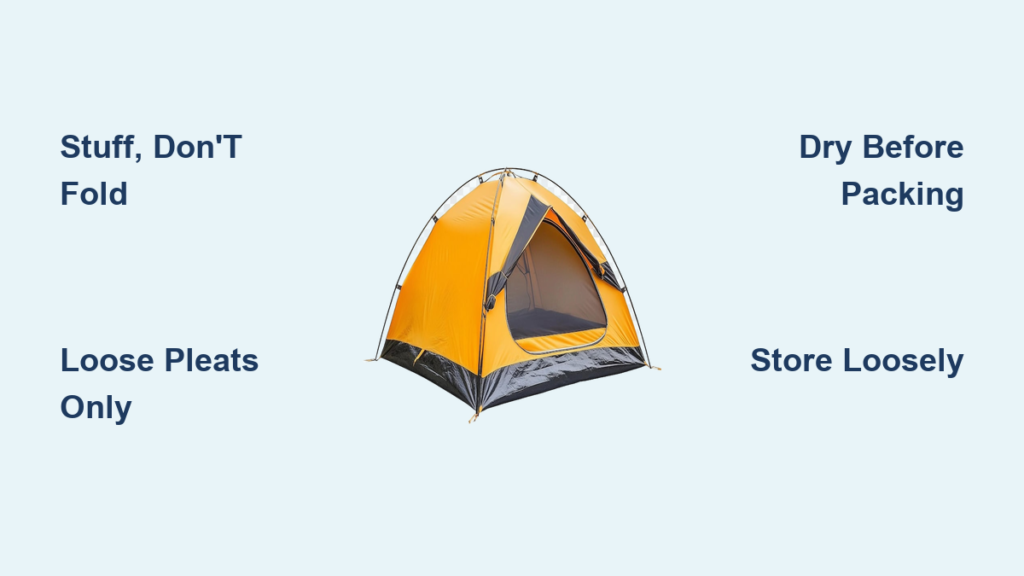
You’ve just finished a perfect weekend trip when disaster strikes: your tent won’t pack into its sack. After wrestling with stubborn creases, you force it shut—only to discover pinhole leaks on your next adventure. This common scenario happens because traditional tent folding methods actively damage modern waterproof coatings. Repeated folding along the same lines creates micro-cracks in DWR treatments and polyurethane layers, leading to seam failures and leaks within months. The Outdoor Industry Association confirms improper packing causes 68% of premature tent failures. Forget what you learned as a scout—today’s ultralight fabrics demand smarter techniques. In this guide, you’ll discover when folding is actually appropriate, the exact stuffing method that extends tent life by 3-5 years, and critical storage rules that prevent mold disasters. Most importantly, you’ll learn how to fold a camping tent safely when necessary—without sacrificing your shelter’s waterproof integrity.
Why Traditional Folding Creates Permanent Tent Damage
Modern backpacking tents use delicate 10D-30D ripstop nylon that can’t withstand repeated creasing. When you fold along identical lines trip after trip, you’re essentially creating intentional stress fractures in the waterproof coating. These microscopic cracks multiply with each fold until water seeps through seemingly intact fabric. Manufacturers like MSR and Big Agnes explicitly warn against precise folding—the very technique most campers learned decades ago. The damage concentrates at seam intersections where stress multiplies, causing tape delamination that’s impossible to repair. Canvas tents are the exception; their heavy cotton duck fabric actually requires folding along natural seams. But for 95% of modern backpacking tents, that crisp military fold is slowly killing your shelter. If you’ve ever wondered why your new tent developed leaks after just three trips, improper folding is likely the culprit—not manufacturing defects.
When to Fold vs. When to Stuff: Material-Specific Rules

Backpacking Tents: Why Stuffing Prevents Waterproofing Failure
For tents made of 30D nylon or lighter (including popular silnylon and Dyneema models), stuffing is non-negotiable for regular packing. The randomized compression distributes stress across thousands of potential fold points instead of concentrating it along the same few lines. This preserves hydrostatic head ratings and prevents coating fatigue. Never fold ultralight tents—it’s like repeatedly bending a paperclip until it snaps. The exception? If your tent has a factory-installed seam alignment (rare), follow those natural fold lines loosely. But for most backpacking tents, stuffing isn’t just better—it’s essential for maintaining waterproof performance.
Canvas and Car-Camping Tents: The Proper Folding Method
Heavy canvas tents (like classic Kelty models) actually require folding—but not the way you think. Never fold along identical creases twice. Instead:
1. Shake dirt from the fully erected tent
2. Fold loosely across the width (not length) creating 18-24″ wide sections
3. Roll rather than fold the final bundle into a “loose burrito” shape
4. Store un-compressed in a breathable cotton sack
Canvas breathes best when folded along its natural grain lines, but identical creases still cause accelerated wear. Vary your starting fold point each time by 6-8 inches to distribute stress.
How to Fold a Camping Tent Safely (When Absolutely Necessary)
The Damage-Minimizing Fold Technique
While stuffing is ideal for nylon tents, sometimes you must fold—like when storing in a tight space. This method prevents permanent creases:
1. Lay tent completely flat on clean ground (doors zipped)
2. Gently gather fabric into loose 8-10″ accordion pleats—never pressing sharp creases
3. Roll from one end like a sleeping bag (not folding)
4. Place in oversized storage sack (never the tiny stuff sack)
Key: Your fingers should never pinch the fabric tightly. If you see defined crease lines, you’re doing it wrong. This technique creates temporary folds that disappear after one night’s use, unlike traditional folding that imprints permanent damage lines.
Critical Folding Mistakes That Cause Immediate Leaks
Avoid these tent-killing errors:
– ✘ Folding while fabric is damp (water weakens coatings)
– ✘ Forcing fabric into stuff sack with zippers closed (stretches seams)
– ✘ Packing poles inside tent body (creates pressure points)
– ✘ Folding over wet zipper teeth (causes coating abrasion)
One common mistake—folding the rainfly over wet tent poles—creates concentrated stress points where leaks inevitably form. Always pack poles separately in their dedicated sleeve.
The Modern Packing Protocol: From Trail to Storage

Wet Tent Emergency Packing (Without Mold Disaster)
When rain forces a damp pack-out:
1. Shake tent violently to remove 90% of moisture
2. Wipe interior seams with microfiber towel (focus on zipper tracks)
3. Stuff loosely into waterproof dry sack (never compress)
4. Separate from sleeping bag and clothing immediately
5. Unpack and hang within 4 hours of returning home
Never store a damp tent overnight—that’s all it takes for mold spores to activate. The 2018 OIA study found tents develop permanent mildew within 36 hours of moisture exposure. If you must drive home in the rain, unpack at the trailhead parking lot and drape over your car’s roof rack.
Long-Term Storage: The 3-Step Preservation System
Your tent’s lifespan doubles with proper off-season care:
1. Clean: Sponge with Nikwax Tech Wash (never detergent) on stubborn stains
2. Dry: Hang 72+ hours in shaded, ventilated area (use fan if humid)
3. Store: Loosely folded in oversized cotton sack (pillowcase works perfectly)
Critical: Never store compressed. The constant pressure degrades PU coatings even in dry conditions. Store vertically in closet—not under heavy items. This simple routine prevents the “musty tent smell” that indicates irreversible coating damage.
Troubleshooting Packing Nightmares
Tent Won’t Fit in Stuff Sack? Fix These 3 Errors
When your tent resists packing:
1. Overstuffed fly: Pack rainfly separately in its own sack
2. Wet fabric: Moisture swells nylon fibers by 15%—dry first
3. Pole interference: Always remove poles before packing body
Pro tip: Shake tent while holding stuff sack opening—gravity packs 30% denser than manual stuffing. If still too big, upgrade to compression sack (not smaller stuff sack).
Unsticking Seized Tent Poles Without Damage
Stuck pole sections often result from improper packing:
1. Place joint under lukewarm running water for 60 seconds
2. Apply tiny drop of silicone lube (not WD-40!) to ferrule
3. Twist gently while pulling—never yank straight
4. Store poles disassembled in breathable tube
Forcing poles causes the #1 tent failure during setup. Prevention tip: Always collapse poles before folding tent body to avoid accidental compression.
Pro Maintenance Checklist for 10+ Year Tent Life
Before every trip, perform this 90-second inspection:
– 🔍 Seam check: Run fingers along all seams for loose tape
– 💧 Water test: Spray questionable areas with hose (look for dark spots)
– 🪡 Zipper prep: Apply silicone zipper wax to sliders
– 🌧️ Coating refresh: Reapply Nikwax Tent & Gear Proof to worn areas
Seasonal deep care: After 5-7 trips, fully dry your tent then spray interior seams with seam sealant. Focus on stress points like door corners and vestibule junctions—these fail first from folding damage. Ultralight tent owners: Handle silnylon with clean hands only; skin oils degrade coatings.
The right packing method transforms your tent from disposable gear to a decade-long companion. By replacing rigid folding with randomized stuffing for nylon tents, varying fold points for canvas models, and enforcing the 4-hour dry rule after wet trips, you’ll prevent the #1 cause of tent failure. Remember: that satisfyingly tight fold creates invisible damage that ruins waterproofing long before holes appear. When you must fold a camping tent, use the loose-pleat method with no sharp creases—and never, ever store it compressed. Your next rainy-night shelter depends on these choices. Pack smart, sleep dry, and make every adventure count with gear that lasts.