That persistent itchy, flaky feeling on your scalp can make you self-conscious and uncomfortable throughout the day. Many people reach for shampoo as the automatic solution, but frequent washing with conventional products often strips your scalp of natural oils, worsening dryness. Learning how to get rid of dry scalp without shampoo is about working with your scalp’s natural ecosystem rather than fighting against it. This approach focuses on gentle, nourishing methods that restore moisture balance without harsh cleansing agents. You’ll discover practical, chemical-free techniques that soothe irritation and eliminate flakes while protecting your scalp’s delicate moisture barrier.
If you’ve ever scratched your head only to find white specks on your shoulders, you know how frustrating dry scalp can be. The instinct to wash more frequently creates a vicious cycle—more shampooing leads to more dryness, which leads to more flaking. The good news is you can break this cycle without reaching for another bottle of shampoo. By implementing these natural, shampoo-free methods, you’ll address the root causes of dryness while rebuilding your scalp’s natural protective layer. This guide reveals exactly what to do when your scalp feels tight, itchy, and flaky—no shampoo required.
Why Shampoo Often Makes Dry Scalp Worse
Most commercial shampoos contain sulfates and other harsh detergents designed to strip away oil, which ironically dries out your scalp and triggers more flaking. When you wash with these products, you’re removing sebum—the natural oil your scalp produces to stay moisturized—causing your skin to overcompensate by producing even more oil or becoming painfully dry. This disruption of your scalp’s natural pH balance leaves it vulnerable to irritation and flaking. The cycle continues as you shampoo more frequently to combat the resulting oiliness or dryness, further damaging your scalp’s protective barrier.
How Hot Water Exacerbates Scalp Dryness
Rinsing with hot water might feel soothing in the moment, but it actually strips away essential moisture from your scalp. The high temperature opens your pores excessively and removes natural oils more aggressively than lukewarm water. You’ll notice increased tightness and flaking within hours after a hot shower. Switch to cool or lukewarm water for your final rinse—this helps seal your hair cuticle while preserving your scalp’s natural moisture. Your scalp will thank you with reduced itching and fewer visible flakes within days of making this simple change.
Direct Scalp Hydration Techniques That Beat Shampoo

Applying targeted moisture directly to your scalp delivers immediate relief without the need for harsh cleansing agents. These natural oil treatments penetrate deeply to soothe irritation and restore your scalp’s moisture balance.
Apply Jojoba Oil for Instant Scalp Relief
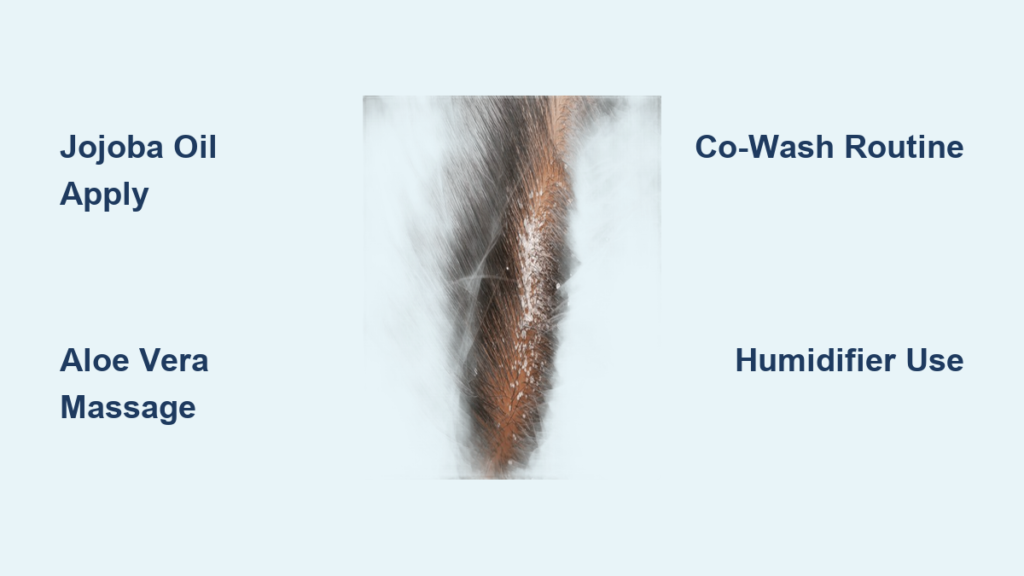
Jojoba oil works uniquely well because its molecular structure closely resembles human sebum, allowing it to integrate seamlessly with your scalp’s natural oils. Warm 1-2 teaspoons of jojoba oil between your palms and massage gently into your dry scalp using circular motions with your fingertips. Focus on dry, flaky areas but avoid pressing too hard. Leave the oil on for at least 30 minutes (or overnight for severe dryness) before rinsing with cool water. You’ll notice reduced flaking and itching after just one treatment, with significant improvement within a week of regular use.
Create an Aloe Vera Scalp Treatment
Pure aloe vera gel provides instant cooling relief for irritated scalps while delivering deep hydration. Look for 95-100% pure aloe vera gel without alcohol additives. Apply a thin layer directly to your dry scalp, massaging gently to ensure coverage. Leave it on for 10-15 minutes before rinsing with cool water. Pro tip: For extra soothing power, store your aloe vera gel in the refrigerator before application. This treatment calms inflammation immediately while helping your scalp retain moisture throughout the day.
Use Diluted Tea Tree Oil for Flaky Scalp
Tea tree oil’s powerful antifungal and anti-inflammatory properties make it ideal for treating stubborn dry scalp, but it must be diluted properly to avoid irritation. Mix 3-5 drops of tea tree oil with one tablespoon of carrier oil like jojoba or coconut oil. Massage this mixture into your scalp, focusing on particularly dry or flaky areas. Leave it on for 20-30 minutes before rinsing thoroughly. Warning: Never apply undiluted tea tree oil directly to your scalp—it can cause severe irritation and worsen dryness.
Gentle Cleansing Methods That Won’t Strip Your Scalp
You can maintain clean hair without traditional shampoo by adopting these scalp-friendly cleansing techniques that preserve natural moisture.
Switch to a Conditioner-Only Wash Routine
Cleansing conditioners (co-washes) gently remove buildup without stripping natural oils. Choose a sulfate-free, moisturizing conditioner and apply it directly to your scalp, massaging gently for 2-3 minutes to lift dirt and dead skin. Rinse thoroughly with cool water. This method cleanses effectively while depositing moisture—perfect for dry scalp sufferers. You’ll likely need to co-wash less frequently than shampooing, giving your scalp more time to rebalance its natural oil production.
Implement the Apple Cider Vinegar Refresh
This gentle cleansing method restores your scalp’s natural pH without harsh detergents. Mix one part raw, unfiltered apple cider vinegar with three parts cool water in a spray bottle. After your regular cleansing routine (or when your hair feels oily between washes), spray this mixture directly onto your scalp, massage gently for 30 seconds, then rinse with cool water. Use this method once or twice weekly to remove buildup while maintaining moisture balance. Time-saving tip: Keep a small spray bottle of this mixture in your shower for quick refreshes between full washes.
Daily Protection Habits for a Flawless Scalp
Protecting your scalp from environmental stressors prevents dryness before it starts.
Shield Your Scalp from Drying Elements
Your scalp needs sun protection just like the skin on your face. Wear breathable hats with UPF protection when outdoors for extended periods, especially during peak sun hours. In winter, switch to soft, non-wool beanies that won’t scratch or irritate your dry scalp. These simple barriers prevent environmental factors from stealing moisture from your scalp throughout the day. You’ll notice fewer flare-ups during seasonal transitions when you protect your scalp from extreme temperatures and wind.
Optimize Your Bedroom Environment
Dry indoor air from heating or air conditioning significantly contributes to scalp dryness while you sleep. Place a cool-mist humidifier in your bedroom set to maintain 40-60% humidity. This simple addition adds moisture back into the air, preventing your scalp from drying out overnight. Within three to four days of consistent use, you’ll wake up with noticeably less tightness and flaking. Expert note: Clean your humidifier weekly to prevent mold buildup that could worsen skin conditions.
Lifestyle Adjustments That Cure Chronic Dry Scalp

Long-term scalp health requires attention to your overall wellness and daily habits.
Boost Your Hydration and Nutrition
What you drink and eat directly impacts your scalp’s moisture levels. Increase your daily water intake to at least half your body weight (in pounds) in ounces—so if you weigh 150 pounds, aim for 75 ounces of water daily. Incorporate omega-3 rich foods like walnuts, chia seeds, and fatty fish into your diet to support skin health from within. Within two weeks of these dietary changes, you’ll notice your scalp produces more natural oil and flakes decrease significantly.
Manage Stress to Reduce Scalp Flare-Ups
Stress triggers inflammatory responses that manifest as scalp irritation and flaking. Implement a daily 10-minute stress-reduction practice like deep breathing, meditation, or gentle yoga. Noticeable improvements in scalp condition typically appear within 14-21 days of consistent stress management. Pro tip: Try scalp massage during your stress-reduction routine—this increases blood flow to the area while calming your nervous system.
When Home Remedies Fail: Professional Dry Scalp Treatments

If you’ve consistently followed these shampoo-free methods for 4-6 weeks without improvement, you may be dealing with a medical condition like seborrheic dermatitis or psoriasis rather than simple dry scalp. Key indicators that warrant professional consultation include: bright red patches, greasy yellow scales, hair loss in affected areas, or persistent itching that disrupts sleep. A dermatologist can prescribe targeted treatments like ketoconazole shampoo (used sparingly) or prescription-strength moisturizers that address the underlying condition while still minimizing shampoo use.
By implementing these shampoo-free strategies consistently, you’ll break the cycle of dryness and restore your scalp’s natural moisture balance. The most effective approach combines direct scalp hydration, gentle cleansing alternatives, environmental protection, and lifestyle adjustments. Remember: Your scalp needs time to rebalance—give these methods at least three weeks of consistent application before expecting dramatic results. Within a month, you should notice significantly less flaking, reduced itching, and a healthier scalp that maintains its natural moisture without relying on harsh shampoos. Start with one or two techniques that fit your lifestyle and gradually incorporate more—you’ll discover which methods work best for your unique scalp needs.