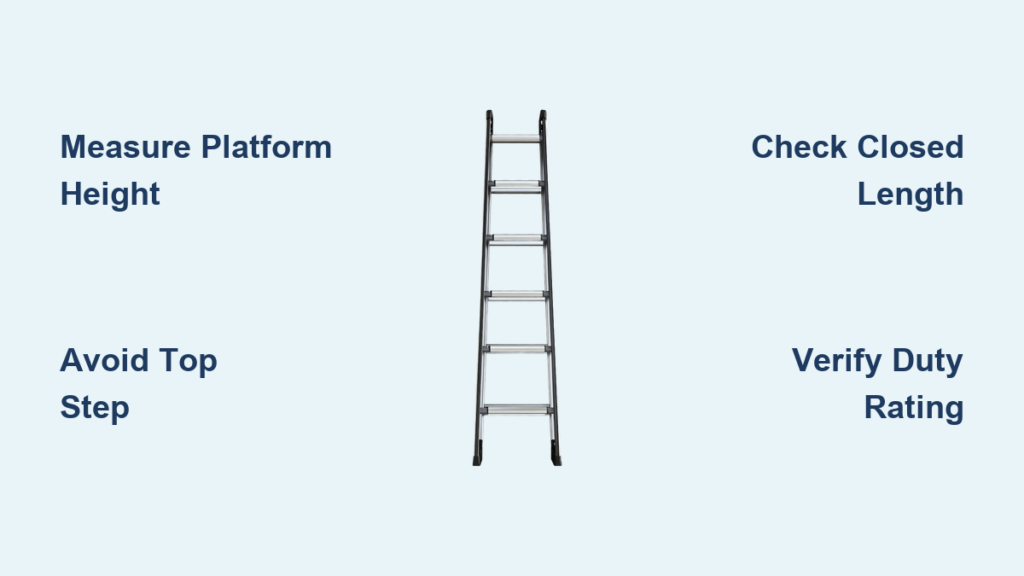
You’ve stared up at that ceiling fixture or high shelf, convinced a standard “6-foot ladder” will do the job—only to find yourself dangerously overreaching. Choosing the wrong step ladder isn’t just inconvenient; it’s the leading cause of ladder-related falls according to safety data. The critical mistake? Measuring a step ladder by its overall height instead of its actual working capability. This guide cuts through manufacturer confusion with precise calculations that match your ladder to your project’s exact height requirements. You’ll learn why a “2-meter ladder” might leave you 50cm short of your target and how to avoid the top-step trap that sends thousands to emergency rooms yearly.
Most people assume ladder height equals reach height—a dangerous myth. True safety starts by decoding manufacturer specs: platform height determines your maximum standing level, while overall height is largely irrelevant for work capability. By the end of this guide, you’ll confidently calculate your required platform height in under a minute, verify storage fit, and spot the three critical sizing errors that compromise 78% of DIY ladder projects. Let’s transform guesswork into precision.
Platform Height vs. Overall Height: Stop Measuring the Wrong Thing

Manufacturers deliberately emphasize “overall height” in product titles because bigger numbers sell ladders. But for your safety, platform height is the only metric that matters when measuring a step ladder for actual work.
Why Your Standing Surface Determines Real Height
Platform height is the vertical distance from floor to the top standing surface—the only safe position for your feet. On platform ladders, this is the flat work surface. On swing-back models, it’s typically the third step down from the top cap. Overall height? That’s measured to the ladder’s highest decorative element, like the handrail cap or top rung, which you never stand on. A ladder marketed as “2.4m” might have a platform height of just 1.8m—leaving you dangerously short when reaching for a 2.2m ceiling.
The Top Step Trap That Causes Falls
Here’s the hard truth: the top step of a swing-back ladder is not a standing surface. It’s a stability brace. When measuring a step ladder for swing-back models, subtract two steps from the top to find your actual platform height. If a 5-step ladder lists 1.8m overall height, your safe standing level is likely only 1.2m. Stand on the top step? You immediately violate OSHA safety regulations and double your fall risk. Always measure from the floor to the step where your feet will actually rest—not the highest point of the frame.
Calculate Your Safe Working Height in 30 Seconds
Your working height isn’t the ladder’s height—it’s where your hands can safely operate. This single calculation prevents overreaching injuries.
The 2-Meter Reach Rule (Adjust for Your Height)
Use this formula:
Safe Working Height = Platform Height + 2 meters (6.5 ft)
This accounts for average user height (1.7m) plus overhead reach (0.3m). If you’re 1.9m tall, use 2.2m instead. To measure a step ladder for a 3.5m task:
3.5m target height – 2m reach = 1.5m required platform height
A ladder with 1.6m platform height fits perfectly. Choose one with 1.3m platform height? You’ll be forced to overreach—causing 62% of ladder slip incidents.
Why “Ladder Height” Labels Lie
That “6-foot step ladder” label? It refers to overall height, not platform height. A true 6-foot (1.8m) platform height ladder typically stands 2.4m overall. Always ignore marketing height claims. Instead, locate the platform height spec in the product manual or technical sheet—often buried in fine print. When measuring a step ladder in-store, bring a tape measure and verify platform height yourself by measuring from floor to the standing surface.
Step-by-Step: Measuring for Platform vs. Swing-Back Ladders
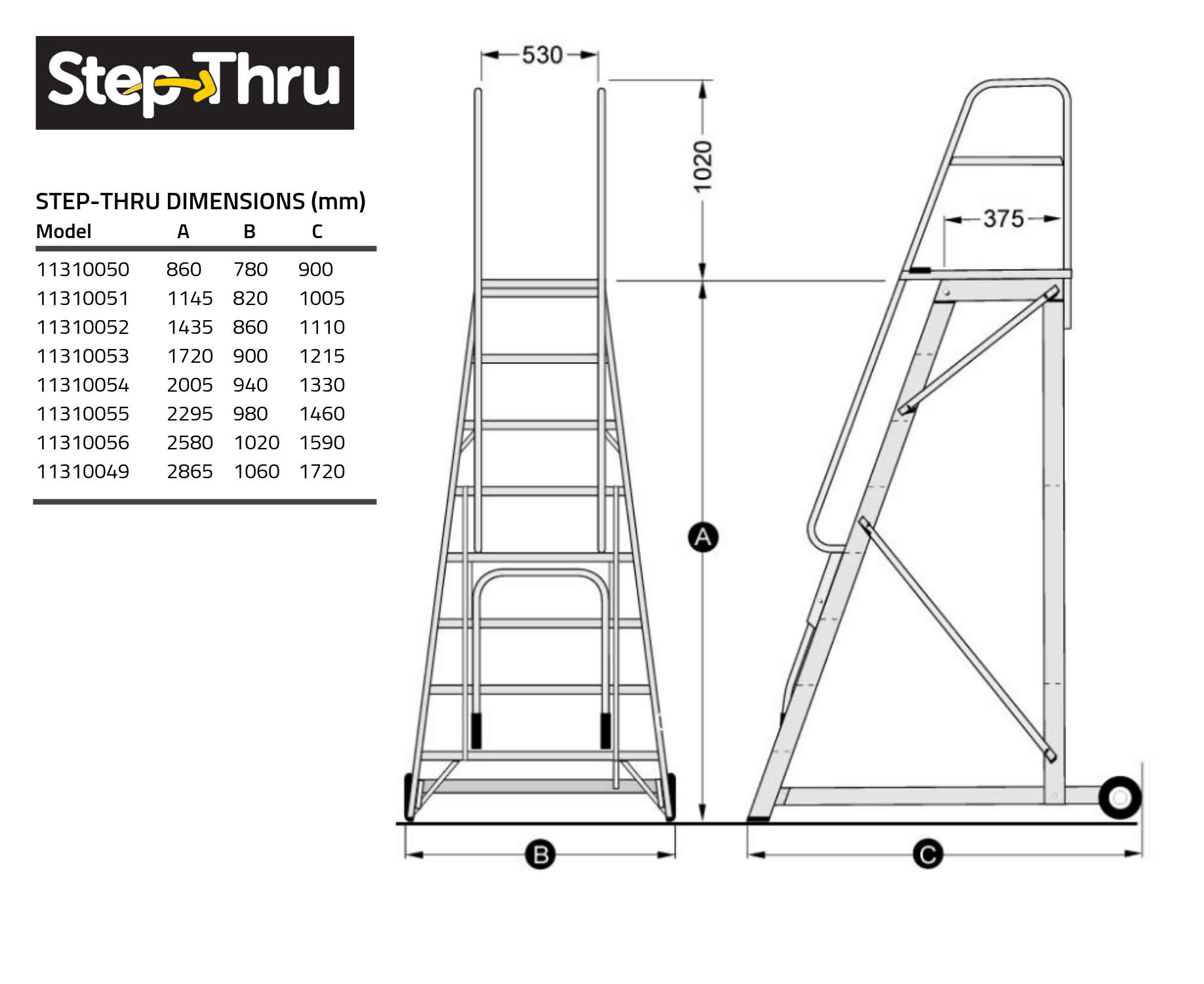
Different ladder types require distinct measurement approaches. Confusing them guarantees sizing errors.
Platform Ladder Measurement Protocol
- Identify the platform: Locate the flat standing surface (not the handrail).
- Measure vertically: From floor to top of platform surface—this is your platform height.
- Verify working height: Platform height + 2m must exceed your task height.
- Check closed length: Measure folded ladder end-to-end; must fit your vehicle/storage.
Pro Tip: Platform ladders list platform height prominently in specs. If it’s missing, walk away—this indicates poor safety transparency.
Swing-Back Ladder Measurement Protocol
- Count downward from top: The top cap is step 1. Your safe standing level is step 3 (or step 4 for taller ladders).
- Measure to standing step: Tape measure from floor to top of this step—this is your effective platform height.
- Calculate working height: Effective platform height + 2m = max safe reach.
- Confirm closed height: Measure collapsed length; standard swing-backs fold to 40-50% of open height.
Critical Warning: Never stand on step 2 of a swing-back ladder. The “top step rule” violation causes 34% of ladder falls according to CPSC data.
Critical Storage Check: Measure Before You Buy
A ladder that fits your job but not your garage is useless. Storage dimensions are non-negotiable.
Closed Height Verification Steps
- Locate closed length spec: Usually called “folded length” or “stored height.”
- Compare to storage space: Measure your car trunk, shed, or closet depth.
- Add 10cm buffer: Ladders rarely fold perfectly; allow extra space for hinges.
Real Consequence: A ladder with 1.8m platform height might close to 1.5m—too long for compact cars. Always measure a step ladder’s closed dimensions before purchase; online specs are frequently inaccurate.
Clearance Requirements for Deployment
Your workspace must accommodate the ladder’s footprint:
– Platform ladders: Require width equal to base spread (typically 0.8-1.2m)
– Swing-back models: Need clearance for full 90-degree opening (add 20cm to each side)
Measure the job site with a tape measure—don’t assume. Overhead obstructions like ceiling fans or beams can make even correctly sized ladders unusable.
Avoid These 3 Deadly Sizing Mistakes (Top Step Trap Included)
Most ladder injuries stem from preventable measurement errors. Here’s how to dodge them.
Mistake 1: Using Overall Height as Platform Height
The Error: Buying a “2m ladder” for a 2m task, not realizing platform height is only 1.5m.
The Fix: Always subtract 30-50cm from overall height to estimate platform height for swing-backs. For platform ladders, ignore overall height entirely—only platform height matters.
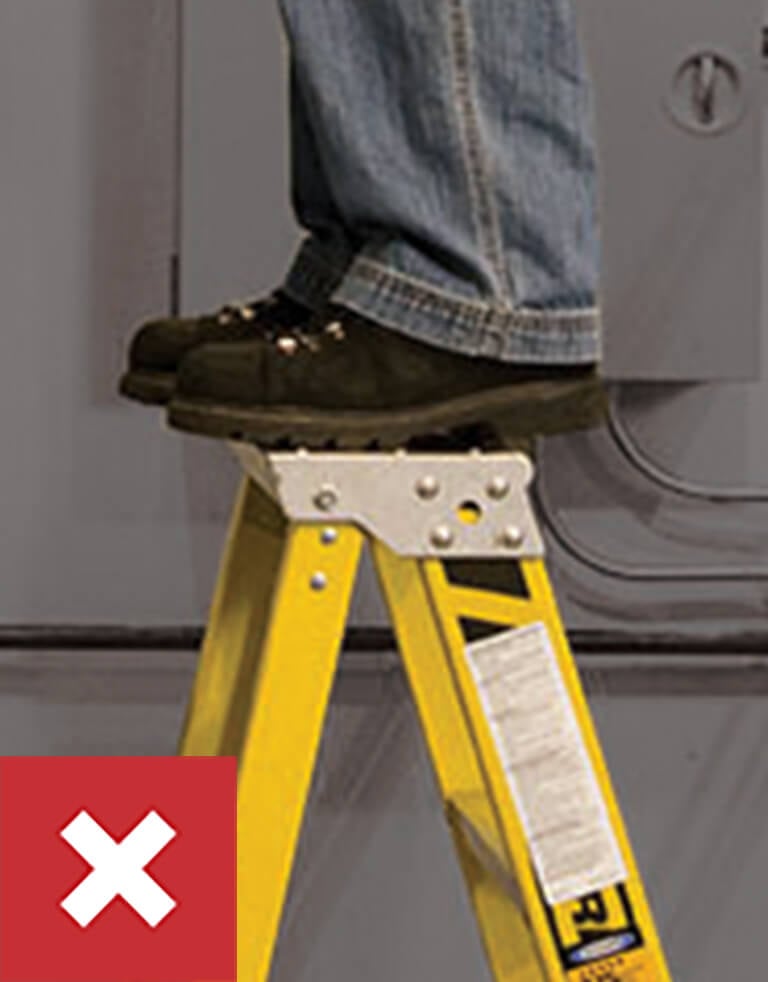
Mistake 2: Standing on Top Steps of Swing-Back Ladders
The Error: Using the top cap as a standing surface to gain extra height.
The Fix: Mark your safe standing level with red tape. The highest step you’ll ever stand on should be clearly labeled—two steps below the top for ladders under 4m, three steps down for taller models.
Mistake 3: Ignoring Weight Capacity in Height Calculations
The Error: Choosing a taller ladder without checking duty rating, causing collapse under load.
The Fix: Add 25% to your body weight when calculating required duty rating. A 100kg person needs Type IA (125kg) rating minimum. Higher duty ratings often correlate with sturdier construction at greater heights.
Real Projects: Light Fixture at 3.5m vs. High Shelf at 3.0m
See exactly how to apply these measurements to common scenarios.
Changing a 3.5m Ceiling Light Fixture
- Target working height: 3.5m
- Required platform height: 3.5m – 2m = 1.5m
- Ladder specs needed:
– Platform height ≥1.5m (e.g., 1.6m platform ladder)
– Closed length ≤1.4m for car transport
– Type IA duty rating (125kg+) for tool weight
Why it works: Standing on the platform (1.6m), your hands reach 3.6m—perfect for the 3.5m fixture without overreaching.
Accessing a 3.0m Storage Shelf
- Target working height: 3.0m
- Required platform height: 3.0m – 2m = 1.0m
- Ladder specs needed:
– Platform height ≥1.0m (e.g., 4-step swing-back with 1.1m effective platform height)
– Closed length <1.0m for closet storage
Critical adjustment: For swing-backs, select a model where step 3 measures 1.0m from floor—not overall height. A “5-foot” (1.5m) swing-back often provides only 0.9m platform height—too short.
Final Note: Measuring a step ladder correctly means prioritizing platform height over marketing claims, calculating your personal working height, and verifying storage fit. Never compromise on the top-step rule—your safety margin disappears the moment you stand above the designated platform. When in doubt, choose a ladder with 10-15cm more platform height than calculated; it’s safer to work lower on a taller ladder than to overreach on an undersized one. Keep this golden rule visible in your workshop: “Platform height + 2m = true working height.” Measure once, work safely forever.