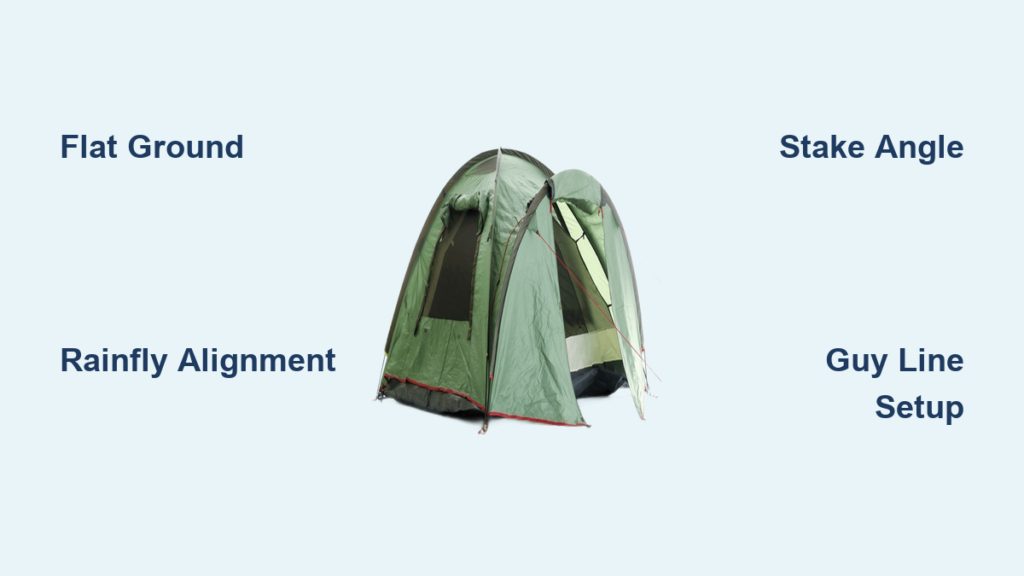
Nothing ruins a camping trip faster than wrestling with a flapping tarp while mosquitoes swarm and darkness falls. Mastering how to set up a camping tent transforms you from a frustrated novice into a confident outdoorsperson who can create reliable shelter in under 15 minutes. Whether you’re preparing for your first family trip or refreshing forgotten skills, this guide cuts through the confusion with field-tested techniques. You’ll learn exactly where to position your tent for maximum comfort, how to avoid common pitching mistakes that cause leaks, and why staking technique matters more than you think. By the end, you’ll have a weatherproof sanctuary ready for any adventure.
Choosing flat ground isn’t just about comfort—it’s your first defense against nighttime flooding. I’ve seen campers wake up in inch-deep water after ignoring subtle slopes that channeled rainwater right under their tents. Always crouch down and sight along the ground before unrolling your gear. While clearing debris seems tedious, that “harmless” pinecone you missed? It becomes a painful surprise under your sleeping pad at 2 AM. And overhead hazards aren’t just about falling branches—dry leaves trapped in your rainfly can clog drainage channels during storms. These prep steps take five minutes but prevent hours of misery later.
Positioning Your Tent for Maximum Protection
Your tent’s orientation determines whether you sleep dry or damp all night. Face the narrowest side of your tent into prevailing winds—the rainfly sheds water more effectively this way and reduces wind pressure on the structure. In desert environments, position the door east to catch morning sun for natural warmth. For coastal sites, angle the tent 45 degrees to oncoming waves to prevent salt spray from seeping through zippers. Never pitch directly on bare soil; seek natural windbreaks like rock formations or dense bushes 15-20 feet away that won’t drop debris on your shelter.
Why Slope Angle Matters More Than Flatness
Many campers fixate on perfectly level ground but miss critical micro-slopes. Place a water bottle on the site—if it rolls slowly, you’ve found the sweet spot. Steeper than that, and rainwater will pool; flatter than that, and condensation won’t drain. Test drainage by pouring a cup of water where your tent footprint will sit. If it pools anywhere, shift your site just 3 feet downhill. This simple check prevents waking up in a shallow puddle after midnight storms.
Identifying Hidden Ground Hazards
Run your hands palm-down 2 inches above the soil in concentric circles outward from your planned footprint. You’ll feel subtle ridges indicating buried roots or rocks. For rocky terrain, place your footprint tarp upside-down with the silver side up—it reflects ground heat while protecting the tent floor. When clearing sticks, collect them into a small pile 10 feet from your site; they’ll decompose faster there without creating trip hazards near your tent.
Assembling Tent Components Without Frustration
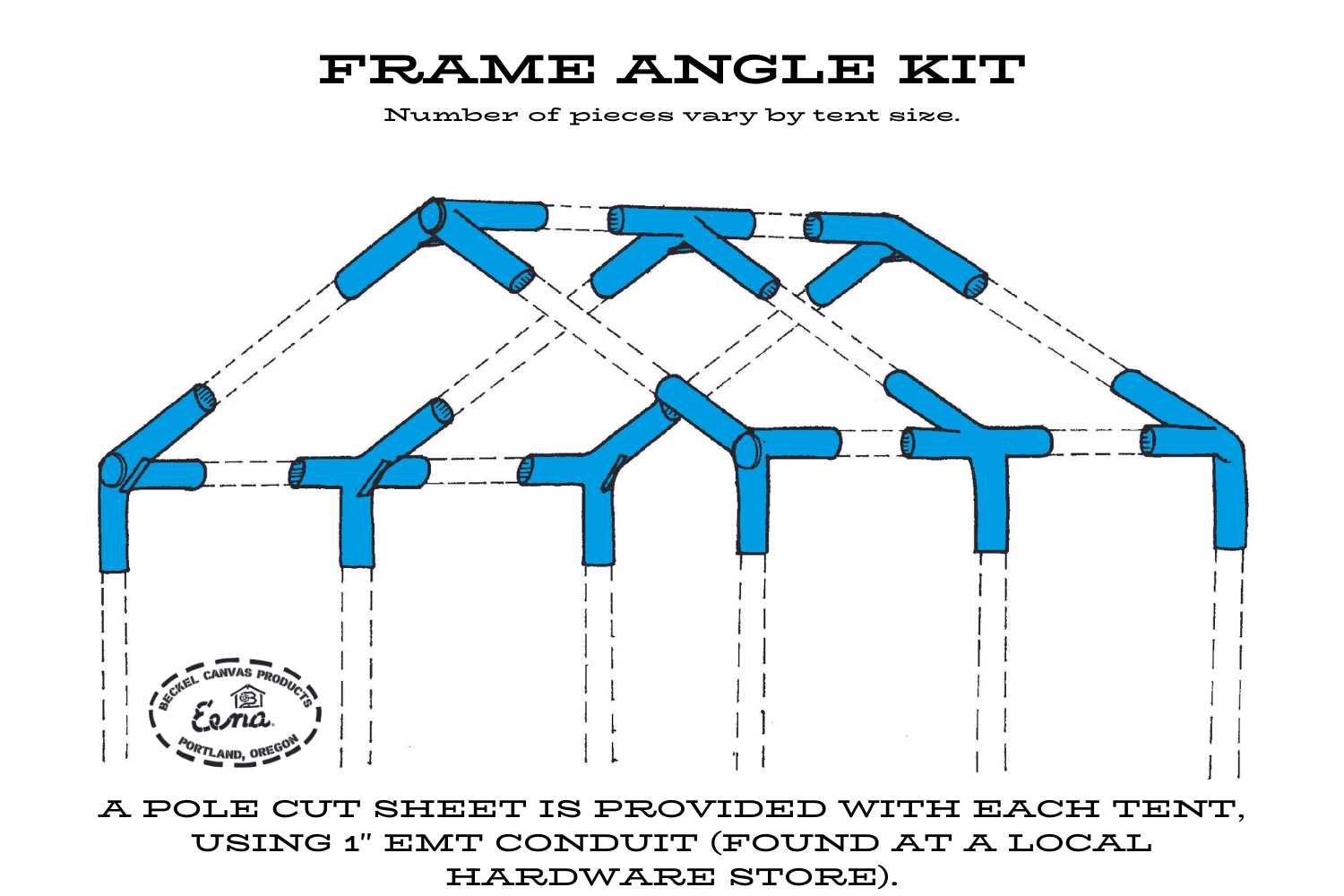
Lay every piece in sunlight before assembly—fumbling with identical-looking poles in fading light causes 80% of first-time setup failures. Group components by type: poles in one arc, stakes in a fan pattern, guy lines coiled separately. Identify pole sections by color-coded tips or notches; mismatched poles create weak structural points. If your poles have shock cords, gently stretch them once before assembly to prevent kinking. For clip-style tents, note that clips closest to the door are often reinforced—attach these first for stable initial framing.
Avoiding Common Pole Assembly Mistakes
Never force pole sections together—this stretches shock cords and weakens joints. Instead, hold both sections vertically and let gravity guide them. If poles resist connecting, rotate one section slightly; the corded ends have directional tabs. When laying out poles, mimic the tent’s final shape: dome tents form a cross, tunnel tents create parallel lines. Misaligned poles cause uneven tension that tears fabric during windstorms. Pro tip: Step on the tent’s corner loops while assembling poles to keep the base stable.
Creating a Waterproof Foundation
:max_bytes(150000):strip_icc()/ground-cover-tips-504214-v3-HL-5c377f614cedfd00018afd01.png)
Your groundsheet must be 2-3 inches smaller than the tent floor on all sides. Oversized tarps channel rainwater underneath during downpours—a frequent cause of soaked sleeping bags. Position the tarp’s shiny side down to reflect ground moisture upward, away from your tent. Smooth out all wrinkles with your palms; creases create water channels that bypass seam sealant. For soft ground, place stakes under tarp corners to prevent shifting during setup.
Correct Footprint Placement Sequence
- Stretch tarp diagonally across your site, aligning corners with your planned tent layout
- Step on all four corners while adjusting tension—fabric should feel drum-tight
- Tuck excess tarp edges inward using smooth, flat rocks (never sharp ones)
- Double-check that no tarp edges extend beyond where tent corners will sit
Building the Tent Structure Efficiently
With poles pre-assembled in their correct shape, attach them to the tent body while both lie flat on the footprint. For clip systems, start with the longest poles at the tent’s center axis—these provide critical structural stability. Snap clips from the bottom up to prevent fabric bunching. If using pole sleeves, feed poles from the door end toward the rear; this keeps sleeves from twisting. Never step on the tent body during assembly—shoe grit abrades waterproof coatings.
Rainfly Attachment That Prevents Condensation
Drape the rainfly over the frame before staking the tent body. Align color-coded tabs on the fly with matching tent corners—mismatched alignment creates gaps where wind-driven rain enters. Secure the fly’s peak first using the included toggles, then work downward. Leave 2-3 inches of space between rainfly and inner tent everywhere—this air gap is your primary defense against condensation. In humid conditions, position the fly’s ventilation panel toward prevailing breezes.
Securing Against Wind and Rain

Drive stakes through loop anchors at a 75-degree angle away from the tent—not the traditional 45 degrees. This shallow angle creates upward tension that prevents stakes from popping out when wind lifts the tent. For soft soil, use deadman anchors: bury a stick horizontally with guy lines attached. Test tension by pressing your palm against each tent wall—it should rebound firmly like a drumhead. Loose sections flap violently in wind, tearing seams within hours.
Guy Line Setup for Extreme Weather
In high winds, attach guy lines to every available anchor point, not just corners. Form a diamond pattern: run lines from mid-wall anchors to stakes placed 8 feet away at 45-degree angles. For heavy rain, add a “drip line” by tying a small weight (like a carabiner) to the center of each guy line—this breaks surface tension so water drips off before reaching the tent. Always leave slack in guy lines for thermal expansion; tightening them in cold evening air causes breakage when temperatures rise at dawn.
Final Weatherproofing Checks
With the tent fully pitched, crawl inside and inspect seams where poles meet the canopy. Any fabric touching the rainfly will transfer moisture through capillary action. Push gently on contact points to create separation—your finger should fit between layers. Test ventilation by lighting a small candle near the floor (safely away from fabric); smoke should exit vents within 10 seconds. In dry conditions, sprinkle water on the rainfly—if it beads up instantly, your waterproofing is intact.
Condensation Control Tactics
Open all vestibule doors during daytime to equalize humidity. At night, slightly offset inner tent and rainfly zippers by 6 inches to create cross-ventilation without rain exposure. Place moisture-absorbing crystals (like silica gel) in mesh pockets near sleeping areas—this reduces interior humidity by 30%. Never cook inside tents; human breath adds 1-2 pints of moisture nightly, overwhelming ventilation systems.
Troubleshooting Common Setup Disasters
Tent walls collapsing inward? You’ve over-tightened guy lines on one side. Loosen all lines, then re-tension symmetrically starting from windward side. Water pooling on rainfly? Gently poke the sag point with a trekking pole to create runoff channels—never pull fabric taut as this stretches waterproof coatings. Stakes pulling out in sand? Soak the area with water first; damp sand holds stakes 200% better than dry.
Packing Up Without Damaging Your Tent
Never pack a damp tent—it breeds mildew within 12 hours. If caught in rain, set up your tent at home for 48 hours before storage. When breaking camp, shake the tent vigorously to dislodge debris—do this over a tarp to catch soil. Roll the tent loosely from foot to head end, keeping poles bundled inside. Stuff sacks cause more wear than simple rolling; use a breathable cotton storage bag instead. Always store your tent fully unzipped with doors open to prevent zipper corrosion.
Final Note: Your tent becomes reliable only through practice. Set it up in your backyard three times before your first trip—each repetition cuts your campsite setup time by 40%. Notice how pole connections become intuitive and staking feels effortless. This confidence means arriving at camp as darkness falls transforms from a panic-inducing race into a calm, methodical process. When you master how to set up a camping tent correctly, you’re not just creating shelter—you’re claiming your rightful place in the wilderness. The next time you hear thunder approaching, you’ll smile knowing your dry refuge is minutes away. Pack your practice session this weekend, and your next adventure starts with a sanctuary, not a struggle.