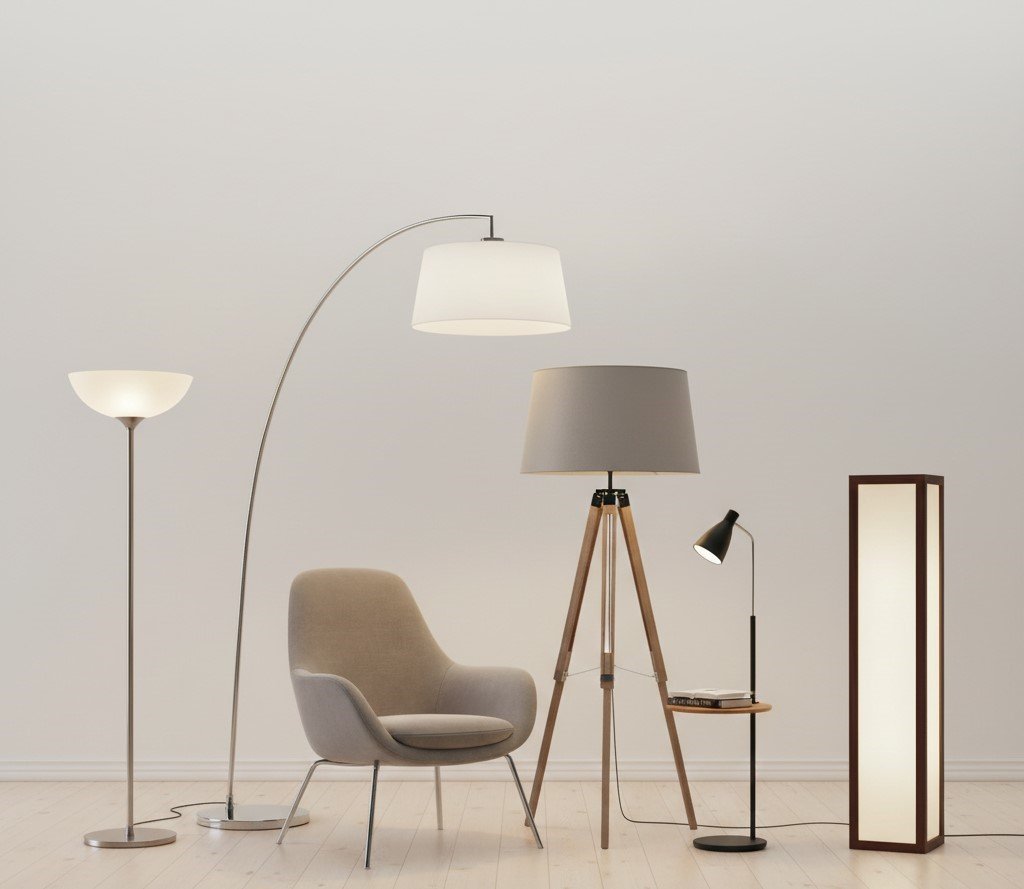
That elegant floor lamp you carefully selected for your living room should enhance your space, not create a constant hazard. When your lamp wobbles uncontrollably on carpet, it’s more than just annoying—it’s a genuine safety concern waiting to happen. Every time you brush against it or someone walks by, that precarious sway threatens to send your expensive lighting fixture crashing down. The soft, uneven surface of carpeting creates the perfect storm for instability, especially with modern lamps that often feature sleek, narrow bases designed more for aesthetics than function.
The problem isn’t you—it’s the physics of heavy objects on soft surfaces. Without proper stabilization, your floor lamp will continue to tilt, rock, and potentially topple, risking broken glass, damaged flooring, or worse, injury to you or your family. The good news? You don’t need specialized skills or expensive equipment to fix this common household frustration. By understanding why your lamp wobbles and applying the right stabilization technique, you can transform an unstable eyesore into a rock-solid lighting solution that stays exactly where you put it.
Diagnose Your Floor Lamp Instability Before Fixing
Before you start applying solutions, you need to pinpoint exactly why your lamp won’t stay steady on carpet. Different causes require different fixes, and applying the wrong solution wastes your time and might even make the problem worse.
Why Narrow Lamp Bases Fail on Soft Carpet
Tall, slender lamp bases look elegant but create serious stability challenges on carpet. Unlike hardwood floors where even a small base can remain stable, carpet fibers compress under weight, allowing the base to sink unevenly. A base with a diameter smaller than 8 inches will almost always struggle on medium to high-pile carpet, as there’s simply not enough surface area to distribute the lamp’s weight evenly across the carpet fibers.
How Carpet Pile Height Affects Lamp Stability
Thick, plush carpets create the biggest stability challenges for floor lamps. The deeper the pile, the more the base sinks into the carpet, creating uneven pressure points. If you have Berber or low-pile carpet, your lamp might only experience minor rocking. But with shag or high-end plush carpeting, the base can sink 1/4 to 1/2 inch unevenly, creating that frustrating wobble that makes your lamp feel perpetually off-balance.
Heavy Lampshades That Tip the Balance
That beautiful oversized drum shade might look stunning, but it’s likely shifting your lamp’s center of gravity dangerously high. When the shade weighs more than the base or the upper third of the lamp carries most of the weight, even a slight bump can send it toppling. Test this by gently pushing the top of your lamp—if it bends significantly before the base moves, you’ve got a top-heavy situation that requires specific stabilization techniques.
Loose Hardware That Creates False Wobble
Before assuming the problem is your carpet, rule out simple mechanical issues. Check if the pole-to-base connection has loosened over time—this creates wobble that mimics carpet-related instability. Place your lamp on a hard surface like tile or wood; if it still wobbles, the issue isn’t your carpet at all. Tighten any visible screws or connections, but be careful not to over-tighten, as this can strip threads or crack plastic components.
Six Proven Methods to Anchor Your Floor Lamp on Carpet
Installing Non-Slip Pads Under Lamp Base
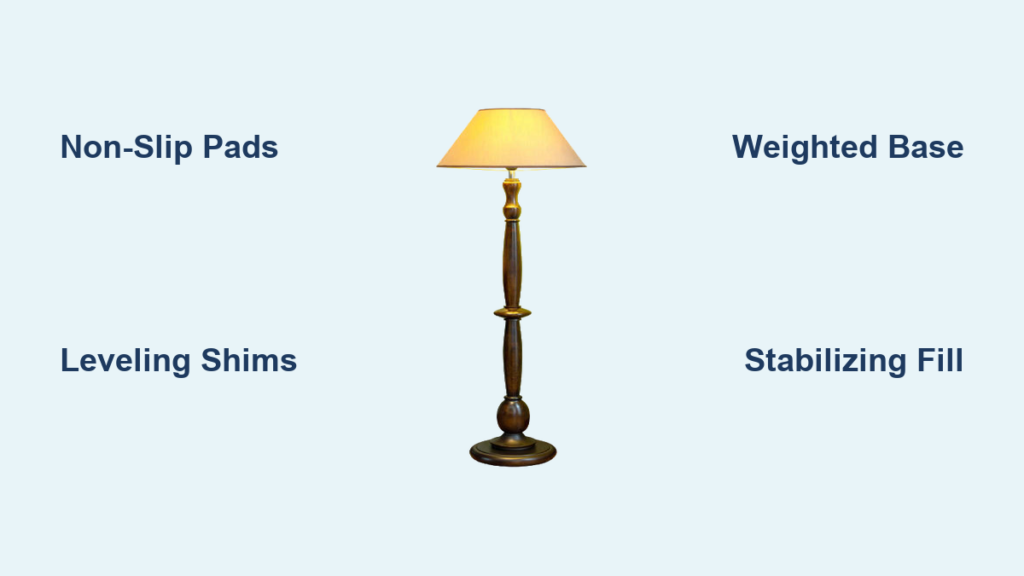
This is your quickest fix with zero permanent modifications. High-density silicone or rubber non-slip pads create microscopic grip points that lock your lamp to the carpet fibers. Cut the pad material to extend 1/2 inch beyond your lamp base for maximum effectiveness—this extra surface area prevents the base from finding purchase on the carpet’s uneven spots. For best results, clean both the carpet and lamp base with a damp cloth before application to remove dust that would reduce adhesion.
Using Precision Leveling Shims for Uneven Surfaces
When your lamp rocks because of carpet inconsistencies rather than overall softness, tapered shims solve the problem surgically. Place a small bubble level across your lamp base to identify which side needs lifting. Start with the thinnest shim (1/16 inch) and work up until the bubble centers. Pro tip: Use rubber or cork shims instead of wood—they compress slightly to maintain contact as carpet fibers shift, preventing that annoying “click” when the shim loses contact.
Creating a Weighted Plywood Base Plate
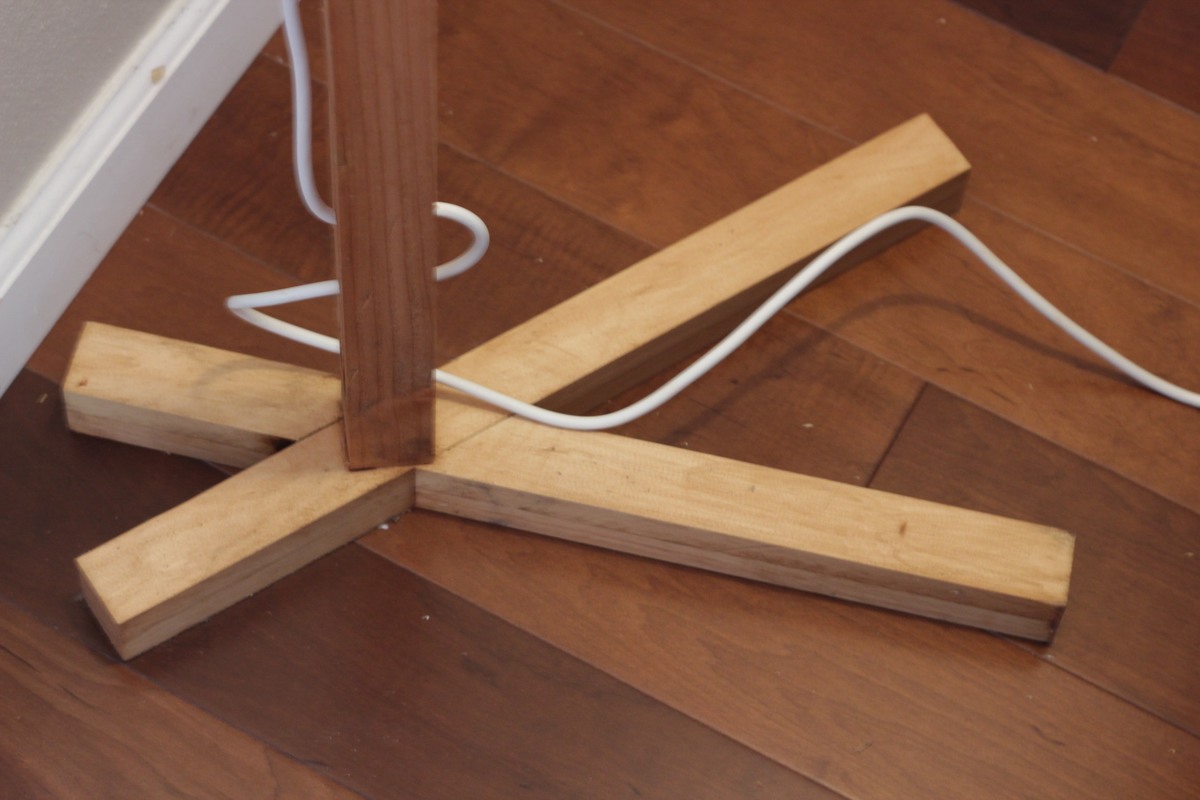
For lamps on extra-plush carpet, combine weight with surface area expansion. Trace your lamp base onto 1/2-inch plywood, then cut 1/2 inch inside the line so the wood won’t be visible. Attach with heavy-duty double-sided tape (3M VHB works best) or construction adhesive. The plywood distributes weight across more carpet fibers while the added mass lowers the center of gravity. Warning: Don’t exceed 5 pounds of added weight—too much can damage carpet backing over time.
Filling Hollow Bases with Stabilizing Material
Many metal lamp bases have removable bottom plates hiding empty space perfect for stabilization. Remove the plate (usually with a single screw), then fill the cavity with clean, dry sand up to 70% capacity. Expert note: Mix sand with small pebbles for better weight distribution—pebbles prevent the sand from shifting during movement. Reattach the plate securely, and you’ll immediately notice how the lamp feels substantially more grounded.
Applying Industrial Anti-Vibration Pads
Originally designed for machinery, these dense rubber pads work wonders for floor lamps. Choose pads with a durometer rating of 60-70 (medium firmness) that compress slightly under pressure. Cut to match your base shape, then place between lamp and carpet. Unlike thin pads that compress completely, these maintain grip while absorbing movement. Time-saving trick: Use pre-cut pads meant for refrigerator leveling—they’re the perfect thickness for most lamp bases.
Installing Furniture Caster Cups for Deep Pile Carpet
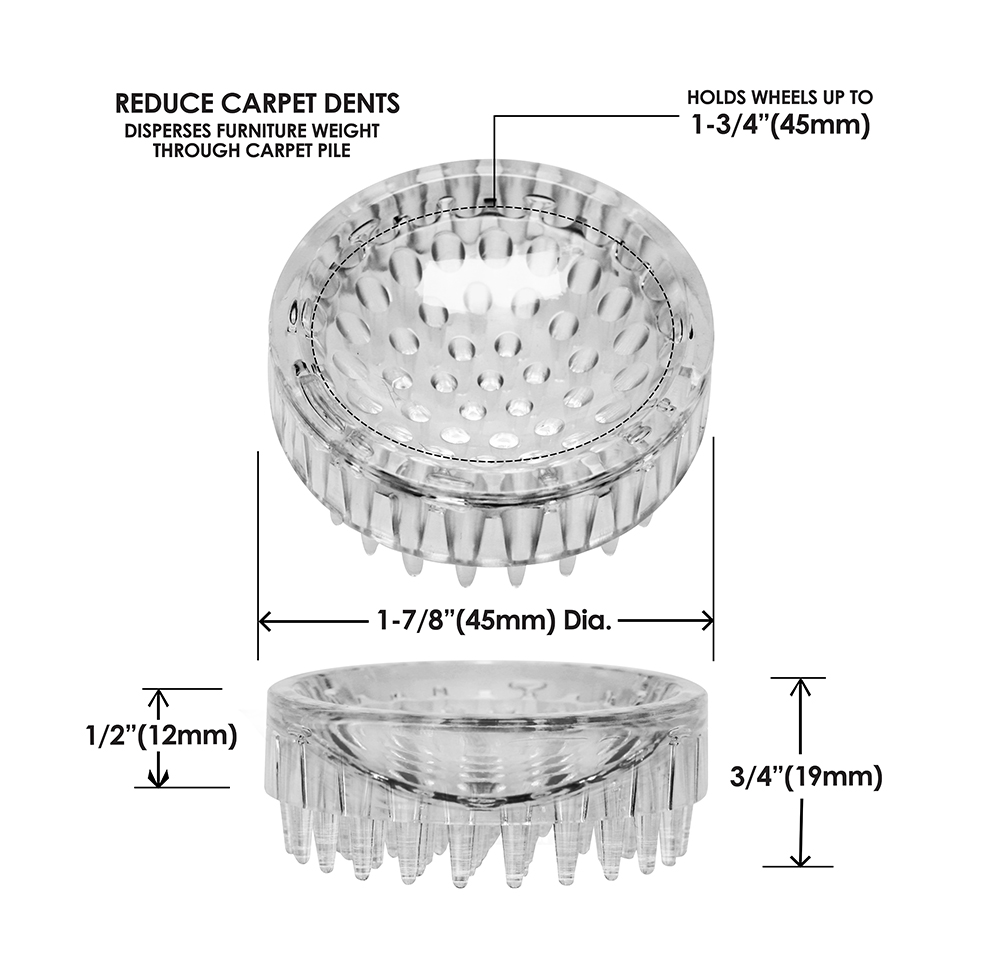
For extreme cases on shag or commercial-grade carpet, caster cups redistribute weight like snowshoes on powder. Select cups at least 1 inch wider than your lamp feet with non-slip bottoms. Press firmly into the carpet until the rim sits flush with the carpet surface, then position your lamp inside. The cup creates a mini-platform that prevents the base from sinking unevenly into the carpet pile. Pro tip: Use cups with drainage holes to prevent moisture buildup if you ever need to clean the carpet underneath.
Step-by-Step Stabilization Process for Immediate Results
Follow this precise sequence to solve your lamp wobble in under 15 minutes:
-
Prepare the work area by moving nearby furniture and clearing the carpet around your lamp base. Vacuum thoroughly to remove debris that could prevent proper contact.
-
Conduct the stability test by placing a coin under each side of the base. If the coin slides out easily, that side needs stabilization. If it stays put, that side has adequate contact.
-
Apply your chosen solution starting with the simplest method (non-slip pads). Work methodically—if using shims, insert from thinnest to thickest until the coin test shows equal resistance on all sides.
-
Verify stability by applying gentle pressure to the lamp’s top at 90-degree intervals. A properly stabilized lamp should resist movement without transferring force to the base.
Critical Mistakes That Sabotage Lamp Stability
Using standard furniture pads designed for hard floors—these thin felt pads compress completely on carpet, creating more instability. Always choose pads specifically labeled for carpet use with thickness of at least 1/8 inch.
Ignoring seasonal changes—carpet density varies with humidity. What works perfectly in summer might fail in winter when indoor air is drier and carpet fibers stiffen. Check stability quarterly and adjust as needed.
Overlooking base shape limitations—round bases are inherently less stable on carpet than square or multi-point bases. If you have a valuable round-based lamp you love, consider replacing just the base with a wider, flat-bottomed alternative rather than fighting physics.
Long-Term Stability Solutions for Peace of Mind
For lamps that must remain absolutely stationary, combine methods for foolproof results. Start with a weighted plywood base (adding 3-5 pounds), then add non-slip pads between the wood and carpet. This dual approach addresses both weight distribution and surface grip. For valuable or antique lamps, consult a lighting specialist about internal counterweights that maintain the lamp’s original appearance while improving stability.
Regular maintenance prevents future wobble—every three months, lift your lamp and fluff the carpet fibers underneath. Compressed carpet creates uneven surfaces that undermine even the best stabilization. Simply using your fingers to separate matted fibers restores the carpet’s natural springiness and maintains consistent support for your lamp base.
Final Note: A stable floor lamp isn’t just about preventing accidents—it transforms your lighting from a constant concern to a reliable part of your home’s ambiance. By choosing the right stabilization method for your specific carpet and lamp combination, you’ll enjoy both safety and peace of mind. Start with the simplest solution that matches your instability cause, and don’t hesitate to combine techniques for challenging situations. Within minutes, you can eliminate that nagging wobble and enjoy your lamp exactly where you want it, without fear it might take a tumble.