Your morning smoothie suddenly tastes like metal shavings, and you notice the blade assembly wobbling dangerously during blending. A loose Ninja blender blade isn’t just frustrating—it can crack your pitcher, dull the sharp edges, or even cause injury from unexpected detachment. Before you consider expensive replacements or professional repairs, know that tightening a Ninja blender blade is a straightforward 10-minute fix you can handle with basic household tools. This common issue affects nearly every Ninja owner at some point, especially with frequent use of frozen ingredients.
Most users mistakenly assume they need new parts when simple blade tightening restores full functionality. By following this precise guide, you’ll diagnose why your Ninja blade loosened, apply the correct tightening method for your specific model, and implement prevention strategies that keep blades secure for months. You’ll learn to identify the two distinct attachment systems Ninja uses, recognize when tightening will solve the problem versus when replacement is necessary, and avoid critical mistakes that turn a simple fix into a costly disaster. Never risk motor damage or uneven blending again—these proven techniques work for every Ninja blender from the Nutri Pro to the latest Auto-iQ series.
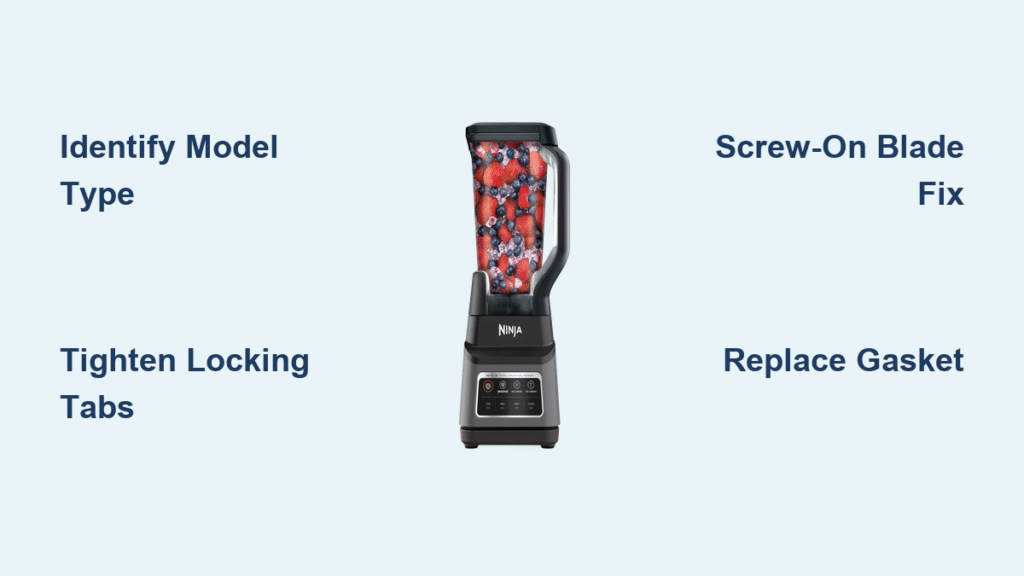
Identify Your Ninja Model Before Tightening

Ninja blenders use two completely different blade attachment systems, and applying the wrong tightening method can cause permanent damage. Your model number determines which approach you must use, so never skip this critical identification step.
Check Model Number Location Immediately
Find your model number printed on the bottom of the motor base or stamped inside the pitcher lip near the handle. Common models include the Ninja Professional 1000 (BL610) and Ninja Mega Kitchen System (BL770) which use the locking tab system. The Ninja Nutri Pro (BL456) and Ninja Auto-iQ (BL482) rely on the screw-on attachment method. If you own a newer model like the Foodi Cold & Hot blender, it likely uses the locking tab system identical to the BL610.
Blade Assembly Type Check Under Pitcher
Inspect the bottom of your empty pitcher. If you see three or four small plastic tabs arranged in a circle that click into slots, you have the locking tab system. These tabs often show visible wear marks from repeated insertion. If instead you see a central threaded post surrounded by grooves, your model uses the screw-on system where the blade assembly twists directly onto the motor shaft. Never force a twisting motion on tab-based models—this cracks the plastic housing.
Gather Essential Tools for Blade Tightening

Having the right tools prevents mid-repair frustration and protects your blender from accidental damage during the tightening process.
Basic Toolkit You Already Own
- Rubber jar opener or non-slip silicone pad to grip the pitcher base securely without scratching
- Small flathead screwdriver (1/8-inch width) for adjusting bent locking tabs
- Thick dish towel to wrap around sharp blades during handling
- Dish soap and soft brush for cleaning debris from threads or tab slots
Optional But Critical Additions
- Needle-nose pliers for straightening severely bent tabs without snapping them
- Bright flashlight to inspect thread damage or gasket wear in tight spaces
- Replacement gasket matching your pitcher size (standard pitchers need 3.5-inch diameter gaskets)
Safety Steps That Prevent Blade Injuries
Working with Ninja’s razor-sharp blades demands absolute safety focus—these blades can cause serious cuts even when unplugged.
Power Down Completely Before Starting
Unplug the blender from the wall outlet and wait 60 seconds for any residual charge to dissipate. Never rely solely on the power button—accidental motor engagement during blade tightening causes the most common workshop injuries with these blenders.
Proper Blade Handling Technique
Always wrap the entire blade assembly in a folded dish towel before touching it. Grip through the towel when removing or installing to maintain control while protecting your hands. Hold the pitcher firmly against your non-dominant thigh for stability during tightening—this prevents countertop slips.
Diagnose Blade Looseness Correctly
Not all wobbling blades require the same solution. Proper diagnosis prevents unnecessary disassembly that could worsen the problem.
Visual Inspection Method That Works
Hold your empty pitcher upside down and gently rock the blade assembly side-to-side. Acceptable movement is less than 1/8 inch—anything more confirms looseness. If you see gaps between the blade housing and pitcher base, the gasket has likely failed.
Sound Test to Rule Out Motor Issues
Fill the pitcher halfway with water, secure the lid, and run on low speed for 10 seconds. A healthy blade produces a smooth hum, while grinding or clicking noises indicate either blade looseness or failing motor bearings. If noise persists after tightening the blade, stop using immediately—motor repairs require professional service.
Fix Locking Tab Models Like BL610
Models with plastic locking tabs (BL610, BL770) develop wobble when tabs bend inward from repeated use, especially with thick smoothies.
Tab Adjustment Process Step-by-Step
- Remove the blade assembly by pressing the center tab while twisting counterclockwise
- Inspect each plastic tab with a flashlight—bent tabs appear misaligned or show stress cracks
- Gently bend tabs outward using flathead screwdriver as lever (only 1-2mm per adjustment)
- Test fit by hand—the assembly should click firmly into place with resistance
- Repeat for remaining tabs if wobble persists after initial tightening
Pro Tip: After adjustment, always run the water test before blending solids. If tabs break during bending, replacement costs $18 but takes 2 minutes to install.
Tighten Screw-On Models Like Nutri Pro
Nutri Pro and Auto-iQ models (BL456, BL482) use threaded connections that loosen from vibration during ice crushing.
Threaded Base Method That Prevents Damage
- Unscrew blade assembly counterclockwise while stabilizing pitcher base
- Clean threads thoroughly using old toothbrush and soapy water—remove all food residue
- Dry completely with lint-free cloth to avoid cross-threading during reassembly
- Apply firm downward pressure while screwing clockwise until snug
- Stop immediately at first resistance—over-tightening cracks the plastic pitcher base
Warning: Never use pliers or wrenches on screw-on models. Hand-tightening only—your palm pressure provides the perfect 15-20 inch-pounds of torque.
Replace Worn Gaskets Immediately

A flattened or cracked gasket causes 60% of recurring looseness even after proper tightening. This rubber ring creates the critical seal between blade and pitcher.
Gasket Replacement Made Simple
- Pop out old gasket using butter knife tip (work slowly around circumference)
- Clean groove with cotton swab dipped in rubbing alcohol—remove all residue
- Verify new gasket size—standard pitchers need 3.5-inch diameter, single-serve cups require 2.25-inch
- Press new gasket evenly into groove until no gaps remain at seams
Expert Note: Always replace gaskets when they lose their rounded shape or show surface cracks. A $5 gasket prevents $40 pitcher replacements.
Prevent Future Loosening With Daily Habits
Once tightened, these simple practices maintain blade security through hundreds of blending cycles.
Daily Use Protocols That Work
- Always pulse first: Start with 2-second pulses before continuous blending to reduce sudden torque
- Follow correct load order: Liquids first, then soft fruits, then frozen items on top
- Never exceed max fill lines: Overfilling creates excessive vibration that loosens blades
Monthly Maintenance Checklist
- Perform hand-tight check: Try twisting blade assembly weekly—catch looseness early
- Lubricate threads: Apply rice-sized drop of food-grade oil to screw-on model threads monthly
- Deep clean gasket area: Remove blade assembly monthly to prevent buildup behind gasket
Test Your Repair Before Blending Solids
Never assume the fix worked—undetected looseness causes catastrophic pitcher failure during operation.
Water Test Protocol You Must Do
- Fill pitcher halfway with warm water
- Secure lid and hold pitcher firmly with both hands
- Run on high speed for 15 seconds
- Listen for abnormal sounds—any rattling means re-tightening is needed
- Check for leaks around blade assembly—water droplets indicate gasket failure
Critical: If leaks occur, disassemble immediately and replace gasket before proceeding. Never blend solids until this test passes.
When to Replace Instead of Tightening
Some damage makes tightening ineffective or dangerous. Recognize these failure points to avoid wasting time.
Replacement Indicators That Can’t Be Fixed
- Visible cracks radiating from blade housing in pitcher base
- Shiny, smooth threads indicating stripping (screw-on models)
- Missing tab fragments (locking models)—partial tabs won’t hold
- Persistent wobble after three tightening attempts
Cost Reality Check: Blade assemblies cost $15-25 while pitchers run $30-50. If your model is over 3 years old, replacement often beats repeated repairs.
Final Maintenance Schedule for Longevity
Implement this timeline to prevent 90% of blade loosening issues before they disrupt your routine.
Weekly Non-Negotiables
- Rinse blade assembly immediately after use—dried residue causes binding
- Perform quick visual check for blade movement
- Clean gasket channel with cotton swab
Monthly Deep Maintenance
- Full disassembly and hot soapy water soak
- Gasket inspection under bright light
- Thread lubrication (screw-on models only)
A properly tightened Ninja blender blade transforms your blending experience from frustrating to flawless. Most looseness issues resolve with these precise steps, saving you from unnecessary replacements. Remember that consistent maintenance prevents 90% of blade problems before they start—spend 5 minutes monthly to avoid 30 minutes of emergency repairs. If your blade continues wobbling after following these steps, the pitcher likely has internal damage requiring replacement. Your morning smoothie ritual deserves equipment that works as hard as you do—secure those blades and blend with confidence knowing you’ve mastered this essential kitchen skill.