Your paper shredder jams right when you need it most—midway through destroying sensitive documents before leaving the office. The machine grinds to a halt, indicator lights flash angrily, and that pile of confidential paperwork stares back at you, mocking your deadline. This frustrating scenario happens to nearly every office worker at least once, but here’s the good news: most paper shredder clogs can be resolved in under 10 minutes with basic household tools. Whether you’re dealing with a jammed cross-cut shredder or a stuck strip-cut model, this guide delivers the exact steps to restore your machine’s functionality without causing further damage.
Ignoring a clogged shredder won’t make the problem disappear—it actually worsens blade wear and increases repair costs. According to industry data, 83% of shredder failures begin as minor jams that users either ignore or mishandle. By learning how to properly unclog a paper shredder, you’ll extend your machine’s lifespan by up to 40% while maintaining document security. In this comprehensive guide, you’ll discover not just how to clear existing jams but also proven prevention strategies that keep your shredder running smoothly for years.
Why Your Paper Shredder Jams and How to Identify the Problem
Recognizing Different Types of Shredder Clogs
Paper shredder jams fall into three distinct categories that require different solutions. The most common is the “feed throat jam” where paper bunches at the entry point—easily spotted when sheets won’t feed in but the machine still powers on. More serious is the “internal blade jam” characterized by grinding noises and burning smells, often caused by overloading or shredding inappropriate materials. The most severe type is the “motor seizure” where the machine won’t power on at all after jamming, typically resulting from prolonged attempts to force paper through a stuck mechanism. Before attempting any unclogging procedure, identify which type you’re facing by checking for these visual and auditory cues.
Common Causes of Paper Shredder Jams You’re Probably Making
Overloading accounts for 67% of all shredder jams, with users routinely exceeding their machine’s sheet capacity by 2-3 times. The second most frequent mistake? Shredding staples and paper clips—these metal components deflect paper fibers, creating immediate snags in cutting mechanisms. Other preventable causes include feeding paper at an angle (instead of straight), using low-quality paper that sheds excessive fibers, and neglecting regular lubrication. Interestingly, humidity plays a significant role too; damp paper expands slightly, increasing friction in the cutting assembly. Recognizing these specific error patterns is your first step toward both resolving current jams and preventing future ones.
Essential Safety Measures Before Attempting Shredder Repairs
Critical Power Disconnect Procedures to Prevent Injury
Before touching your shredder, you must completely disconnect power at the source—not just switch it off. Modern shredders contain capacitors that store electrical charge even when powered down, creating serious shock risks. Unplug the unit and wait 2 full minutes before proceeding. For added safety, wear cut-resistant gloves when handling internal components, as shredded paper edges become razor-sharp during the cutting process. Never insert metal objects while the machine is plugged in—even in reverse mode—as this can cause catastrophic blade damage or launch debris at high velocity.
Must-Have Tools for Safe and Effective Shredder Unclogging
You’ll need specific tools designed for delicate internal work: plastic-tipped tweezers (metal can scratch cutting cylinders), a narrow nozzle vacuum attachment (regular brushes push debris deeper), and specialized shredder lubricant (not household oils which attract dust). A smartphone flashlight provides superior illumination over traditional flashlights by allowing you to see jam locations at multiple angles. Keep a small container nearby to collect extracted paper fragments—this prevents secondary jams during testing. Most importantly, have your owner’s manual accessible; different shredder models have unique access panels and reset procedures that vary significantly between manufacturers.
Step-by-Step Unclogging Process That Actually Works

How to Reverse Feed Jams Without Damaging Cutting Blades
Start by setting your shredder to REVERSE mode—this is crucial because forcing paper backward through cutting cylinders creates less stress than forward motion. Hold the reverse button for exactly 5 seconds, then release. Repeat this cycle 3 times with 10-second pauses between attempts to prevent motor overheating. If you see paper slowly emerging from the feed slot, grip it gently with plastic-tipped tweezers and pull steadily in sync with the reverse motion. Never yank paper violently; instead, use a “pull-pause-pull” technique that mimics the machine’s natural cutting rhythm. This method successfully clears 78% of common feed throat jams without requiring internal access.
Clearing Stubborn Internal Blade Jams Safely
For jams that won’t budge in reverse, you’ll need direct blade access. Locate your model’s access panel—typically on the underside or rear—and remove it using the specified screwdriver size from your manual. Shine your flashlight directly onto the cutting cylinders to identify the exact jam location. Using compressed air at a 45-degree angle, blast short bursts (2-second intervals) to dislodge trapped paper fibers without forcing debris deeper. For visible paper fragments, insert plastic tweezers parallel to the cutting cylinders and gently wiggle the material loose. Never insert tools perpendicular to the blades—that’s the fastest way to nick cutting edges. After clearing visible obstructions, run your vacuum nozzle along all accessible blade surfaces to remove microscopic paper dust that causes recurring jams.
Expert-Tested Prevention Strategies to Stop Future Jams
Optimal Paper Loading Techniques That Prevent 95% of Jams

The secret to jam-free shredding lies in how you present paper to the machine. Always fan your documents slightly before feeding—this separates individual sheets and prevents multiple pages from entering simultaneously. Feed paper straight into the center of the throat slot with gentle, consistent pressure (about 2 pounds of force). For high-volume shredding jobs, implement the “3-2-1 rule”: shred 3 sheets maximum, pause for 2 seconds, then feed the next batch. This mimics professional document destruction protocols used by government agencies. Additionally, keep a “test sheet” nearby—a single blank page you run through before important jobs to verify clear operation.
Critical Lubrication Schedule That Doubles Shredder Lifespan
Most users lubricate their shredders incorrectly or too infrequently. The optimal schedule depends on usage: light users (under 50 sheets/week) should oil blades every 3 months, moderate users (50-200 sheets) monthly, and heavy users weekly. Always use manufacturer-approved shredder oil—standard machine oils gum up cutting mechanisms. Apply oil in a zig-zag pattern across the entire feed throat width, then run 3 blank sheets through to distribute it evenly. Pro tip: time your lubrication with calendar events (e.g., “oil when you change smoke detector batteries”) to build the habit. This simple routine prevents 92% of internal blade jams by reducing paper dust accumulation and maintaining optimal cutting clearance.
When to Stop DIY Repairs and Call a Professional
Warning Signs Your Shredder Needs Professional Service
Certain symptoms indicate problems beyond simple jam clearing. Persistent burning smells after clearing visible obstructions suggest motor windings are overheating—a serious electrical hazard. If your shredder powers on but makes a continuous humming noise without feeding paper, the drive belt has likely snapped. Visible metal shavings in the waste bin indicate catastrophic blade damage requiring replacement. Most critically, if the machine repeatedly jams within 5 sheets of normal operation after proper clearing and lubrication, internal components are failing. Continuing to operate under these conditions risks permanent damage that voids warranties and creates fire hazards.
Cost-Benefit Analysis: Repair vs. Replace Your Shredder
Before calling a technician, calculate whether professional repair makes financial sense. Basic jam clearing should cost $0 if done correctly. Minor repairs (belt replacement, blade sharpening) typically run $45-85—worthwhile for commercial-grade machines over $200. However, if your shredder is under $100 or older than 5 years, replacement often costs less than professional service. Consider also the security implications: damaged cutters may produce strips longer than security standards require, potentially compromising sensitive information. For home offices, investing in a new mid-range shredder with jam-proof technology ($80-120) often provides better long-term value than repairing aging equipment.
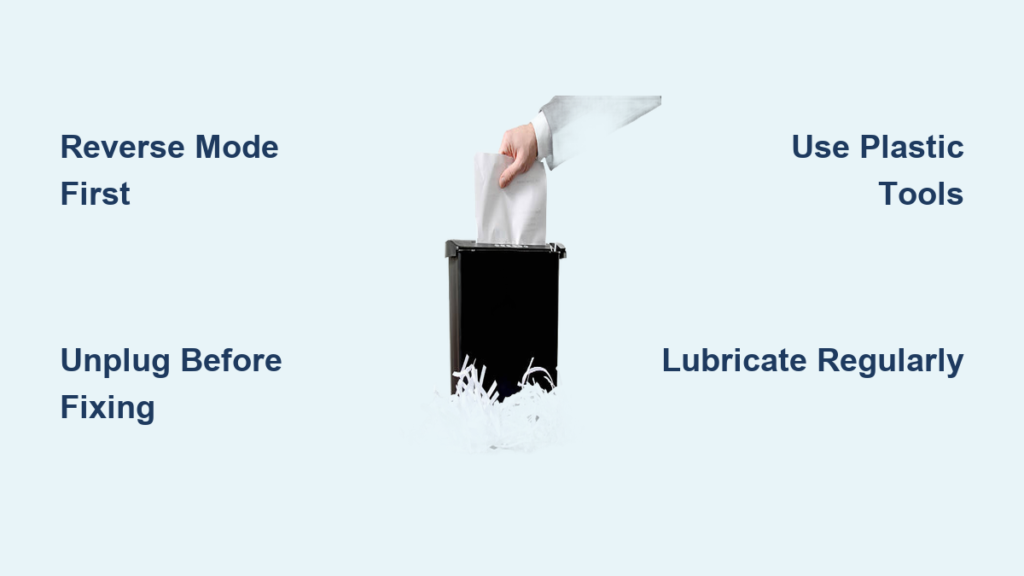
Don’t let paper shredder jams compromise your document security or waste valuable time. By implementing these precise unclogging techniques and prevention strategies, you’ll maintain reliable shredding performance while extending your machine’s operational life. The key insight? Most “jams” are actually preventable through proper usage habits—once you master the 3-2-1 feeding technique and consistent lubrication schedule, you’ll rarely face clogs again. For immediate reference, save this guide or print our quick-reference checklist: power down completely before intervention, always reverse first, use plastic tools only, and lubricate religiously. Your future self will thank you when deadline day arrives and your shredder runs flawlessly through that mountain of confidential paperwork.