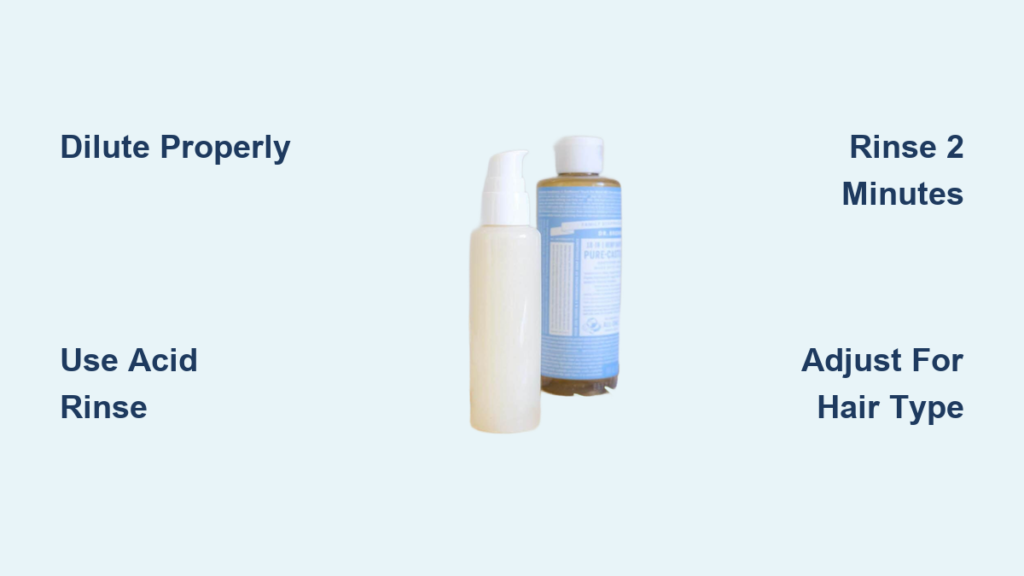
Your hair deserves a cleaner, simpler routine that strips away harsh chemicals without sacrificing cleanliness. When you learn how to use castile soap as shampoo properly, you’ll discover a natural hair care solution that cleanses effectively while preserving your hair’s natural oils. Many people make the mistake of applying castile soap directly to their hair, only to experience dryness, residue, or that dreaded “waxy” feeling. But with the right technique—proper dilution and a balancing acid rinse—you’ll achieve clean, shiny hair without synthetic detergents.
Switching to castile soap as shampoo isn’t just about going natural; it’s about understanding how this plant-based cleanser interacts with your hair’s unique chemistry. Unlike commercial shampoos formulated with sulfates that create abundant lather, castile soap works differently—it cleanses through saponified oils that bind to dirt and oil while maintaining moisture balance. The key to success lies in recognizing that castile soap has an alkaline pH (8-9), which opens your hair cuticles for deep cleaning but requires an acidic follow-up to seal those cuticles and restore shine.
Why Your Hair Feels Waxy When Using Castile Soap (And How to Fix It)
The waxy feeling many experience when first using castile soap as shampoo stems directly from its alkaline nature interacting with your hair’s natural pH. Commercial shampoos are formulated to match your scalp’s slightly acidic pH (4.5-5.5), while castile soap operates at a higher pH (8-9). This alkaline environment lifts hair cuticles to remove buildup, but without proper rebalancing, those open cuticles create friction between strands, leading to tangles and that unpleasant residue feeling.
The Critical Acid Rinse Process You Can’t Skip
This non-negotiable step transforms castile soap washing from a frustrating experience to a hair-reviving ritual. After thoroughly rinsing out your diluted castile soap, prepare your acid rinse:
- Mix 1-2 tablespoons of apple cider vinegar or the juice of one lemon with 1 cup of cool water
- Pour slowly over your hair, focusing on the lengths rather than your scalp
- Let it sit for 3-5 minutes while you gently run your fingers through your hair
- Rinse with cool water to seal the cuticle
Pro Tip: Don’t worry about vinegar smell—it completely rinses out! If you’re sensitive, try a citric acid rinse (¼ teaspoon food-grade citric acid per cup of water) for more consistent pH control.
Your Precision Dilution Formula Based on Hair Type

Applying undiluted castile soap is the #1 mistake that leads to residue, dryness, and frustration. The perfect dilution ratio depends entirely on your specific hair characteristics—get this wrong, and you’ll wonder why your hair feels like straw.
Create Your Custom Dilution Blend
Grab a foaming pump bottle or repurposed shampoo container and mix these precise ratios:
- Oily Hair or Scalp: Combine 1 part castile soap with 4 parts water. Add 5-10 drops of rosemary or peppermint essential oil for scalp stimulation.
- Normal Hair: Use 1 part soap to 6-8 parts water. Shake gently before each use.
- Dry or Color-Treated Hair: Dilute 1 part soap with 10-12 parts water. Add 1 tablespoon of argan or jojoba oil to boost moisture retention.
- Curly or Coily Hair: Mix 1 part soap with 5 parts water and add 2 tablespoons of coconut milk for extra slip and definition.
Warning: Always pre-dilute in a separate container—never apply full-strength soap to your hair. The mixture should look slightly cloudy, not clear like water.
The 5-Step Washing Protocol for Perfect Results
Follow this precise sequence to transform how you use castile soap as shampoo and avoid common pitfalls that leave hair feeling less than clean.
Proper Pre-Wet Technique for Complete Saturation
Before applying any soap, thoroughly saturate your hair with lukewarm water for a full 60 seconds. Hair must be completely waterlogged—from roots to ends—to ensure even cleansing. This pre-wet step prevents the soap from binding unevenly and creating patchy residue.
Targeted Scalp Application Method
Pour a quarter-sized amount of your diluted mixture into your palms and rub hands together to activate lather. Apply directly to your scalp using your fingertips (not palms), focusing on the roots where oil accumulates. For medium to long hair, avoid applying soap directly to the ends—let the cleansing action flow downward as you rinse.
The Perfect Rinse Duration You’re Probably Missing
After massaging your scalp for 1-2 minutes, begin rinsing with lukewarm water. Keep rinsing for a minimum of 2 full minutes—this is where most people cut corners. You should feel your hair “squeak” slightly when rubbing strands between fingers, indicating thorough soap removal. If you still feel slip or residue, continue rinsing for another 30 seconds.
Troubleshooting Guide for Common Castile Soap Problems

Even with proper technique, you might encounter issues during your transition to castile soap shampoo. These targeted solutions address the most frequent complaints.
Fixing Hard Water Residue Instantly
If you live in a hard water area (over 120 ppm minerals), soap reacts with calcium and magnesium to create that filmy residue. Here’s your immediate solution:
- Switch to distilled water for both your soap dilution and final acid rinse
- Add ¼ teaspoon citric acid to your final rinse water
- Install an affordable shower head filter to remove minerals
Pro Tip: Test your water hardness with inexpensive strips from a hardware store—this knowledge transforms your castile soap results.
Solving Dryness Without Compromising Cleanliness
Dry hair after castile soap use typically means your dilution ratio needs adjustment or you’re skipping essential moisture components. Try these fixes:
- Increase your dilution ratio by adding 2 extra parts water
- Add 1 tablespoon of honey to your soap mixture—it acts as a natural humectant
- Apply a pre-wash oil treatment (2 tablespoons jojoba oil) to ends 30 minutes before washing
- Follow with a leave-in conditioner containing shea butter
Seasonal Adjustments for Year-Round Success

Your castile soap shampoo routine shouldn’t stay static throughout the year—your hair’s needs change with the seasons, and your formula should adapt accordingly.
Summer Hair Protection Formula
During hot, humid months or after swimming, modify your base recipe:
- Add 2 tablespoons aloe vera gel to your soap mixture for UV protection
- Include 1 teaspoon of glycerin to combat humidity-induced frizz
- Use cooler water temperatures to prevent excessive oil stripping
- Add 10 drops of peppermint oil for a refreshing, clarifying sensation
Winter Moisture-Boosting Blend
Cold, dry air demands extra hydration—adjust your formula:
- Increase oil content by adding 1 tablespoon of argan oil to your mixture
- Use a richer acid rinse (1 tablespoon ACV to 1 cup water with 5 drops lavender oil)
- Apply a hot oil treatment once weekly using warm (not hot) coconut oil
- Reduce washing frequency to prevent stripping natural protective oils
Hard Water Hair Rescue Protocol
If you’ve ever wondered why your castile soap leaves residue despite proper technique, hard water is likely the culprit. This specialized protocol eliminates mineral buildup while maintaining cleansing effectiveness.
The Two-Step Hard Water Solution
- Pre-Rinse with Filtered Water: Before applying soap, saturate hair with distilled or filtered water for 30 seconds
- Enhanced Acid Rinse: Mix 2 tablespoons ACV with 1 cup distilled water plus ¼ teaspoon citric acid
Critical Tip: Install a simple $20 shower head filter—it pays for itself in saved castile soap and better hair results. Look for filters specifically designed to remove calcium and magnesium ions.
Transition Timeline: What to Expect Month by Month
Understanding the adjustment period prevents premature abandonment of castile soap shampoo. Your scalp needs time to recalibrate its oil production after years of synthetic detergents.
Weeks 1-2: The Adjustment Phase
Expect increased oiliness or dryness as your scalp rebalances. This is normal—don’t increase washing frequency. Stick to your routine and track changes in a hair journal.
Weeks 3-4: The Turning Point
Oil production stabilizes. You’ll notice improved texture, natural shine returning, and less frequent washing needed. This is when most people experience the “aha!” moment with castile soap.
Month 2+: The Sweet Spot
Your hair achieves its natural balance. Washing frequency decreases, hair feels stronger, and you’ll likely notice reduced breakage and increased shine. Many report their hair feels “lighter” and more alive than with commercial products.
Advanced Formulations for Specific Hair Goals
Tailor your castile soap shampoo to target specific concerns with these professional-level recipes.
Dandruff-Fighting Formula
- ¼ cup castile soap
- ¼ cup distilled water
- 10 drops tea tree oil
- 5 drops peppermint oil
- 1 tablespoon neem oil
Shake gently before use. Massage into scalp for 3 minutes before rinsing. Follow with a rosemary tea rinse (brew 2 tea bags in 2 cups water).
Color-Protecting Blend for Treated Hair
- ¼ cup castile soap
- ½ cup distilled water
- 1 tablespoon argan oil
- 5 drops rosemary oil
- 1 teaspoon UV-protective aloe vera gel
Use tepid water for washing and a cold final rinse to lock in color. Apply a green tea rinse (1 cup brewed green tea + 1 tsp lemon juice) after your acid rinse.
Final Success Checklist for Castile Soap Shampoo
Before you put your castile soap routine into practice, verify these critical elements that make the difference between frustration and flawless results:
- You’ve diluted your soap according to your specific hair type (not used full strength)
- You have apple cider vinegar or lemon juice ready for the mandatory acid rinse
- You’re using lukewarm (not hot) water for washing and cool water for final rinse
- You’re rinsing for at least 2 full minutes after applying soap
- You’ve adjusted your formula for seasonal needs and water hardness
Mastering how to use castile soap as shampoo transforms your hair care from a chemical-dependent routine to a simple, intentional ritual. The initial adjustment period pays off with healthier hair, reduced product costs, and the satisfaction of knowing exactly what touches your scalp. Remember that patience is key—your hair needs 2-4 weeks to rebalance after commercial shampoos. Track your progress with photos and notes, and don’t hesitate to tweak your formula until you find your perfect balance. With these precise techniques, you’ll discover why castile soap has been a hair care staple for centuries—before synthetic detergents complicated our routines.