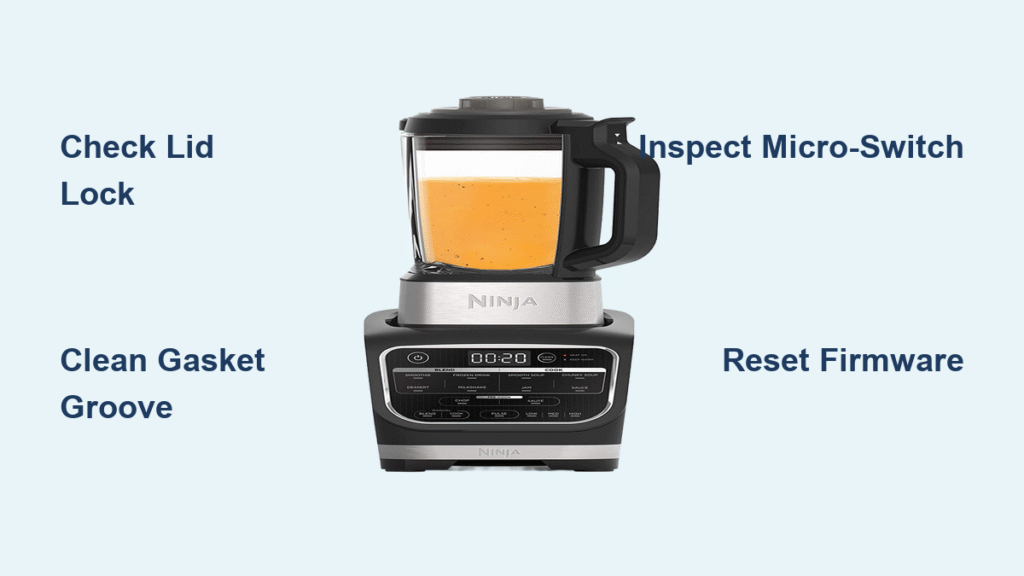

Your Ninja blender suddenly dying mid-smoothie is enough to make you ditch the healthy breakfast plan and head straight for the drive-thru. When your Ninja blender keeps shutting off without warning—whether you’re crushing ice, blending frozen fruit, or making nut butter—you’re not just frustrated; you’re facing a serious kitchen disruption. This automatic shutdown issue affects nearly every Ninja model from compact Nutri Pros to powerhouse Mega Kitchen Systems, but here’s the good news: 90% of these problems have simple fixes you can handle in under 15 minutes.
This guide cuts through the confusion to deliver precise diagnostic steps and immediate solutions for your Ninja blender keeps shutting off problem. You’ll learn to identify the exact cause within minutes, implement the right fix, and establish maintenance habits that prevent future shutdowns—no technical skills required.
Overheating Protection Triggers Immediate Shutdown
Your Ninja blender’s automatic shutdown is most likely triggered by thermal overload protection kicking in when the motor hits 200°F—this safety feature prevents permanent damage but ruins your blending session. When your Ninja blender keeps shutting off after 30-90 seconds of operation, especially with thick mixtures or frozen ingredients, overheating is almost certainly the culprit.
Spot overheating shutdowns by these clear signs:
– Blender powers down mid-cycle with noticeable heat radiating from the base
– Burning smell or unusual motor sounds precede the shutdown
– Unit won’t restart for 15-45 minutes even after cooling
– Visible steam or hot air escaping from ventilation slots
Cool down and restart protocol:
1. Unplug immediately when shutdown occurs
2. Remove pitcher and blade assembly to maximize airflow
3. Clean ventilation slots with compressed air while waiting
4. Allow 30+ minutes for complete cooling before restarting
Prevent future thermal shutdowns with these adjustments:
– Limit continuous blending to 60 seconds for thick mixtures
– Maintain minimum 1:1 liquid-to-frozen ratio (more liquid for thicker blends)
– Cut frozen ingredients into 1-inch pieces before blending
– Use pulse technique: 30-second blends followed by 30-second rests
Power Supply Issues That Trigger Shutdowns

Inadequate power delivery causes your Ninja blender keeps shutting off problem, particularly with high-wattage models like the 1500-watt Mega Kitchen System that demands a dedicated 15-amp circuit. Sharing circuits with other appliances or using incompatible outlets creates voltage fluctuations that trigger protective shutdowns.
Test your electrical setup in 4 steps:
1. Plug a 1500-watt space heater into the same outlet—if it shuts off, your circuit is insufficient
2. Measure voltage under load with a multimeter (should read 110-125V)
3. Avoid GFCI outlets which frequently trip from motor electrical noise
4. Wiggle test the plug to check for loose outlet connections
Critical power cord inspection points:
– Look for kinks, cuts, or melted spots along the cord length
– Check plug prongs for discoloration or burning signs
– Verify extension cords meet 14 AWG minimum gauge (better to avoid entirely)
– Ensure no frayed wires where cord enters the motor base
Immediate electrical fixes:
– Move blender to a non-GFCI kitchen outlet
– Unplug other appliances sharing the circuit
– Replace damaged cords immediately (don’t attempt repairs)
– Never use extension cords with 1200W+ models
Assembly Safety Switch Failures Cause Unexpected Shutdowns

Your Ninja blender keeps shutting off because safety switches prevent operation when components aren’t perfectly aligned—even a 1/8-inch misalignment triggers shutdowns. These switches ensure the pitcher is seated correctly, the lid is locked, and blade assemblies are properly installed.
Common assembly mistakes that trigger shutdowns:
– Lid not rotated fully to locked position (requires slight additional turn)
– Pitcher handle not clicking audibly into base alignment
– Food debris blocking switch contact points under pitcher rim
– Cracks in pitcher handle preventing proper switch engagement
Quick assembly troubleshooting:
1. Completely disassemble all components
2. Clean switch contact points with cotton swab and isopropyl alcohol
3. Reassemble while applying firm downward pressure on pitcher
4. Rotate pitcher clockwise until you feel definite resistance
Model-specific switch locations:
– Professional series: Side switch inside pitcher handle
– Mega Kitchen: Dual switches under 8-cup pitcher base
– Nutri Pro: Activation switches in cup threading mechanism
Motor and Drive Component Failures Require Diagnosis
Mechanical resistance from worn components makes your Ninja blender keeps shutting off by triggering overload protection—this requires careful diagnosis to distinguish between simple fixes and serious failures.
Gradual failure indicators (fixable at home):
– Increasingly frequent shutdowns over weeks/months
– Slight grinding sounds during operation
– Blade resistance when manually spun
– Motor base warmer than usual after normal use
Critical failure symptoms (requires service):
– Immediate shutdown with loud grinding noise
– Visible sparks from motor base
– Excessive blade wobble during operation
– Persistent burning smell after cleaning
DIY mechanical tests:
1. Remove pitcher and spin blade assembly by hand—should rotate freely
2. Check drive coupling teeth for wear or damage
3. Inspect blade assembly for cracks or imbalance
4. Listen for unusual sounds when rotating manually
Model-Specific Fixes for Common Shutdown Problems

Ninja Professional 1000/1100 Series Shutdown Solutions
These models feature a thermal reset button you’ll find on the motor base underside—after overheating shutdowns, press this button firmly to restore operation. Also check for cracks in the pitcher handle that prevent safety switch engagement, and verify blade assembly seating by pressing down firmly while rotating clockwise.
Mega Kitchen System Power Management
The 1500-watt motor demands consistent power—ensure you’re using a dedicated 15-amp circuit and that the 8-cup pitcher fully engages both safety switches. Incorrect blade stack orientation (wide base must seat completely) commonly causes shutdowns in this model line.
Nutri Pro Series Cup Assembly Fixes
Confirm cups are fully threaded clockwise until resistance increases significantly—many users unknowingly stop short of complete engagement. Check cup threads for hairline cracks and verify the blade assembly gasket sits properly without damage.
Emergency Workarounds for Critical Blending Needs
When you absolutely must blend now:
– Implement pulse technique: 3-5 second bursts with 10-second rests
– Use ice bath method: Place pitcher in ice water between cycles
– Pre-thaw frozen ingredients 50% before blending
– Increase liquid content to maximum safe levels
Risk mitigation during emergency use:
– Stop immediately if burning smell appears
– Unplug at first sign of sparking
– Never disassemble beyond removable components
– Document symptoms for warranty claims
Preventive Maintenance That Stops Shutdowns Before They Start
Daily (30 seconds):
– Rinse blade assembly immediately after use
– Wipe motor base with damp cloth avoiding switches
– Clear ventilation slots of visible debris
Weekly (5 minutes):
– Deep clean all removable parts
– Inspect power cord for new damage
– Test safety switches by reassembling components
Monthly (15 minutes):
– Apply food-grade lubricant to blade bearing if accessible
– Tighten visible motor base screws
– Listen for unusual sounds during operation
When your Ninja blender keeps shutting off, remember these shutdowns are protective measures—not random failures. By understanding the specific cause (overheating, electrical issues, assembly problems, or mechanical wear), you can implement the precise fix needed. Most shutdown problems resolve with simple adjustments to usage habits or minor maintenance. If problems persist after trying these solutions, contact Ninja support at 1-877-646-5288 with your model number and symptom details—most motor base issues are covered under the 1-year warranty. Implement these fixes today and transform your Ninja from a frustrating shutdown machine into the reliable kitchen workhorse it was designed to be.