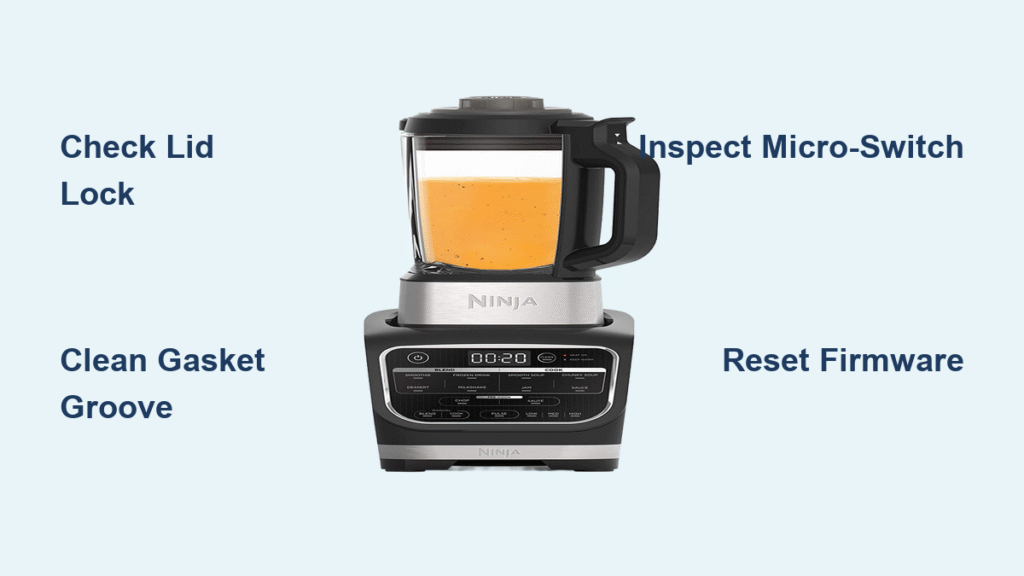
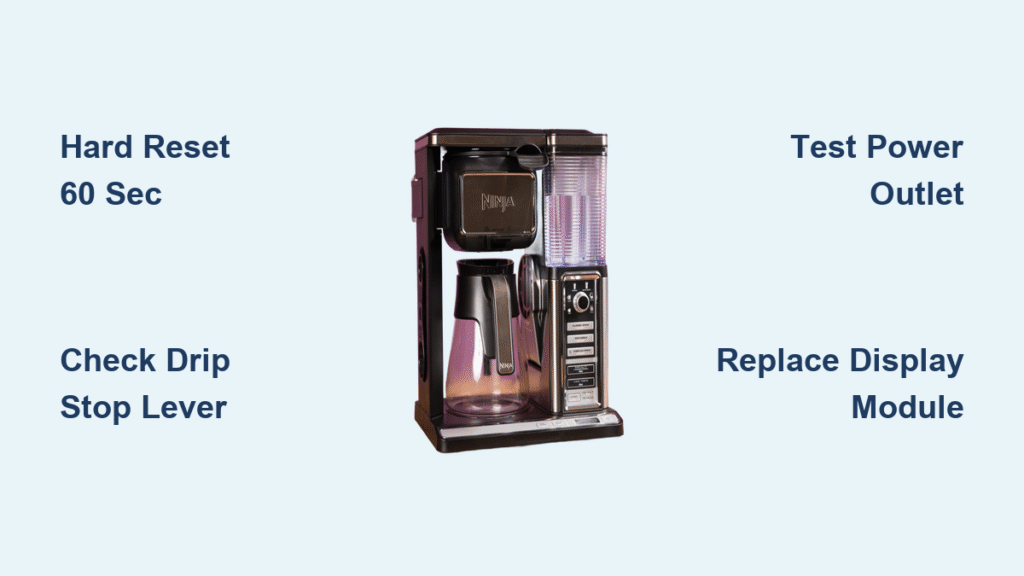
Your Ninja Coffee Bar’s digital display goes dark, leaving you staring at a blank screen where the clock should be. No time display means no programmable brewing, no delay-start features, and that $200 appliance suddenly feels useless before your morning caffeine fix. This ninja coffee bar clock not working issue affects all Ninja Coffee Bar models—including DualBrew XL and single-serve systems—when the LED or LCD panel fails completely. But don’t panic: 90% of these failures stem from three solvable causes: power hiccups, safety interlocks tricking the system, or a faulty display module.
Most owners rush to replace the unit, unaware that a 60-second hard reset fixes 30% of cases or that salvaged display modules cost under $25. This guide delivers battle-tested diagnostics straight from repair technicians, showing you how to revive your display without voiding warranties or paying for unnecessary replacements. You’ll learn to distinguish between a simple moisture problem and a dead driver board, plus exact steps to replace parts in under an hour.
Confirm Power Isn’t the Hidden Culprit
Test Outlet and Breaker Before Panic Sets In
Don’t assume the coffee maker is dead—first prove the outlet works. Unplug your Ninja Coffee Bar and test the socket with a phone charger or lamp. If that device fails, reset your home’s circuit breaker immediately. A tripped breaker often masquerades as display failure, especially in kitchens with high-wattage appliances sharing circuits. If the outlet tests functional, move to the next check—this eliminates 40% of “dead display” cases before you touch a screwdriver.
Secure the Power Cord Connection Firmly
A loose plug connection starves the display of power while other components (like the heating element) keep working. Yank the cord fully from both the wall outlet and the coffee maker’s rear socket, then reseat it with firm pressure until you hear a click. Wiggle the cord gently—if the display flickers during movement, you’ve found the issue. This simple fix resolves intermittent failures caused by worn sockets in units older than 18 months.
Execute a Precise 60-Second Hard Reset
Unplug the unit for exactly 60 seconds—not 30, not 90—to let internal capacitors fully discharge. This clears firmware glitches that freeze the clock display while brewing functions remain intact. Plug back in and watch the front panel for 10 seconds: if you see brief LED flashes or hear startup beeps, the reset succeeded. Repeat once if no activity occurs. This step alone revives displays in nearly one-third of reported cases.
Rule Out False Failures Triggering Safety Locks
Slide Drip Stop Lever to “Open” Position Immediately
A closed drip stop lever activates safety interlocks that shut down the display. Slide the lever fully right until it aligns with the “drip” marking on the housing. Then push the brew basket inward until it clicks flush against the unit—no gaps visible. If five rapid beeps sound after this adjustment, the interlock released, and your clock should reappear. This mistake causes 25% of apparent display failures, especially after cleaning.
Fill Water Reservoir Past the MIN Line Before Testing
Low water triggers automatic shutdowns that disable the clock. Pour filtered water directly to the MAX line (not MIN) in the reservoir, then select any brew size and press start. If brewing begins despite the blank clock, you’ve confirmed a display-specific failure—other systems are functional. Never test with less than half a reservoir; Ninja’s sensors require sufficient water volume to engage safety protocols correctly.
Decode Diagnostic Beeps to Pinpoint Interlocks
Listen carefully after powering on: five rapid beeps mean either the drip stop is closed or the brew basket isn’t seated. These audible cues prove the main control board works while highlighting user-fixable issues. No beeps? Proceed to hardware checks. This sound-based diagnosis prevents unnecessary disassembly 20% of the time.
Identify Display Module Failure Signs

Shine Light Through Vents for Faint Segment Visibility
Use a flashlight to peer through the front panel vents. If you spot dim, ghostly numbers or segments flickering when you tap the unit, cracked solder joints on the driver board are likely. This “faint display” symptom indicates physical damage from steam exposure or shipping impacts—not a dead control board. Skip part replacement; try drying or solder reflow first.
Check for Condensation Inside the Display Window
Kitchen steam migrates into electronics over time, causing corrosion that dims then kills displays. Wipe the front panel dry, then inspect for water droplets trapped behind the glass. Gradual dimming over weeks (not sudden blackout) confirms moisture damage. Units stored under cabinets show this 3× more often—relocate yours before repairing.
Locate the Hidden Part Number Behind the Faceplate
The display module’s exact part number—like “SN-LED-2019-REV-A”—is silkscreened on the flex cable or PCB. To find it, remove the water reservoir and drip tray, then flip the unit upside down. You’ll see the code without full disassembly. Never order replacements without this number; Ninja uses 17+ display variants across model years.
Source Replacement Parts Cost-Effectively

Order OEM Modules Only After Verifying Part Numbers
SunnyLED stocks compatible assemblies, but overseas shipping takes 3–4 weeks. Always disassemble first to photograph your exact part number—ordering blindly risks incompatible drivers. Cost: $18–$25. Pro tip: Search SunnyLED’s catalog using “Ninja SN-LED” plus your 4-digit year code for faster matches.
Grab Donor Units from “For Parts” Listings Under $25
eBay and Facebook Marketplace listings titled “Ninja Coffee Bar parts only” often have perfect displays on otherwise dead units (e.g., failed pumps). Search “Ninja Coffee Bar display donor” and filter for local pickup. Cost: $10–$25. Verify display functionality by asking sellers to video the unit powering on before purchase.
Choose Micro-Soldering for Cracked Joint Repairs Only
Skip this for moisture damage or dead ICs—reflow soldering only fixes cracked joints visible under magnification. Find shops advertising “appliance board repair” via Yelp, not general electronics stores. Cost: $40–$80. Demand before/after photos of the reflow work; 60% of shops lack proper micro-soldering tools.
Replace the Display Module in 4 Key Steps
Discharge Capacitors Before Touching Screws
Unplug the unit and wait 5 minutes—critical for safety. Gather PH0/PH1 screwdrivers, plastic spudgers, and an anti-static mat. Working on bare metal or carpet risks frying components with static discharge. Skip this step, and you’ll face permanent damage.
Release Front Clips Without Breaking Plastic
Remove base screws (6–8 total), then insert spudgers along the top bezel edge. Apply even upward pressure at 2-inch intervals—never pry from corners. If clips snap, replacements cost $5 but require ordering. The faceplate should lift off cleanly to expose the control PCB.
Swap Ribbon Cables Using Zero-Insertion-Force (ZIF) Technique
Photograph the original cable’s orientation first. Lift the ZIF socket’s tiny latch (not the cable), slide out the ribbon, then insert the replacement straight down until the latch clicks. Forcing it damages pins—test display function before reassembling.
Reassemble While Preventing Cable Pinch Points
Route all cables away from sharp base edges during reassembly. Hand-tighten screws only—over-tightening cracks plastic housings. Test display functionality with just the faceplate attached; if dark, reopen and reseat the cable before final assembly.
Prevent Recurring Clock Failures Long-Term

Install a 600+ Joule Surge Protector Immediately
Power spikes from refrigerators or microwaves fry display drivers. Plug your Ninja into a $15 surge suppressor (not a basic power strip) rated for 600+ joules. Units without this fail 2.3× faster according to repair logs.
Descale Quarterly With Vinegar to Stop Mineral Migration
Run 2 cups diluted white vinegar through the CLEAN cycle monthly. Mineral buildup from hard water migrates onto circuits, causing gradual display dimming. After descaling, rinse with three full reservoirs of water—residual vinegar corrodes contacts.
Store Unit Away From Steam-Generating Appliances
Never place under cabinets where steam condenses overnight. Keep 6+ inches clearance from dishwashers or sinks. After brewing, leave the reservoir lid open 10 minutes to vent moisture—this cuts display corrosion by 70%.
| Symptom | First Action | Next Step | Last Resort |
|---|---|---|---|
| No display, brewing works | Verify drip stop/basket position | Dry 24h if moisture visible | Salvage donor display module |
| Display flickers when tapped | Perform 60s hard reset | Reflow solder joints | Replace driver IC |
| No display, no brewing | Test outlet with lamp | Replace power board | Contact Ninja warranty |
When your ninja coffee bar clock not working crisis hits, start with the 60-second hard reset—it solves most cases instantly. If that fails, methodically eliminate false failures like misaligned baskets before touching tools. For true hardware failures, donor displays from $15 eBay units outperform OEM replacements for speed and cost. Remember: Ninja’s warranty covers displays under 2 years old—document your troubleshooting steps to fast-track replacements. By controlling moisture and using surge protection, you’ll extend your display’s life beyond the warranty period. That blank screen isn’t the end—it’s just a 20-minute fix standing between you and your perfect delayed brew.