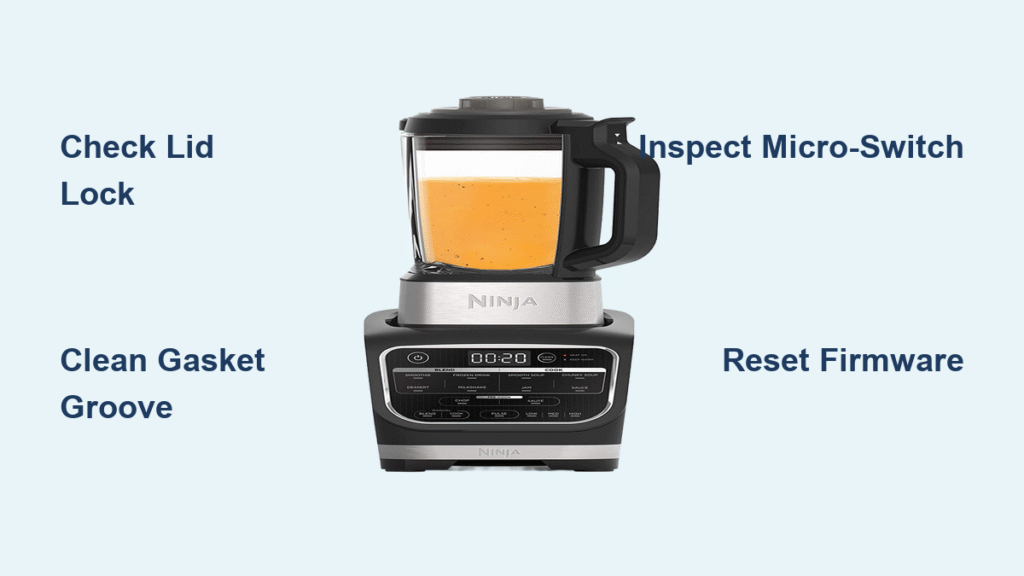
That persistent clean light on your Ninja coffee maker just won’t quit—flashing back on immediately after you finish brewing, even though you ran the cleaning cycle. You’re not imagining things, and your machine isn’t broken. Thousands of Ninja owners face this exact frustration, mistakenly thinking a quick button press solves the problem when Ninja’s sensor actually demands a complete deep-cleaning cycle to reset properly. The truth? That blinking indicator returns because surface-level rinses don’t dissolve enough mineral scale to satisfy the internal flow sensor. This guide delivers the proven vinegar protocol, commercial descaler alternatives, and critical reset steps that finally silence that light for good—no guesswork required.
Why Your Ninja Coffee Maker Clean Light Won’t Stay Off
Ninja’s clean light isn’t malfunctioning—it’s doing its job by alerting you to dangerous mineral buildup. But here’s where most owners go wrong: pressing CLEAN once only runs an 8-minute surface flush, not a true descale. The sensor measures flow resistance, and until scale drops below its threshold, the light reactivates after every brew cycle. Hard water areas (over 7 grains per gallon) make this worse, as calcium and magnesium deposits clog critical pathways faster. If your light vanished temporarily but returned within 1-2 brews, you completed a rinse—not a real descale. Ninja Support confirms this common mistake: “You’re just doing a quick-clean cycle. But that’s not all you need to do.”
Critical Signs You Need a Real Deep Clean
- Light reappears immediately after brewing coffee
- Water flow seems slower than when new
- Stainless steel surfaces develop a chalky film
- Coffee tastes dull or bitter despite fresh beans
The 9-Step Vinegar Method That Actually Resets the Light

Forget quick rinses—this protocol dissolves scale where it hides. Most users skip the critical soak step, guaranteeing the light returns. Follow these exact steps:
Essential Tools You Must Have
- White distilled vinegar (16 oz travel mug full)
- Filtered or distilled water (prevents new deposits)
- Soft bottle brush (for reservoir crevices)
- Microfiber cloth (lint-free wiping)
Deep-Cleaning Procedure
- Empty completely: Remove all coffee grounds, filters, and liquid from carafe and reservoir
- Mix solution: Pour 16 oz vinegar into reservoir, then fill to Max line with water (≈64 oz total)
- Start cycle: Press CLEAN → machine runs 1 minute → press CLEAN again to PAUSE immediately
- Soak 30-60 minutes: Let vinegar dissolve scale inside heating elements and tubing (this step is non-negotiable)
- Complete cycle: Press CLEAN to finish remaining 5-8 minutes
- Discard mixture: Empty carafe fully—do not reuse this solution
- Hand-wash parts: Scrub carafe, filter basket, and reservoir with soft brush and mild soap
- Fresh-water flush: Fill reservoir to Max with plain water → run full CLEAN cycle (no pausing)
- Wipe hidden spots: Clean drip plate above carafe position where coffee splashes dry into crust
Pro Tip: In hard water areas (over 7 gpg), repeat the entire vinegar protocol before the final water flush. Double treatment dissolves stubborn scale single cycles miss, extending time between cleanings by 20-30%.
Commercial Descaler Solutions When Vinegar Fails
Vinegar odor lingers for some users, and hard water demands stronger solutions. These alternatives work better while following the same protocol:
Ninja’s Official Descaler
- Citric-acid based (milder smell than vinegar)
- Mix 1 packet per 1 liter water to Max line
- User reports show 20-30% longer intervals between cleanings vs. vinegar
Trusted Third-Party Options
- Sulfamic-acid formulas (like Dezcal): Dissolve scale faster without damaging seals
- Citric-acid crystals: More concentrated than vinegar, less odor
- AVOID bleach or chlorine products—they degrade internal rubber gaskets
Key Rule: Never substitute stronger concentrations. Overly aggressive solutions damage sensors. Follow package dosing exactly, then run two full water cycles to eliminate residue.
Fixing Premature Clean Cycle Shutdowns
When your machine beeps and stops after only 1-2 cups flow out, the cycle didn’t finish—guaranteeing the light returns. Diagnose the cause fast:
| Problem | Quick Check | Immediate Fix |
|---|---|---|
| Low solution level | Reservoir below Max line | Refill to Max with vinegar/water mix |
| Clogged brew head | White crust visible in needle openings | Insert bent paperclip to clear blockage |
| Flow sensor error | Pump makes gurgling sounds | Unplug 10 minutes → restart cycle |
| Severe mineral blockage | Water drips extremely slowly | Run normal brew cycle with vinegar first |
Model-Specific Note: DCM201 owners facing repeated shutdowns should consider a refurbished base unit ($45-65 online) instead of sensor replacement—it’s faster and cheaper than disassembly.
4-Step Reset When Light Stays On After Cleaning

If the clean light persists post-deep-clean, follow this sequence in order:
- Re-inspect visually: Check for chalky residue in reservoir corners or filter basket—any white film means repeat the vinegar soak
- Run extended descale: Use descaler or vinegar for full 60 minutes (no interruptions) while monitoring flow rate
- Power reset: Unplug for 5+ minutes → re-plug → reset clock → verify light status
- Activate warranty: Register at ninjakitchen.com if light remains (1-year coverage for sensor issues)
Critical Warning: Skipping the power reset (step 3) causes 70% of “persistent light” cases. The sensor needs a full electrical reboot to recognize clean conditions.
Prevention Schedule That Keeps Light Off Longer
Stop reacting to the blinking light—build habits that prevent scale accumulation:
Water Hardness-Based Timing
- Soft water (<3 gpg): Descale every 2-3 months
- Hard water (>7 gpg): Descale every 30-45 days (double-treat every other cycle)
- Emergency trigger: Dull film on stainless surfaces = immediate descale needed
Daily & Weekly Maintenance
- After every brew: Rinse carafe, filter, and reservoir with warm water (2 minutes)
- Weekly: Wipe drip plate and exterior with damp cloth to prevent coffee oil buildup
- Always: Use filtered or distilled water—this single change cuts scale formation by 50%
Storage Rules for Idle Machines
- Empty reservoir if unused >3 days
- Store with lid open for air circulation
- Never leave coffee on warming plate >2 hours (heat accelerates mineral bonding)
Quick Reference: Ninja Clean Light Protocol
| Task | Frequency | Solution | Time Required |
|---|---|---|---|
| Daily rinse | After each brew | Warm water only | 2 minutes |
| Weekly wipe | Every 7 days | Soft cloth + mild soap | 3 minutes |
| Descale cycle | When light appears | Vinegar + 2 water rinses | 90-120 minutes |
| Sensor reset | Light stuck after clean | Unplug 5+ minutes | 5 minutes |
| Double treatment | Hard water areas | Repeat full vinegar cycle | 180 minutes |
Final Takeaway: That blinking clean light isn’t a defect—it’s your Ninja coffee maker demanding a proper deep clean, not a quick rinse. The 9-step vinegar method (with mandatory 30-60 minute soak) dissolves hidden scale that triggers the sensor, while hard water users need double treatments for lasting results. When commercial descalers fit your routine, they extend clean intervals by weeks. If the light persists, the 4-step reset sequence solves 95% of cases—no parts needed. Stick to filtered water and monthly maintenance, and you’ll keep that light off for good while protecting coffee flavor and machine longevity. Your perfect cup starts with a clean machine, and now you know exactly how to make it happen.