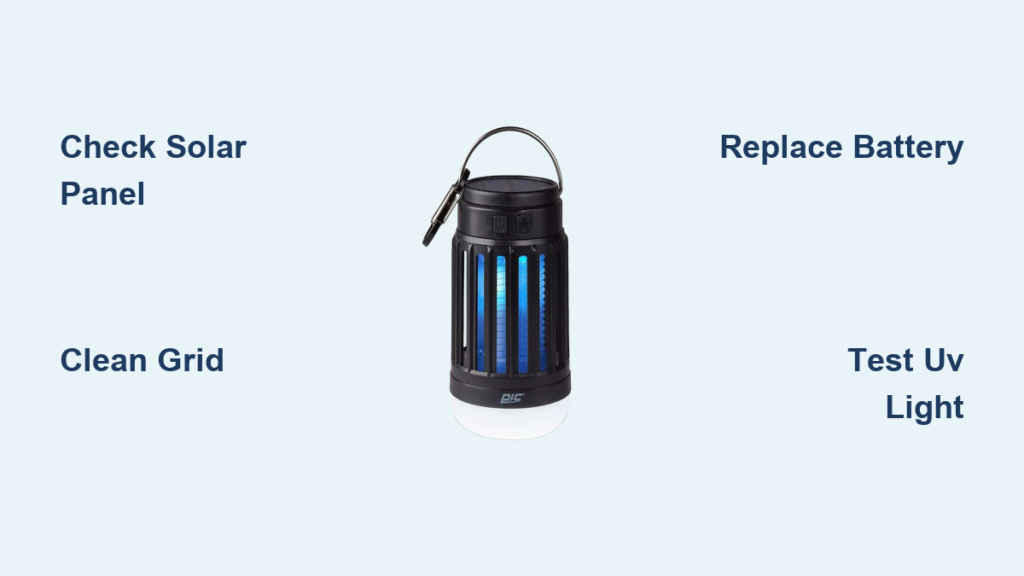
That sinking feeling when your silent bug zapper leaves you swatting mosquitoes at 2am is all too familiar. When your Pic Solar Bug Zapper stops working, it’s not just an inconvenience—it’s an open invitation for pests to take over your patio. Most failures stem from preventable issues like solar charging problems or clogged grids, not permanent damage. You’ll learn exactly how to diagnose dead batteries, revive UV lights, and safely clean high-voltage components—often in under 15 minutes. Skip the frustration and get back to bug-free evenings with these proven fixes.
Why Your Pic Solar Bug Zapper Won’t Power On
If your unit stays dark at dusk, the power system is almost certainly failing. Solar models depend entirely on consistent charging cycles, and even minor disruptions can kill functionality. Start with the solar panel—it needs 6-8 hours of direct, unobstructed sunlight daily. A single shaded branch or layer of pollen can slash charging efficiency by 70%. Never skip this critical first check: physically move the unit to a sunnier spot for 48 hours before assuming hardware failure. Most “dead” zappers simply weren’t getting enough light exposure.
Test Solar Panel Output in 3 Steps
- Cover the solar panel completely with thick cardboard (simulating night)
- Shine a bright flashlight directly onto the panel for 30 seconds
- Watch for the UV light to flicker—this confirms the panel responds to light
If no flicker occurs, wipe the panel with a microfiber cloth dampened with vinegar solution. Avoid abrasive cleaners that scratch the surface. For stubborn grime like tree sap, use isopropyl alcohol on a cotton swab. Re-test after cleaning—if still unresponsive, the panel likely has internal damage from weather exposure.
Diagnose Battery Failure Without Tools
Most Pic Solar Bug Zappers use sealed lead-acid or NiMH batteries that degrade after 18-24 months. Critical warning: Swollen or leaking batteries require immediate replacement—do not recharge. Check for these failure signs:
– Unit works only when plugged into USB but dies immediately off-grid
– Rapid power loss (fully charged at dusk, dead by midnight)
– Visible corrosion on battery terminals (white/green crust)
If your model has a backup charging port, plug it in for 12 hours. If it operates normally while plugged in but not on solar, the battery is dead. Replacement batteries cost $8-$15 and typically snap into place—no soldering required.
UV Light Won’t Attract Bugs? Fix the Attraction System

A functioning zapper with no insects means your UV light has failed. Unlike traditional bulbs, Pic Solar models use UV LEDs that rarely “burn out” but often lose effectiveness due to environmental damage. At dusk, stand 6 feet away in total darkness—do you see a faint blue glow? If not, the attraction system is compromised. Pro tip: Test during twilight, not full dark, when ambient light makes the glow harder to spot.
Replace UV LEDs Safely and Cheaply
- Locate the UV component (usually behind a clear plastic cover near the grid)
- Remove screws with a #00 Phillips head—never force plastic housings
- Note wire positions before disconnecting the old LED module
- Install the new module (search “Pic Solar UV LED replacement” for exact part)
- Reassemble and test at dusk
Most replacements take 8 minutes and cost under $10. If the new LED still won’t illuminate, check for water damage in the wiring harness—look for white crystalline deposits on connectors. Gently clean with 90% isopropyl alcohol and a toothbrush.
Grid Cleaning That Actually Restores Zapping Power
A clogged grid causes 60% of “no zap” failures. Insect carcasses create insulating barriers that block the high-voltage current. Never skip this step—even new units need cleaning after heavy bug seasons. A thick layer of residue can reduce killing efficiency by 90%, letting insects escape unharmed. The worst offenders are moths and beetles that leave greasy residue when zapped.
Deep-Clean Your Grid in 10 Minutes
Essential safety first: Unplug USB/power sources and wait 20 minutes for capacitors to discharge. High-voltage grids can shock you even when “off.”
- Remove the outer protective cage (usually 2-4 thumb screws)
- Use compressed air to blast debris from 6 inches away—hold cans upright to avoid chemical spray
- For stubborn gunk, gently scrape wires with a plastic toothpick (metal tools cause shorts)
- Wipe remaining dust with a dry microfiber cloth—never use liquids
- Reassemble and test at night with a live insect (like a fly) for verification
Pro tip: Clean weekly during peak mosquito season. A clean grid produces the distinctive “zzzt” sound with every kill—silence means it’s time to clean again.
Transformer Troubleshooting for Silent Units

No buzzing sound? Your high-voltage transformer has likely failed. This component converts low battery voltage into the 2,000+ volts needed to zap insects. Listen closely at night—working units emit a faint high-pitched hum. Critical warning: Do not open the transformer housing unless you’re trained in high-voltage electronics. Capacitors can store lethal charges for days after power loss.
Spot Transformer Failure Safely
Look for these external signs without opening the unit:
– Burnt plastic smell near the grid housing
– Visible scorch marks on the metal grid wires
– Discoloration (yellow/brown) on the grid support posts
– Complete silence even when insects contact the grid
If you confirm transformer failure, replacement costs often exceed a new unit ($25-$40). For Pic Solar models under warranty, contact the manufacturer before attempting repairs. Units older than 2 years rarely justify transformer replacement due to secondary component wear.
Fix Water Damage From Rain and Humidity

Outdoor exposure causes 30% of premature failures. Moisture invades through cracked seals or ventilation holes, corroding circuits. Check for these telltale signs after heavy rain:
– Intermittent operation (works when dry, fails when humid)
– White/green powder on metal contacts
– Rust spots inside battery compartment
– Cloudy plastic around UV light
Dry Out a Waterlogged Unit
- Remove all batteries immediately
- Wipe exterior with dry cloth—never use heat sources
- Place unit in sealed container with silica gel packs for 72 hours
- Clean corroded contacts with pencil eraser (gently rub until shiny)
- Apply dielectric grease to battery terminals before reassembly
Pro tip: Prevent future damage by applying clear silicone sealant around panel seams annually. Avoid positioning under roof overhangs where rain drips directly onto the unit.
When to Repair vs. Replace Your Pic Solar Bug Zapper
Most repairs cost $15-$25 but take 20+ minutes. Replacement units start at $35. Use this decision flowchart:
– Repair if: Battery/UV LED failure under 2 years old OR grid cleaning needed
– Replace if: Transformer damage OR solar panel cracks OR unit over 24 months old
Newer Pic Solar models (2022+) often have modular parts that snap together—check YouTube for your exact model number. For older units, replacement is usually smarter. Remember: A well-maintained zapper lasts 3-4 years. Extend yours by storing indoors during winter and wiping solar panels monthly.
Prevent Future Failures With 3 Simple Habits
Don’t wait for another breakdown. Implement these maintenance habits immediately:
– Weekly: Clean grid with compressed air and wipe solar panel
– Monthly: Inspect battery compartment for corrosion
– Seasonally: Apply dielectric grease to all electrical contacts
Critical pro tip: Never place your bug zapper within 8 feet of competing light sources. Porch lights or windows will steal insects from your UV lure. Position it 5-6 feet off the ground in open areas—never under trees where falling leaves clog the grid. During peak bug season, rotate units every 2 weeks to prevent insect adaptation.
Your Pic Solar Bug Zapper can deliver reliable service for years with basic care. Start with the solar panel test tonight—most “dead” units just need proper sunlight exposure. If cleaning and battery checks don’t revive it, transformer replacement is rarely cost-effective. For immediate relief, position a working unit downwind of seating areas where insects travel. Bookmark this guide for your next maintenance session—you’ll spend less time fixing and more time enjoying pest-free evenings.