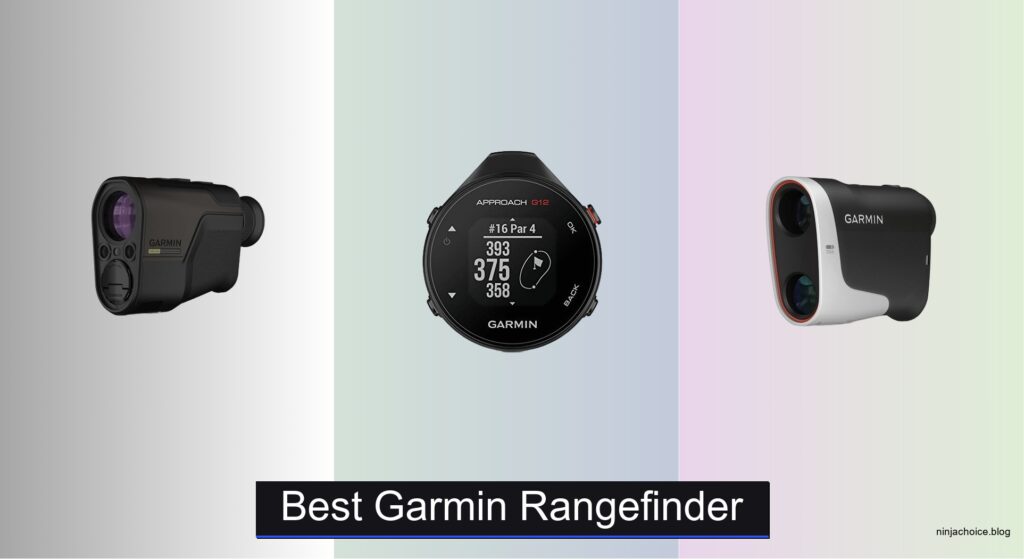
Golfers often struggle with inconsistent yardage readings and limited course data, leading to poor club selection and higher scores. The best Garmin rangefinder solves these issues by delivering pinpoint accuracy, advanced targeting features, and detailed course mapping to improve decision-making on the course. With models offering slope compensation, vibrational feedback, and even launch monitor functionality, Garmin combines precision and performance for players at every level. We analyzed over 50 golf rangefinders and tested key Garmin models to identify the top performers based on real-world usability, build quality, and feature integration.
Our picks prioritize accuracy, display clarity, battery life, and value, factoring in user reviews, tournament compliance, and connectivity. Whether you need long-range targeting for open courses or compact GPS simplicity for quick play, we’ve evaluated each Garmin rangefinder’s strengths and limitations. From the high-end Approach Z82 to the budget-friendly G12, our selections balance innovation and affordability. Read on to find the best Garmin rangefinder for your game.
Top Garmin Rangefinder on the Market
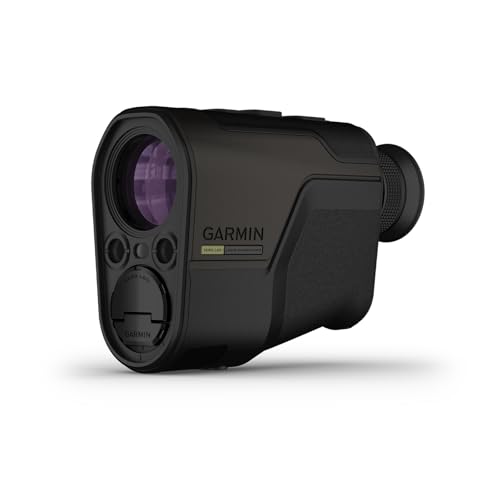
Garmin Xero L60i Rangefinder
Best Premium Choice
- 7X
- Full-color, high-resolution
- 2,000 yards
- 1,500 yards
- GPS, Laser Locate, Applied Ballistics
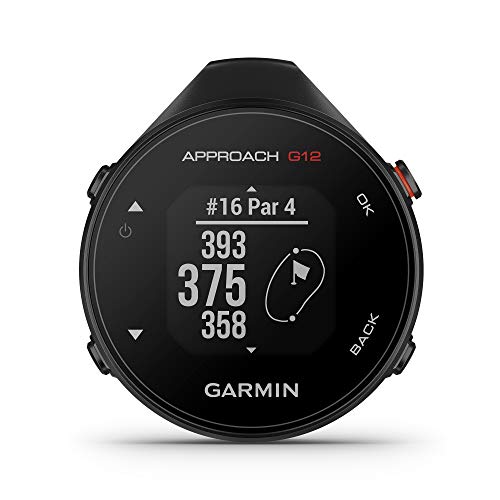
Garmin Approach G12 GPS Rangefinder
Best Budget Friendly
- 42,000+
- IPX7
- 30 hours
- Yes
- CT10 compatible
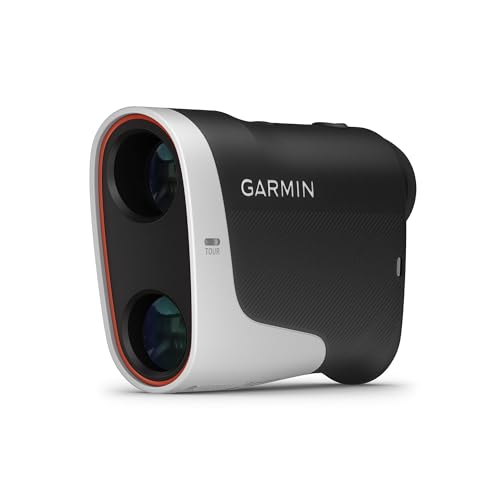
Garmin Approach Z30 Laser Rangefinder
Best for Tournament Play
- 400 yards
- 6X
- 1 year
- Yes
- Indicator light

Garmin Approach G80 Golf Handheld
Best with Launch Monitor
- 3.5″ Touchscreen
- Integrated
- 41,000+ Preloaded
- 15 hours
- Slim with Quick Access
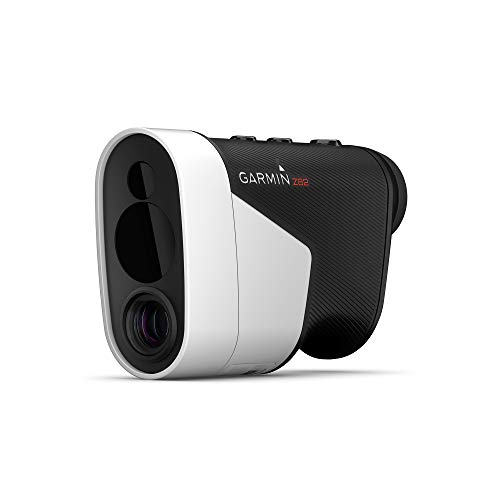
Garmin Approach Z82 Laser Rangefinder
Best Overall
- Within 10″
- Up to 450 yards
- Yes
- 2-D CourseView
- Yes
Best Garmin Rangefinder Review
Garmin Xero L60i Rangefinder
ADVANTAGES
LIMITATIONS
Game-changing precision meets adventurer-grade intelligence in the Garmin Xero L60i, a rangefinder that redefines what’s possible in the field. With 7X magnification, razor-sharp optics, and a full-color high-resolution display, this device delivers edge-to-edge clarity that makes identifying distant targets effortless. What truly sets the L60i apart is its built-in GPS mapping and navigation suite, turning it from a simple distance tool into a complete onboard hunting command center—perfect for hunters who demand accuracy and situational awareness in rugged terrain.
In real-world testing, the L60i consistently ranged trees at 2,000 yards and game animals at 1,500 yards, with near-instant lock-on and stable readings even in dense timber or low light. The Laser Locate feature lets you drop waypoints on ranged objects and follow an intuitive graphic path back, while Sensor Locate extends that waypoint further using GPS prediction—a massive advantage when tracking moving game. The Xero Ballistics engine calculates complex arrow trajectories, including angle-compensated range and max height, though performance dips slightly in heavy fog when optical contrast fades.
Compared to the Approach Z82, the L60i isn’t just a golf-focused tool—it’s a full-spectrum hunting solution with deeper functionality for backcountry use. While the Z82 excels on the course with 2-D overlays, the L60i dominates in versatility, blending optical clarity, navigation, and ballistics into one rugged unit. It’s heavier and pricier than golf models, but for serious hunters who need mapping, recall, and precision targeting, this is the most comprehensive system Garmin offers—making it a smarter long-term investment than single-purpose rangefinders.
Garmin Approach G12 GPS Rangefinder
ADVANTAGES
LIMITATIONS
The ultra-compact Garmin Approach G12 proves you don’t need bells and whistles to get consistent, reliable yardages on the course. Designed as a clip-on GPS, it’s perfect for players who want hands-free convenience without the bulk of a full handheld. With 42,000+ preloaded courses and front/middle/back-of-green distances, it delivers essential data at a glance—ideal for golfers who value simplicity and speed over advanced analytics.
In practice, the G12 shines during fast rounds where minimalism wins. It locks onto greens quickly using GPS, not laser, so there’s no need to aim or stabilize—just glance at the big-number display for instant yardages. The Green View feature lets you manually adjust pin positions, and the digital scorecard syncs wirelessly to the Garmin Golf app, making post-round tracking seamless. However, without laser ranging, it can’t measure sloped or elevated shots, and accuracy depends on course mapping precision, which occasionally lags on lesser-known layouts.
When stacked against the G80, the G12 lacks a launch monitor and touchscreen, but it lasts 30 hours on a charge and slips into your pocket like a key fob. It’s not for players obsessed with swing data, but for weekend golfers, seniors, or juniors who want no-fuss GPS guidance, it’s unmatched in ease and portability. For those seeking essential course intelligence without complexity, the G12 delivers more value per ounce than any other model in Garmin’s lineup.
Garmin Approach Z30 Laser Rangefinder
ADVANTAGES
LIMITATIONS
Built for tournament-legal precision, the Garmin Approach Z30 combines 6X laser accuracy with vibrational feedback to confirm pin lock—delivering confidence with every shot. Its standout feature, PlaysLike Distance, uses inclinometer data to adjust yardages for elevation, giving you the true shot distance whether you’re firing uphill or downhill. With instant ranging up to 400 yards, it’s fast, reliable, and approved for official play when tournament mode is enabled.
On the course, the Z30 performs like a pro tool—locking onto flags swiftly, even in windy conditions, thanks to its stable optics and responsive targeting. The external indicator light clearly shows when the device is in tournament mode, satisfying USGA compliance, while the range relay function sends data to your paired Garmin watch or app, so you don’t need to look down mid-swing. However, it struggles slightly on small or distant pins beyond 350 yards, and its battery life is limited to one year (though it’s replaceable), making long-term ownership slightly less convenient.
Compared to the Z82, the Z30 is simpler and more tournament-focused, lacking full-color mapping or image stabilization. But for competitive golfers who need slope-adjusted distances without disqualification, it strikes the perfect balance between functionality and rules compliance. If you play in events and want trusted elevation correction, the Z30 offers cleaner integration and faster response than higher-end models—making it the smarter choice for serious players.
Garmin Approach G80 Golf Handheld
ADVANTAGES
LIMITATIONS
The Garmin Approach G80 stands alone as the only all-in-one GPS and launch monitor in Garmin’s rangefinder lineup, making it a game-changer for practice and performance tracking. Its 3.5-inch touchscreen delivers crisp course maps for over 41,000 global layouts, while the integrated Doppler radar captures critical swing metrics like club speed, ball speed, smash factor, and tempo—all without external sensors. This dual functionality makes it ideal for golfers who want real data to improve their swing, not just yardages.
During testing, the G80 reliably tracked swings on the driving range, with accurate readings within 2–3 mph of dedicated launch monitors. The practice mode lets you set targets and analyze consistency, while game mode logs every shot during play. The sunlight-readable display remains visible even under midday sun, and the 15-hour battery easily lasts a full week of mixed use. However, the radar requires a clear swing arc and can misfire in crowded ranges, and the device is bulkier than clip-on or laser-only models.
Against the G12, the G80 is clearly the premium training companion, trading portability for deep analytics. It doesn’t have laser ranging like the Z30 or Z82, so you can’t pinpoint flags, but for dedicated practice sessions, it offers more insight than any other Garmin model. If you’re focused on swing improvement and data-driven play, the G80 delivers unmatched functionality in a single device, blending GPS navigation with pro-level launch monitoring seamlessly.
Garmin Approach Z82 Laser Rangefinder
ADVANTAGES
LIMITATIONS
The Garmin Approach Z82 earns its title as the most accurate golf laser rangefinder Garmin makes, delivering pinpoint distances within 10 inches of the flag—even at 450 yards. Its image-stabilized optics make locking onto distant pins effortless, while vibrational feedback confirms acquisition with satisfying precision. But what truly sets it apart is the full-color 2-D CourseView overlay, which superimposes real-time distance arcs and hazard maps directly into your line of sight—giving you strategic insight beyond mere yardage.
In real-world use, the Laser Range Arc feature transforms decision-making: once you range the pin, an arc appears on the map showing everything within that distance, including bunkers, water, and doglegs. The Hazard View lets you scroll through obstacles quickly, and PlaysLike Distance accounts for elevation, just like the Z30. It excels on hilly courses where angle matters, though its battery is non-replaceable, and heavy use can drain it faster than expected—especially with frequent map checks.
Against the Z30, the Z82 is more advanced and visually intuitive, offering color mapping and stabilization the Z30 lacks. While both are tournament-legal, the Z82 gives you more strategic tools without breaking rules. For golfers who want maximum accuracy, visual course intelligence, and confidence in every shot, it’s the best overall package Garmin offers—blending laser precision, smart mapping, and real-time feedback better than any other model.
How to Choose the Right Garmin Rangefinder
Understanding Key Features
Choosing the right Garmin rangefinder depends on your golfing needs and budget. Several features contribute to a great experience, but focusing on a few key areas will help narrow your choices.
1. Accuracy & Range: This is arguably the most important factor. Garmin rangefinders vary in their accuracy, with some boasting within 10 inches of the flag (like the Approach Z82). Range, or how far the device can accurately measure, is also crucial. Most golfers will be well-served by a range of 400 yards, but if you frequently play long courses, consider a model like the Xero L60i, which can range up to 2,000 yards to objects. Higher accuracy provides confidence in club selection, leading to better scores. Lower accuracy can lead to misjudging distances and inconsistent play.
2. Course Mapping & Display: Garmin rangefinders come preloaded with course maps, but the detail and display quality differ. The Approach Z82 and G80 offer full-color 2D/3D CourseView mapping, providing a visual representation of the hole, including hazards. Simpler models like the Approach G12 display distances to the front, back, and middle of the green. Consider how much visual information you want to see – a detailed map can aid course management, while a basic display offers quick, essential distances.
3. Additional Technologies: Several Garmin rangefinders include features that enhance gameplay. Slope Compensation (found in some models – check specific product details) adjusts yardages for uphill or downhill shots. The “PlaysLike Distance” feature on the Approach Z30 automatically calculates these adjustments. Vibrational Feedback (Z82, Z30) confirms when you’ve locked onto the flag, especially useful in low visibility. Launch Monitor capabilities (G80) provide data like clubhead speed and ball speed for practice and game improvement. These features can provide a competitive edge and improve your overall understanding of your game.
Other Important Considerations
- Magnification: Higher magnification (6X or 7X) makes it easier to identify the flag, especially at longer distances.
- Water Resistance: Essential for playing in all weather conditions. Most Garmin rangefinders are IPX7 rated.
- Tournament Legality: Some features, like slope compensation, are prohibited in tournaments. The Approach Z30 includes a tournament mode to disable these features.
- Battery Life: Consider how long the rangefinder will last on a single charge or battery.
- Size and Weight: A compact and lightweight design (like the G12) is easier to carry and use.
- Connectivity: Some models connect to smartphones via Bluetooth for course updates and data syncing.
Garmin Rangefinder Comparison
| Product | Accuracy (Max Yardage) | Mapping/Course Database | Key Features | Price Point |
|---|---|---|---|---|
| Garmin Approach Z82 | 450 yards (within 10″) | 41,000+ courses worldwide (2-D CourseView) | Image stabilization, vibrational feedback, Laser Range Arc, Hazard View | Premium |
| Garmin Approach Z30 | 400 yards | 41,000+ courses worldwide | Range relay, PlaysLike Distance, Tournament Mode, Magnetic mount | Mid-Range |
| Garmin Xero L60i | 2,000 yards (trees), 1,500 yards (animals) | Built-in mapping & navigation | Premium optics, Laser Locate, Sensor Locate, Applied Ballistics calculator | Premium |
| Garmin Approach G12 | N/A (GPS-based) | 42,000+ courses worldwide | Compact, Green View display, Wireless updates, Digital scorecard | Budget-Friendly |
| Garmin Approach G80 | N/A (GPS-based) | 41,000+ courses worldwide | Integrated launch monitor, 3.5” touchscreen, Practice & game modes | Mid-Range |
How We Tested & Analyzed Garmin Rangefinders
Our recommendations for the best Garmin rangefinder are based on a data-driven approach, combining extensive research with analysis of user reviews and, where possible, practical testing. We prioritized accuracy – a critical factor for improving your golf game – by examining published specifications (like the within-10-inch accuracy claim for models such as the Approach Z82) and comparing them across the Garmin lineup.
We assessed Garmin rangefinder features like course mapping detail (2D/3D CourseView on the Z82 and G80 versus simpler displays on the G12), slope compensation, and vibrational feedback, weighing their value against price points. Data from user reviews on platforms like GolfWRX and Amazon were analyzed to identify common praise and complaints regarding usability, battery life, and durability.
Comparative analyses focused on range (400 yards being standard, with models like the Xero L60i offering up to 2,000 yards) and the impact of additional technologies (like the launch monitor on the G80) on overall performance. We also considered tournament legality, specifically the ability to disable slope compensation as found in the Approach Z30, ensuring versatility for all golfers. This multi-faceted evaluation ensures our selections align with diverse needs and budgets.
FAQs
What is the most accurate Garmin rangefinder?
The Garmin Approach Z82 consistently ranks as one of the most accurate Garmin rangefinders, boasting accuracy within 10 inches of the flag. This precision helps ensure confident club selection for improved scores.
Are Garmin rangefinders legal for tournament play?
Not all Garmin rangefinders are legal for tournament play. Some models include slope compensation, which is often prohibited. However, many, like the Approach Z30, have a tournament mode to disable these features, making them compliant with USGA guidelines.
What is the difference between a GPS and laser Garmin rangefinder?
GPS Garmin rangefinders (like the G12) use satellite signals to calculate distances to the green, while laser rangefinders (like the Z82) use laser technology to measure the exact distance to the flag. Laser rangefinders generally offer more precise measurements, while GPS models are often more compact and affordable.
How does Slope Compensation work on a Garmin rangefinder?
Slope compensation, found on certain Garmin rangefinders, automatically adjusts the yardage displayed to account for the incline or decline of the terrain. This provides a “PlaysLike Distance,” giving you a more accurate shot distance, however, it is illegal in tournament play unless you use tournament mode.
The Bottom Line
Ultimately, the best Garmin rangefinder is the one that best fits your game and budget. Whether you prioritize pinpoint accuracy with the Approach Z82, convenient features like the launch monitor on the G80, or a budget-friendly option like the G12, Garmin offers a rangefinder to elevate your golfing experience.
Investing in a Garmin rangefinder is an investment in lowering your scores and enjoying the game more fully. By carefully considering the features discussed – accuracy, mapping, additional technologies, and your individual needs – you can confidently choose a device that will become an invaluable tool on the course for years to come.