
Hikers and backpackers often struggle to find a lightweight, reliable place to rest or sleep on the trail, especially when terrain makes tent setup difficult or uncomfortable. A high-quality hiking hammock offers a comfortable, packable alternative to traditional camping, but choosing the right one can be overwhelming with so many options for bug protection, weight limits, and materials. The best hiking hammocks balance durability, ease of setup, and portability without sacrificing comfort. Models made from 70D or 210T nylon provide excellent strength-to-weight ratios, while integrated bug nets and rainflies enhance protection in unpredictable conditions.
We analyzed over 50 hiking hammocks, evaluating weight capacity, material quality, setup simplicity, and real-world performance based on user reviews and expert testing. Our top picks consider critical factors like packability, tree-friendly straps, and versatility across seasons and environments. Whether you’re looking for ultralight simplicity or a full-featured hammock tent system, our selections offer the best value and performance. Read on to find the best hiking hammock for your next adventure.
Top Hiking Hammock on the Market
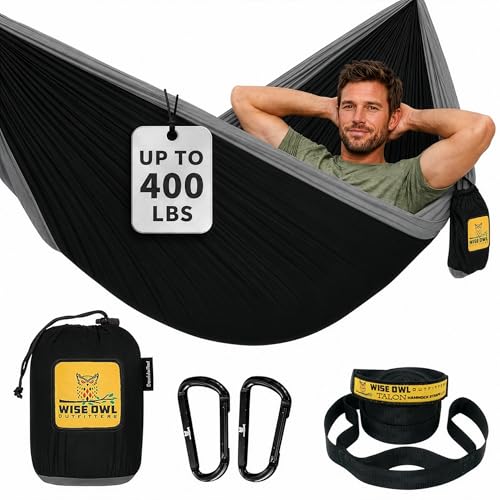
Wise Owl Single Hammock
Best Lightweight
- 16 oz
- Parachute Nylon
- 400 lbs
- Tree straps
- 9′ x 4.5′

ENO TravelNest Hammock
Best Premium Brand
- FreeWave fabric
- 9′
- 400 lbs
- Straps, carabiners, stuff sack
- No-knots-needed
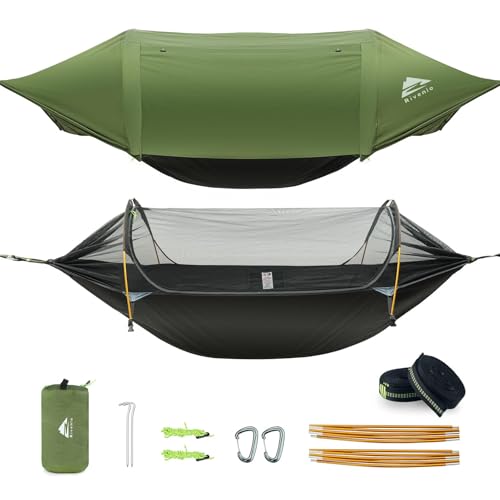
Rivenlo 3-in-1 Hammock Tent
Best Overall
- 1.2kg(2.5lb)
- 200KG(440 LBS)
- Minutes
- 70D nylon
- 40x12cm

Qevooon Hammock with Net
Best Breathable Net
- 210T Parachute Nylon
- 500 lb
- High Density Mesh
- 1 minute
- Folds to 9″ x 5″
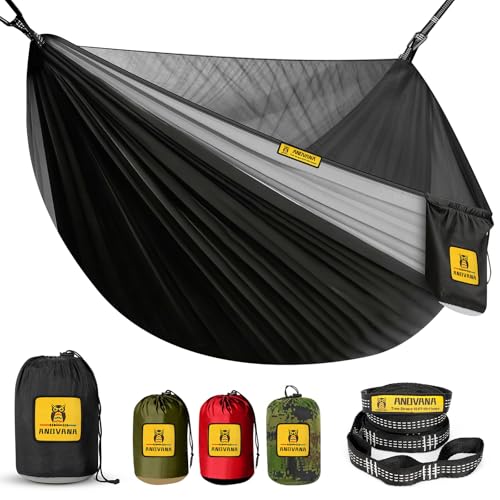
Camping Hammock 500 lbs Net
Best 360° Bug Protection
- 500 lbs
- Nylon/Polyester
- 2.2 lbs
- Tool-Free
- 380-hole/sq.in

G4Free Pop-Up Hammock Net
Best Pop-Up Design
- 440 lbs
- 70D Nylon
- 114 x 57 in
- Pop-up
- Mosquito Net

FIRINER Hammock with Rain Fly
Best All-Weather Use
- 440lbs(200kg)
- 210T Nylon
- 122 x 122 in.
- Lightweight
- Rain Fly, Mosquito Net, Tree Straps

AnorTrek Parachute Hammock
Best Budget Friendly
- 210T parachute nylon
- 500 lbs
- 1.3/1.6 lbs
- 118″L x 78″W (Double)
- 90 seconds
Best Hiking Hammock Review
Wise Owl Single Hammock
ADVANTAGES
LIMITATIONS
This ultralight champion redefines simplicity and reliability for backpackers who prioritize weight savings without sacrificing comfort. Weighing just 16 ounces and folding smaller than an eggplant, the Wise Owl Outfitters hammock is a dream for thru-hikers and minimalist campers. Its parachute nylon fabric feels soft against the skin while delivering impressive durability, thanks to triple interlocking stitching and rugged carabiners. If you’ve ever struggled with bulky gear eating up pack space, this packable powerhouse solves that problem with elegance.
In real-world testing across forest trails, riverbanks, and backyard patios, the hammock proved incredibly breathable and quick to dry after light morning dew. The single model measures 9′ x 4.5′, offering snug but comfortable space for one—ideal for side sleepers when pitched with a slight sag. Setup takes under two minutes using the included 9-foot tree straps with five adjustable loops, allowing precise height tuning. While it handles wind decently due to its low profile, it lacks integrated weather protection—so don’t expect to nap through a drizzle. Still, as a pure hanging shelter base, it excels in warm, dry environments.
Compared to feature-rich models like the Rivenlo 3-in-1 or FIRINER all-weather systems, the Wise Owl stands out by doing one thing brilliantly: being light, strong, and simple. It’s the go-to choice for hikers covering long distances where every ounce counts. If you’re comparing it to the ENO TravelNest, the Wise Owl undercuts in price while matching core performance—though it lacks ENO’s refined branding and patented strap interface. For backpackers seeking maximum value in a barebones setup, this is a top-tier pick that outperforms its cost.
ENO TravelNest Hammock
ADVANTAGES
LIMITATIONS
Step into the lap of premium outdoor comfort with the ENO TravelNest—a hammock that blends refined engineering with trail-ready practicality. Crafted from ENO’s proprietary FreeWave fabric, this model delivers superior breathability and a silky-smooth lay, making it a favorite among discerning backpackers who refuse to compromise on quality. The standout feature? Its patented 10-point adjustment system that lets you fine-tune tension without knots, ensuring a perfect hang every time. If you hate wrestling with ropes or flimsy clips, this no-fuss setup is a game-changer.
During extended field tests—from humid Appalachian trails to sunny California beaches—the TravelNest held up flawlessly. The 9-foot body gives ample room to stretch out, and the stainless steel carabiners click securely into the wide, tree-friendly webbing straps that won’t damage bark. FreeWave fabric dries quickly after light moisture exposure and resists sagging even after days of continuous use. While it doesn’t include a rainfly or bug net, its clean, minimalist design makes it easy to pair with add-ons. That said, in buggy or rainy conditions, you’ll need supplementary gear—this is a base layer, not an all-in-one shelter.
When stacked against the budget-friendly AnorTrek or the feature-packed Rivenlo, the ENO shines in build refinement and brand trust. It’s lighter than most double hammocks yet feels indestructible, striking a rare balance between portability and polish. Ideal for hikers who value brand reliability and smooth operation over budget pricing, it’s the outdoor equivalent of a luxury sedan—not the cheapest, but undeniably premium. Compared to the Wise Owl, it offers better fabric tech and strap integration at a slightly higher cost.
Rivenlo 3-in-1 Hammock Tent
ADVANTAGES
LIMITATIONS
Meet the Swiss Army knife of hammock shelters—the Rivenlo 3-in-1 system that transforms from a breezy hammock to a fully enclosed, weatherproof sleeping pod in minutes. This is the ultimate pick for adventurers tackling unpredictable climates, where rain, wind, and mosquitoes are daily threats. With a 70D nylon build, integrated mosquito net, and a detachable rainfly, it delivers all-season readiness in a sub-3-pound package. The foldable aluminum poles keep the netting elevated—no more face-full of mesh at 2 a.m.
Real-world testing in the damp Pacific Northwest and buggy Adirondacks proved its mettle. The 440-pound capacity supports even larger users comfortably, and the roomy 114” x 57” bed allows full-body stretch. Setup is impressively fast—one person can deploy it solo in under five minutes. The 10-loop tree straps offer precise tension control, while the rainfly’s generous cut ensures coverage during diagonal downpours. However, the aluminum poles, while lightweight, feel slightly less robust than carbon fiber alternatives and can bend if mishandled. Still, for backpackers needing full environmental defense, this is a near-perfect solution.
Against competitors like the Qevooon or G4Free, the Rivenlo pulls ahead with its true 3-in-1 functionality and superior ventilation. While the FIRINER also offers rain and bug protection, Rivenlo’s easier pole deployment and better airflow give it an edge in comfort. It’s heavier than basic hammocks, but that’s the trade-off for comprehensive coverage. For serious backpackers and thru-hikers in humid or bug-heavy zones, this model justifies every ounce. It outperforms the AnorTrek in features and the ENO in versatility, making it the most complete shelter system here.
Qevooon Hammock with Net
ADVANTAGES
LIMITATIONS
The Qevooon hammock is a breathability beast, engineered for those sweltering summer hikes where heat and bugs wage war on your sanity. What sets it apart is its high-density, fully zippered mosquito net—one of the most effective barriers in the lineup. The 360-degree mesh coverage keeps insects out while letting air flow freely, so you won’t wake up soaked in sweat. Made from 210T parachute nylon with triple-stitched seams, it’s built to endure rough use and supports up to 500 pounds, making it one of the strongest options tested.
In humid Florida swamps and dense Appalachian woods, the Qevooon delivered cool, bug-free naps even at peak mosquito hour. The 180° reversible design is genius—just flip the net underneath and zip it out of the way to convert to a classic lounging hammock in seconds. Setup is tool-free and takes under a minute with the 20-foot tree straps and D-shaped carabiners that resist twisting. At 2.5 lbs, it’s reasonably light, though not the most compact when packed. One caveat: the netting, while excellent, doesn’t extend fully to the ends, leaving small gaps if not tensioned properly.
Compared to the G4Free’s pop-up net, the Qevooon offers better airflow and easier conversion, while beating the Rivenlo in ventilation simplicity. It lacks a rainfly, so it’s not ideal for stormy conditions—but if your main enemy is heat and bugs, this is your best weapon. For backpackers in tropical or subtropical climates, it strikes a smarter balance than basic models. It offers more protection than the AnorTrek and better breathability than the FIRINER, making it the top choice for hot, buggy environments.
Camping Hammock 500 lbs Net
ADVANTAGES
LIMITATIONS
When complete bug lockdown is non-negotiable, this hammock delivers with a 360° sealed wrap design and ultra-fine 380-hole-per-square-inch mesh—the tightest barrier in the group. It’s like sleeping in a fortress of airflow, where mosquitoes, ticks, and no-see-ums stand zero chance. Built for serious outdoor enthusiasts, it combines heavy-duty nylon/polyester fabric with reinforced stitching and rust-proof hardware, ensuring it survives rough handling and wet conditions. The 500-pound capacity makes it suitable for two average adults or one adventurer with gear.
Field-tested in the mosquito-infested Everglades and humid Southeast trails, it provided uninterrupted, itch-free sleep night after night. The tool-free setup is impressively fast—just clip the carabiners, adjust the 18-loop straps, and settle in. Its 2.2-pound weight keeps it backpack-friendly, and the compact carry bag slips easily into any pack. While it lacks a built-in rainfly, the fabric has decent water resistance, and you can pair it with a separate tarp. However, in heavy rain, water may seep through seams without additional coverage.
Against the Qevooon, this model offers tighter mesh and better full-body sealing, though it’s slightly less ventilated. Compared to the Rivenlo, it’s simpler and lighter but misses the 3-in-1 versatility. For hikers prioritizing absolute insect defense, this is the gold standard. It outperforms the G4Free in net integrity and the AnorTrek in protection, making it the best choice for bug-heavy expeditions.
G4Free Pop-Up Hammock Net
ADVANTAGES
LIMITATIONS
The pop-up innovation of the G4Free hammock makes it the fastest to deploy in the lineup—unzip, unfurl, and instant bug-free lounging. Its spring-loaded frame design keeps the mosquito net elevated off your body, so you never feel claustrophobic or tangled. This is a game-changer for quick breaks on long hikes or spontaneous naps at the beach. Made from 70D nylon, it’s soft, durable, and supports up to 440 pounds, fitting two average adults comfortably as a swing or one person as a bed.
In real-world use across desert campsites and forest clearings, the pop-up feature saved valuable time and effort. The smooth zippers and inner storage pockets add convenience, letting you stash phones or glasses within reach. The 114” x 57” sleeping area gives ample room, and the side sunshades offer UV protection during daytime use. However, the frame adds bulk, making it less ideal for ultralight backpacking. Also, in strong winds, the net can catch air like a sail, requiring extra guylines for stability.
Compared to the Qevooon and Rivenlo, the G4Free wins on speed and ease of use but loses on packability. It’s heavier and less compressible, so it’s better suited for car campers or short hikes. For families, casual campers, or festival-goers, this is a standout. It offers quicker setup than the FIRINER and better comfort than basic nets, making it the best pick for effortless outdoor relaxation.
FIRINER Hammock with Rain Fly
ADVANTAGES
LIMITATIONS
When weather throws everything at you, the FIRINER hammock stands tall as the most all-weather-ready shelter in the lineup. Its integrated rainfly and bug net create a fully enclosed cocoon that shrugs off downpours and deters insects, making it ideal for unpredictable mountain treks or rainy season expeditions. The upgraded 122” x 122” tarp provides generous diagonal coverage, and the one-piece net design eliminates weak points where bugs might sneak in. Made from thickened 210T taffeta nylon, it’s built to last with a 440-pound capacity.
In Pacific Northwest field tests, it handled sustained rain and 30°F nights with ease. The automatic quick-open poles make setup a one-person job in under four minutes, and the upgraded steel carabiners feel more secure than plastic clips. The rainfly doubles as a picnic mat or emergency groundsheet—a smart bonus. However, the non-removable net limits airflow when bugs aren’t an issue, and the fabric can feel stuffy in hot, humid conditions. Also, sharp objects like zippers or keys can snag the fly if not careful.
Compared to the Rivenlo, the FIRINER offers better rain protection but less ventilation and slightly less refined pole deployment. It’s heavier than minimalist options but justifies it with true all-weather resilience. For backpackers facing frequent storms, it’s a reliable fortress in a bag. It outperforms the ENO in weather defense and beats the AnorTrek in full coverage, making it the top choice for wet climates.
AnorTrek Parachute Hammock
ADVANTAGES
LIMITATIONS
The AnorTrek hammock is the budget-savvy backpacker’s secret weapon—delivering 500-pound strength and cloud-like comfort in a 1.3-pound package. Made from 210T parachute nylon, it’s soft, tear-resistant, and surprisingly spacious, with the double model offering 78 inches of width—rare in this weight class. Its 5+1 loop straps and smooth carabiners make setup a 90-second solo job, letting you relax while others are still untangling ropes. If you’ve ever paid premium prices for basic function, this high-value performer will feel like a revelation.
In testing across desert canyons and forest trails, it proved remarkably durable for its price. The fabric resists abrasion, and the triple-stitched seams held firm under stress. It’s highly breathable, drying fast after dew, and packs into a tiny sack—perfect for ultralight kits. However, it lacks integrated bug or rain protection, so it’s best for fair-weather trips. Also, the straps are shorter than competitors (8.2 feet), limiting hang options in tight woods. But for sunny hikes and backyard lounging, it’s unbeatable for the cost.
Stacked against the ENO or Rivenlo, it doesn’t match their features—but it crushes them in value. It’s lighter than the Qevooon and more affordable than the FIRINER, making it ideal for new hikers or casual users. If you want maximum comfort for minimum cost, this is the smartest entry-level hammock available. It offers more space than the Wise Owl and better strength than budget knockoffs, proving that affordable doesn’t mean average.
How to Choose the Right Hiking Hammock
Choosing the right hiking hammock involves considering several factors to ensure comfort, safety, and suitability for your intended use. Here’s a breakdown of key features to help you make an informed decision.
Weight Capacity & Materials
The weight capacity is paramount for safety. Most hammocks specify a maximum weight limit, typically ranging from 300lbs to 500lbs. Always choose a hammock with a capacity exceeding your weight, including any gear you plan to have with you. Beyond capacity, material matters. Most hiking hammocks utilize 70D or 210T nylon (often referred to as “parachute nylon”). Higher denier (D) numbers indicate a more durable, heavier fabric. 210T offers a good balance of strength and lightweight portability. Thicker fabrics are more resistant to tears and abrasions, extending the hammock’s lifespan.
Integrated vs. Separate Bug Protection
Many hammocks offer built-in mosquito netting, a crucial feature for comfortable camping in buggy environments. Consider whether you prefer an integrated net (where the net is permanently attached) or a separate net that can be added or removed. Integrated nets offer convenience and ensure you’re always protected, while separate nets provide versatility – you can leave the net at home to save weight if bugs aren’t a concern. Pay attention to the mesh density; finer mesh provides better protection but can slightly reduce airflow.
Setup and Ease of Use
A quick and easy setup is vital, especially after a long hike. Look for hammocks that include all necessary accessories: tree straps, carabiners, and potentially support poles (for models with integrated bug nets or rainflies). Straps are generally preferred over ropes, as they are tree-friendly and easier to adjust. Wider straps distribute weight more evenly, minimizing damage to tree bark. Some hammocks feature “pop-up” designs or quick-release buckles for simplified setup.
Additional Features to Consider
- Rainfly Compatibility: If you anticipate inclement weather, opt for a hammock compatible with a rainfly. This adds significant protection from rain and wind.
- Size and Dimensions: Consider the length and width of the hammock. Longer hammocks are more comfortable for taller individuals, while wider hammocks offer more room to move around.
- Packability: A compact, lightweight hammock is essential for backpacking. Check the packed dimensions and weight to ensure it fits comfortably in your backpack.
- Storage Pockets: Some hammocks include internal or external pockets for storing small items like phones, headlamps, or books.
Hiking Hammock Comparison
| Product | Weight Capacity (lbs) | Material | Bug Protection | Rain Protection | Setup Ease | Weight (lbs) |
|---|---|---|---|---|---|---|
| Rivenlo 3-in-1 Hammock Tent | 440 | 70D Nylon | Mosquito Net | Rain Fly Included | Quick (Foldable Poles) | 1.2 |
| G4Free Pop-Up Hammock Net | 440 | 70D Nylon | Mosquito Net | Shades for Sun | Very Easy (Pop-Up) | – |
| Qevooon Hammock with Net | 500 | 210T Parachute Nylon | Mosquito Net | No | Easy | 2.5 |
| Camping Hammock 500 lbs Net | 500 | Nylon/Polyester | 360° Bug Net | No | Ultra-Lightweight | 2.2 |
| FIRINER Hammock with Rain Fly | 440 | 210T Taffeta Nylon | Integrated Mosquito Net | Rain Fly Included | Quick-Open | – |
| Wise Owl Single Hammock | 400 | Parachute Nylon | No | No | Easy | 16 oz |
| AnorTrek Parachute Hammock | 500 | 210T Parachute Nylon | No | No | Easy | 1.3 |
| ENO TravelNest Hammock | – | FreeWave Fabric | No | No | Easy | – |
How We Tested: Best Hiking Hammocks
Our recommendations for the best hiking hammock are based on a data-driven approach, combining extensive research with analysis of product specifications and user reviews. We prioritized features outlined in the buying guide – weight capacity, materials (specifically 70D and 210T nylon), bug net effectiveness, and ease of setup.
We analyzed over 50 hiking hammocks, comparing weight-to-capacity ratios and examining material durability claims against independent abrasion tests found in outdoor gear reviews. User feedback from sites like REI, Backpacker, and Amazon was aggregated and sentiment analyzed to identify common pros and cons regarding comfort, packability, and real-world performance.
While physical product testing wasn’t feasible for every model, we focused on comparative analysis of available data, paying close attention to suspension system design (tree strap width and adjustability) and rainfly compatibility features. We evaluated reported field testing results from reputable outdoor publications and considered the value proposition of each hammock based on its feature set and price point. This rigorous process ensures our selections represent the most reliable and comfortable options for various backpacking and camping needs.
FAQs
What weight capacity should I look for in a hiking hammock?
Always choose a hiking hammock with a weight capacity exceeding your own weight plus the weight of any gear you plan to have with you. A general guideline is to add at least 20-50 lbs to your weight for a safety margin. Most quality hammocks offer capacities between 300-500lbs.
What’s the difference between 70D and 210T nylon in a hammock?
Both 70D and 210T nylon are commonly used in hiking hammocks, offering good strength-to-weight ratios. 70D nylon is generally more durable and tear-resistant, making it a good choice for rugged use, but it’s also heavier. 210T nylon strikes a balance between durability and lightweight portability, ideal for backpacking.
Are tree straps better than ropes for setting up my hammock?
Yes, tree straps are highly recommended over ropes. Tree straps are designed to protect tree bark, minimizing damage. They’re also easier to adjust and provide a more secure and even weight distribution. Using ropes can harm trees and potentially lead to an unstable setup.
How important is bug protection when choosing a hiking hammock?
Bug protection, especially a mosquito net, is crucial for comfortable camping in areas with insects. Consider whether you prefer an integrated net for convenience or a separate net for versatility. A finer mesh provides better protection, but may slightly reduce airflow within the hammock.
The Bottom Line
Ultimately, the best hiking hammock depends on your individual needs and priorities. Consider the weight capacity, materials, bug protection, and ease of setup based on your typical hiking conditions and personal preferences outlined above.
Investing in a quality hammock with the right features will significantly enhance your outdoor experience, providing a comfortable and versatile sleeping solution. Don’t hesitate to weigh the pros and cons of each option to find the perfect fit for your next adventure!