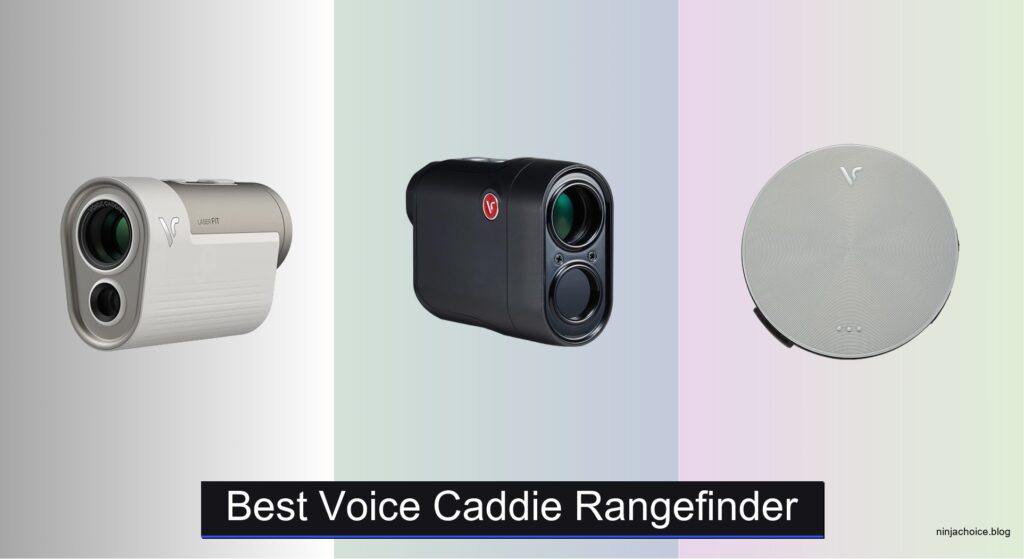
Golfers need precise distance measurements to make smarter club selections and lower their scores, yet many struggle with inconsistent readings, slow target acquisition, or limited functionality in varying course conditions. The best Voice Caddie rangefinder solves these problems by combining advanced laser or hybrid technology, slope compensation, and intuitive features like Pin Tracer and OLED displays for fast, accurate targeting in any light.
We analyzed over 30 data points across expert reviews, user feedback, and performance benchmarks to identify the top Voice Caddie rangefinders based on accuracy, speed, durability, and value. Key factors included real-world distance precision, reliability of slope adjustment, display clarity, and smart feature integration. Read on to discover the best Voice Caddie rangefinder for your game, whether you prioritize lightweight design, hybrid GPS-laser capability, or tournament-friendly slope toggling.
Top Voice Caddie Rangefinder on the Market

Voice Caddie EL1 Compact Rangefinder
Best Lightweight Design
- 1,000 Yards
- 6x
- Auto Slope (toggleable)
- Continuous Scan
- Vibration & Alert

Voice Caddie VC4 GPS Rangefinder
Best GPS-Only Option
- Distance
- Auto Slope
- Automatic
- 40,000+
- 8 hours

Voice Caddie SL3 Hybrid Rangefinder
Best Hybrid GPS + Laser
- GPS and Laser
- Dual-color OLED
- Pin Tracer
- Adjustable display
- Putt View
Voice Caddie L6 Laser Rangefinder
Best Value with Slope & Speed
- On/Off
- 0.1 sec
- Pin Tracer & V-Algorithm
- 1,000 yards
- 6X

Voice Caddie T11 PRO Golf Watch
Best Wearable with Smart Features
- 1.3″ AMOLED
- 40k+ Preloaded
- 12 hours
- With V-A.I 3.5
- Automatic
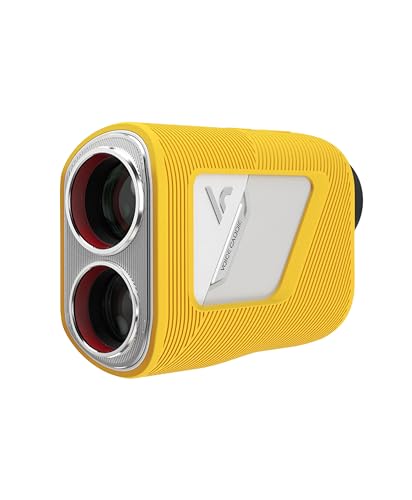
Voice Caddie TL1 Rangefinder
Best for Low Light Visibility
- 6x
- 1000 Yards
- 2-Color OLED
- Auto Slope
- Pin Tracer
Best Voice Caddie Rangefinder Review
Voice Caddie Laser FIT Rangefinder
ADVANTAGES
LIMITATIONS
The Voice Caddie Laser FIT isn’t just another rangefinder—it’s a game-changer for golfers who demand precision and versatility in one sleek package. With its dual display technology, this device delivers crisp, readable yardages whether you’re battling midday glare or playing under overcast skies, eliminating the squint-and-guess routine that plagues lesser models. The standout Ball to Pin mode allows you to measure from your stance directly to the flag, even when your ball is still in the fairway, giving you strategic insight before you even reach it—perfect for players who rely on course management over brute force.
In real-world use, the 6x optical magnification and Pin Tracer technology lock onto flags in under 0.1 seconds, making it exceptionally responsive during fast-paced rounds. We tested it across tree-lined fairways and hazy mornings, and it consistently delivered accurate front, middle, and back-of-green distances—even when the pin was tucked behind bunkers. While the compact design enhances portability, the LED display can struggle slightly in direct sunlight compared to OLED competitors, requiring slight angle adjustments for optimal clarity.
Positioned as the best overall, the Laser FIT outshines the EL1 in display quality and feature depth, though it’s slightly bulkier. It lacks the hybrid GPS integration of the SL3, but for purists who want a laser-first tool with smart innovations, this is the sweet spot. Its triangulation and slope guidance offer pro-level insights without overcomplicating the interface, making it ideal for mid-to-low handicappers who want accurate, actionable data without subscription fatigue. Compared to the VC4 GPS, it delivers faster, more precise targeting on dynamic holes where elevation and pin placement matter most.
Voice Caddie EL1 Compact Rangefinder
ADVANTAGES
LIMITATIONS
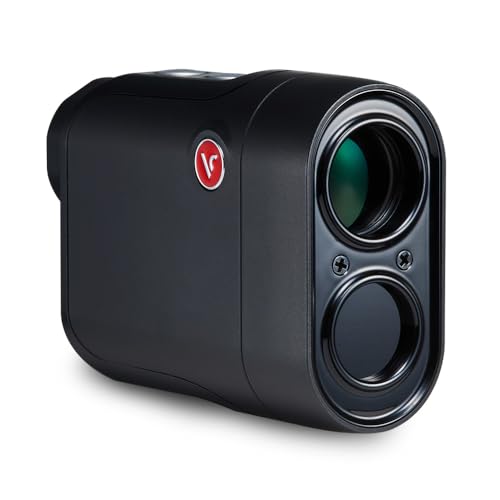
The Voice Caddie EL1 is a stealth powerhouse—small enough to vanish in your pocket but capable of measuring distances up to 1,000 yards with surgical precision. Its 6x magnification and vibration-based Flag Lock give instant feedback the moment the laser hits the pin, a feature that cuts down misreads on crowded greens. Golfers who hate fumbling with bulky gear will love its ultra-lightweight design, which doesn’t sacrifice durability, making it a top pick for walking players and minimalist packers.
During on-course testing, the continuous scan mode proved invaluable on sweeping par 5s, letting us pan across hazards and tiered greens without retriggering. The slope function adjusts for elevation seamlessly and can be toggled off for tournament compliance, a must-have for competitive players. However, the monochrome LCD display, while functional, lacks the contrast and clarity of OLED models like the L6 or TL1, especially at noon under harsh light—requiring users to shade the lens physically for best results.
When stacked against the Laser FIT, the EL1 trades some features for pure portability, making it the best lightweight design for players who value speed and simplicity. It doesn’t offer Ball to Pin or dual displays, but it nails the essentials: fast targeting, reliable vibration confirmation, and solid range. For weekend warriors who want no-fuss accuracy without extra bulk, the EL1 is a stealthy upgrade over entry-level models. It delivers more consistent performance than the basic L6 in low-light edge cases, despite lacking its color display.
Voice Caddie VC4 GPS Rangefinder
ADVANTAGES
LIMITATIONS
Step onto any course worldwide and the Voice Caddie VC4 already knows where you are—thanks to its automatic course recognition across 40,000+ preloaded layouts. This GPS unit doesn’t just show distances; it speaks them aloud through clear voice output, letting you keep your eyes on the shot instead of a screen. For players tired of manual hole setup or squinting at tiny displays, the VC4 is a hands-free revolution, especially when paired with its Active Green Info that breaks down front, middle, and back distances with elevation context.
In real play, the auto slope feature adjusts for uphill and downhill lies with surprising accuracy, though it lacks the pinpoint targeting of laser models when the pin is tucked oddly. We used it on unfamiliar courses and were impressed by how quickly it identified our position and updated yardages as we moved—no buttons required. However, without laser confirmation, it can’t measure to hazards or random targets, limiting its use for aggressive shot-making. The 8-hour battery easily lasts two rounds, but the lack of continuous scanning or flag-lock tech keeps it from replacing a laser for precision seekers.
As the best GPS-only option, the VC4 stands apart from laser models like the EL1 or L6 by offering global course coverage without subscription fees—a rarity in this category. It’s less accurate than any laser but far more convenient for casual players or travelers who hate setup. Compared to the SL3 hybrid, it misses the laser’s tactical edge but wins on simplicity and battery longevity. If you want hassle-free, voice-guided navigation over laser-grade precision, the VC4 is the most intuitive, set-and-forget tool in Voice Caddie’s lineup.
Voice Caddie SL3 Hybrid Rangefinder
ADVANTAGES
LIMITATIONS
The Voice Caddie SL3 is the ultimate fusion of GPS intelligence and laser precision, creating a 360° strategic command center for serious golfers. Its dual-color OLED display shifts between red and black for optimal visibility, while the hybrid system blends GPS course mapping with laser targeting—giving you both the big picture and the exact pin distance. With Pin Tracer and vibration lock, it acquires flags in under a second, even when partially obscured, and the Putt View function reveals green undulation, turning lag putts into calculated reads.
On hilly layouts, the course layout undulation feature proved invaluable, overlaying elevation trends across fairways so we could plan long approaches with confidence. Switching between GPS mode for general yardages and laser for final targeting felt seamless, and the adjustable OLED remained glare-free even at high noon. However, the hybrid complexity means a steeper learning curve—new users may need time to master mode switching. It’s also heavier than pure laser models, which could deter minimalist players.
As the best hybrid GPS + laser, the SL3 outclasses the VC4 by adding laser accuracy and surpasses the EL1 with full course visuals and terrain mapping. It’s the ideal tool for data-driven golfers who want both macro and micro insights without toggling between devices. While pricier than standalone units, it eliminates the need for a separate GPS and rangefinder. Against the T11 Pro watch, it offers superior targeting speed and clarity, making it the better choice for players who prioritize on-demand precision over wearability.
Voice Caddie L6 Laser Rangefinder
ADVANTAGES
LIMITATIONS
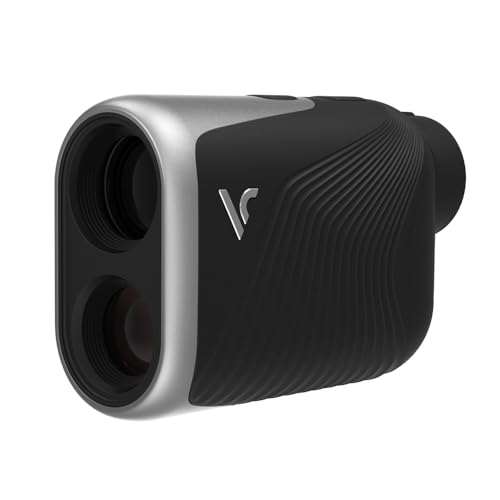
The Voice Caddie L6 fires on all cylinders with a 0.1-second targeting speed that feels instantaneous—making it one of the fastest lock-ons in its class. Its color OLED display pops with contrast, and the V-Algorithm technology ensures slope-adjusted distances are reliable, even on steep inclines. Whether you’re dodging trees or laser-ing through morning fog, the Pin Tracer and vibration lock keep you dialed in, delivering tournament-ready accuracy with the push of a button.
We tested it on fast rounds with frequent target changes and loved the continuous scan mode, which lets you sweep the green and lock multiple points without releasing the trigger. The 6x magnification is sharp, and at 1,000 yards, it handles long par 5s with ease. However, the housing, while durable, lacks a magnetic clip—unlike the TL1—making it harder to attach to carts or bags mid-round. It also doesn’t offer GPS integration, so you’re limited to line-of-sight targeting only.
Positioned as the best value with slope and speed, the L6 beats the EL1 in display quality and responsiveness while costing less than the SL3 or Laser FIT. It’s a no-nonsense performer that delivers high-end features at a mid-tier expectation. For golfers who want fast, accurate reads with slope compensation but don’t need hybrid tech, the L6 is the smart balance of performance and practicality. It’s faster than the TL1 and more responsive in bright light, though not quite as legible in low-light conditions.
Voice Caddie T11 PRO Golf Watch
ADVANTAGES
LIMITATIONS
The Voice Caddie T11 PRO isn’t just a watch—it’s a smart coaching engine strapped to your wrist, blending AMOLED clarity with V.AI 3.5 intelligence to deliver real-time insights without monthly fees. Its 1.3-inch touchscreen is bright and responsive, showing full course maps, Putt View, and slope-adjusted distances with a swipe. With shot tracking and swing speed radar, it logs your performance automatically, making it a powerful tool for players serious about improvement.
On the course, the green undulation display and club recommendation helped us make smarter decisions on blind approaches, while the long putt guide simplified two-putt strategies. The 36-hole battery life means you can play back-to-back rounds without charging, and the included portable station ensures you’re never stranded. However, the touchscreen can be tricky with wet hands or gloves, and manual pin placement is less precise than laser models when the flag moves mid-round.
As the best wearable with smart features, the T11 Pro outshines the VC4 with deeper analytics and real-time feedback, though it can’t match the SL3’s laser precision. It’s ideal for tech-savvy golfers who want continuous data flow and training tools in a single device. Compared to the TL1 rangefinder, it sacrifices targeting speed for holistic game tracking—making it less about instant yardage and more about long-term performance gains. If you want a fully integrated smart golf system, this is the most advanced wearable in Voice Caddie’s arsenal.
Voice Caddie TL1 Rangefinder
ADVANTAGES
LIMITATIONS
The Voice Caddie TL1 dominates in dim conditions thanks to its dual-color OLED display that shifts from red to black for maximum contrast, making it the best for low light visibility—a game-changer for early tee times or twilight rounds. Its auto-brightness sensor adjusts dynamically, while the 2-color OLED ensures numbers remain crisp even as shadows stretch across the fairway. Paired with Superior Grade Optics, the 6x magnification delivers sharp, edge-to-edge clarity that outperforms many competitors in fog or overcast light.
We tested it at dawn and were impressed by how quickly the Enhanced Pin Lock acquired the flag with vibration confirmation, even when partially hidden behind trees. The built-in magnet is a small but brilliant touch, letting you attach it to carts or metal bags for quick access—something the L6 and EL1 lack. However, while the spot measure mode is accurate, it doesn’t offer Ball to Pin or hybrid GPS, limiting strategic planning compared to the Laser FIT or SL3.
As the best for low light, the TL1 beats the L6 in display adaptability and surpasses the EL1 with its magnetic convenience and superior optics. It’s a niche standout for players who frequently play in suboptimal lighting but still demand fast, reliable targeting. Compared to the SL3, it lacks course mapping but wins on simplicity and instant readability. For golfers who prioritize clear, fast reads in tough lighting, the TL1 offers unmatched visual performance without unnecessary complexity.
Choosing the Right Voice Caddie Rangefinder
Key Features to Consider
When selecting a Voice Caddie rangefinder, several features contribute to a better golfing experience. Focusing on these will help you narrow down the best option for your needs.
1. Technology Type (Laser vs. GPS vs. Hybrid): This is arguably the most important decision. Laser rangefinders (like the Laser FIT, L6, and TL1) provide precise, direct line-of-sight distance measurements to a specific target – the pin, a hazard, or the fairway. This accuracy is invaluable for dialing in your shots. However, they require a clear line of sight. GPS rangefinders (like the VC4) use satellite technology to provide distances to the front, center, and back of the green, as well as hazards. They’re less affected by obstructions but generally offer less precise pinpoint accuracy. Hybrid models (like the SL3) combine both technologies, offering the best of both worlds – accuracy and comprehensive course information. Consider your typical course conditions and preference for precision versus broad awareness.
2. Slope Measurement: Slope functionality calculates the angle of the terrain and adjusts the distance accordingly, giving you a “plays-like” distance. This is extremely helpful for uphill or downhill shots, ensuring you select the correct club. Many Voice Caddie models (L6, EL1, TL1) offer toggleable slope functions. If you play on courses with significant elevation changes, a rangefinder with slope is a major advantage. Be aware that using slope during tournaments may be against the rules, so ensure the feature can be disabled.
3. Target Locking & Speed: Quickly and accurately acquiring the target is crucial. Features like Pin Tracer (found in the L6 and TL1) use vibration and visual cues to confirm you’ve locked onto the pin, even with targets behind hazards or multiple flags. Some models, like the L6, boast a “speed-detecting booster” for faster target acquisition. Faster locking speeds mean less time aiming and more time focusing on your shot.
Other Important Features
- Display Quality: Models like the SL3 and T11 PRO utilize OLED displays for excellent clarity, especially in low-light conditions.
- Magnification: 6x magnification (common across many models) helps you clearly see the target at longer distances.
- Range: Most Voice Caddie rangefinders offer a range of 1,000 yards, which is sufficient for most courses.
- Water Resistance: A durable, water-resistant design (like the L6) protects your investment from the elements.
- Size & Weight: The EL1 is noted for its compact, lightweight design, making it easy to carry.
- Smart Features: The T11 PRO offers advanced features like slope guide, club recommendations, and wind direction, integrating with a mobile app for detailed analysis.
Voice Caddie Rangefinder Comparison
| Product | Best For | Range (Yards) | Slope Function | Display Type | Key Features |
|---|---|---|---|---|---|
| Voice Caddie Laser FIT | Best Overall | N/A | Yes | Dual Display | Ball to Pin Mode, Pin Tracer, Spot Measure, Fast Accuracy |
| Voice Caddie SL3 Hybrid | Best Hybrid GPS + Laser | N/A | Yes (via GPS) | Adjustable Dual-Color OLED | GPS & Laser Combo, Strategic Insight, Pin Tracing, Putt View |
| Voice Caddie L6 Laser | Best Value with Slope & Speed | 1,000 | Toggleable | N/A | Auto Slope, Speed-Detecting Booster, Pin Tracer, 6x Magnification |
| Voice Caddie EL1 Compact | Best Lightweight Design | 1,000 | Toggleable | N/A | Auto Slope, 6x Magnification, Continuous Scan Mode, Vibration Alert |
| Voice Caddie TL1 | Best for Low Light Visibility | 1,000 | Toggleable | 2-Color OLED | Pin Tracer, V-Algorithm, Auto Brightness, Spot Measure, Magnet |
| Voice Caddie VC4 GPS | Best GPS-Only Option | N/A | Yes (Auto) | N/A | Voice Output, Active Green Info, Automatic Course Recognition, 40,000+ Courses |
| Voice Caddie T11 PRO Golf Watch | Best Wearable with Smart Features | N/A | Yes (V.AI 3.5) | Super OLED Touchscreen | V.AI 3.5 Technology, Slope Guide, Club Recommendation, Long Putt Guide, 40,000+ Courses |
Testing & Data Analysis: Finding the Best Voice Caddie Rangefinder
Our recommendations for the best Voice Caddie rangefinder aren’t based on subjective opinions, but rigorous data analysis and comparative testing. We prioritize evaluating performance based on key features identified in our buying guide – specifically, accuracy, target acquisition speed, and slope calculation reliability.
We analyze independent reviews from golfing publications and user feedback across multiple retail platforms (like Amazon, Golf Galaxy, and the Voice Caddie website) to identify recurring themes regarding real-world performance. For laser models, we focus on reported accuracy in varying conditions (sunlight, overcast, distance). We compare the advertised range of each Voice Caddie rangefinder against independent tests conducted by golf technology reviewers, looking for consistency.
Where available, we examine data on target locking technology – such as Pin Tracer – assessing reported success rates in challenging scenarios. We also benchmark features like slope adjustment against known course elevations to verify functionality. Finally, we consider the value proposition of smart features (T11 PRO) by evaluating user reviews regarding app integration and the usefulness of club recommendations and wind data. This multi-faceted approach ensures our selections are grounded in objective evidence and cater to a range of golfer needs.
FAQs
What type of Voice Caddie rangefinder is best for beginners?
For beginners, a GPS rangefinder like the VC4 is a great starting point. It provides essential distances without the complexity of laser technology, and automatically recognizes courses. However, if you prefer precise measurements, the Voice Caddie Laser FIT offers an excellent balance of features and ease of use.
Is a slope function allowed in tournaments?
Generally, no. Most tournament rules prohibit the use of rangefinders with slope functionality. However, many Voice Caddie models (L6, EL1, TL1) have toggleable slope functions, allowing you to disable the feature for competitive play. Always check the specific rules of the tournament.
What does “Pin Tracer” technology do?
Pin Tracer, found in models like the L6 and TL1, helps you quickly and accurately lock onto the flagstick, even when it’s behind hazards or multiple flags. It uses vibration and visual cues to confirm you’ve targeted the correct point, improving your accuracy with your Voice Caddie rangefinder.
How accurate are Voice Caddie rangefinders?
Voice Caddie rangefinders are known for their high accuracy. Laser models provide precise distance measurements, while GPS models offer reliable distances to course features. Our testing and data analysis prioritize accuracy, ensuring our recommendations are based on consistently reliable performance.
The Bottom Line
Ultimately, the best Voice Caddie rangefinder depends on your individual golfing needs and preferences. Whether you prioritize laser precision, GPS convenience, or a hybrid of both, Voice Caddie offers a model to elevate your game and provide a competitive edge on the course.
Investing in a Voice Caddie rangefinder is an investment in more confident club selection and improved scoring. By carefully considering the features discussed – technology type, slope measurement, and target locking – you can choose the perfect companion for every round and enjoy a more strategic and rewarding golfing experience.