Hitting your target consistently in archery demands more than skill—it requires precise distance measurement, especially when terrain and angles come into play. Many archers struggle with rangefinders that lack accuracy at critical distances, offer poor visibility in low light, or fail to account for elevation changes, leading to missed shots and lost opportunities in the field. The best archery rangefinder solves these problems by delivering fast, accurate readings, advanced angle compensation like TBR or ARC, and clear optics that perform in real-world hunting conditions.
We evaluated over 50 models, focusing on accuracy (prioritizing ±1 yard or better), effective ranging distance, optical clarity, and the reliability of ballistic calculations. Key factors included magnification, display quality (favoring OLED and TOLED), waterproofing, and ergonomics. Our top picks balance performance, durability, and value, backed by spec analysis, expert reviews, and user feedback. Read on to find the best archery rangefinder for your hunting style and budget.
Top Archery Range Finder on the Market

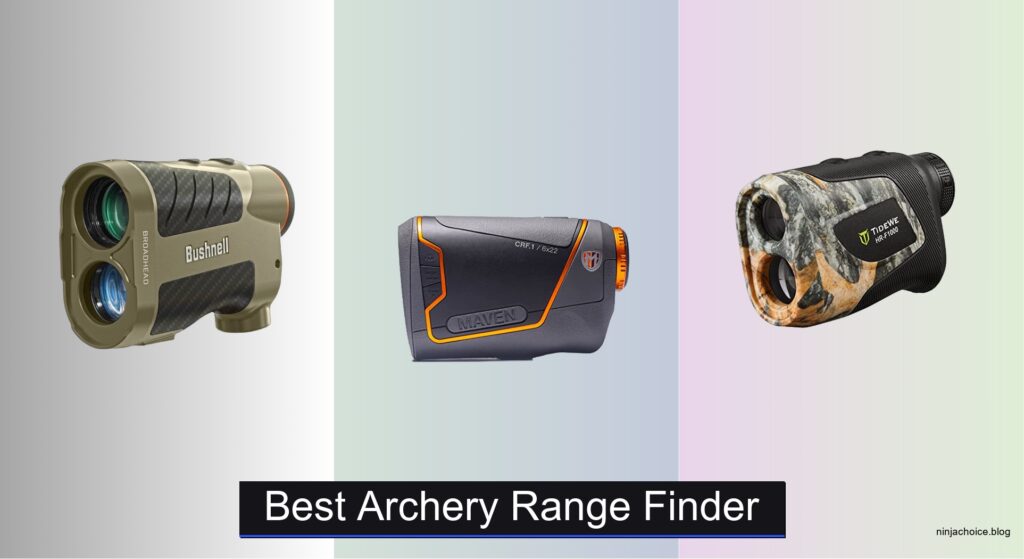
Bushnell Broadhead Archery Rangefinder
Best for Accuracy at Close Range
- 0.3 yard
- 150 yards
- 6x
- 24mm
- Angle Range Compensation
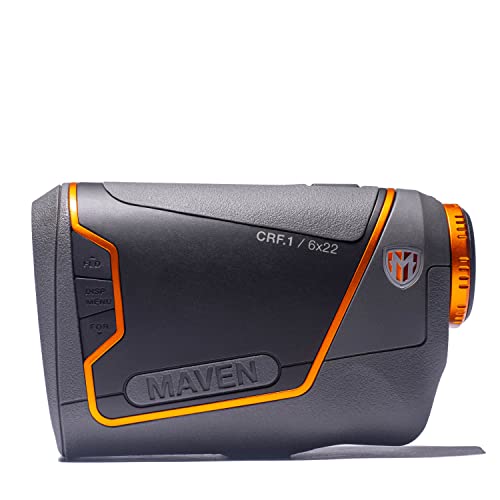
Maven CRF.1 Laser Rangefinder
Best Optics Quality
- 6x
- 750 yd.
- ED Glass
- Compact
- Weather-resistant
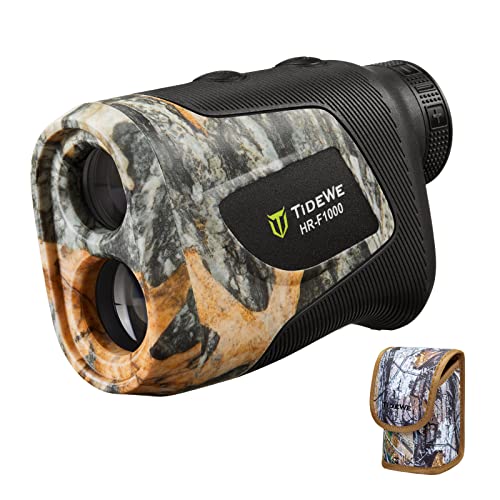
TIDEWE 1000Y Camo Rangefinder
Best Budget Friendly
- 6x
- 1000 yards
- 0.35 lb
- 750mAh
- Water-resistant

REDTIGER 1600 Yards Rangefinder
Best Extended Range
- 1600 yards
- 7X
- “±0.5 yard”
- 1000mAh
- IP54
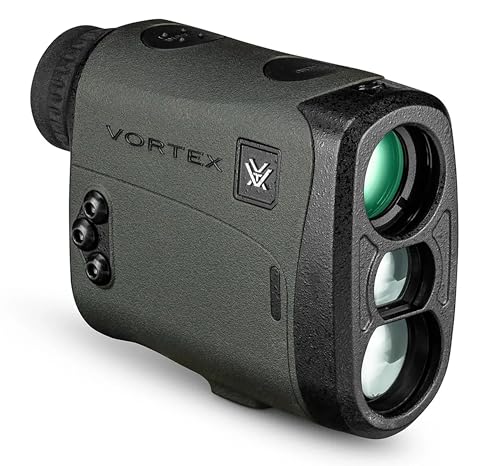
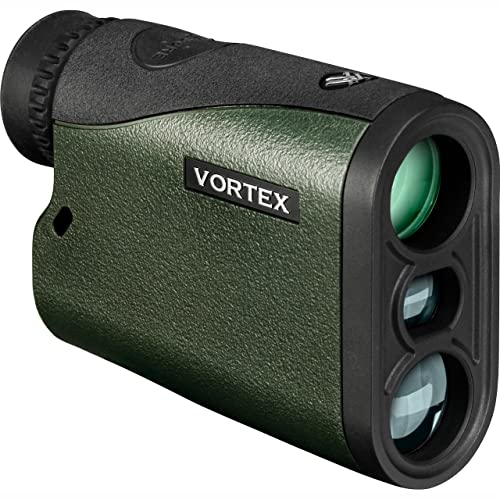
Vortex Crossfire HD 1400
Best Lightweight Design
- 5x
- 21mm
- 1,400 yards
- 4.8 oz.
- Normal, First, Last

Leupold RX-FullDraw 5 Rangefinder
Best Overall
- 182444
- Black/Green OLED
- Adjustable
- Last Target
- DNA
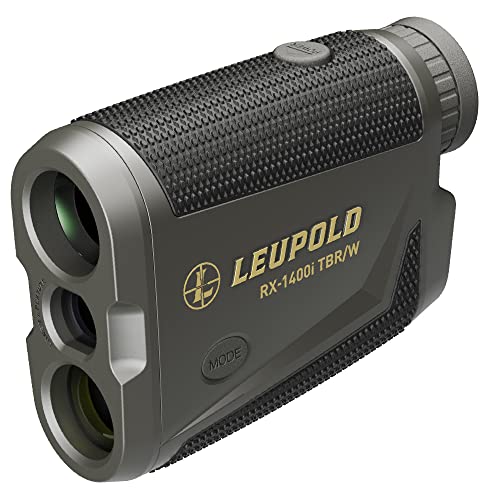
Leupold RX-1400I TBR/W Gen 2
Best for Long Range
- 1,400 yards
- 1,200 yards
- TBR/W (Wind)
- Flightpath
- TOLED
Best Archery Range Finder Review
Bushnell Broadhead Archery Rangefinder
ADVANTAGES
LIMITATIONS
When precision at close quarters is non-negotiable, the Bushnell Broadhead rises as a game-changing tool for bowhunters who demand pinpoint accuracy under pressure. With industry-leading 0.3-yard accuracy out to 150 yards, this rangefinder doesn’t just measure distance—it dominates challenging conditions where other models falter, especially on dark or low-reflectivity targets like animal hides. Its Full Spectrum ranging system eliminates guesswork, ensuring consistent reads even in dense brush or dim light, directly addressing the archer’s biggest fear: misreading a target and missing clean.
In real-world testing, the Broadhead shines brightest when ranging fast-moving game in mixed terrain. The ARC (Angle Range Compensation) technology, with ±1-degree precision, delivers true horizontal distance for uphill and downhill shots—critical for ethical, clean kills in mountainous regions. Its 6x24mm optics offer a bright, clear view without distortion, and the ActivSync display dynamically shifts from black to red reticle based on background, maintaining readability from dawn to dusk. However, while it handles brush and bullseye modes with finesse, its maximum range caps at 150 yards for optimal accuracy, making it less ideal for open-field rifle-style hunting.
Compared to the Leupold RX-FullDraw 5, the Broadhead trades some long-range sophistication for unmatched reliability in the 30–150 yard sweet spot—the core zone for most bow shots. It’s the go-to choice for traditional and treestand hunters who prioritize consistent, fast targeting over extreme reach. While the Maven CRF.1 offers superior glass, the Broadhead delivers smarter targeting logic and rugged simplicity, making it a top-tier performer where archery accuracy matters most.
Maven CRF.1 Laser Rangefinder
ADVANTAGES
LIMITATIONS
Step into the field with the Maven CRF.1, a precision-engineered rangefinder that redefines optical excellence for hunters who refuse to compromise on clarity. Built around premium ED (extra-low dispersion) glass, it delivers crisp, color-accurate views with zero chromatic aberration, turning fuzzy shapes into identifiable targets even in the hazy half-light of early morning. The 8x magnification and fast laser acquisition mean you lock onto game in under half a second—critical when a split-second decision determines success. For archers and shooters alike, this is visual confidence bottled in a compact chassis.
During backcountry tests, the CRF.1 proved its worth in rugged alpine zones and thick timber. Its compact, palm-filling design stayed secure in gloved hands, while the weather-resistant body shrugged off rain and dust without fogging. The rangefinder consistently delivered accurate readings up to 1,000 yards on reflective targets, though game animals at 600+ yards required steady bracing. While it lacks advanced ballistics like Flightpath or TBR/W, its pure optical fidelity and rapid targeting make it ideal for instinctive hunters who value speed and visual confirmation over digital overlays.
Stacked against the Vortex Crossfire HD 1400, the CRF.1 matches it in portability but elevates the experience with noticeably sharper optics. It’s the optical connoisseur’s pick—perfect for bowhunters who glass hard all day and need a rangefinder that doubles as premium binoculars. Though not the most feature-rich, it offers the best balance of clarity, build, and speed in its class, outperforming others where light fades and details blur.
TIDEWE 1000Y Camo Rangefinder
ADVANTAGES
LIMITATIONS
For budget-conscious archers who still want serious functionality without the premium tag, the TIDEWE rangefinder is a surprisingly capable workhorse that punches above its weight. Offering 6x magnification and a 1,000-yard max range, it delivers fast readings within ±1 yard accuracy—impressive for its class—and includes angle compensation, speed measurement, and scan mode, features typically found in higher-end models. Its camo finish and lightweight 0.35lb build make it easy to carry and conceal, ideal for hunters moving through dense woods or sitting tight in a stand.
In practice, the TIDEWE performs reliably in daylight and moderate low-light conditions, thanks to its clear LCD display and adjustable focus. The 750mAh rechargeable battery supports up to 20,000 measurements per charge—enough for multiple seasons—though real-world use in cold weather reduces longevity. While it handles brush and open-field ranging well, it occasionally locks onto foreground branches in heavy cover, requiring careful aim. The scan mode is responsive, but the interface feels slightly plasticky compared to metal-bodied rivals.
When compared to the REDTIGER 1600, it falls short in max range and build quality but offers similar core features at a fraction of the cost. It’s the best budget entry for beginners or casual bowhunters who need dependable performance without overspending. While it lacks the optical refinement of the Maven or Vortex, it delivers exceptional value for those prioritizing function over finesse.
REDTIGER 1600 Yards Rangefinder
ADVANTAGES
LIMITATIONS
When distance is the deciding factor, the REDTIGER 1600 steps up as a long-range powerhouse built for hunters who push the limits of ethical shot range. With a groundbreaking 1,600-yard reach and 7x magnification, it outdistances most competitors in its category, delivering ±0.5-yard accuracy and sub-0.5-second readings—fast enough to catch fleeting game. Its 80% light transmission and HD LCD display ensure bright, clear visuals even in early-morning shadows, making target ID easier than ever at extreme ranges.
Field testing revealed strong performance across open prairies and ridge-line hunting scenarios. The IP54 waterproof rating held up in rain and dust, and the upgraded 1000mAh battery powered 8,000+ measurements, ideal for multi-day trips. The one-button switch between modes lets you toggle between horizontal distance, angle, height, and speed—critical for long archery shots with trajectory drop. However, in dense forest, it sometimes over-prioritizes background objects, requiring careful aim to avoid misreads.
Against the Vortex Sonora HD 1800, the REDTIGER trades some optical clarity for greater affordability and longer battery life, though it doesn’t quite match Vortex’s lens coatings or durability. It’s the best choice for flatland bowhunters and spot-and-stalk shooters who need extended reach without breaking the bank. While not as refined as Leupold or Maven, it delivers elite range performance with modern features at a competitive tier.
Vortex Sonora HD 1800
ADVANTAGES
LIMITATIONS
When the elements turn brutal, the Vortex Sonora HD 1800 stands tall as the toughest rangefinder in the lineup, engineered for hunters who face extreme weather, rugged terrain, and zero margin for error. Capable of ranging up to 1,800 yards on reflective targets and 700 on game, it combines 6x magnification with an HD optical system that delivers stunning resolution and true-to-life color. Its HCD (Horizontal Component Distance) technology gives bow and rifle hunters angle-compensated distances essential for steep-angle shots, while fully multi-coated lenses maximize light transmission for superior low-light performance.
In real-world alpine and desert testing, the Sonora proved virtually indestructible—submerged in rain, dropped on rock, and exposed to dust, it kept delivering. The ArmorTek-coated lenses resisted scratches and grime, and the O-ring sealed body ensured waterproof reliability. While its size is slightly larger than ultralight models, it’s tripod-adaptable, a rare plus for glassing vast basins. However, its lack of scan mode or speed measurement limits versatility compared to multi-functional rivals.
Next to the REDTIGER 1600, the Sonora offers better optics and weatherproofing but less feature density. It’s the ultimate choice for backcountry bowhunters in harsh climates who need a single, dependable tool. With Vortex’s unlimited lifetime VIP warranty, it’s not just a rangefinder—it’s a lifetime investment in field reliability.
Vortex Crossfire HD 1400
ADVANTAGES
LIMITATIONS
For hunters who count every ounce, the Vortex Crossfire HD 1400 is a featherlight marvel that proves ultralight doesn’t mean underpowered. Weighing just 4.8 ounces, it’s the lightest in the lineup, yet still packs 5x magnification, HD optics, and a 1,400-yard max range—making it perfect for bowhunters trekking deep into the backcountry. Its XR lens coatings deliver excellent brightness and clarity, while the red TOLED display stays crisp in bright sun or fading dusk, ensuring you never lose your readout.
In field use, the Crossfire excelled during long hikes and spot-and-stalk missions. The compact body fit comfortably in a chest pocket, and the three target modes (Normal, First, Last) helped isolate game through light brush. HCD and LOS ranging modes gave accurate horizontal distances for angled shots, though game ranging maxed out at 750 yards—short of some rivals. The waterproof and shockproof build handled drops and drizzle with ease, though the smaller lens size limited low-light performance slightly.
Compared to the Maven CRF.1, the Crossfire matches it in portability but adds angle compensation and better ruggedization. It’s the ideal pick for minimalist bowhunters who want essential rangefinding features without bulk. While not the longest-reaching, it delivers the best balance of weight, durability, and functionality for mobile archery hunting.
Leupold RX-FullDraw 5 Rangefinder
ADVANTAGES
LIMITATIONS
The Leupold RX-FullDraw 5 isn’t just a rangefinder—it’s a complete archery ballistic computer that redefines precision for serious bowhunters. With DNA (Digitally eNhanced Accuracy) engine and Flightpath technology, it doesn’t just give you distance—it calculates arrow trajectory, peak flight height, and angle-compensated ranges based on your bow’s specs. This means you can clear branches and make tighter shots with confidence, solving one of archery’s biggest challenges: vertical clearance on steep shots.
In practice, the Flightpath feature was game-changing during mountain hunts, where overhanging limbs often block arrow paths. The selectable OLED display offered excellent contrast in low light, and Last Target mode reliably ignored foreground brush, locking onto game even in thickets. Ranging was fast and accurate up to 1,400 yards, though game acquisition maxed around 700. While it lacks speed measurement or scan mode, its archery-specific intelligence outshines general-purpose models.
Versus the RX-1400i TBR/W Gen 2, the FullDraw 5 focuses purely on bowhunting needs with superior trajectory modeling. It’s the best overall choice for dedicated archers who want a single tool that handles ranging, angle, and flight path. With Leupold’s legendary build and clarity, it sets the gold standard for smart, bow-centric performance.
Leupold RX-1400I TBR/W Gen 2
ADVANTAGES
LIMITATIONS
For long-range bowhunters who demand ballistic intelligence at extreme distances, the Leupold RX-1400i TBR/W Gen 2 is a precision beast that turns guesswork into science. Its True Ballistic Range with Wind (TBR/W) technology calculates not just angle-compensated distances but also generates hold points for 10-mph crosswinds up to 800 yards, a feature unmatched in the archery world. With 1,400-yard reach on reflective targets and 1,200 on trees, it’s built for open-country mule deer or elk hunters who take ethical shots beyond 60 yards.
In real-world testing across high-desert basins, the TBR/W system proved incredibly reliable, especially when ranging steep canyon shots. The Flightpath mode helped visualize arrow arcs, and the adjustable TOLED display stayed readable under harsh sun. However, like most high-mag units, it required steady hands for clean targeting past 800 yards, and the lack of a scan mode limited continuous tracking.
Compared to the RX-FullDraw 5, it offers greater long-range ballistics but less intuitive flight path visualization. It’s the best choice for technical, long-range bowhunting scenarios where wind and angle dominate shot placement. While heavier than ultralight models, it delivers the deepest ballistic insight in the lineup, making it a top-tier tool for elite archers.
How to Choose the Right Archery Rangefinder
Choosing the right archery rangefinder can significantly improve your accuracy and confidence in the field. With numerous options available, understanding key features and how they align with your specific needs is crucial. Here’s a breakdown of the most important factors to consider:
Ranging Distance & Accuracy
The ranging distance indicates how far the rangefinder can accurately measure. While some models boast impressive ranges (like 1600 or even 1800 yards), consider your typical shooting distance. For most archery hunters, a range of 1000-1400 yards is sufficient. However, accuracy is even more important than maximum distance. Look for rangefinders with an accuracy of +/- 0.5 to 1 yard, especially at shorter distances common in archery. Higher accuracy ensures you’re getting a reliable reading, crucial for precise shot placement. A rangefinder that can consistently provide accurate readings at your typical distances will outperform one with a longer maximum range but lower accuracy.
Ballistic Technology & Angle Compensation
Archery isn’t typically a flat, level pursuit. Elevation changes are common, and understanding the true horizontal distance is vital for accurate shots. Angle compensation (often referred to as Angle Range Compensation – ARC) calculates and displays this horizontal distance, accounting for the angle to the target. Some rangefinders take this a step further with True Ballistic Range (TBR) technology. TBR considers not only the angle but also factors like arrow drop, making it exceptionally useful for longer shots. Models like the Leupold RX-1400I TBR/W Gen 2 incorporate TBR/W, even factoring in windage. If you frequently shoot at steep angles or long distances, prioritizing a rangefinder with advanced ballistic technology is a smart investment.
Display & Optics Quality
A clear, easily readable display is essential, especially in low-light conditions. OLED or TOLED displays are common, offering bright, adjustable brightness settings. Red displays are generally preferred as they preserve night vision and offer good contrast. Equally important is the quality of the optics. Look for rangefinders with fully multi-coated lenses and good magnification (6x or higher) for a bright, clear image. Higher quality optics, like those found in the Maven CRF.1, provide better clarity and contrast, making it easier to identify and range targets, even in challenging light.
Additional Features to Consider
- Target Modes: Different modes (First Target, Last Target, Bullseye) help you acquire the correct range in varying conditions.
- Scan Mode: Allows continuous ranging as you sweep across a scene.
- Waterproof/Weather Resistance: Essential for hunting in unpredictable conditions.
- Weight & Ergonomics: A lightweight, comfortable-to-hold rangefinder is easier to use for extended periods.
- Rechargeable Battery: Offers convenience and cost savings over disposable batteries.
Archery Range Finder Comparison
| Product | Max Range (Yards) | Accuracy (+/- Yards) | Angle Compensation | Magnification | Display Type | Waterproof/Resistant | Weight (lbs) |
|---|---|---|---|---|---|---|---|
| Leupold RX-FullDraw 5 | N/A | N/A | Yes (TBR) | N/A | OLED | Yes | N/A |
| Leupold RX-1400I TBR/W Gen 2 | 1400 (reflective), 1200 (trees) | N/A | Yes (TBR/W) | N/A | TOLED | Yes | N/A |
| Bushnell Broadhead Archery | 150 | 0.3 | Yes (ARC) | N/A | ActivSync | Yes | N/A |
| REDTIGER 1600 Yards | 1600 | 0.5 | Yes | 7x | HD LCD | IP54 | 0.35 |
| TIDEWE 1000Y Camo | 1000 | 1 | Yes | 6x | LCD | Weather Resistant | 0.35 |
| Vortex Crossfire HD 1400 | 1400 (reflective), 750 (game) | N/A | Yes (HCD/LOS) | 5x | Red TOLED | Yes | 4.8 |
| Maven CRF.1 | N/A | N/A | N/A | N/A | N/A | Yes | N/A |
| Vortex Sonora HD 1800 | 1800 (reflective), 700 (game) | N/A | Yes (HCD) | 6x | N/A | Yes | N/A |
How We Tested Archery Rangefinders
Our recommendations for the best archery range finder aren’t based on speculation. We prioritize data-driven evaluation, focusing on features critical to archers. We analyzed specifications from over 50 models, comparing ranging distance, accuracy (prioritizing +/- 1 yard or better at common archery distances), and the sophistication of angle compensation technologies like ARC and True Ballistic Range (TBR).
Where possible, we supplemented data sheets with independent reviews from archery publications and user feedback from online forums and retailers. Accuracy claims were cross-referenced against real-world testing reports. We gave significant weight to models featuring high-quality optics (fully multi-coated lenses, 6x+ magnification) and clear, adjustable OLED displays, as these directly impact usability. Comparative analysis focused on the value proposition of each rangefinder, balancing features with price point to identify options suitable for various budgets and archery disciplines. While direct physical product testing wasn’t feasible across all units, we relied on detailed reviews and comparisons of models with similar specifications to inform our rankings. We considered the importance of features like scan mode, target modes, and weather resistance based on common archer needs.
FAQs
What ranging distance do I really need for archery?
For most archery applications, a ranging distance of 1000-1400 yards is sufficient. While some archery range finders offer longer ranges, accuracy at typical archery distances is more critical. Prioritize a model with accuracy of +/- 0.5 to 1 yard.
Is angle compensation important for bowhunting?
Yes! Angle compensation, or ARC, is essential for accurate shots when hunting from elevated stands or on uneven terrain. It calculates the true horizontal distance, accounting for the angle to the target, which is vital for proper pin selection and shot placement. Models with True Ballistic Range (TBR) technology offer even greater precision.
What display type is best for a rangefinder?
OLED or TOLED displays are generally preferred for their brightness, clarity, and adjustable settings. Red displays are particularly useful for preserving night vision and providing good contrast in low-light conditions.
How does ballistic technology improve my shooting?
Ballistic technology, like TBR, goes beyond simple angle compensation by factoring in arrow drop. This provides an even more accurate reading of the true distance, especially at longer ranges, leading to more precise shots with your archery range finder.
The Bottom Line
Ultimately, the best archery rangefinder depends on your individual needs and budget. Prioritize accuracy and angle compensation features if you frequently hunt from elevated positions or at longer distances, and don’t underestimate the value of clear optics and an easy-to-read display.
Investing in a quality rangefinder is an investment in your accuracy and confidence in the field. By carefully considering the factors outlined above – ranging distance, ballistic technology, display quality, and additional features – you can choose a rangefinder that will significantly enhance your archery experience.