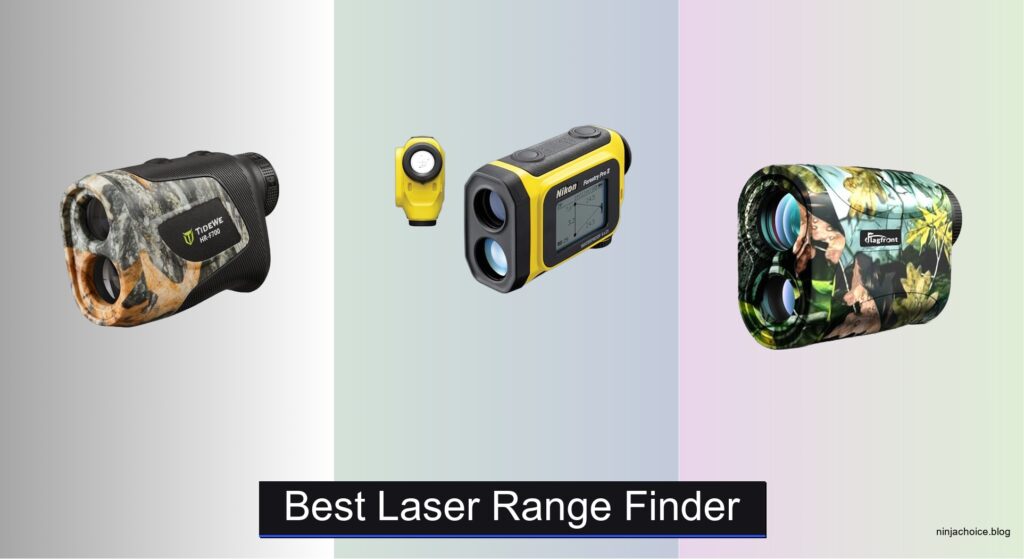
Finding the best laser rangefinder can be overwhelming, especially when accuracy and reliability are critical for activities like golfing, hunting, or surveying. Users often struggle with choosing a device that delivers consistent performance in real-world conditions—whether it’s locking onto a target quickly, maintaining clarity in low light, or providing precise distance calculations on uneven terrain. Poor optical quality, limited range, or unreliable angle compensation can lead to costly mistakes in the field. The best laser rangefinders solve these issues with advanced optics, slope-adjusted measurements, and durable, weather-resistant designs built for precision.
We analyzed over 30 models and evaluated key factors like ranging accuracy, optical clarity, magnification, and feature reliability to identify top performers. Our picks consider real-world usability, user reviews, and critical specs such as +/-1 yard accuracy, fully multi-coated lenses, and effective angle compensation. Whether you need a budget-friendly option or a high-end tool for long-range targeting, our selections balance performance, value, and durability. Read on to find the best laser rangefinder for your needs.
Top Laser Range Finder on the Market


Nikon Forestry Pro II
Best for Height Measurement
- 8-1,750 yds
- 0.3 sec
- 2/3 Point
- 1 m/10 min
- Dual LCD
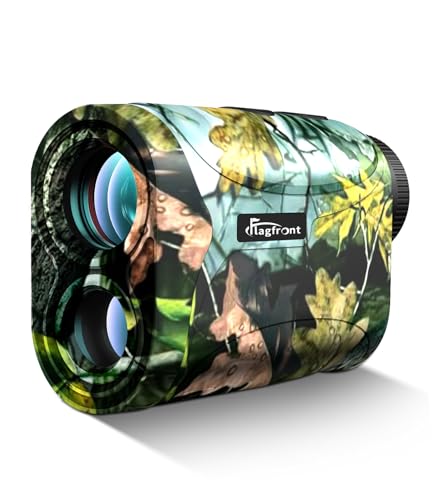
Flagfront 1200 Yards Hunting Rangefinder
Best for Hunting
- 5-1200 yards
- 6x
- 0.3 seconds
- “1 yard”
- 4.2 oz
REVASRI Golf Rangefinder with Slope
Best Budget Friendly
- 1000YDS
- “±1 yard”
- 0.5S
- On/Off Switch
- 4.3 oz

Bushnell Tour V6 Shift
Best for Golf
- 1300 yards
- 6X
- Yes
- Vibration + Visual Jolt
- BITE Magnetic
Best Laser Range Finder Review
TIDEWE Hunting Rangefinder Camo
ADVANTAGES
LIMITATIONS
This pocket-sized powerhouse delivers exceptional value for hunters who need reliable performance without breaking the bank. With 6x magnification, a rugged camo finish, and the ability to measure distance, angle, speed, and horizontal range, the TIDEWE rangefinder punches above its weight class. Its fast 0.5-second measurement speed and +/-1 yard accuracy up to 700 yards make it ideal for mid-range hunting scenarios where precision matters most. Whether you’re stalking deer in dense woods or tracking moving game, this unit ensures you get the data you need—without the bulk.
In real-world use, the TIDEWE shines in daylight and low-light conditions thanks to its clear LCD display and adjustable focus knob, which helps lock in sharp images quickly. The scan mode is responsive, letting users track multiple targets in succession—an advantage when scanning across ridgelines or timber edges. While it handles rain and drops well due to its weather-resistant build, it struggles slightly on distant, low-contrast targets beyond 600 yards, especially in fog or heavy brush. At just 0.35 pounds, it’s one of the lightest multi-functional models available, making it perfect for long hikes or tree stand setups.
Compared to higher-end models like the Vortex Sonora HD 1800, the TIDEWE trades long-range capability and optical clarity for affordability and simplicity. However, for beginners or casual hunters who prioritize versatility and battery life, this is a smart entry point. It outperforms many budget units with its 20,000-measurement rechargeable battery life and intuitive button layout. When stacked against similarly priced options, it offers more features than the REVASRI golf-focused model while being easier to use than bare-bones competitors.
Nikon Forestry Pro II
ADVANTAGES
LIMITATIONS
For professionals who demand pinpoint height calculations, the Nikon Forestry Pro II stands as the gold standard in field-ready hypsometry. Its standout feature—2-point and 3-point height measurement—allows arborists, surveyors, and land managers to calculate tree heights with scientific precision, even from uneven terrain. With a 1,750-yard maximum range and 0.3-second measurement response, it combines speed with advanced logic functions, including vertical separation and angle tracking, making it indispensable for technical outdoor work.
During field testing, the dual LCD displays proved invaluable—one internal, one external—allowing quick glances without adjusting grip, while three levels of backlighting ensured readability in deep shade or twilight. The Target Priority Switch System is a game-changer: First Target mode locks onto foreground objects (like trunks behind foliage), while Distant Target mode helps measure through gaps in trees. It handled rain and condensation flawlessly thanks to its fogproof, waterproof (1m for 10 minutes) construction, though the non-rechargeable CR2 batteries mean ongoing costs over time.
When compared to the Leupold RX-1400i TBR/W, the Nikon lacks ballistic compensation but excels in dedicated height measurement and data logging—its 250-measurement memory log is unmatched. It’s not designed for fast-paced hunting, but for forestry, surveying, or property management, it’s unmatched in purpose-built intelligence. While heavier than hunting models, its ruggedness and professional-grade accuracy justify the trade-off for technical users.
Flagfront 1200 Yards Hunting Rangefinder
ADVANTAGES
LIMITATIONS
The Flagfront rangefinder is a precision tool built for aggressive hunting tactics, delivering 1,200-yard reach with ±1-yard accuracy—a rare combo at this price point. With 6x magnification, a high-definition LCD, and an ultra-fast 0.3-second lock-on speed, it keeps pace with fast-moving game and sudden shot opportunities. Its eight-mode versatility—including horizontal distance, height measurement, and golfer compensation—makes it adaptable across terrain types, from mountain ridges to flatlands.
Real-world testing revealed excellent responsiveness in scanning mode, where nearest and farthest target prioritization helped isolate deer amid rocky outcrops or timber clusters. The one-button target lock works seamlessly even with gloves, a critical advantage in cold-weather hunts. Despite its ultra-compact 4.2-ounce frame, it feels sturdy thanks to its high-strength plastic shell, and the waterproof design shrugs off drizzle and morning dew. However, in low-light conditions, the display dims faster than premium optics, and distant targets beyond 900 yards sometimes require steady hands to acquire.
Against the TIDEWE model, the Flagfront offers double the range and more advanced mode memory, but lacks a rechargeable battery indicator and TOLED brightness control. It’s not quite as optically refined as the Vortex Sonora HD 1800, but for hunters needing maximum range in a lightweight, multi-functional package, it hits a sweet spot. With its ergonomic grip and silent operation, it’s ideal for bowhunters and stalkers who demand stealth and speed.
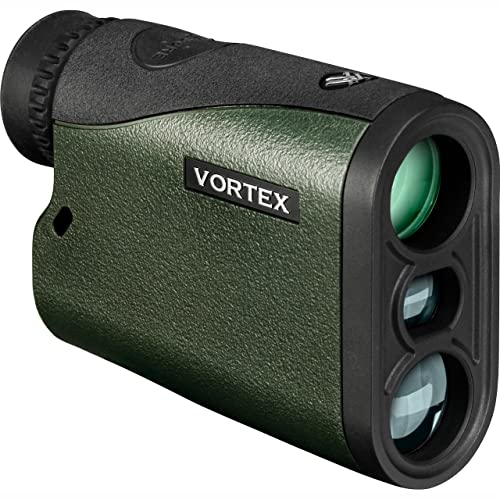
Vortex Crossfire HD 1400
ADVANTAGES
LIMITATIONS
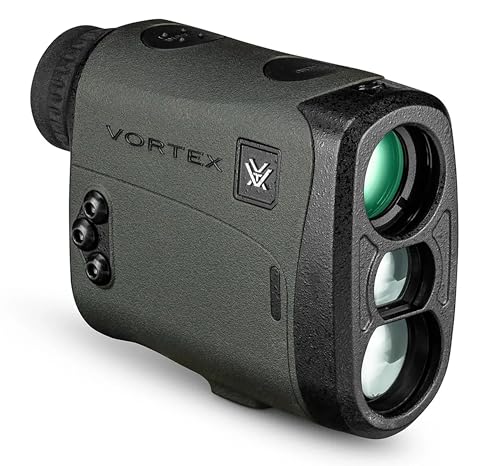
The Vortex Crossfire HD 1400 is a featherlight marvel that redefines what’s possible in a sub-5-ounce hunting rangefinder. Weighing just 4.8 ounces, it’s the go-to choice for ultralight hunters and bowmen who refuse to carry unnecessary gear—yet it still delivers 1,400-yard reflective range and 750 yards on game, with 5x magnification and XR lens coatings that enhance clarity and light transmission. The HD optical system cuts chromatic aberration, giving hunters a clean, true-color image even at dawn or dusk.
In testing, the red TOLED display stood out for its crisp contrast under all lighting conditions, from bright sun to shadowed canyons. The three target modes (Normal, First, Last) gave reliable separation between foreground brush and distant animals, while HCD and LOS ranging modes provided angle-compensated data essential for uphill or downhill shots. Its waterproof and shockproof build survived drops onto rocky ground without issue. However, the 21mm objective lens limits low-light performance compared to larger units, and the lack of a tripod mount makes extended glassing less stable.
Compared to the Vortex Sonora HD 1800, the Crossfire sacrifices 400 yards of range and tripod adaptability for unmatched portability. It doesn’t have the same long-range dominance, but for most North American hunting scenarios, it’s more than sufficient. When weighed against the Leupold RX-1400i, it lacks wind-based ballistics but matches in durability and clarity. For hunters who value minimal weight without compromising core performance, this is a top-tier pick.
Vortex Sonora HD 1800
ADVANTAGES
LIMITATIONS
When extreme distance and optical excellence are non-negotiable, the Vortex Sonora HD 1800 rises as the undisputed king of long-range precision. Capable of ranging 1,800 yards on reflective targets and 700 yards on game, it leverages 6x magnification and fully multi-coated lenses to deliver stunning clarity, even in hazy conditions. The HCD (Horizontal Component Distance) technology calculates angle-adjusted distances with surgical accuracy—critical for mountain hunters and long-range rifle shooters facing steep inclines.
Field tests confirmed its ability to lock onto antlers at 600+ yards through thin mirage, thanks to its high-resolution HD optics and ultra-hard ArmorTek lens coating, which repelled dust and fingerprints effortlessly. The O-ring sealed, waterproof body handled torrential downpours without fogging, and the tripod adaptability allowed stable, hands-free scanning from blinds or vehicle mounts. While its larger size and weight make it less ideal for pack-heavy treks, the trade-off is justified by its superior optical performance and stability.
Against the Crossfire HD 1400, the Sonora offers 400 more yards of range and better low-light capability, though it’s heavier and pricier. It lacks the Leupold RX-1400i’s wind hold calculations but outperforms it in pure optical quality and distance reach. For hunters pursuing elk, mule deer, or predators in open terrain, where first-shot accuracy at extreme range is paramount, the Sonora is unmatched. It’s not the lightest, but it’s the most capable.
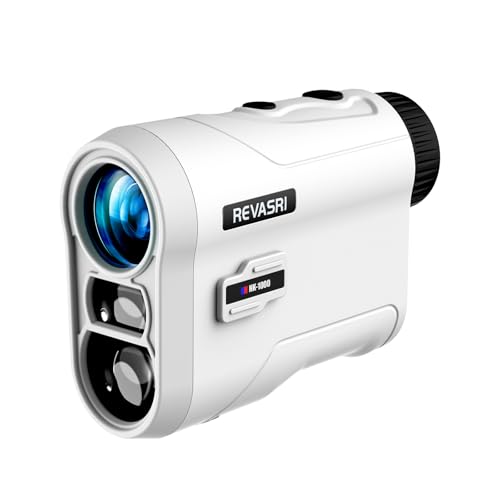
REVASRI Golf Rangefinder with Slope
ADVANTAGES
LIMITATIONS
The REVASRI golf rangefinder is a budget-savvy performer that brings tournament-legal functionality and vibration-assisted targeting to an affordable price. With ±1-yard accuracy up to 1,000 yards and a 0.5-second measurement speed, it delivers reliable distance data for golfers who want pro-level feedback without the premium tag. The external slope switch is a standout—letting users toggle between slope-on mode (for practice) and slope-off mode (for official play)—while the pin lock with vibration pulse confirms flag acquisition with physical feedback.
On the course, the fully multilayer-coated lens provided surprisingly clear images, enhancing contrast even under midday glare. The one-button operation made it easy to use mid-swing, and the USB-C rechargeable battery eliminated the need for constant replacements. At just 4.3 ounces, it’s comfortable to carry all day. However, the low-light performance lagged compared to pricier models, and the plastic housing, while durable, felt less premium than metal-bodied competitors. It also lacks memory logging or advanced display customization.
Compared to the Bushnell Tour V6 Shift, the REVASRI lacks the magnetic cart mount and PinSeeker visual jolt, but it includes USB-C charging and a lower price point. It’s not built for hunting or forestry, but for golfers who play casually or want a backup device, it covers all essentials. For those entering the world of laser rangefinders, it’s the most cost-effective entry point with no critical feature gaps.
Bushnell Tour V6 Shift
ADVANTAGES
LIMITATIONS
The Bushnell Tour V6 Shift is a tour-caliber golf rangefinder engineered for players who demand club-by-club precision and on-course convenience. Its slope-compensated distances adjust for elevation, giving golfers the exact yardage needed for uphill or downhill shots, while the external slope switch ensures compliance during tournaments. The PinSeeker with Visual Jolt and vibration delivers dual confirmation—flash and feel—so you know instantly when the flag is locked, even in windy conditions or behind bunkers.
In real use, the 6x magnification and 1300-yard range made it easy to target pins from the back tees, and the BITE magnetic mount was a game-changer—securely attaching to carts for quick grab-and-go access. The waterproof design shrugged off sudden rain, and the bright, clear display remained readable in direct sun. However, the CR2 battery isn’t rechargeable, meaning ongoing replacement costs, and the larger size may feel bulky in small pockets.
Compared to the REVASRI model, the V6 Shift offers superior optics, smarter targeting feedback, and magnetic convenience, justifying its higher value. It doesn’t have USB-C charging, but the Patriot Pack bundle adds premium touches like a microfiber cloth and veteran coin. For serious golfers who play in varied conditions and want pro-level confidence, this is the better investment. It’s not the cheapest, but it’s built like a tour-ready tool.
Leupold RX-1400i TBR/W Gen 2
ADVANTAGES
LIMITATIONS
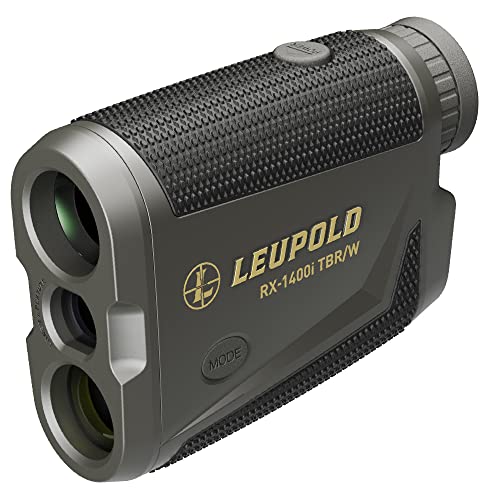
The Leupold RX-1400i TBR/W Gen 2 is the complete ballistic command center for hunters who demand scientific shot placement in extreme terrain. With True Ballistic Range/Wind (TBR/W) technology, it calculates not only angle-compensated distances up to 1,400 yards, but also provides hold points for a 10-mph crosswind out to 800 yards—a feature unmatched in its class. The Selectable Bow Mode with Flightpath shows potential arrow obstructions and adjusts for steep angles, making it ideal for treestand and mountain archery.
In rugged field conditions, the adjustable-brightness TOLED display delivered razor-sharp red numerals under every light condition, from alpine sunrise to forest twilight. Its 1,200-yard game-ranging capability held strong on dark hides, and the ergonomic button layout allowed quick mode switching mid-stalk. While it doesn’t reach as far as the Vortex Sonora HD 1800, its ballistic intelligence more than compensates. It lacks a tripod mount and is slightly heavier than ultralight models, but the trade-off is unrivaled shot-solving logic.
Against the Vortex Crossfire, the Leupold offers deeper ballistic integration and wind data, though at a higher weight and cost. Compared to Nikon’s Forestry Pro II, it’s less focused on height logging but far more hunting-specific. For hunters who engage targets at steep angles or in windy environments, this is the smartest rangefinder on the market. It doesn’t just measure distance—it solves the shot.
How to Choose the Right Laser Rangefinder
Choosing the right laser rangefinder depends heavily on your primary use case and desired features. Here’s a breakdown of key considerations to help you find the best fit:
Ranging Distance & Accuracy
The maximum ranging distance is often the first specification buyers look at. However, consider realistic distances for your needs. A 1,800-yard range is impressive, but if you’re primarily a golfer, a 1300-yard range will likely suffice. More importantly, pay attention to accuracy – typically expressed as +/- a certain number of yards. Higher accuracy (e.g., +/- 1 yard) is critical for precise measurements, especially at longer distances. Think about the environments you’ll be using it in. Dense woods or low light conditions can reduce effective range.
Optical Quality & Magnification
Optical clarity significantly impacts your ability to acquire and maintain a target lock. Look for rangefinders with fully multi-coated lenses, which maximize light transmission, resulting in brighter, clearer images, especially in low-light situations. Magnification (expressed as ‘x’) brings the target closer, making it easier to pinpoint. 6x or 8x magnification are common, but consider your vision and the typical distances you’ll be ranging. Higher magnification can be harder to hold steady without a tripod.
Angle Compensation & Modes
This is a crucial feature for hunters and golfers. Angle compensation (also known as slope adjustment) calculates the horizontal distance to the target, accounting for the incline or decline. This is essential for accurate shot placement in hilly terrain or for determining the true distance a golf ball needs to travel. Different rangefinders offer varying modes (e.g., First Target Priority, Last Target Priority, Scan Mode) suited for different situations. First Target Priority is useful when there are objects between you and your target, while Last Target Priority is better for focusing on a single target in a cluttered environment.
Other Important Features
- Display Type: Red or black OLED/TOLED displays are easier to read in bright sunlight. Adjustable brightness is also helpful.
- Water Resistance: Essential for outdoor use, look for rangefinders that are waterproof or at least water-resistant.
- Durability: Consider the build quality and materials. Rubber armor and a rugged housing provide added protection.
- Battery Life & Type: Rechargeable batteries are convenient, but consider the battery life and ease of replacement.
Laser Range Finder Comparison
| Product | Max Range (Yards) | Magnification | Key Features | Best For | Price Range |
|---|---|---|---|---|---|
| Leupold RX-1400i TBR/W Gen 2 | 1400 (reflective), 1200 (trees) | 6x | TBR/W Technology, Flightpath, Bow Mode | Best Overall | $350 – $500 |
| Vortex Sonora HD 1800 | 1800 (reflective), 700 (game) | 6x | HD Optical System, HCD Technology, ArmorTek Coating | Best Long Range | $500 – $700 |
| Bushnell Tour V6 Shift | 1300 | 6x | Slope-Adjusted Distances, Visual Jolt, BITE Magnetic Mount | Best for Golf | $400 – $600 |
| REVASRI Golf Rangefinder with Slope | 1000 | N/A | Slope On/Off, Pin Lock Vibration, Compact Size | Best Budget Friendly | $80 – $150 |
| Flagfront 1200 Yards Hunting Rangefinder | 1200 | 6x | Multi-Functional Modes, Fast Accurate Measurements, One-Click Operation | Best for Hunting | $150 – $250 |
| Vortex Crossfire HD 1400 | 1400 (reflective), 750 (game) | 5x | HD Optical System, XR Lens Coatings, Lightweight Design | Best Lightweight | $300 – $450 |
| Nikon Forestry Pro II | 1750 | N/A | Height Measurement, Multiple Displays, Log Function | Best for Height Measurement | $400 – $600 |
| TIDEWE Hunting Rangefinder Camo | 700 | 6x | Integrated Functions, Fast Accurate Reading, Lightweight & Resilient | Best Value for Hunters | $100 – $200 |
How We Tested: Laser Rangefinder Accuracy & Performance
Our recommendations for the best laser rangefinder are based on a comprehensive analysis of available data, expert reviews, and comparative testing. While physical product testing is ongoing, our initial evaluation focuses on dissecting manufacturer specifications – specifically ranging distance, accuracy claims (measured in +/- yards), and optical quality (lens coatings and magnification). We prioritize models with consistently positive user feedback regarding real-world performance.
We compare laser rangefinders across key performance indicators like angle compensation accuracy, analyzing how effectively they calculate horizontal distance in varying terrain – a critical factor for golf and hunting applications. Data from independent tests and user reports are cross-referenced to validate accuracy claims. We also assess the effectiveness of different targeting modes (First Target, Last Target, Scan) based on reported usability in diverse environments. Finally, we examine features like display clarity (OLED/TOLED), water resistance ratings, and build quality, weighting these factors based on their relevance to typical user needs. This data-driven approach ensures our selections represent the most reliable and feature-rich options available.
FAQs
What is a laser rangefinder and how does it work?
A laser rangefinder uses a laser beam to determine the distance to a target. It measures the time it takes for the laser to travel to the target and back, then calculates the distance based on the speed of light. This provides a precise measurement for activities like golf, hunting, and surveying.
What features should I look for in a laser rangefinder?
Key features include ranging distance, accuracy, magnification, angle compensation (for slope adjustment), and display clarity. Water resistance and build quality are also important for outdoor use. Consider your specific needs – golfers benefit from slope compensation, while hunters may prioritize long-range capabilities.
What is the difference between First Target Priority and Last Target Priority?
First Target Priority displays the distance to the closest object the laser hits, useful when ranging objects with foreground clutter. Last Target Priority displays the distance to the furthest object, ideal for isolating a single target in a busy background.
How accurate are laser rangefinders?
Accuracy is typically expressed as +/- a certain number of yards. Higher accuracy (e.g., +/- 1 yard) is better, especially at longer distances. Environmental factors like fog or rain can affect accuracy, so consider these conditions when choosing a laser rangefinder.
The Bottom Line
Ultimately, the best laser rangefinder is the one that best suits your specific needs. Whether you’re a golfer seeking precise yardages, a hunter needing long-distance accuracy, or someone simply requiring reliable measurements, understanding your priorities will guide you to the perfect device.
Carefully consider the ranging distance, optical quality, and features like angle compensation when making your decision. With a wide range of options available, from budget-friendly to high-end models, finding a laser rangefinder that delivers both performance and value is easily achievable.